Amanjena Resort, Marrakesh
Elegant Accommodations Amanjena Resort in Marrakech offers a 5-star experience with family rooms, interconnected rooms, and private pools. Each room features air-conditioning, a balcony, and moder

Marrakesh is one of the few cities in the world where the built environment itself functions as the primary amenity. The medina, a UNESCO World Heritage Site, is a 12th-century urban fabric of souks, madrasas, and private riads whose interior architecture is deliberately concealed from the street. This inversion of luxury, where the most extraordinary spaces face inward, defines the local standard for high-end accommodation. A suite in Marrakesh is rarely about the view from the outside. It is about what the interior reveals.
73 hotels available

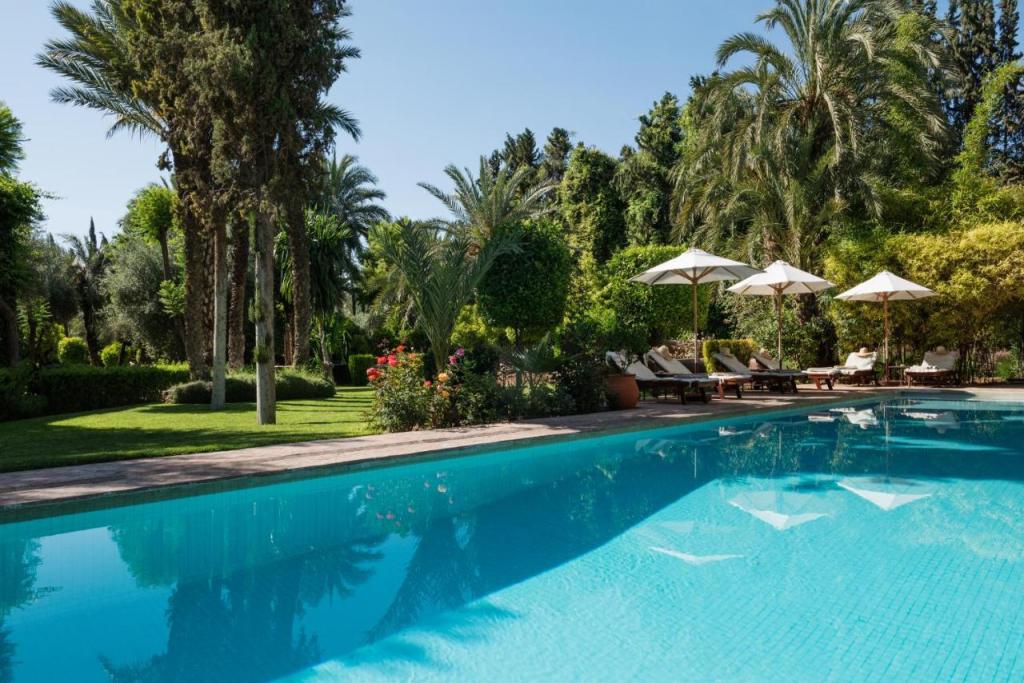
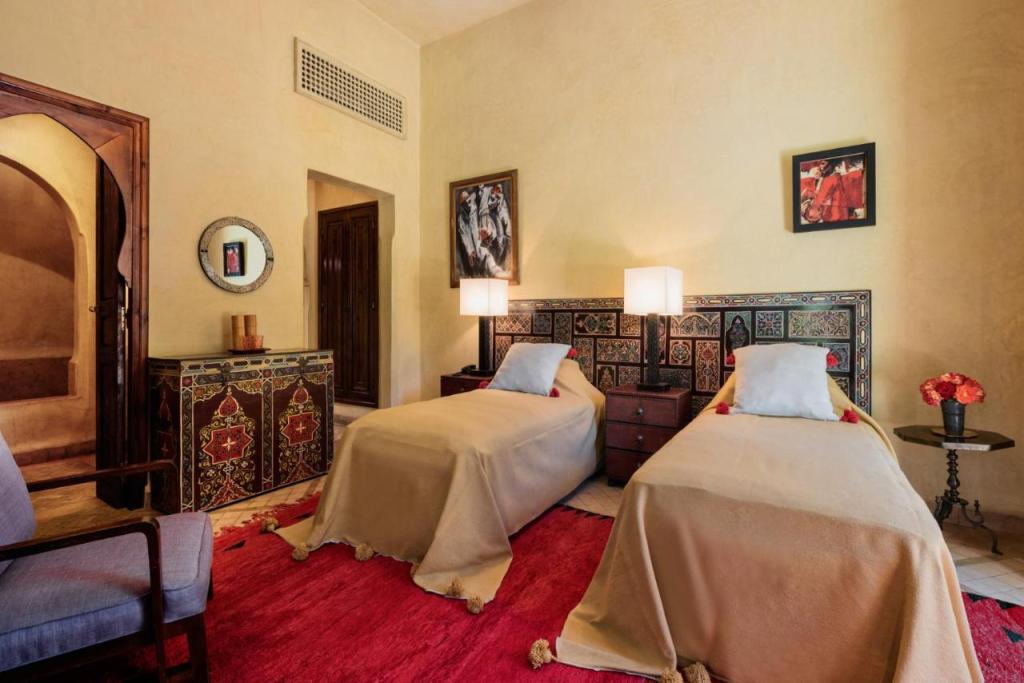
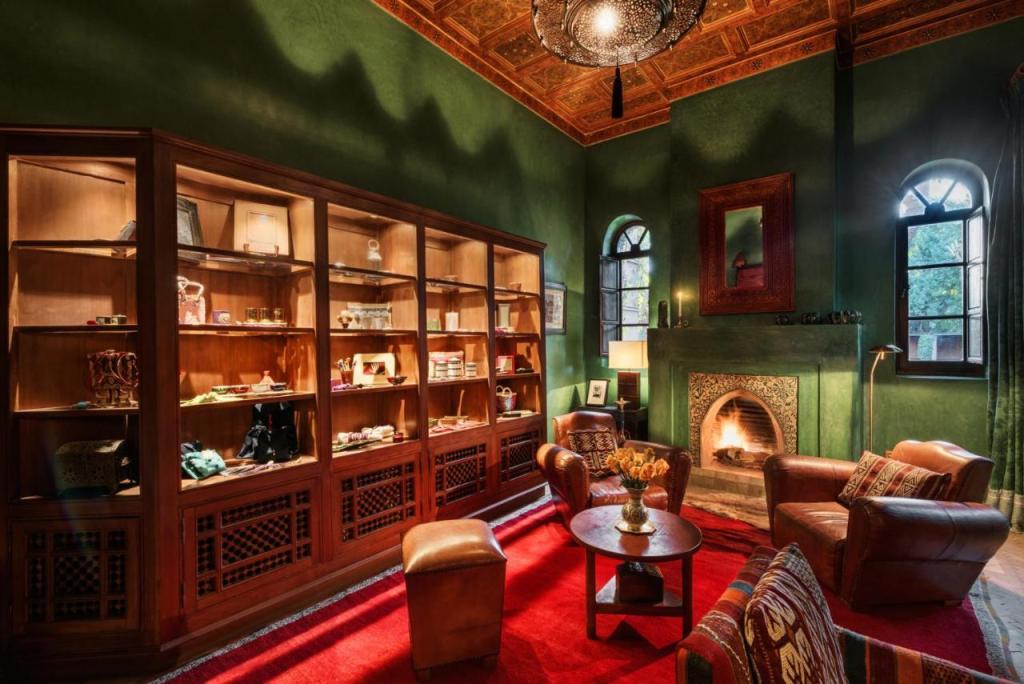
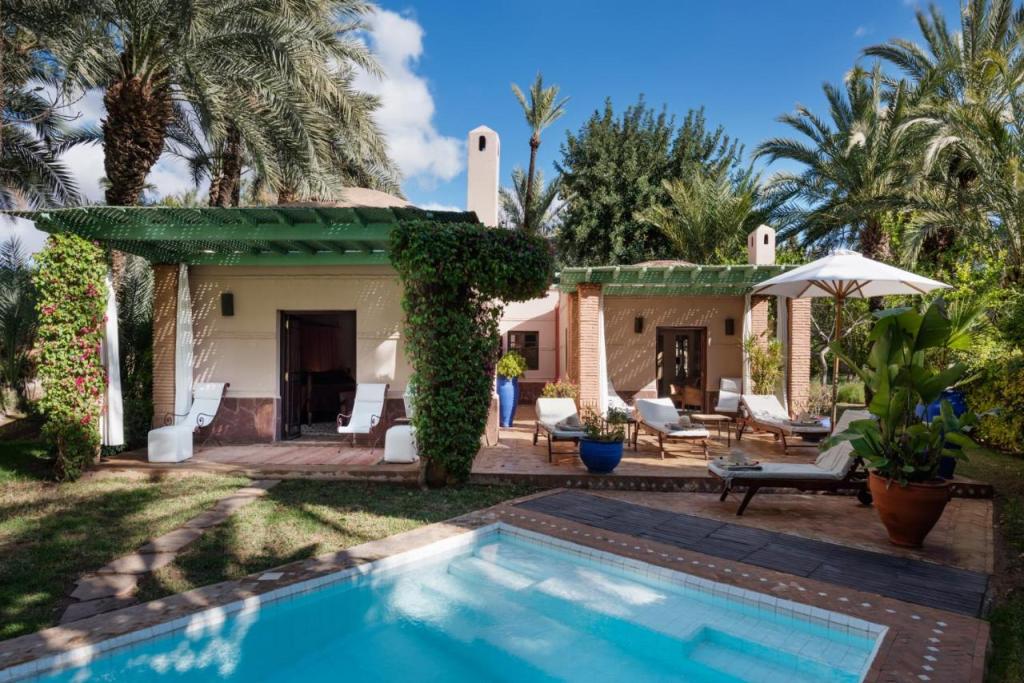
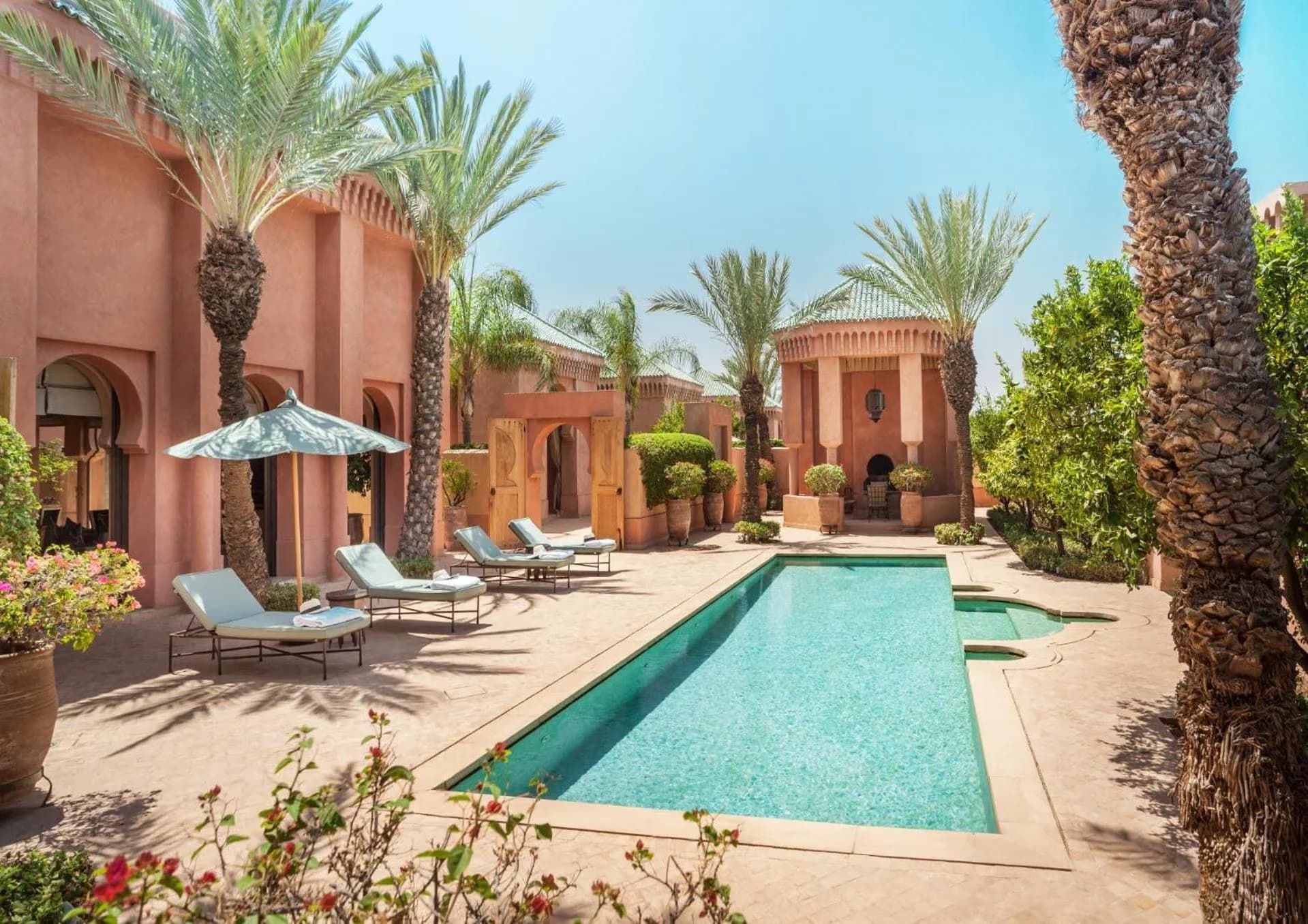
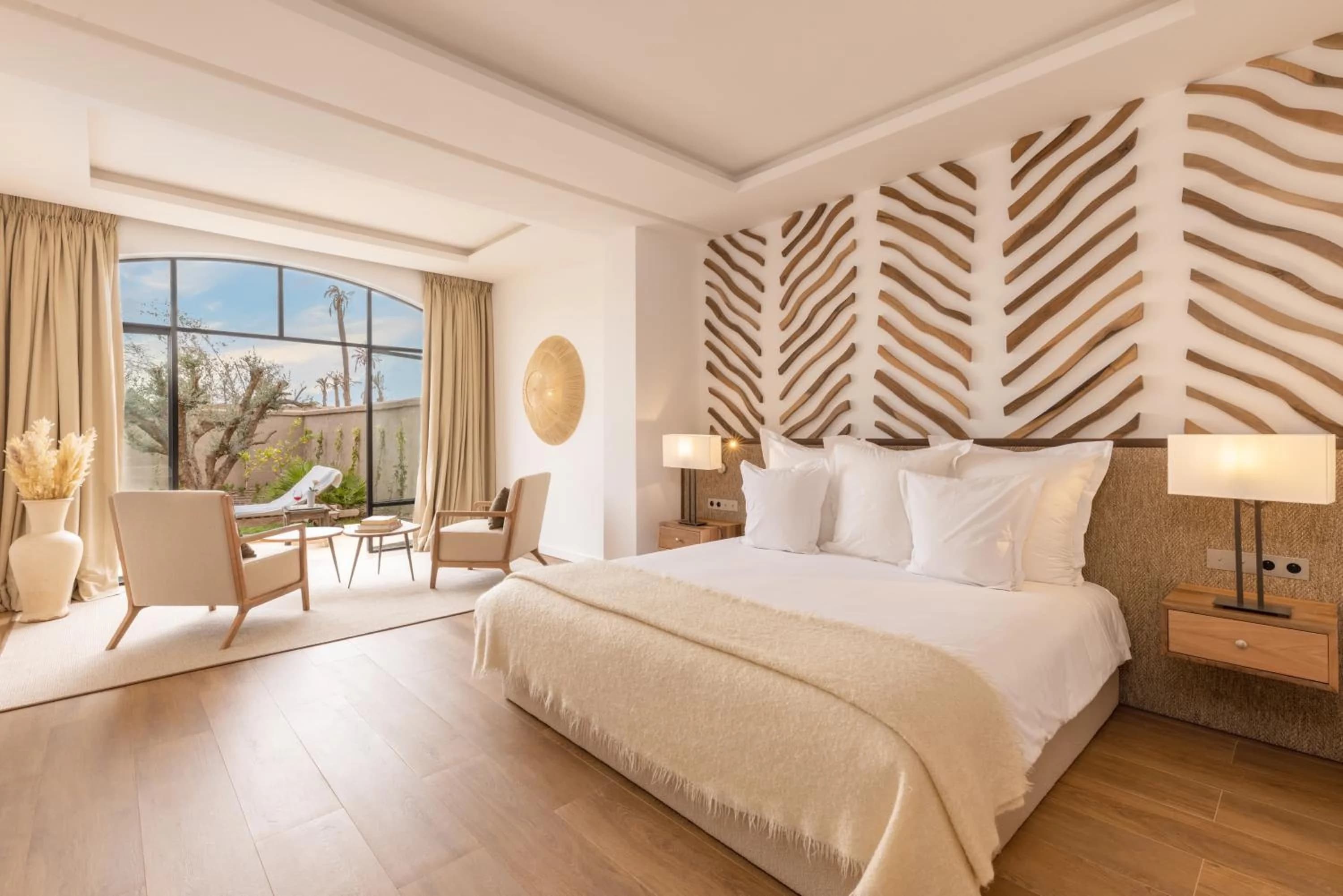
Elegant Accommodations Amanjena Resort in Marrakech offers a 5-star experience with family rooms, interconnected rooms, and private pools. Each room features air-conditioning, a balcony, and moder

Elegant Accommodations Bab Akoul Palmeraie - Boutique Hotel & Spa in Marrakech offers a recently renovated guest house with a year-round outdoor swimming pool, sun terrace, and lush garden. Guests enj

Surrounded by a large garden with an outdoor pool, Hôtel Dar Rhizlane is located in L’Hivernage, Marrakesh, 1.2 mi from Jamaâ El Fna Square. It features a spa. Each air-conditioned room has Moroccan

Offering an outdoor pool and a restaurant, Dar Zemora is located in Marrakech. Free WiFi access is available. Each room here will provide you with air conditioning, an iPod dock and a seating area. F

Located in the heart of Marrakesh, this hotel is just a 10-minute drive from the famous Jaam El Fenaa square. It features an outdoor swimming pool, spa and fitness center. Guestrooms at Diwane Hotel a

Domaine des Remparts sit on a 2-hectare park in Marrakech and offers a view of the Atlas Mountains. It offers a fitness center and 2 restaurants. It has two swimming pools, one of which is heated, a y

Domaine Rosaroum is 6.2 mi from Marrakech Airport. Each villa offers an outdoor swimming pool, terrace with a seating area and views of the palm grove, and free Wi-Fi throughout. The villas at Domaine

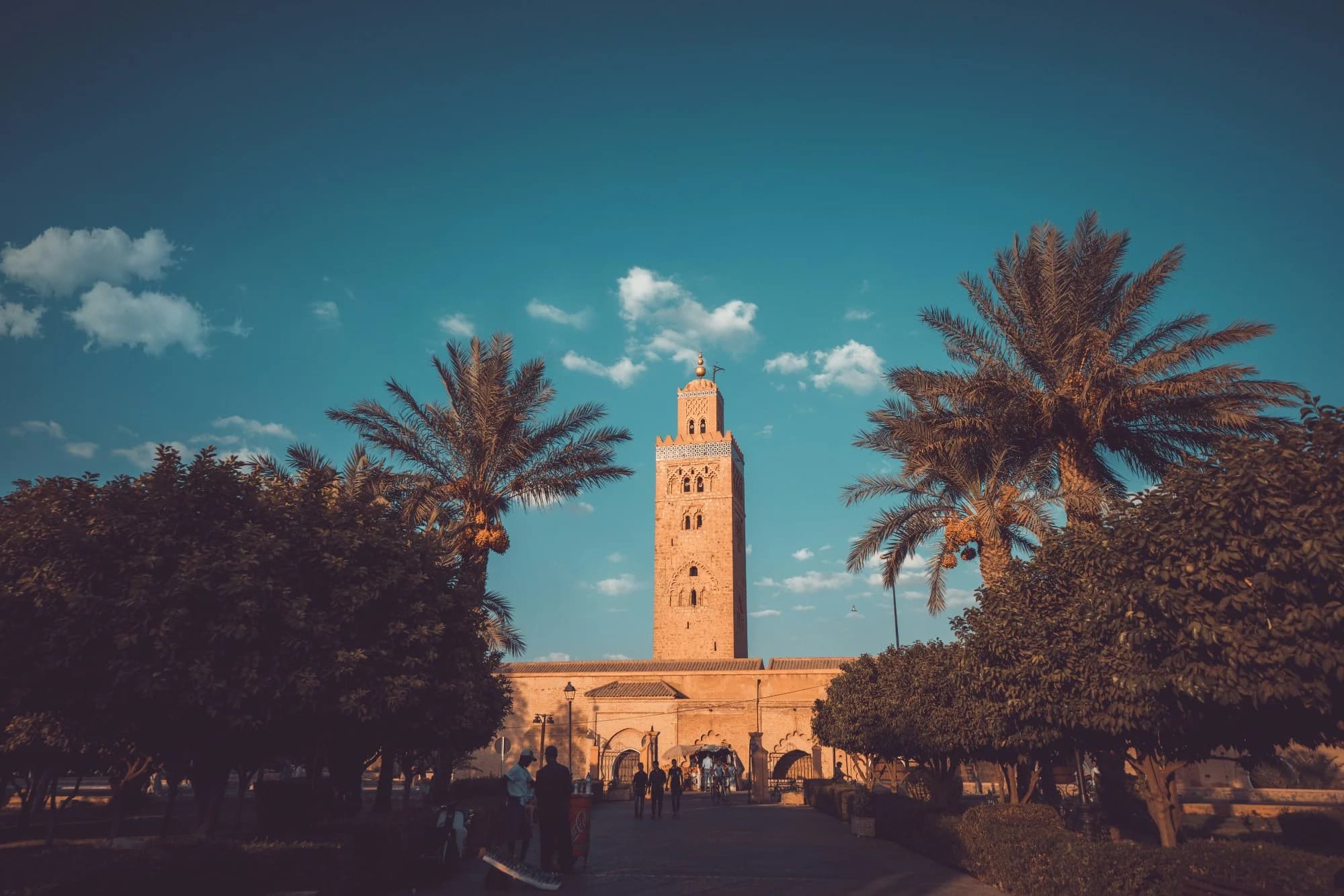
This boutique Riad in a traditional former palace features a furnished rooftop terrace with a pool and views of the Kotoubia Mosque, a 5 minute walk away. It has a collection of art, a piano bar and a

Located in the heart of the luxurious district of Hivernage in an 8-hectare park, the Es Saadi Marrakech Resort - Hotel is 10 minutes’ walk from Djemaa El Fna square. The property offers an oriental s

Located in the heart of the luxurious district of Hivernage in an 8-hectare park, 5 minutes’ walk from the heart of old Marrakesh, Es Saadi Marrakech Resort - Palace offers a 9843 ft² spa, a 7874 ft²

Four Seasons is a 3-minute drive from the Menara Gardens. It offers an outdoor swimming pool surrounded by palm trees, sunbeds and a rooftop terrace. A wellness center and free Wi-Fi are available. R

Comfortable Accommodations Grand Plaza Marrakech in Marrakech offers family rooms with air-conditioning, private bathrooms, and free WiFi. Each room includes a seating area, TV, and soundproofing

The Naoura Barrière is spread over a beautiful garden landscape, centrally located in Marrakesh near the heart of the medina. It offers a peaceful setting and luxury facilities. The suites at Naoura B

Offering a heated, outdoor swimming pool and a terrace with a view on the surrounding palm grove and Atlas Mountains, this elegant hotel is set 4.3 mi from central Marrakech. It has a free Wi-Fi inter

Comfortable Accommodations Hotel Riu Tikida Palmeraie in Marrakech offers comfortable rooms with air-conditioning, balconies, private bathrooms, and modern amenities. Each room includes a work des

Comfortable Accommodations IZZA Marrakech in Marrakech offers comfortable rooms with air-conditioning, private bathrooms, and modern amenities. Each room includes a mini-bar, free WiFi, and a work

Elegant Accommodations Kasbah La Moun - The Art Of Hospitality in Marrakech offers a 5-star experience with spa facilities, a year-round outdoor swimming pool, and a lush garden. Guests enjoy free WiF

Set in Marrakech’s Palmeraie, Ksar Char-Bagh offers Moroccan style accommodations in a garden with fig and olive trees. It has 3 swimming pools and a terrace with sun beds. The air-conditioned rooms

A luxury outdoor swimming pool and a spa with massages are featured at La Sultana Marrakech. It is a 10 minute walk from Jamaâ El Fna Square and features a rooftop terrace. A Moorish décor and Morocc

Villa des Orangers offers luxurious accommodations in a former palace located in the center of Marrakech, just a 5-minute walk from Jemaa el Fna Square. It features 3 patios with orange trees and swim
Hotels in the area, but in a neighbouring town.

The property offers a heated swimming pool at 28 degree during winter. Located 9.3 mi from Marrakesh’s Medina, Manzil La Tortue offers a magnificent outdoor pool and on-site golfing green. An LCD TV

In the heart of an oasis, 9.3 mi from Marrakech Airport, Residence Dar Lamia Marrakech offers rooms, apartments and villas, an outdoor swimming pool surrounded by a garden with deckchairs, and a spa.

Set a 10-minute drive from the center of Marrakesh, this 5-star hotel offers a stable with purebred Arabian horses. It offers 3 outdoor swimming pools and beauty treatments in its spa. The spacious ro

Set in Marrakech, 7.5 mi from Yves Saint Laurent Museum, The Oberoi Marrakech offers accommodations with a restaurant, free private parking, free bikes and an outdoor swimming pool. Each accommodation
The city draws a consistently international clientele: European creative industries, Gulf families, North American cultural travellers, and a persistent cohort of artists and designers who return season after season. This audience shapes the hospitality offer, which ranges from historically restored riads in the Medina to purpose-built contemporary estates at the edge of the Palmeraie.
The Medina is where the riad typology reaches its most refined expression. Properties here are typically 17th to 19th century courtyard houses, restored to varying degrees of fidelity. The finest examples preserve original zellij tilework, carved cedar ceilings, and central fountains, while integrating climate control and contemporary bathrooms without compromising spatial integrity. Staying in the Medina places guests within walking distance of Djemaa el-Fna, the major souks, and the principal architectural monuments. Navigation requires engagement with the city on foot, through lanes too narrow for vehicles. This is not a constraint; it is the condition that makes the experience legible.
Guéliz is the French Protectorate-era new town, developed from the 1910s onward on a grid plan west of the medina walls. The architecture is a hybrid of Art Deco and North African modernism. Luxury accommodation here tends toward the contemporary boutique format: smaller room counts, design-forward interiors, proximity to the city's gallery district and upscale dining. It suits travellers who prefer an urban pace with cleaner architectural lines.
Hivernage is the established address for larger luxury hotels in Marrakesh. Located immediately south of Guéliz, this residential and hotel district was developed to accommodate international visitors seeking a quieter, more ordered environment than the medina. Properties here typically offer larger footprints, formal gardens, and the full infrastructure of destination hospitality: spas, pools, and banquet capacity. The trade-off is distance from the historical core.
The Palmeraie is a palm grove extending north of the city, long associated with private villas and resort-scale estates. Accommodation here operates at a remove from the city's density, offering poolside seclusion, equestrian facilities, and views toward the Atlas foothills. For travellers seeking a retreat format within reach of Marrakesh's cultural offer, the Palmeraie represents a coherent alternative to medina immersion.
Agdal, located south of the medina adjacent to the royal palace complex, takes its name from the historic Agdal Gardens, a 12th-century agricultural and ornamental garden covering over 400 hectares. The area is quieter and less commercially developed, attracting properties that position themselves on exclusivity and proximity to monumental heritage rather than urban convenience.
The Marrakesh climate divides into two comfortable windows and two periods of extremity. October through early December and March through May offer the most temperate conditions: daytime temperatures between 18 and 26 degrees Celsius, low humidity, and clear light that makes the city's ochre architecture read at its sharpest. These are the periods when suite occupancy is highest among international leisure travellers, and when the city's cultural calendar is most active.
January and February are cooler and quieter. Rates at many properties decrease significantly, and the Atlas Mountains, visible on clear days from rooftop terraces across the city, carry snow at altitude, which can be reached in under two hours by road. This period suits travellers who prefer a slower pace and reduced tourist volume.
July and August are hot, with temperatures regularly exceeding 38 degrees Celsius. Properties with serious pool infrastructure and air conditioning systems manage this well, and the city empties of European visitors, creating a paradoxically local atmosphere. For travellers comfortable with heat, this is an underrated period.
The Marrakesh International Film Festival, typically held in late November or December, draws an international cultural audience and increases demand for premium suites. Advance booking during this period is advisable.
Morocco does not operate a formal palace classification equivalent to France's national Palace label. However, the Moroccan Ministry of Tourism applies a five-star system, and within that category, a significant quality spread exists. The properties that La Suite considers for curation meet a more specific set of criteria than star rating alone.
A genuine luxury suite in Marrakesh typically includes a private courtyard or dedicated terrace (not a shared rooftop), a bathroom of architectural ambition (often incorporating hammam elements, freestanding baths, or zellij-lined steam rooms), and a staff-to-guest ratio that permits anticipatory service without intrusion. The best riads operate with fewer than ten rooms, creating an environment closer to a private house than a hotel. At the resort scale, suites in the Palmeraie and Hivernage are assessed on spatial volume, garden access, and the coherence of the design language across public and private areas.
Craftsmanship is the most reliable quality indicator in Marrakesh. Properties that have invested in authentic materials (hand-cut zellij, tadelakt plasterwork, carved stucco) rather than reproduction finishes represent a fundamentally different category of experience. This distinction is not always visible in photography and is one of the primary reasons curation by a specialist platform adds value in this market. For broader context on the country's suite offer, the Morocco destination page provides a national overview.
The first decision is architectural: riad or resort. This is not merely a style preference but a structural choice about how you intend to experience the city. A riad positions you inside the medina's logic, requiring physical engagement with the urban fabric to reach anything. A resort in the Palmeraie or Hivernage offers a curated remove, with the city available by car when required.
The second consideration is room typology. In a riad, the premium suites are typically those with direct courtyard access or private rooftop terraces rather than rooms opening onto shared circulation. In a resort context, the suite hierarchy is usually defined by floor level, garden orientation, and the presence of a private pool.
Third, consider seasonality in relation to outdoor space. Suites with private terraces or plunge pools are a different proposition in April than in July. If outdoor space is a primary motivation, the spring and autumn windows maximise its utility.
Finally, consider the service model. Smaller riad properties often provide a more personally calibrated experience, where preferences established on arrival shape the entire stay. Larger properties offer more consistent infrastructure but require more active engagement to achieve the same degree of personalisation.
The Marrakesh hotel market is extensive and, at the upper end, uneven. The photography of riad properties is often aspirational rather than representative, and the gap between a well-restored historic property and a superficially similar conversion can be significant in terms of daily experience. Spatial quality, acoustic insulation, plumbing reliability, and the condition of craftsmanship elements are not assessable from a booking page.
La Suite's curated selection of luxury hotel suites in Marrakesh is built on direct property knowledge and a consistent set of spatial and experiential criteria. For travellers exploring Africa more broadly, or those considering Marrakesh as part of a wider Moroccan itinerary, the platform provides a coherent framework for decision-making that removes the principal risk of this market: committing to a property that performs well in images and inconsistently in reality.

A riad suite is situated within a traditional courtyard house in the medina, typically offering intimate scale, inward-facing architecture, and proximity to the historical city on foot. A resort suite, found in areas such as the Palmeraie or Hivernage, offers larger footprints, pool infrastructure, and a quieter, more removed environment. The choice depends primarily on how directly you wish to engage with the city's urban fabric during your stay.
The answer depends on the type of experience you are seeking. The Medina offers the most architecturally authentic riad stays and direct access to the city's monuments and souks. Hivernage suits travellers who want larger hotel infrastructure and formal gardens. The Palmeraie is appropriate for those who prioritise seclusion and resort-scale amenities within reach of the city.
Prioritise properties where suite descriptions specify private courtyard or terrace access rather than shared rooftop, and where interior finishes are described in material terms (zellij, tadelakt, carved cedar) rather than generic adjectives. Staff-to-guest ratios and room counts are also reliable indicators: the finest riad properties rarely exceed ten rooms, which allows a level of service calibration that larger properties cannot match.
October to early December and March to May offer the most comfortable climate and represent the peak of international leisure demand. Booking three to six months in advance is advisable for the best suites during these windows. January and February offer a quieter alternative with lower rates and the visual benefit of snow on the Atlas Mountains. The period around the Marrakesh International Film Festival in late November or December requires particularly early reservation.
Riads operate as hotels with multiple rooms, so common areas such as courtyards, pools, and rooftop terraces are typically shared between all guests. However, properties with fewer rooms (often four to eight) naturally create a more private atmosphere than larger establishments. Some estates and villa-format properties in the Palmeraie offer full exclusive-use arrangements, where the entire property is reserved for a single party.
A Palmeraie suite is typically set within a resort or villa estate surrounded by palm gardens, offering pool access, open sky, and spatial generosity that the dense medina urban fabric cannot provide. The Medina suite prioritises architectural heritage, sensory immersion in the city, and walkable access to souks and monuments. The Palmeraie is better suited to travellers whose primary objective is rest and seclusion; the Medina suits those who want direct cultural engagement as the default mode of their stay.
Tadelakt is a traditional Moroccan waterproof plasterwork technique, developed in the Marrakesh region, which produces a polished, slightly organic surface typically used in hammams and bathrooms. In a high-quality suite, authentic tadelakt application indicates craft investment and local material knowledge. It is distinct from painted or tiled finishes and has a specific tactile and visual quality that reproduction materials do not replicate. Its presence in a suite's bathroom is a credible quality signal.
Yes, though the typology varies by area. In the Medina, private plunge pools are occasionally integrated into riad suites at courtyard level or on private terraces, though space constraints mean they are smaller in scale. In the Palmeraie and Hivernage, resort properties are more likely to offer suites with direct access to a private or semi-private pool. Villa-format properties in the Palmeraie regularly include full pool facilities as part of the suite or exclusive-use arrangement.
The hammam is the foundational wellness tradition in Marrakesh, a sequence of steam, exfoliation (using kessa glove and black soap derived from olive pulp), and massage that predates the modern spa concept by centuries. Top-tier luxury hotels in Marrakesh typically operate private hammam facilities as part of their spa offer, often with suite-level in-room versions available. The quality of the hammam experience is a meaningful differentiator between properties and is worth specifying when booking.
La Suite applies a set of spatial, material, and experiential criteria that go beyond star rating or review aggregation. In a market like Marrakesh, where photography frequently overstates a property's actual condition and where the quality gap between superficially similar riads can be substantial, direct property knowledge is the primary curatorial tool. The platform focuses specifically on suites rather than rooms, assessing private outdoor space, craftsmanship integrity, service model, and acoustic quality as distinct criteria rather than treating all five-star designations as equivalent.

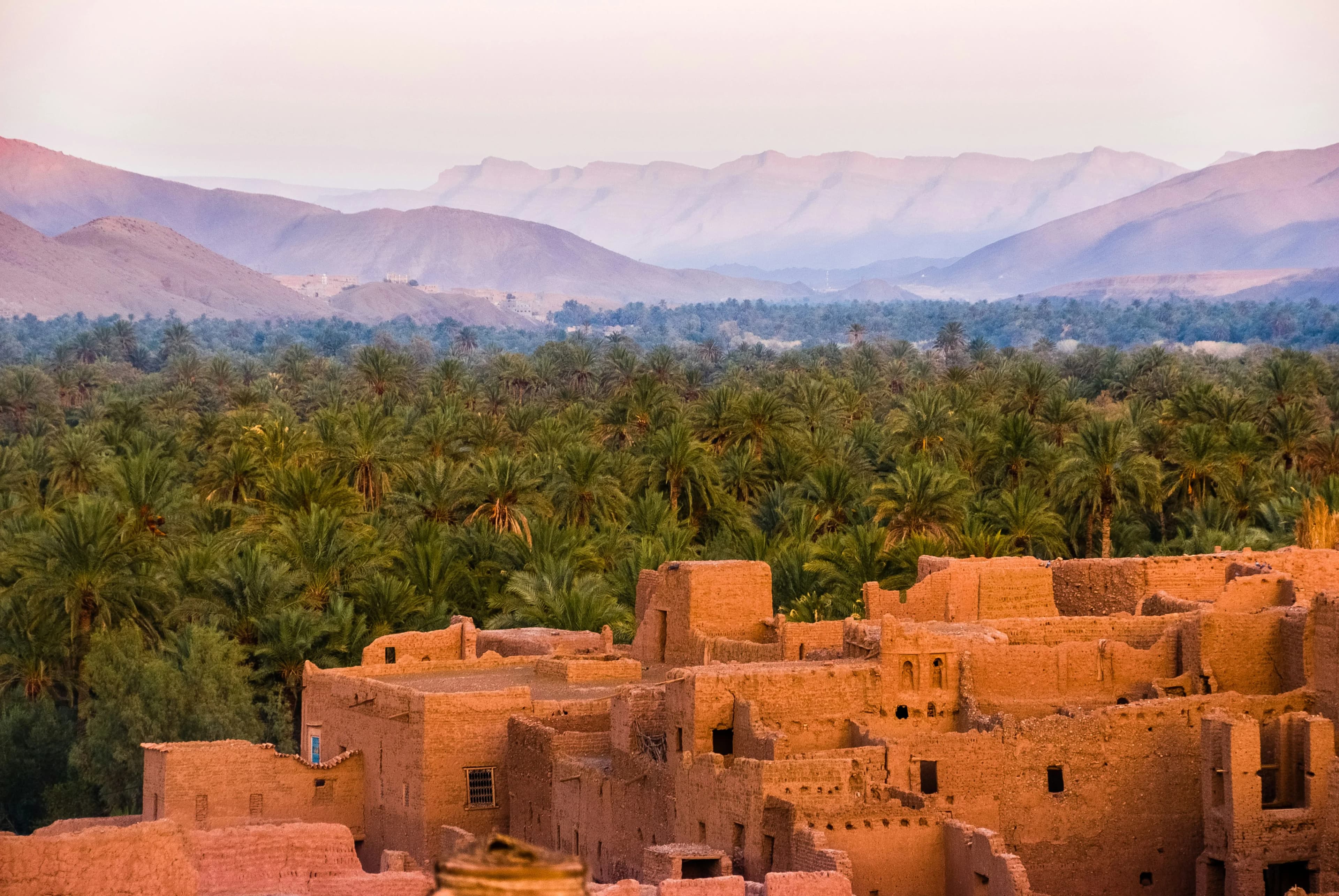
Marrakech is a city of striking contrasts, a destination where hyper-stimulation of the senses meets the absolute silence of private sanctuaries. Behind the ochre and anonymous walls of the Medina lie masterpieces of Hispano-Moorish architecture, while the Palmeraie unfolds its contemporary palaces facing the snow-capped peaks of the Atlas. For the discerning traveler, the Red City cannot be tamed in a standard hotel. It is experienced through an exceptional suite, a privatized riad, or a pavilion hidden in lush gardens. We have set aside stereotypical addresses to reveal the city's most exclusive spaces. Whether you seek the vibrant authenticity of the historic center or the serenity of wide open spaces, here is our definitive selection.
To deepen your exploration of Moroccan hospitality and discover the philosophy behind our curation, we invite you to read the complete guide to the finest luxury suites in Marrakech on our publication, or browse directly all our suites in Marrakech to book your next sanctuary.
BY Jules Peulet

When summer crowds disperse and August's frantic pace fades away, an enchanted respite opens for discerning travelers. October is, without question, the best-kept secret of luxury hospitality. It's the time when Mediterranean light turns golden, when the sea retains the warmth accumulated all summer long, and when service in exceptional establishments returns to its most attentive fluidity. Traveling in the shoulder season is no compromise, but rather a quest for elegance, space, and intimacy. From Andalusia to the foothills of the Atlas, through the wild coasts of the Algarve, we have selected five sumptuous retreats to celebrate the return of tranquility. Here is our guide to extending summer with mastery.
BY Jules Peulet