Best Regions for Luxury Suites in Namibia
The Namib Desert and Sossusvlei
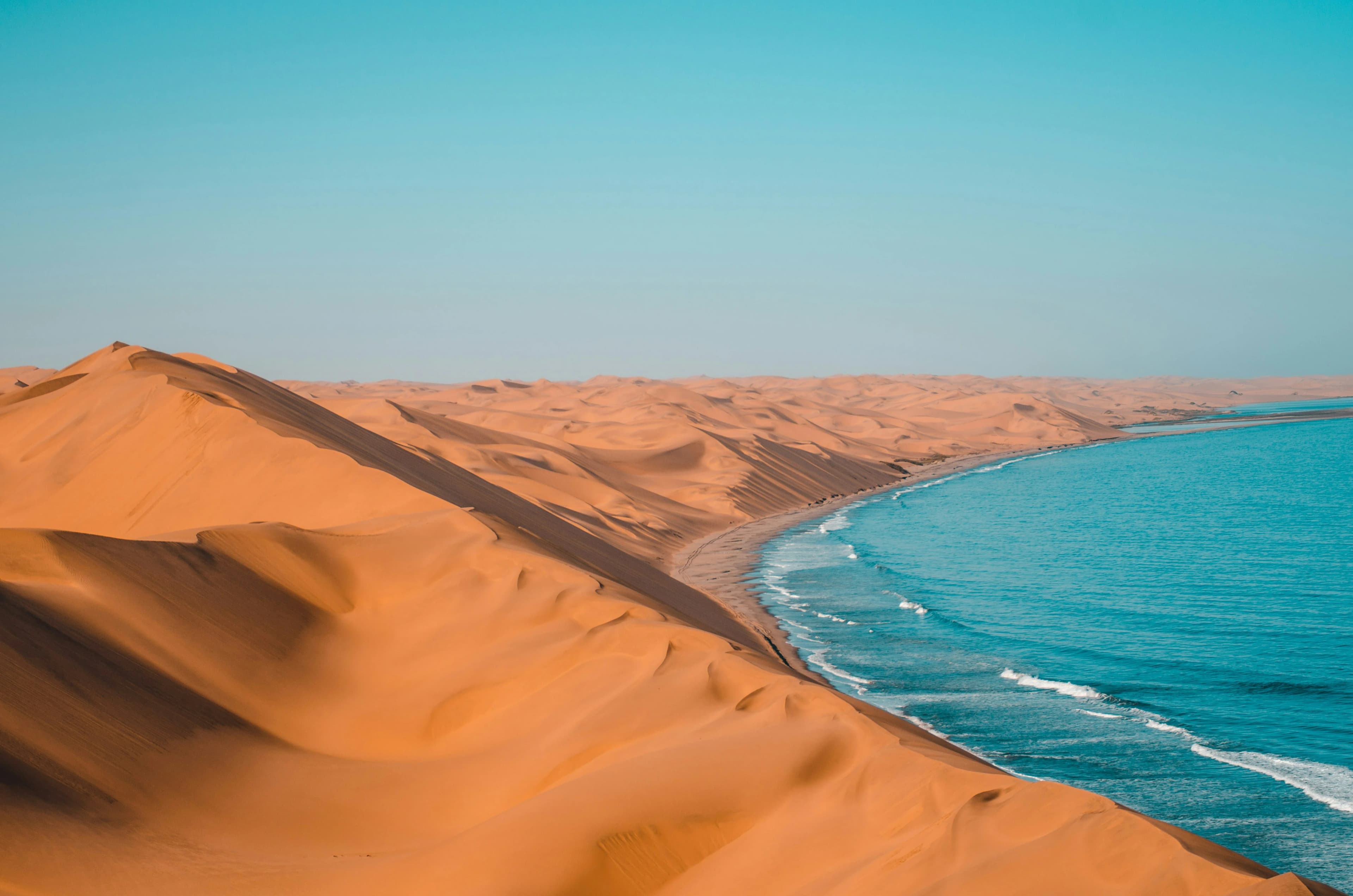
The Namib is one of the oldest deserts on Earth, and the dune fields around Sossusvlei — particularly the iron-oxide formations of Deadvlei — constitute some of the most photographed geological formations on the continent. Lodges in this corridor operate either inside or at the boundary of the Namib-Naukluft National Park, conferring privileged early-morning and late-afternoon access to the dunes before day visitors arrive. The architecture here tends toward low-profile, earth-toned structures that dissolve into the landscape rather than assert themselves against it. Light at this latitude is directional and unforgiving; suites oriented toward the dune face at sunrise justify their positioning entirely.
Etosha National Park
Etosha is built around a vast saline pan — a flat, white mineral expanse visible from space — that anchors a network of waterholes drawing concentrated wildlife activity throughout the year. The park operates on a concession system, and the most considered lodges are positioned adjacent to floodlit waterholes, enabling nocturnal game observation from private terraces or suite interiors. The landscape here is less dramatic in the conventional sense but more behaviorally rich: predator-prey dynamics play out at close range with a frequency uncommon elsewhere in southern Africa.
Damaraland
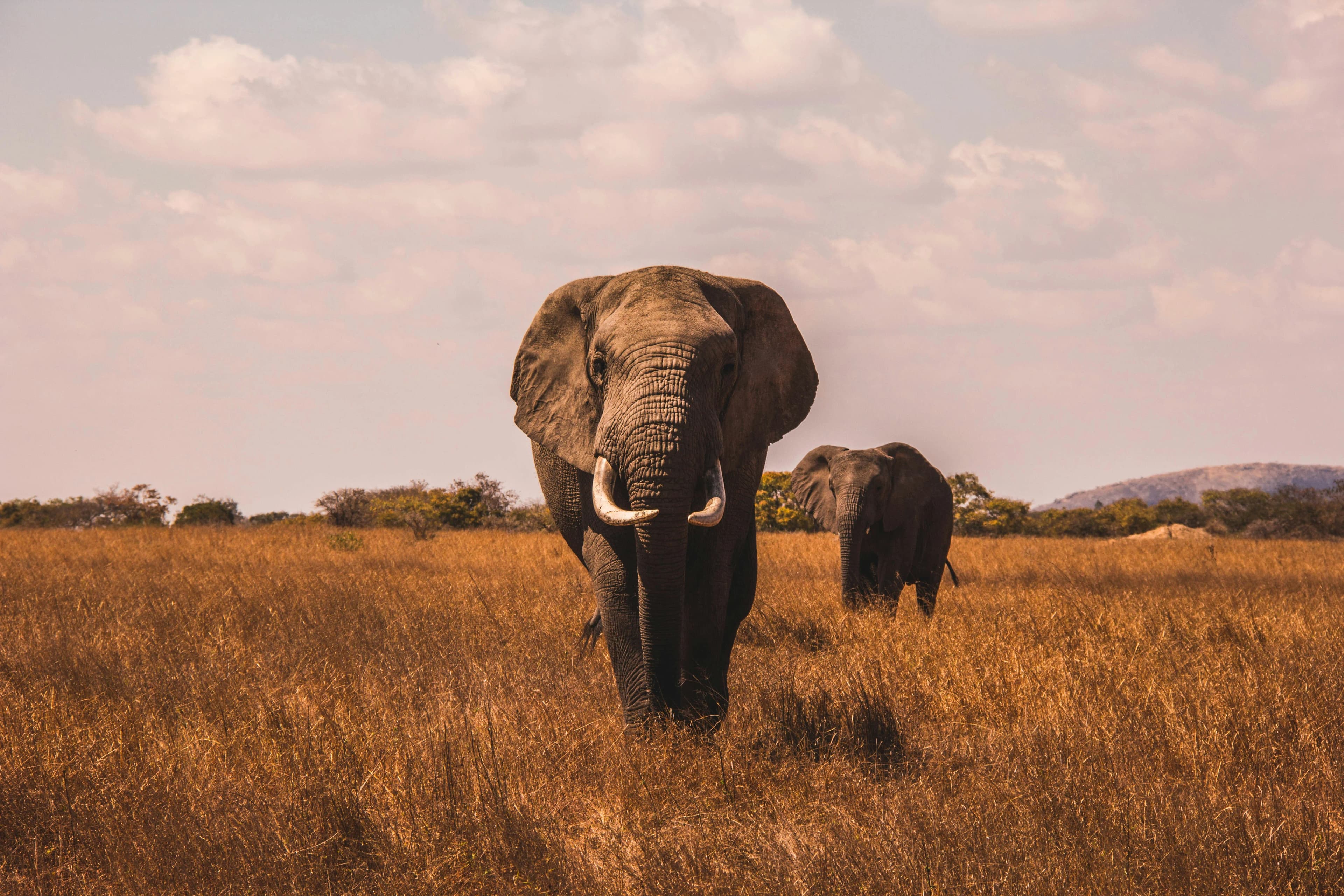
Damaraland is semi-arid communal land in northwest Namibia, notable for its desert-adapted elephant populations, ancient rock engravings at Twyfelfontein, and a rugged, underpopulated terrain that resists straightforward categorization. Lodges here operate under community partnership models, which carry both ethical and experiential weight: access to private land translates into tracking activities unavailable within formal park boundaries. The geological character — granite outcrops, dry riverbeds, volcanic formations — is arresting in a way that rewards sustained attention.
The Skeleton Coast
The Skeleton Coast is governed by extreme conditions: cold Benguela Current upwellings, dense coastal fog, and a landscape of shipwrecks, bleached whale bones, and seal colonies that has historically resisted settlement. Fly-in camps along this coastline are among the most remote and deliberately minimal in the world. Access is typically restricted to small aircraft, and the properties themselves operate with correspondingly small guest capacities. The experience is defined by solitude and the particular atmosphere of a coast that has not been domesticated.
The Caprivi Strip (Zambezi Region)
The narrow eastern corridor known historically as the Caprivi Strip — now officially the Zambezi Region — is ecologically distinct from the rest of Namibia: well-watered, forested, and positioned at the confluence of four rivers including the Zambezi. Lodges here offer riverine safari experiences with papyrus-fringed channels, hippo pools, and access to Bwabwata and Mudumu national parks. It functions as a different country in climatic and ecological terms, appealing to travelers seeking lush contrast after the mineral austerity of the western desert.
When to Visit Namibia
Namibia has two dominant seasons with meaningfully different implications for luxury travel.
The dry season, running from May through October, is the conventional peak period. Wildlife concentrates around permanent water sources, vegetation thins, and road conditions across gravel tracks remain navigable. In Etosha, waterhole activity intensifies from July onward. The Namib Desert is accessible year-round, but temperatures in the dune fields are more manageable between April and September, when midday heat does not render outdoor activity untenable before 8 a.m.
The green season — November through April — brings the short and long rains to the north and east, transforming the Zambezi Region into a lush, migratory-bird-rich environment. Sossusvlei occasionally floods in February and March, an event that briefly covers the pan floor and creates a photographic phenomenon that draws specialist visitors. Rates across most lodges drop materially during this period, and occupancy is lower, which improves access and staff-to-guest ratios at high-end properties.
The Skeleton Coast and the Namib coastline are fog-bound and cool throughout the year, governed more by ocean current than by inland seasonality. Coastal camp operators typically run in June through October when conditions align with their fly-in itinerary structures.
Namibian Luxury Hospitality Standards
Namibia does not operate a formal state classification system equivalent to France's Palace designation or the UK's five-red-star rating. Luxury here is assessed through different criteria — principally, the quality of land access, the ratio of guests to space, the caliber of guides, and the physical standard of accommodation relative to its remoteness.
The most credible independent quality signals in Namibian safari lodging include membership in Relais & Châteaux for properties that qualify on the architectural and culinary dimensions, and recognition by Condé Nast Traveller and Travel + Leisure for consistent operational performance. Several Namibian properties are also affiliated with Virtuoso, the global luxury travel network, which imposes its own vetting criteria.
A more Namibia-specific marker of quality is land scale. Properties operating on private conservancies or community conservancies of 50,000 hectares or more are structurally positioned to offer experiences unavailable on smaller or more congested concessions. The Namibia Community-Based Tourism Association (NACOBTA) framework also provides a reference point for properties that operate with genuine conservation and community benefit structures — relevant both ethically and operationally, as these arrangements often underwrite access to areas closed to standard tourism.
How to Choose the Right Suite in Namibia
The suite selection calculus in Namibia differs from urban hotel decisions. The physical room matters, but the operative questions are geographic and logistical.
First, establish the itinerary arc. Namibia's regions are separated by long distances — Sossusvlei to Etosha is a six-hour drive or a forty-minute flight. Most considered itineraries are multi-property, fly-in circuits rather than single-base stays. The suite choice is therefore inseparable from the sequence of camps it belongs to.
Second, assess the guide-to-guest ratio. In high-end Namibian bush lodges, the guide assigned to a vehicle is the primary determinant of experiential quality. Properties with four or fewer vehicles in operation and a named, senior guide roster offer materially better experiences than larger lodges where guide allocation is variable.
Third, consider terrace orientation and suite positioning. In desert lodges, eastern-facing terraces capture the dune or plains color shift at dawn, which is architecturally and photographically the peak moment. Waterhole-facing suites in Etosha should be assessed by proximity — the closest positions see the most concentrated activity but also more noise.
Fourth, confirm what the rate includes. All-inclusive structuring varies: some Namibian lodges include all game activities and drinks; others charge separately for premium excursions such as hot-air balloon flights over the Namib or private fly-in transfers. The total cost of a stay can diverge significantly from the room rate depending on these variables.
The Value of Curation in the Namibian Luxury Market
The Namibian luxury lodge market is small by absolute numbers but dense in quality variance. There are properties that command equivalent nightly rates but deliver experiences that are categorically different — in guide quality, in land access, in architectural integrity, and in the honesty of their conservation credentials.
A curated selection resolves a specific problem: the public-facing marketing of Namibian lodges is uniformly strong, and the gap between presentation and reality is not always visible to the first-time visitor. La Suite's selection of eight properties represents assessed consistency across the dimensions that determine actual experience — not photographic appeal or rate positioning. For a destination where logistics are complex, distances are extreme, and accommodation decisions are irreversible once en route, the cost of an undiscerning choice is high. Curation is not a convenience; it is a structural advantage.
Frequently Asked Questions: Luxury Suites in Namibia
What is the minimum recommended stay at a Namibia luxury lodge?
Most high-end operators recommend a minimum of three nights per property to allow for the full activity schedule and the physical adjustment to a remote environment. For multi-region itineraries, budget at least ten to fourteen days total to cover the Namib, Etosha, and one northern or coastal region without compression.
Is Namibia appropriate for luxury travelers who are not experienced safari guests?
Yes — Namibia's landscape-driven model means that game drive intensity is lower than in East Africa, and the emphasis on geology, light, and space appeals strongly to design-literate and architecture-focused travelers who may not prioritize the Big Five checklist.