Tanzania

Tanzania

Luxury Hotel Suites in Tanzania

Tanzania is not a single destination. It is a sequence of radically different geographies, each requiring its own accommodation logic. Understanding the distinctions between regions is the first decision a discerning traveller must make.

List modeShow map

17 hotels available

Anaya Hotel Zanzibar

Located in Pwani Mchangani, a 2-minute walk from Pwani Mchangani Beach, Anaya Hotel Zanzibar has accommodations with an outdoor swimming pool, free private parking, a garden and a terrace. This 5-star

Bawe Island Zanzibar

Bawe Island Zanzibar features an outdoor swimming pool, garden, a private beach area and shared lounge in Zanzibar City. Featuring room service, this property also provides guests with a playground. T

JAZ Elite Aurora
JAZ Elite Aurora

Located in Michamvi, a 4-minute walk from Michamvi Kae Beach, JAZ Elite Aurora has accommodations with an outdoor swimming pool, free private parking, a fitness center and a garden. Among the various

Kappa Senses Zanzibar

Located in Pwani Mchangani, a 2-minute walk from Pwani Mchangani Beach, Kappa Senses Zanzibar has accommodations with an outdoor swimming pool, free private parking, a fitness center and a garden. Fea

Koroi Forest Camp
Koroi Forest Camp

Located in Arusha, Koroi Forest Camp provides free WiFi, and guests can enjoy a garden, a terrace and a bar. There's a fully equipped private bathroom with shower and free toiletries. A buffet, à la

Le Saint Tropez
Le Saint Tropez

Located in Kidoti, 30 miles from Peace Memorial Museum, Le Saint Tropez has accommodations with an outdoor swimming pool, free private parking, a garden and a restaurant. Among the facilities at this

Mapito Safari Camp, Serengeti, Autograph Collection

Located in Serengeti, 19 miles from Serengeti National Park, Mapito Safari Camp, Serengeti, Autograph Collection has accommodations with an outdoor swimming pool, free private parking, a fitness cente

Meliá Serengeti Lodge member of Meliá Collection

Offering a year-round infinity pool, with stunning views of Serengeti National Park. The property offers elegant rooms and suites that offer breath-taking views, free WiFi, Private terrace, safety box

Neptune Serengeti Luxury Tented Camp

A few steps from Serengeti National Park in Serengeti National Park, Neptune Serengeti Luxury Tented Camp offers accommodations with free Wifi and access to a sauna, hot tub, and fitness center. This

Ngorongoro Lodge member of Meliá Collection - The leading Hotels of the World

Located in Ngorongoro, 17 miles from Ngorongoro Crater, Ngorongoro Lodge member of Meliá Collection - The leading Hotels of the World has accommodations with an outdoor swimming pool, free private par

Olkeri Camp
Olkeri Camp

Olkeri Camp offers accommodations in Olmotoni, 27 miles from Tarangire National Park. There's a private entrance at the luxury tent for the convenience of those who stay. There's free private parking,

One Nature Nyaruswiga Serengeti

Located at the heart of the Serengeti, One Nature Nyaruswiga Serengeti is a luxury camp surrounded by breathtaking views of the endless plains and offers a sun terrace with a two-level heated infinity

Salinero Serengeti
Salinero Serengeti

Located in Ututwa, 16 miles from Serengeti National Park, Salinero Serengeti provides accommodations with an outdoor swimming pool, free private parking, a garden and a terrace. Among the various faci

Sandies Nungwi Beach Zanzibar

Located in Nungwi, a few steps from Nungwi Beach, Sandies Nungwi Beach Zanzibar provides accommodations with an outdoor swimming pool, free private parking, a fitness center and a garden. Among the va

Serengeti Luxury Retreat

With Serengeti National Park reachable in 7.6 miles, Serengeti Luxury Retreat has accommodations, a restaurant, a shared lounge, a terrace and a bar. The lodge features both WiFi and private parking f

Wellworth Tarangire Kuro Treetops Lodge

Wellworth Tarangire Kuro Treetops Lodge provides accommodations with a garden and free Wifi in Manyara, 11 miles from Tarangire National Park. This luxury tent features a bar. Towels and bed linen ar

Zuri Zanzibar
Zuri Zanzibar

Located in the Kendwa Beach district of Kendwa, Zuri Zanzibar offers accommodations with a private beach area and free WiFi. The property features an outdoor swimming pool, garden, terrace and a bar.

Best Areas to Stay in Tanzania for Luxury Travellers

The Serengeti

Africa's most recognised ecosystem covers approximately 30,000 square kilometres of open savannah in northern Tanzania. The landscape is horizontal and uninterrupted — a fact that the best properties here convert into architectural advantage, designing suites with glass frontages, open decks, and sightlines that extend unobstructed to the horizon. The Serengeti operates as a series of concessions and conservancies, and position within the ecosystem matters considerably: the central Seronera corridor is busier and more accessible, while the northern Lamai and Mara regions offer greater exclusivity and proximity to the Kenyan migration crossing points. The western Grumeti corridor is privately conserved and among the least trafficked areas of the greater ecosystem.

Ngorongoro and the Northern Circuit

The Ngorongoro Crater is a collapsed caldera sheltering a self-contained ecosystem at roughly 2,200 metres elevation. Properties on the crater rim operate under specific conservation authority regulations that limit footprint and development. The altitude produces a distinctly cooler, often mist-laced atmosphere that separates this area experientially and climatically from the Serengeti plateau below. Nearby, Tarangire National Park — characterised by ancient baobab stands and high elephant density — has developed its own small cluster of high-specification camps operating in private conservancies adjacent to the park boundary.

Zanzibar Archipelago

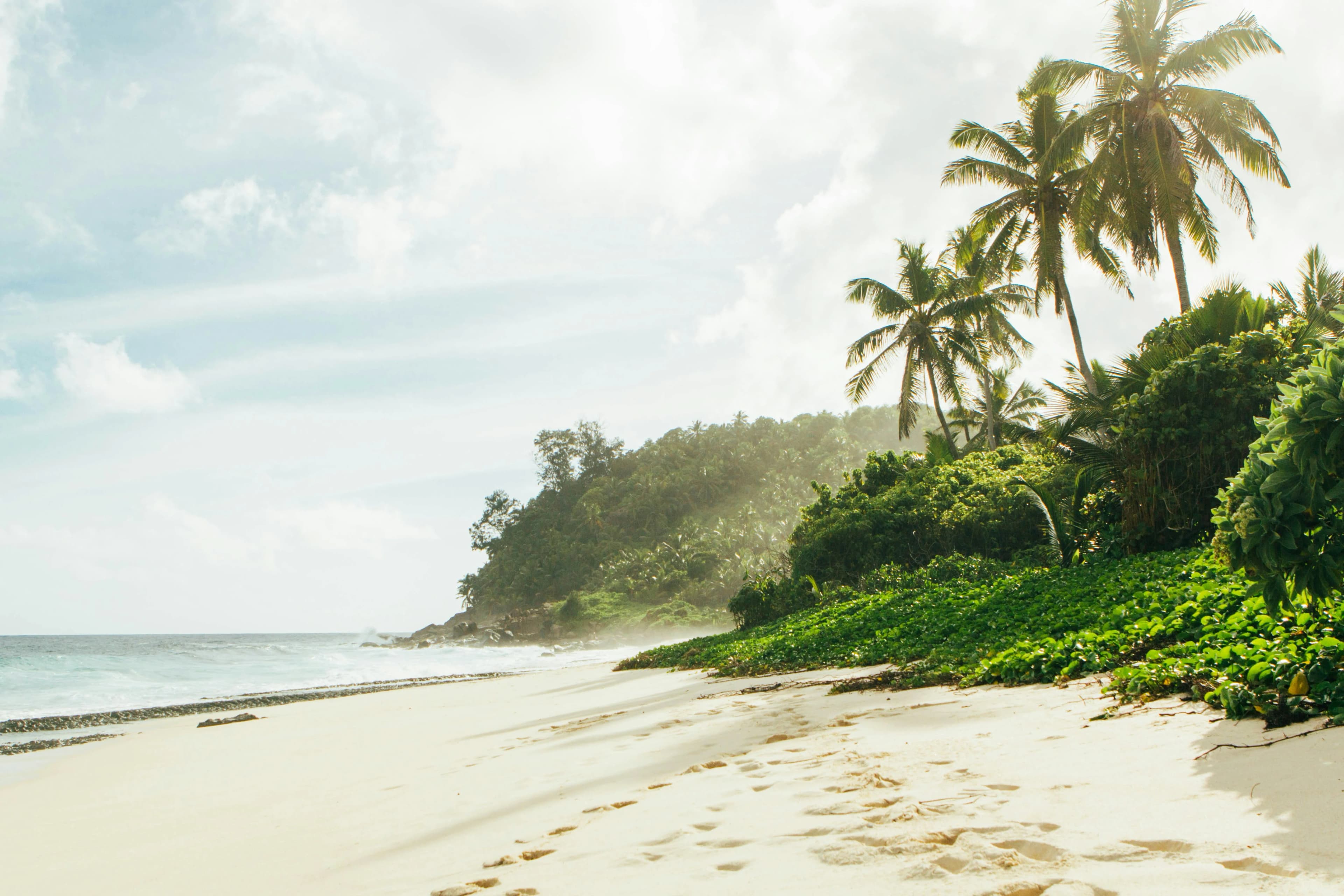
The main island of Unguja, commonly called Zanzibar, divides sharply between the historic UNESCO-listed Stone Town on the west coast and the resort coastline of the north and east. Stone Town's architecture — a dense interplay of Omani, Indian, Portuguese and British colonial influence — provides a specific typology of suite: deep interior rooms with carved hardwood doors, inner courtyard ventilation, and deliberate absence of panoramic glazing. The north coast, anchored by Nungwi and Kendwa, and the east coast around Paje and Bwejuu, offer a more conventional Indian Ocean resort format, with properties oriented toward tidal flats and reef systems. The outlying islands of Pemba and Mnemba offer more controlled, smaller-footprint experiences for those prioritising privacy above access.

Ruaha and the Southern Circuit

Ruaha National Park — Tanzania's largest — and the adjacent Selous Game Reserve (now Nyerere National Park) constitute one of Africa's least-trafficked wilderness areas. Properties here are fewer, smaller, and deliberately remote. The landscape is drier and more angular than the north, populated by baobab and combretum woodland. Access typically requires a light aircraft connection, which serves as an effective filter on the type of traveller present.

When to Visit Tanzania

Tanzania's climate is governed by two rainfall patterns: the long rains running roughly from March through May, and the short rains from November into December. The implications for luxury travel are significant and nuanced.

The dry season, broadly June through October, represents the conventional peak. Vegetation retreats, game concentrates around water sources, and the Great Migration's northern Mara crossing — where wildebeest enter the Masai Mara from the Serengeti in July and August — draws the highest demand. Rates and occupancy reach their ceiling during this window, and advance planning of 12 months or more is standard for preferred properties.

January and February offer a secondary peak for the southern Serengeti calving season — a high-density wildlife spectacle that rivals the migration crossing in photographic intensity, at somewhat lower competition for beds. Zanzibar's optimal window runs from June through October and again from December through February, when humidity is moderate and the Indian Ocean is navigable.

The green season — April and May — is structurally undervalued. Many camps close entirely, but those that remain open offer significantly reduced rates, transformed landscapes, and near-private wildlife access. Birdlife reaches its peak, migratory species are present, and the landscape colour shifts dramatically. For travellers comfortable with occasional afternoon rain and reduced predator-sighting predictability, this period represents exceptional value and a qualitatively different aesthetic experience.

Understanding Luxury Classifications in Tanzania

Tanzania does not operate a formal national grading system equivalent to the French Palace designation or the UK's AA star scheme. Classification in the East African safari context is largely market-driven, using terminology that has solidified through industry consensus rather than regulatory framework.

The operative tier for properties on La Suite is generally described as Private Reserve or Exclusive-Use Camp — terms indicating restricted concession access, low bed counts (commonly six to twelve suites), and a staffing ratio that often exceeds one team member per guest. The distinction between a permanent tented camp and a lodge is architectural rather than hierarchical: canvas-and-hardwood structures on raised decking are not inferior to stone-and-glass constructions, and in many cases represent a higher level of material and spatial intelligence.

On Zanzibar, the relevant distinction is between historic boutique properties within Stone Town — often operating in genuinely listed colonial structures — and resort properties on the north and east coasts. Neither category is inherently superior; the choice is a function of what the traveller is prioritising between cultural density and spatial openness.

How to Choose the Right Suite in Tanzania

The suite selection process in Tanzania involves variables that differ from urban luxury hotel contexts. Several considerations are specific to this market.

Proximity to the ecosystem matters more than room category. A standard suite at a camp positioned within a private conservancy abutting the Serengeti will typically deliver a more immersive experience than a premium suite at a lodge in a high-traffic zone. The concession itself — its size, exclusivity, and positioning relative to animal movement corridors — is the primary filter.

Bed count and exclusivity determine the rhythm of the experience. Camps with fewer than ten suites structure their guiding schedules differently, with greater flexibility for private game drives and adjusted timing based on guest preference rather than group logistics.

Architectural orientation should be interrogated before booking. On the Serengeti, a suite facing east captures the quality of light at dawn and the spectacle of sunrise across open grass. In Zanzibar, a west-facing room on the north coast captures sunset over the ocean, while east-facing suites are positioned for morning light across the tidal flats. These are fixed physical facts with direct bearing on daily experience.

Connectivity and transfer logistics are not incidental. The southern circuit requires light aircraft access; the northern circuit allows for road combinations. Journey time from an airstrip to a camp can range from ten minutes to over an hour on unpaved roads. For short-stay itineraries, this arithmetic affects the usable hours in a meaningful way.

Why a Curated Selection Improves the Decision

Tanzania presents a paradox common to the highest-end travel markets: the volume of properties claiming luxury positioning significantly exceeds the number that can justify it under critical examination. Marketing language across the sector has converged toward a set of shared descriptors — private, exclusive, authentic — that have lost discriminatory value through overuse.

A curated selection operates differently. It applies consistent criteria across the full range of available inventory, removes properties that meet price expectations but not experiential ones, and surfaces options that are frequently underrepresented in standard search — either because they are small, young, or positioned in circuits that mainstream platforms do not adequately index.

La Suite's selection of 17 properties across Tanzania reflects this filtering process. Each listing has been assessed on the specific merits of its suite typology, spatial design, positional advantage within its ecosystem, and the coherence between its physical offer and its stated positioning. The result is a working shortlist rather than a comprehensive directory — a meaningful distinction in a market where comprehensiveness and quality are not synonymous.

Frequently Asked Questions: Luxury Suites in Tanzania

What is the difference between a tented suite and a lodge suite in Tanzania?

A tented suite uses a canvas-and-hardwood structure on a raised platform, designed for minimal environmental footprint and a closer sensory relationship with the surrounding landscape. A lodge suite uses permanent construction materials — stone, concrete, or timber frame — and typically offers more climate control. Neither format is inherently superior; the choice reflects personal preference for materiality and atmosphere.

Which area of Tanzania offers the most private luxury safari experience?

The western Grumeti Serengeti corridor and the southern Ruaha-Selous circuit consistently deliver the lowest guest densities. Both areas operate through private concessions with restricted vehicle access, which limits the number of travellers in the ecosystem at any time.

Is Zanzibar worth combining with a Tanzania safari itinerary?

The combination is logistically straightforward via Dar es Salaam or direct charter connections from Kilimanjaro. The experiential contrast — open savannah followed by Indian Ocean coastline — is sharp enough to justify the transition. Most high-specification itineraries allow three to four nights on Zanzibar following a northern or southern circuit safari.

Frequently asked questions

Which region of Tanzania should I prioritise for a luxury safari stay?

The answer depends on what you seek. The Serengeti delivers the iconic open savannah experience, with the northern Lamai and Mara zones offering the greatest exclusivity and proximity to the Great Migration river crossings. The Ngorongoro Crater provides a dramatically different atmosphere, cool and mist-laden at altitude, while Ruaha and Selous in the south reward travellers seeking true remoteness and fewer vehicles sharing any given sighting.

When is the best time of year to visit Tanzania for a luxury safari?

The dry season from June through October is the most celebrated period, offering excellent wildlife visibility and comfortable daytime temperatures across most regions. The Great Migration river crossings in the northern Serengeti typically peak between July and September. The short green season from November to December and the long rains from March to May suit travellers seeking solitude and lush landscapes, with many camps offering preferential rates during quieter months.

What suite categories can I expect at Tanzania's finest safari properties?

Tanzania's leading properties offer a thoughtful hierarchy of accommodation. Entry-level luxury suites feature generous canvas or stone construction with private verandas and curated interiors. Owner's suites and villa categories add private plunge pools, dedicated butler service, and expanded living areas. At the most exclusive level, standalone private villas or entire camp buyouts provide complete seclusion, personalised schedules, and bespoke guiding arrangements tailored entirely to your group.

How should I plan a Tanzania itinerary if I am travelling with children?

Tanzania is exceptionally rewarding for families when planned carefully. Several premier Serengeti and Ruaha properties offer dedicated family suites with interconnecting layouts and child-friendly programming including junior ranger activities and guided nature walks scaled to younger guests. Age restrictions vary by camp, and some adults-only properties are not suited to children under twelve. A specialist itinerary typically sequences bush camps with a coastal finale on Zanzibar, balancing the intensity of game drives with relaxed beach time.

What makes Tanzania an ideal destination for a romantic or honeymoon stay?

Tanzania offers an extraordinary combination of dramatic wilderness and intimate Indian Ocean coastline that few destinations can rival. Couples frequently combine a private Serengeti or Ngorongoro camp, where in-suite dining under the stars and private game drives create genuinely secluded moments, with a stay on Zanzibar's north or east coast. Many properties arrange bespoke experiences including bush breakfasts, sundowner flights, and private dhow cruises to mark honeymoon occasions.

What level of service should I expect at Tanzania's top luxury camps and lodges?

The finest properties maintain exceptionally low guest-to-staff ratios, often with dedicated butlers or personal camp hosts assigned to individual suites. Service extends to pre-arrival preference profiling, customised in-room amenities, and flexible daily scheduling so that game drives, spa treatments, and dining are arranged around your preferences rather than a fixed timetable. Guiding quality is paramount and the best camps employ senior naturalists with deep regional expertise and relevant professional certifications.

How do guests typically travel between regions and camps in Tanzania?

Light aircraft transfers via Tanzania's network of private and government airstrips are the preferred means of inter-camp travel for discerning visitors. Scheduled safari circuits connect major destinations including the Serengeti, Ngorongoro, Ruaha, and Zanzibar, while charter flights offer greater flexibility in routing and timing. Road transfers are occasionally appropriate for shorter journeys, particularly around Ngorongoro, but for longer distances flying is both more comfortable and the most efficient use of your time.

What is the culinary experience like at Tanzania's leading luxury properties?

Gastronomy at the best Tanzanian camps has evolved considerably beyond conventional camp cuisine. Menus draw on seasonal local produce, fresh coastal seafood where supply chains allow, and influences from Swahili culinary traditions. Dining formats vary from communal firepit dinners and bush breakfasts beside a waterhole to fully private in-suite service. Wine programmes at premier properties are thoughtfully curated, and many camps accommodate dietary requirements including plant-based menus with advance notice.

How should I budget for a luxury safari in Tanzania?

Tanzania operates at the premium end of the African safari market, reflecting conservation fees, the logistics of remote access, and the exceptional staff-to-guest ratios involved. All-inclusive rates at leading camps typically cover accommodation, meals, beverages, and game activities. Significant additional costs include international and domestic flights, conservation levies, and gratuities. A meaningful luxury itinerary covering multiple regions across ten to fourteen nights represents a considerable investment, and working with a curated specialist ensures expenditure is well directed.

What booking strategies should I follow to secure the best luxury suites in Tanzania?

Planning twelve to eighteen months in advance is strongly advisable, particularly for travel during peak migration season or over the year-end festive period, when the most sought-after suites and private villas are reserved quickly. Booking directly through a trusted luxury travel specialist rather than general platforms ensures access to preferential suite categories, pre-arrival coordination, and on-the-ground support. Flexibility on travel dates, particularly towards the shoulder seasons, can also unlock availability at properties that are otherwise fully committed.