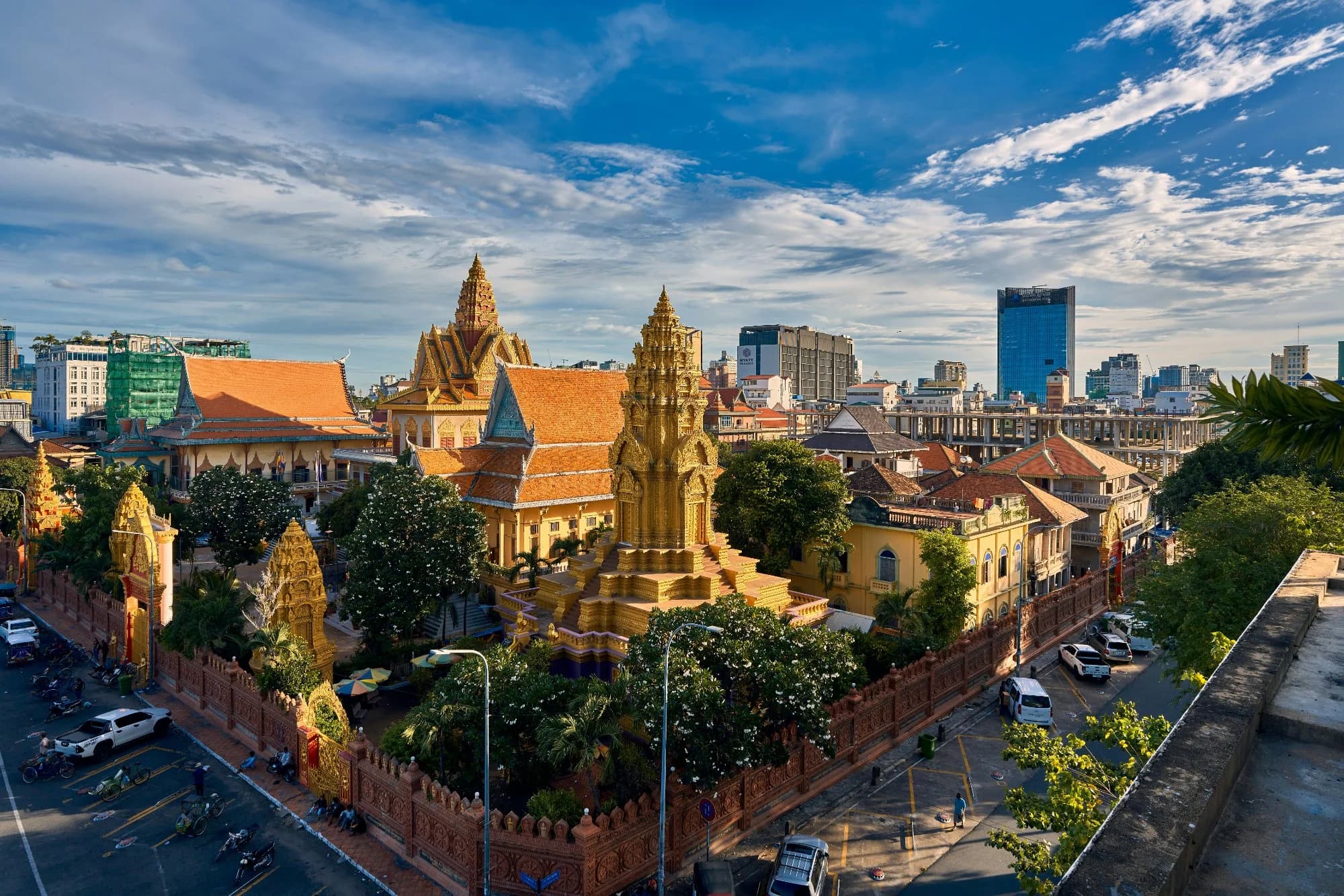
Understanding Phnom Penh as a luxury destination
Since approximately 2015, a generation of boutique and independently owned luxury hotels has reshaped the city's upper tier. These properties tend to prioritize craft, local material sourcing, and spatial restraint over the volume-driven amenity stacking common to international chain hotels. A luxury hotel suite in Phnom Penh today can mean anything from a colonial-era mansion restored around a central courtyard to a purpose-built contemporary residence with unobstructed river views. Both typologies exist, and both serve distinct traveler profiles.
The best areas to stay in Phnom Penh for a luxury suite
The riverfront and Daun Penh district
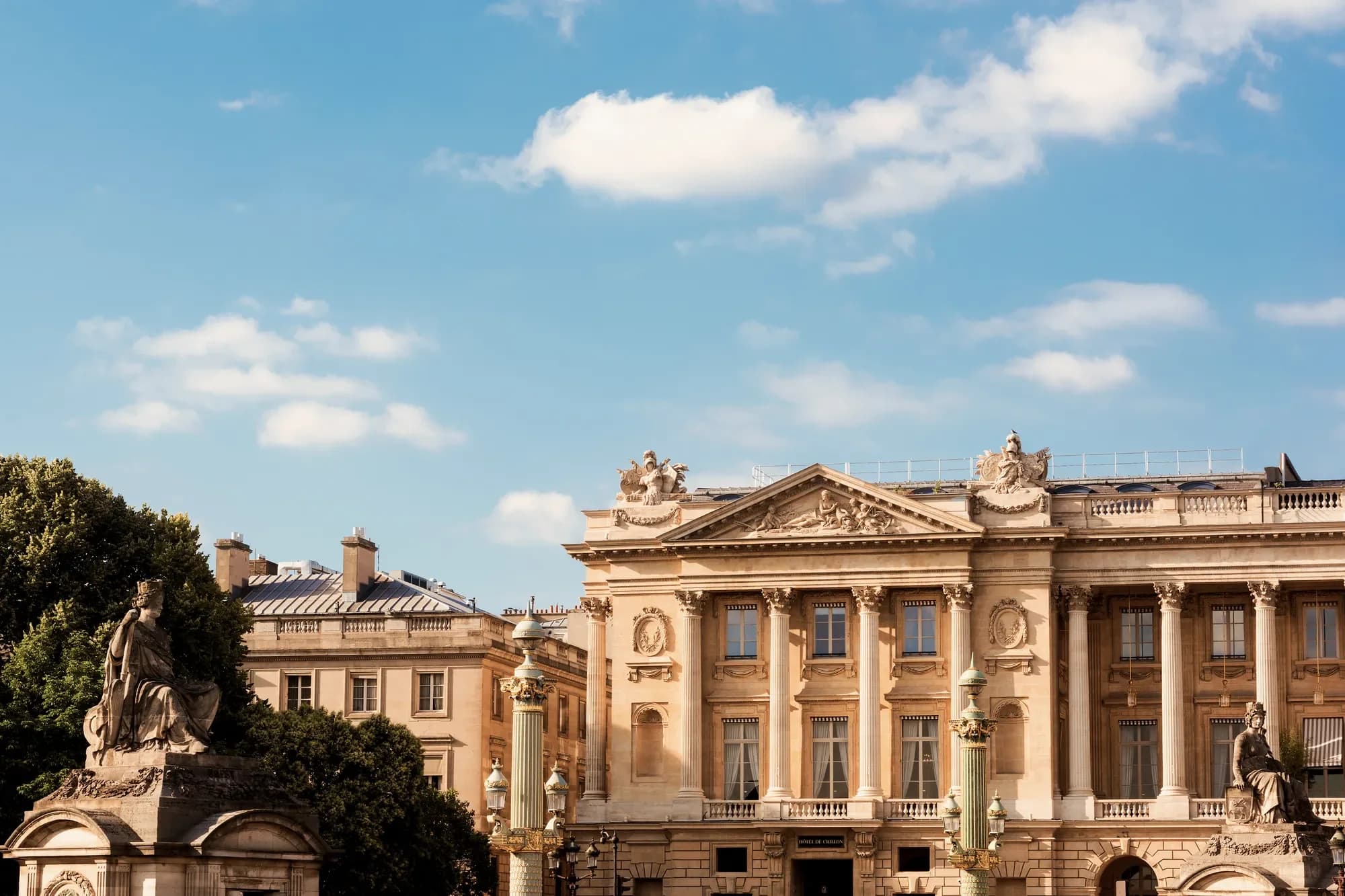
The historic core of the city, bounded by the Tonle Sap River to the east and Wat Phnom to the north, concentrates the highest density of architecturally significant hotels. The Daun Penh district contains the original French colonial street grid, wide tree-lined boulevards, and proximity to the Royal Palace and the National Museum. Suites in this zone offer immediate pedestrian access to the city's primary cultural sites, and the best properties here have preserved or restored original building fabric: tiled floors, louvered shutters, deep verandas. The sensory experience of the riverfront at dusk, with river traffic visible from a suite terrace, is specific to this part of the city and not easily replicated elsewhere.
BKK1 and the diplomatic quarter
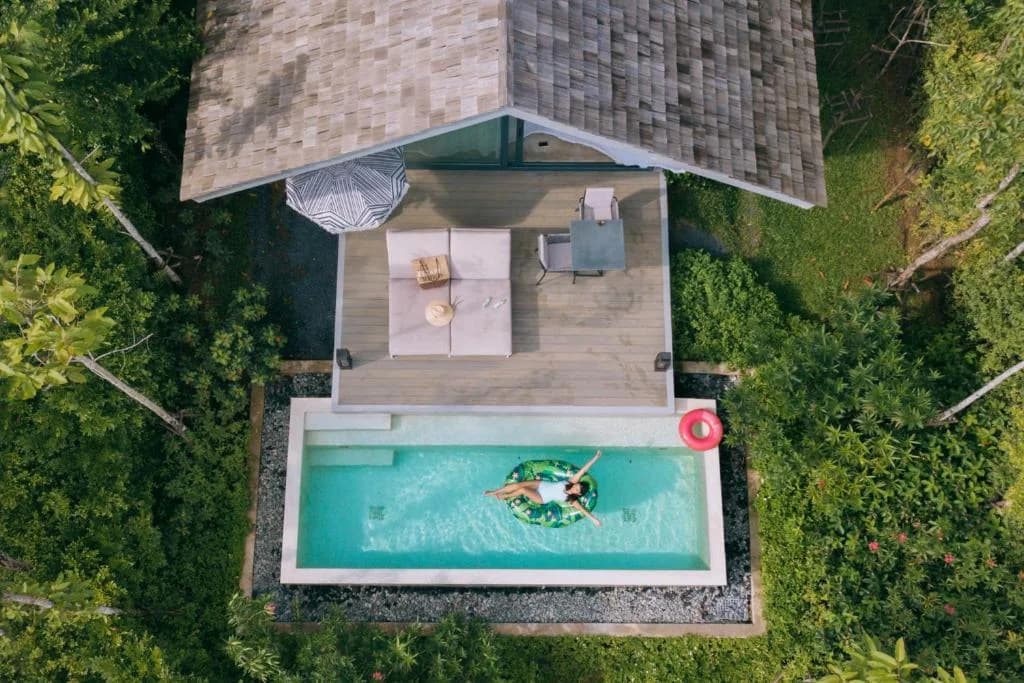
Boeung Keng Kang 1, known locally as BKK1, functions as the city's cosmopolitan residential and commercial center. It houses foreign embassies, international restaurants, independent galleries, and a concentration of design-forward boutique properties. Travelers who prioritize proximity to the city's contemporary creative scene, international dining, and a lower ambient noise level than the riverfront will find BKK1 a rational base. Suites here tend toward a more residential scale, with private terraces, plunge pools, and garden access in converted villa properties.
Tonle Bassac and the southern districts
The area south of Sihanouk Boulevard, centered on the Tonle Bassac river tributary, has developed into a quieter, more residential luxury corridor. New construction here follows a more vertical profile, and some of the city's most spatially generous suite formats occupy upper floors of recently completed buildings. River views extend south toward the Bassac, and the distance from the historic core provides insulation from tourist traffic.
When to visit Phnom Penh for a luxury hotel experience
Cambodia operates on a tropical monsoon climate with two distinct seasons. The dry season, running from November through April, is the conventional peak period for international travel. Temperatures remain high but humidity drops significantly, and the quality of light during these months is notably different from the wet season. The period between November and February represents the most comfortable conditions for extended time outdoors, including terrace dining and riverside activities.
The Water Festival (Bon Om Touk), held annually in October or November depending on the lunar calendar, marks the reversal of the Tonle Sap River's flow direction, a hydrological event unique to Cambodia. During this period, Phnom Penh draws significant domestic and regional visitors, and suite availability at premier properties tightens considerably. Booking well in advance is essential for this window. Khmer New Year in April is a second high-demand period, though hotel occupancy patterns differ from the Water Festival given the primarily domestic nature of that celebration.
The wet season, May through October, is underestimated by many travelers. Rainfall is typically concentrated in afternoon and evening hours, mornings remain clear, and the city's green spaces and riverbanks take on a quality of light that the dry season does not produce. Suite rates in this period are frequently more accessible, and the city operates at a lower tourist density.
Local luxury standards: what to expect from top-tier suites in Phnom Penh
Cambodia does not operate a formal state classification system equivalent to the French Palace designation or the Thai luxury hotel star tier. The distinction between a premium international hotel and a genuine luxury property in Phnom Penh is therefore a matter of curatorial judgment rather than official certification. The indicators that separate a high-end suite from a merely expensive room include the quality of local craft integration (Khmer silk, hand-carved wood panels, lacquerwork), the depth of spatial planning (separate living volumes, dedicated dressing areas, private outdoor space), and the specificity of service design.
The most considered properties in the city engage local artisans for their interiors, commission Cambodian artists for their public spaces, and structure their service models around the rhythms of the city rather than imported hospitality templates. A luxury hotel suite in this context is not simply a large room with premium linens; it is a considered position within a building that itself has a point of view about where it sits in the city.
Butler service, airport transfers by private vehicle, and in-suite dining at a genuine culinary standard are baseline expectations at the upper tier. Properties that position themselves at the very top of the market additionally offer access to private cultural programming: dedicated guides for the Royal Palace, private sessions at the Tuol Sleng Genocide Museum with specialist historians, or early-morning access to pagoda complexes before public opening hours.
How to choose the best luxury suite in Phnom Penh
The primary decision axis for a luxury suite in Phnom Penh is architectural typology. Colonial restoration properties and purpose-built contemporary hotels serve fundamentally different aesthetic experiences, and neither is categorically superior. A traveler whose primary interest lies in historical and material continuity will find a restored French-era mansion more rewarding. A traveler whose priority is spatial maximalism, unobstructed river views, and contemporary design will find a purpose-built property more coherent.
The second decision axis is location relative to the city's cultural geography. The riverfront and Daun Penh zone prioritizes walkability to primary sites; BKK1 prioritizes residential calm and contemporary scene access; the southern districts prioritize spatial privacy and distance from tourist concentration. These are not interchangeable choices, and a suite that performs well on one axis may underperform on another.
Practical considerations specific to Phnom Penh include the acoustic environment (the city's traffic is dense and motorbike-heavy, making upper-floor suites with double glazing or interior courtyard orientation a meaningful practical choice), the quality of air filtration systems in sealed rooms during the dry season, and the availability of secure private vehicle services for cultural excursions to sites such as the Silver Pagoda or the Choeung Ek memorial.
Why a curated selection by La Suite matters in Phnom Penh
Phnom Penh's luxury hotel market has expanded rapidly over a relatively short period, and the range of properties presenting themselves at the upper tier is not uniformly consistent in quality. The gap between a property's self-presentation and its actual suite experience can be significant. La Suite applies a consistent curatorial framework to this market: assessing spatial quality, material finish, service architecture, and the coherence of the property's position within its city context.
For a traveler allocating a meaningful portion of a broader Southeast Asia itinerary to Phnom Penh, the cost of an uninformed choice is not only financial. It is temporal and experiential. A curated selection by La Suite reduces that cost by applying editorial standards that are independent of hotel marketing and consistent with the expectations of travelers who have already experienced the best suite formats in comparable destinations.