Le Bund and the wider Shanghai suite landscape
Le Bund and the former concession districts
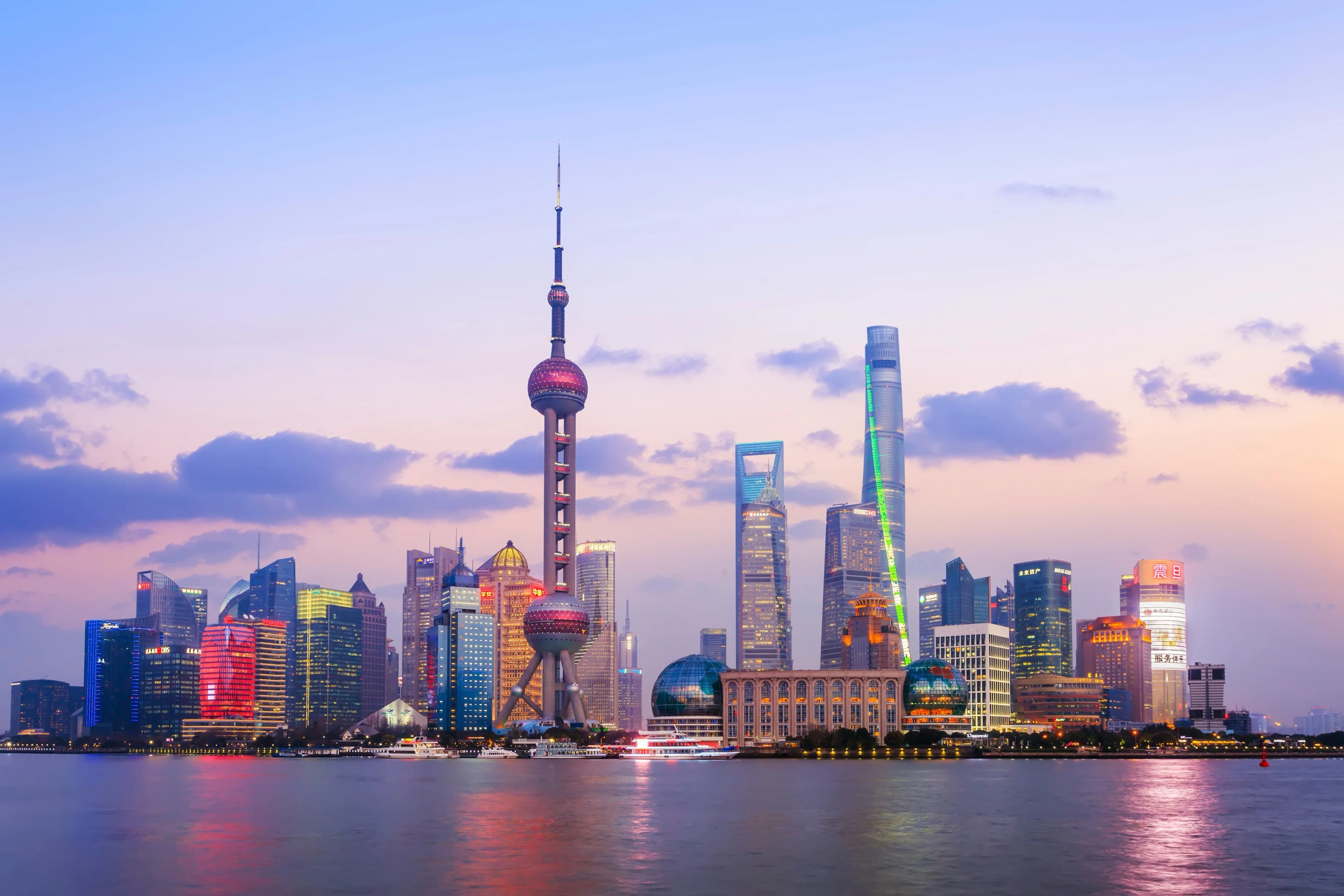
The Bund strip itself carries the weight of Shanghai's treaty-port history. Buildings constructed between the 1860s and 1930s by British, French, and American interests now house flagship hotels whose suites occupy upper floors with unobstructed river views toward Pudong. The architectural vocabulary is formal: marble lobbies, high ceilings, restored cornices. A suite here operates as much as a viewing platform as a private residence. The French Concession, a short distance inland, offers a different register: tree-lined streets, Art Deco apartment blocks, and boutique properties where scale is smaller and atmosphere more residential.
Pudong and the high-rise suite experience
Directly across the Huangpu, Pudong's financial district presents the inverse proposition. Suites in the towers of Lujiazui sit at altitude, with the Bund's facades arrayed below as a panoramic frieze. The experience is cinematic rather than immersive. Both orientations have merit; the choice depends on whether a traveler prefers to inhabit history or observe it.
Jing'an and the inner city
Jing'an district, centered on Nanjing West Road, serves travelers whose primary interest is retail, contemporary art, and proximity to the city's commercial core. Suites here tend toward the modern international register: large floor plates, contemporary design, and less connection to Shanghai's specific architectural identity. The tradeoff is efficiency over character.
When to visit Shanghai for a suite stay
Shanghai operates on a climate calendar that rewards precision. Spring (March to May) and autumn (September to November) deliver the most temperate conditions: moderate humidity, lower rainfall, and consistent temperatures between 15 and 25 degrees Celsius. These windows align with the city's primary cultural and commercial calendar, including major art fairs such as Art021 in November and West Bund Art and Design, both of which draw international collectors and creatives who typically seek suite-level accommodation.
Summer (June to August) brings heat, humidity, and occasional typhoon activity from the South China Sea. Demand for luxury hotel suites remains high due to domestic tourism peaks, and rates reflect this. Winter is mild by northern Chinese standards but grey and damp. The advantage is reduced international demand and, often, greater suite availability at negotiated rates. The Chinese New Year period (January or February, depending on the lunar calendar) generates significant domestic travel pressure; suite inventory tightens sharply in the days surrounding the holiday.
Local luxury standards: what to expect from top-tier suites in Shanghai
China does not operate a formal state classification equivalent to France's Palace designation, but Shanghai's upper hotel market has developed its own coherent set of expectations. The city hosts several properties that belong to the Leading Hotels of the World or Forbes Five-Star programmes, and the international luxury groups (Aman, Rosewood, Four Seasons, Peninsula) maintain flagship addresses here that set the local benchmark.
In practical terms, a top-tier suite in Shanghai at Le Bund or the surrounding districts should include: a separate living area of meaningful scale (not a partitioned alcove), dedicated check-in procedures, butler or personal assistant services, and at minimum one bathroom per sleeping area. River-view suites at Bund-facing properties command significant premiums and should be confirmed at the point of reservation rather than assumed.
Service culture in Shanghai's luxury hotels reflects a hybrid standard: the attentiveness common to East Asian hospitality combined with the procedural formality of international group operations. English-language service at management and concierge level is reliable in five-star properties; at ownership and operational levels, Mandarin fluency remains the working language of the city.
One distinction worth noting: Shanghai's luxury hotel market includes a number of adaptive reuse projects, where historic buildings have been converted to hotel use. Suites in these properties often carry architectural constraints (irregular floor plans, load-bearing walls, original windows) that differ materially from purpose-built towers. Both typologies have merit; the choice is a question of preference between historical texture and spatial efficiency.
How to choose the right suite in Le Bund and Shanghai
Several variables shape the decision in this specific market. First, orientation: a Bund-facing suite at a river-side property and a Bund-view suite from Pudong are categorically different experiences. Confirm the precise aspect before booking. Second, floor height: in tower properties, suites at mid-height and upper-height floors differ significantly in terms of light and city scale; this is rarely communicated clearly in standard room descriptions.
Third, connectivity: Shanghai's internet infrastructure for international travelers requires a VPN for access to most Western platforms and services. Confirm with the property whether a compliant solution is available within the suite, as this affects working travelers materially. Fourth, transfer logistics: Pudong International Airport (PVG) is approximately 45 minutes from Le Bund by road in standard traffic; Hongqiao Airport (SHA) is closer but serves primarily domestic routes. Helicopter transfers are available through select operators but require advance arrangement.
For travelers with a design interest, the question of contemporary versus historic architecture should be settled before shortlisting properties. Shanghai's best historic suites reward guests who read the building as part of the experience; those who prioritize square footage and contemporary finish will find more consistent satisfaction in purpose-built towers. As explored in our guide to Asia's suite landscape, this tension between heritage and modernity is a recurring theme across the continent's premier destinations.
Why curation matters in Shanghai's suite market
Shanghai lists more five-star hotels than almost any city in China, and the volume of options is itself a navigational problem. Marketing language in this market is dense and often disconnected from the actual suite product: categories proliferate, naming conventions vary by brand, and photography routinely presents aspirational rather than accurate representations of space and view.
La Suite applies a consistent editorial filter to this market, evaluating suites on spatial reality, service consistency, and the coherence of the overall experience rather than star count or brand recognition. The curated selection by La Suite within Shanghai reflects properties where suite-level accommodation delivers a materially different experience from standard room categories, and where the Bund address or its adjacency adds genuine value to the stay rather than simply a postcode premium.
For travelers approaching Shanghai as part of a broader itinerary across the region, the suite selection here integrates with La Suite's coverage across Asia, allowing a coherent standard to be maintained across multiple destinations without repeating the research process at each stop.