Where to stay in Changzhou: understanding the city's distinct zones
The newer Wujin district, in contrast, represents the city's ambitions as a manufacturing and innovation hub. Hotels in this zone tend toward contemporary architecture, with larger floor plates and facilities oriented toward the extended business traveler. For those combining cultural exploration with professional obligations, Wujin provides logistical efficiency without sacrificing comfort.
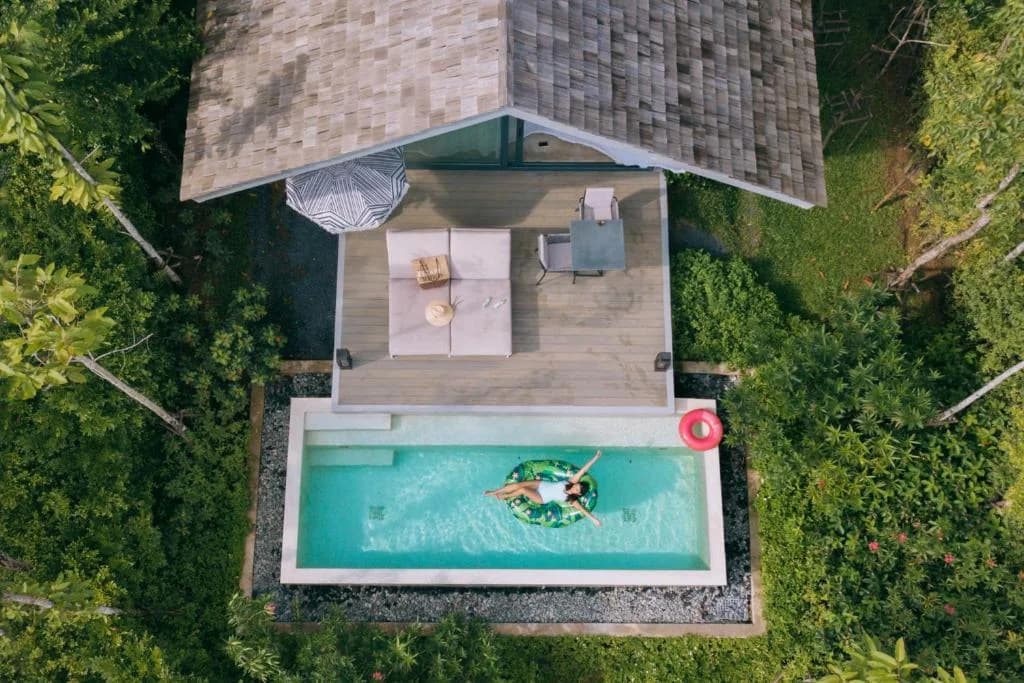
The area around Tianmu Lake, to the south of the urban core, attracts travelers seeking a lower density environment. The lake and its surrounding hills offer a quieter register entirely, and properties in this zone are typically resort-format, with suites designed around landscape access and leisure rather than city connectivity.
When to visit Changzhou for a high-end stay
The optimal windows for visiting Changzhou are spring (March to May) and autumn (September to November). Both seasons deliver moderate temperatures, low humidity relative to the July and August peak, and the kind of atmospheric clarity that makes canal walks and garden visits genuinely comfortable. Spring in particular brings the city's parks and the surrounding Jiangnan landscape into a considered visual register, with plum and cherry flowering across public gardens.
Summer in Changzhou is humid and hot, consistent with the broader Yangtze Delta climate. Properties with strong climate control and access to pool facilities become significantly more relevant during this period. Winter is cool and occasionally wet, but the city empties of domestic tourists, which translates to better suite availability and, at certain properties, more competitive rate structures without any reduction in service quality.
There are no major international luxury events anchored in Changzhou, but the city's proximity to Shanghai means that coordination with that city's fashion weeks, art fairs, and trade events is logistically straightforward. Changzhou functions well as a quieter residential base during periods when Shanghai accommodation rates spike.
Local luxury standards: what to expect from top-tier suites in Changzhou
China's luxury hotel classification system operates through a five-star framework regulated by the China National Tourism Administration, but the practical range within that tier is wide. In a city like Changzhou, the highest-end properties are typically affiliated with international groups, which brings with them consistent service protocols, multilingual staff, and room specifications aligned with global luxury standards.
Suites in Changzhou's best hotels generally offer floor areas that exceed what comparable price points would yield in Shanghai or Beijing, a function of lower land costs and reduced demand pressure. This translates to more generous living room configurations, larger bathroom specifications, and in resort properties, more direct access to outdoor or landscape elements. Expect Chinese contemporary design influences in newer properties, and occasionally a deliberate incorporation of Jiangnan aesthetic references: ink wash tones, latticed woodwork, and materials drawn from regional craft traditions.
Service culture in Changzhou's top hotels leans toward attentive formality. Staff in international-branded properties are trained to international standards, and Mandarin proficiency among guests is not assumed. The city's industrial profile means business amenities, meeting facilities, and executive services are consistently well-developed across the leading hotel stock.
How to choose the best luxury suite in Changzhou
The primary decision axis for Changzhou suite selection is the purpose of the visit. Guests arriving for cultural or historical interest should prioritize proximity to the old town, canal district, and key heritage sites. Properties that offer a meaningful architectural dialogue with the city's older fabric, or that are integrated into refurbished heritage buildings, provide an additional layer of contextual experience.
For business travelers or those using Changzhou as a base for wider regional movement, connectivity is the operative criterion. The city is well-served by high-speed rail, with services to Shanghai taking under an hour and connections to Nanjing similarly fast. A suite near Changzhou North or Changzhou Railway Station reduces transit friction considerably.
Families or travelers seeking a slower, landscape-oriented experience should direct attention toward resort properties near Tianmu Lake, where suite configurations typically include more generous outdoor space, and the surrounding natural environment provides a genuine contrast to the urban core. Checking whether suites include access to private terraces, lake views, or dedicated family facilities is worthwhile in this zone.
In all cases, confirming floor level, suite orientation, and whether the property has undergone recent renovation is worth doing before confirming. Changzhou's hotel stock spans several generations of development, and the variation in specification between a recently opened property and one built two decades ago can be significant.
Why a curated selection matters in a city like Changzhou
Changzhou does not carry the immediate name recognition of Shanghai, Hangzhou, or Suzhou, and that relative anonymity has a practical consequence: the volume of reliable, editorially considered information about its luxury accommodation is thin. Aggregator platforms surface results by volume and price without addressing suite quality, spatial configuration, or the subtler questions of design and service culture that matter to experienced travelers.
La Suite applies a consistent curatorial standard across every city in its portfolio, including less-narrated destinations like Changzhou. The selection process prioritizes suite-specific criteria: room architecture, privacy conditions, service access, and the overall coherence of the guest experience at the suite level rather than the hotel level in aggregate. For a city where the options are fewer and the differences between properties more consequential, that editorial filter is not a convenience. It is the starting point for making a sound decision.