Best areas to stay in Beijing for a luxury suite experience
The historic core: Dongcheng and the hutong districts
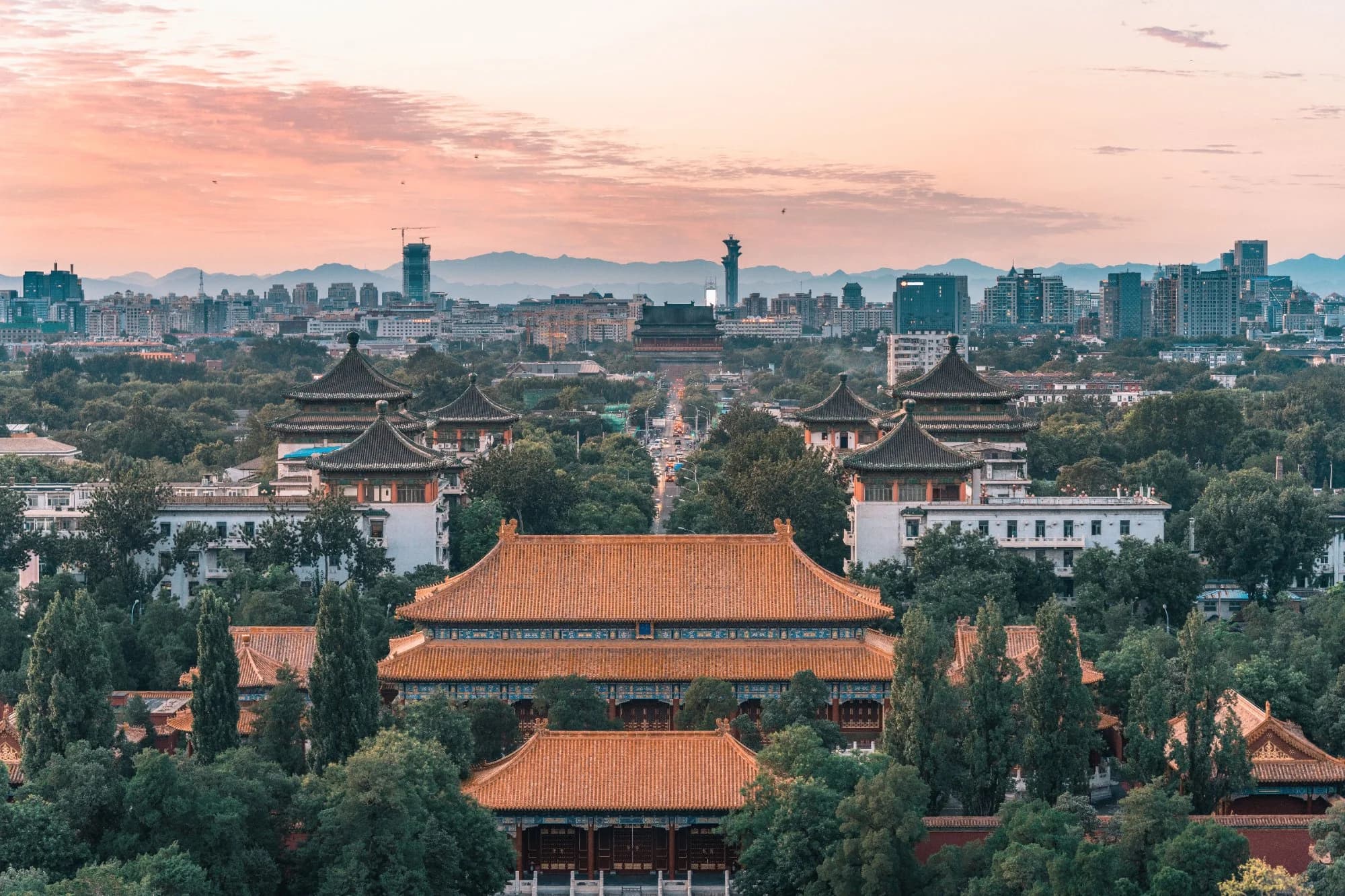
Dongcheng, which encompasses the areas immediately surrounding the Forbidden City and the imperial axis, remains the most historically dense part of the city. Staying here places guests within walking distance of Tiananmen Square, Jingshan Park, and the Bell and Drum Towers. Properties in this zone often occupy restored courtyard structures (known locally as siheyuan), where architecture is the amenity. The spatial language of these buildings, with their inward-facing courtyards, filtered light, and stone-paved passages, creates a sensory environment that no modern tower can replicate. For travelers prioritizing cultural immersion, the Dongcheng and Shichahai areas represent the most architecturally coherent choice.
Central business and diplomatic districts: Chaoyang
Chaoyang is Beijing's most internationally oriented district. It houses the majority of foreign embassies, the 798 Art District, and the primary luxury retail corridors. International hotel groups have concentrated their flagship properties here, and the luxury suite offering in this zone tends toward contemporary design, panoramic city views, and the full infrastructure of business travel: private meeting facilities, executive lounges, and ground transportation services. Travelers arriving for professional or cultural reasons often find Chaoyang's connectivity more practical, while the design sensibility of its better suites matches global luxury benchmarks.
Sanlitun and the embassy quarter
Sanlitun has evolved into one of Beijing's most design-forward addresses. The area combines high-end gastronomy, contemporary art spaces, and boutique retail in a relatively compact perimeter. Suites in this zone are often positioned within properties that prioritize interior design and food and beverage programming, appealing to creative travelers for whom the social environment of a hotel is as important as the room itself.
When to visit Beijing: seasons, events, and suite availability
Beijing's climate is continental and emphatically seasonal. Each period of the year presents a different version of the city, and timing a visit around both climate and cultural calendar makes a material difference to the experience.
Spring (April to May)
Spring is widely considered the most comfortable period for visiting Beijing. Temperatures are mild, the city's parks come into bloom, and the light across the imperial monuments has a particular clarity. Suite availability at the city's top properties is competitive during this window, and advance planning is advisable.
Autumn (September to October)
The autumn months, particularly October, bring Beijing's most photogenic conditions. The foliage in the Temple of Heaven grounds and across the Western Hills turns in ways that make the city feel compositionally deliberate. The National Day holiday (the first week of October) generates significant domestic tourism, which can affect availability and movement around major sites. Experienced travelers generally target mid-to-late October for this reason.
Summer (June to August)
Summers in Beijing are hot and humid, with occasional intense rainfall. The city's top luxury hotels respond by focusing programming inward, with spa facilities, indoor dining, and private terrace experiences becoming more central to the suite proposition. Rates can be more flexible during the summer months outside of the school holiday peaks.
Winter (November to February)
Beijing winters are cold and dry. The Forbidden City under light snow is one of the city's most architecturally striking conditions, and a heated suite with strong views becomes a deliberate counterpoint to the exterior temperature. Properties with exceptional spa facilities and indoor programming represent the strongest proposition during this period.
Local luxury standards: what to expect from Beijing's top hotels
China does not operate a formal national equivalent to France's Palace designation, but Beijing's top-tier properties have developed their own markers of distinction. The leading luxury hotels in the city typically operate at a physical scale that reflects the city's urban ambitions: suite floor areas are often generous by international standards, and service ratios at the best addresses are high.
The concept of the courtyard hotel (siheyuan hotel) represents a distinctly Beijing typology. These properties, typically occupying restored Qing dynasty residential compounds within the hutong network, offer an experience of the city that is spatially intimate and historically grounded. Room counts are low, privacy is a structural given, and the experience of moving through covered walkways between a bedroom pavilion and a sitting area is architecturally specific to this city.
At the other end of the spectrum, Beijing's international luxury hotel brands have invested heavily in suite design, particularly in properties opened or renovated since the 2008 Olympic cycle. These suites frequently reference Chinese aesthetic traditions through material choices, art commissioning, and spatial proportion, without being decoratively literal about it. The better examples demonstrate a sophistication in how Eastern and contemporary design languages are synthesized.
How to choose the best luxury suite in Beijing
Several practical considerations should inform the selection process for a luxury suite in Beijing.
Architecture type matters here more than in many cities. The choice between a courtyard property and a contemporary tower is not merely aesthetic: it determines the character of your daily movement through the city, the type of service model you will experience, and the degree of visual and acoustic privacy the property provides. Both typologies can be exceptional; the question is which suits the purpose of the visit.
Location relative to major sites also carries real weight. Beijing's scale means that moving between the historic core and Chaoyang can take significant time during peak traffic. Selecting a suite in a district aligned with the primary activities of the trip reduces friction and increases the quality of the overall experience.
Finally, the suite's relationship to food and beverage programming should be assessed. Beijing's top luxury properties have invested substantially in their restaurant operations, and the quality gap between the best and the merely adequate is significant. For travelers who treat dining as central to the experience, the culinary infrastructure of the property is a relevant factor in suite selection.
Why use La Suite's curated selection for Beijing
Beijing presents a genuine curation challenge. The city's luxury hotel market spans courtyard properties with five rooms and international towers with dedicated butler floors, and the pricing signals across these categories do not always correspond to quality. A curated selection by La Suite applies a consistent editorial standard across property types, enabling travelers to compare meaningfully within a pre-qualified set rather than navigating an undifferentiated market. For first-time visitors to Beijing and returning travelers seeking a different experience of the city, this structure materially simplifies the decision.