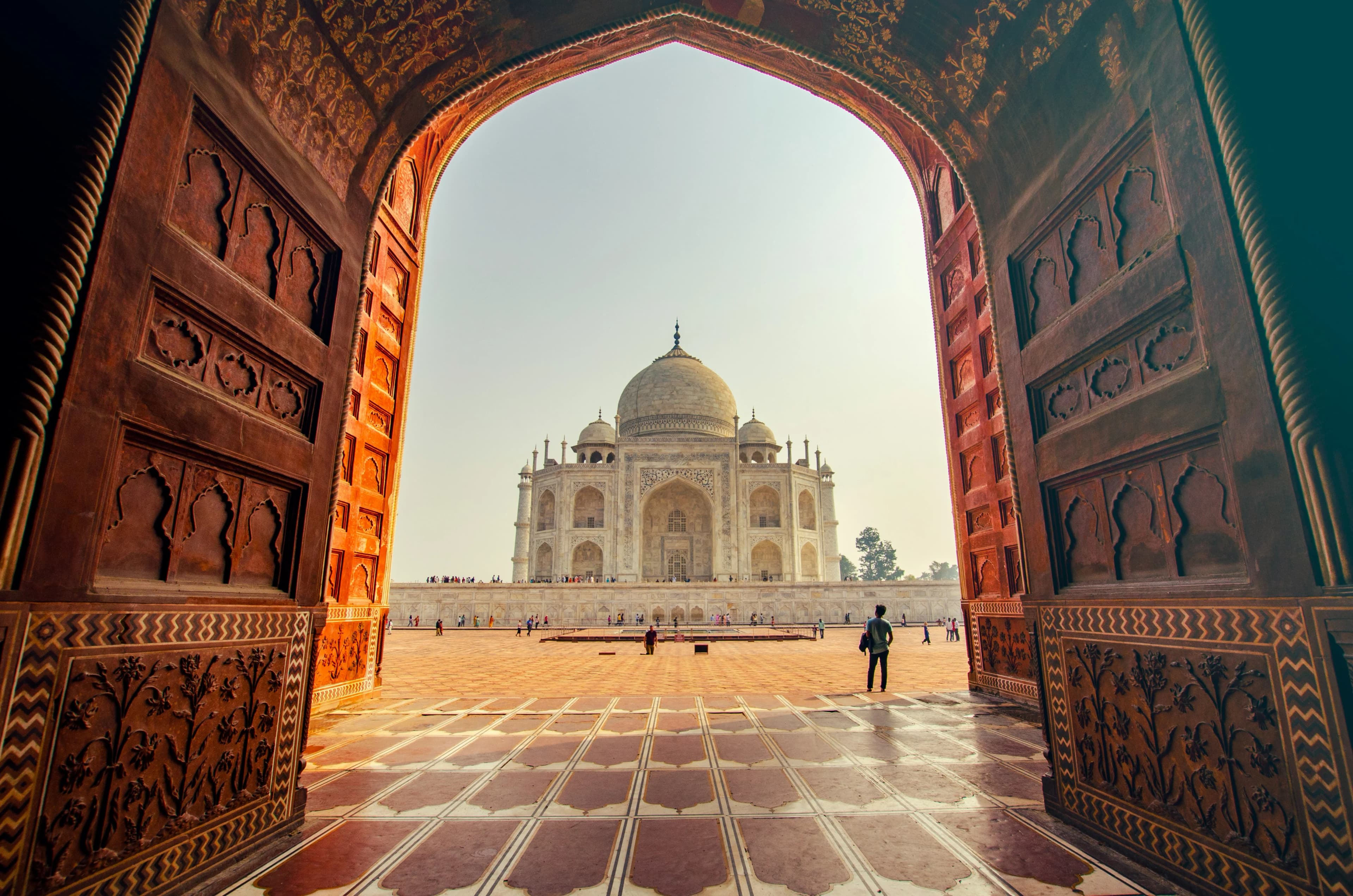
Understanding Agra as a luxury destination
For the discerning traveler, Agra functions best as a deliberate stay rather than a day trip from Delhi. The city's atmosphere shifts dramatically across the day. The Taj Mahal at dawn, before the crowds arrive, is a fundamentally different experience from the same structure at midday. Accessing that quality of encounter requires being in residence, properly lodged, with the flexibility that only a well-chosen suite can provide.
Areas to consider when choosing where to stay in Agra
Taj Ganj and the southern approaches
The area immediately surrounding the Taj Mahal is the most symbolically charged in the city. Properties positioned here, particularly those with elevated sightlines toward the monument's dome and minarets, offer a form of proximity that no other location in Agra replicates. A suite with a direct or partial view of the Taj Mahal across the Yamuna or from the southern precinct becomes, in itself, a curatorial decision. The architecture frames the architecture.
Fatehabad Road and the mid-city corridor
Fatehabad Road functions as the primary hospitality corridor in Agra, connecting the Taj Mahal precinct to the broader city infrastructure. Properties here tend to offer larger grounds, more expansive suite configurations, and easier logistical access to both the Taj Mahal and Agra Fort. This corridor suits travelers who prioritise space, privacy, and on-site amenities alongside cultural access.
The Yamuna riverfront
The eastern bank of the Yamuna offers a quieter, more contemplative relationship with the city. Stays here are characterised by spatial remove from the commercial density of the center while maintaining clear sightlines toward the Taj Mahal's northern facade. For travelers who value silence and considered distance, this orientation provides a meaningfully different quality of residence.
When to visit Agra for a high-end stay
The optimal window for a luxury stay in Agra is between October and March. Temperatures during this period are moderate, ranging from approximately 8 degrees Celsius at night to 25 degrees Celsius during the day, creating conditions in which the monuments can be explored with real physical ease. The light during winter mornings is particularly precise, the low angle of the sun drawing the pietra dura inlay on the Taj Mahal's exterior into sharp relief in ways that midday illumination does not permit.
The monsoon season, from July through September, brings atmospheric transformations to the landscape. The heat breaks, the gardens surrounding the monuments become dense and green, and visitor numbers fall. For travelers who are prepared for humidity and occasional disruption, this period offers a form of access to Agra that the peak season cannot provide.
April through June represents the high summer in northern India, with temperatures regularly exceeding 40 degrees Celsius. This period is generally not recommended for extended stays unless the property's interior amenities and suite infrastructure make the heat manageable as a design condition rather than an obstacle.
Local luxury standards and what to expect from top-tier suites in Agra
India's formal luxury hotel classification system includes a five-star deluxe category governed by the Ministry of Tourism. In practice, the properties that define the upper register of hospitality in Agra tend to be large-format hotels operated by India's established luxury groups and international chains, each with suite inventories that reference Mughal design vocabularies in varying degrees of literalness or abstraction.
The most architecturally considered suites in Agra draw on Mughal spatial logic: symmetry, the integration of water features, jali screens that filter light into geometric patterns, and the use of local Makrana marble as a surface material. This is the same white marble used in the construction of the Taj Mahal, quarried from Rajasthan, and its presence in a suite interior creates a material continuity with the monument itself that is both deliberate and historically legible.
Service standards at the top tier in Agra reflect the city's long history of receiving significant international visitors. Multilingual concierge teams, dedicated butler services, and the capacity to arrange private access or after-hours engagement with cultural sites are features that distinguish the best properties from merely adequate ones. Travelers should assess these operational details with the same rigour applied to room specification and design.
How to choose the right luxury suite in Agra
The primary decision in choosing a suite in Agra is one of orientation. A property's relationship to the Taj Mahal, whether by direct sightline, proximity to the eastern or western gates, or position along the Yamuna riverbank, determines the quality of the unmediated experience available to the guest. This is not a matter of prestige alone. It is a practical question about how the stay is structured across a full day and across different light conditions.
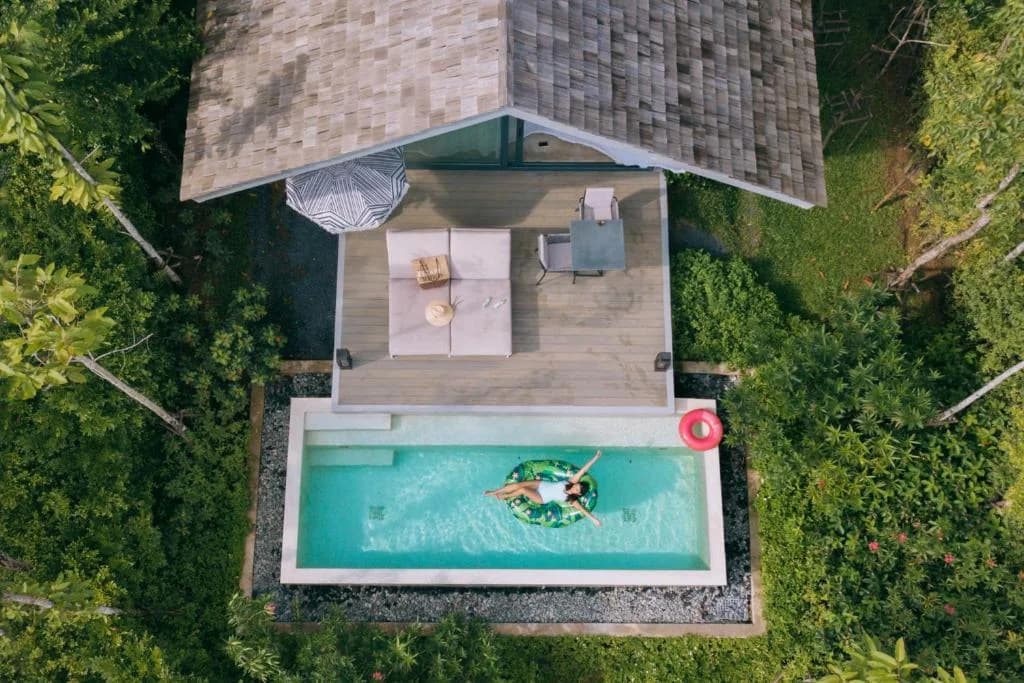
Beyond orientation, suite size and configuration matter in a city where the pace of exploration is deliberately unhurried. Larger suite formats, with dedicated sitting rooms, private terraces, or plunge pools, allow the property itself to function as a place of decompression between monument visits. Agra's cultural density is significant and the architecture is demanding in the attention it requires. A suite that provides genuine retreat, not simply an upgraded room, changes the character of the entire visit.
Travelers should also consider the property's approach to dining. The culinary traditions of Uttar Pradesh, including Awadhi cuisine characterised by dum cooking techniques and layered spice use, are among the most historically developed in India. Suites that offer in-room dining drawing from this tradition, or properties with serious culinary programs, extend the cultural experience beyond the monuments themselves.
Why a curated selection by La Suite matters in Agra
Agra is one of the most visited cities on earth, and the hotel market responds to that volume with a wide range of properties that are superficially similar in classification but materially different in quality, positioning, and experience. The gap between a five-star property that serves tour group itineraries and a suite designed for travelers who are making a considered, once-in-a-generation visit to one of the world's defining monuments is significant. It is not always visible in the star rating or the price point.
La Suite applies an editorial framework to this selection process. The criteria are architectural coherence, service consistency, suite specificity, and the degree to which a property enhances rather than competes with the destination it occupies. In a city as symbolically loaded as Agra, where the monument is always the primary reference point, the best suite is one that holds its own standard without overreaching. The curated selection by La Suite is built on exactly that calibration.