







Indonesia
Best Hotel Suites in Indonesia
Indonesia's hospitality landscape does not concentrate in a single urban core. It distributes across a series of distinct island environments, each with its own typology of luxury accommodation. Understanding the regional character of each destination is prerequisite to a well-calibrated selection.
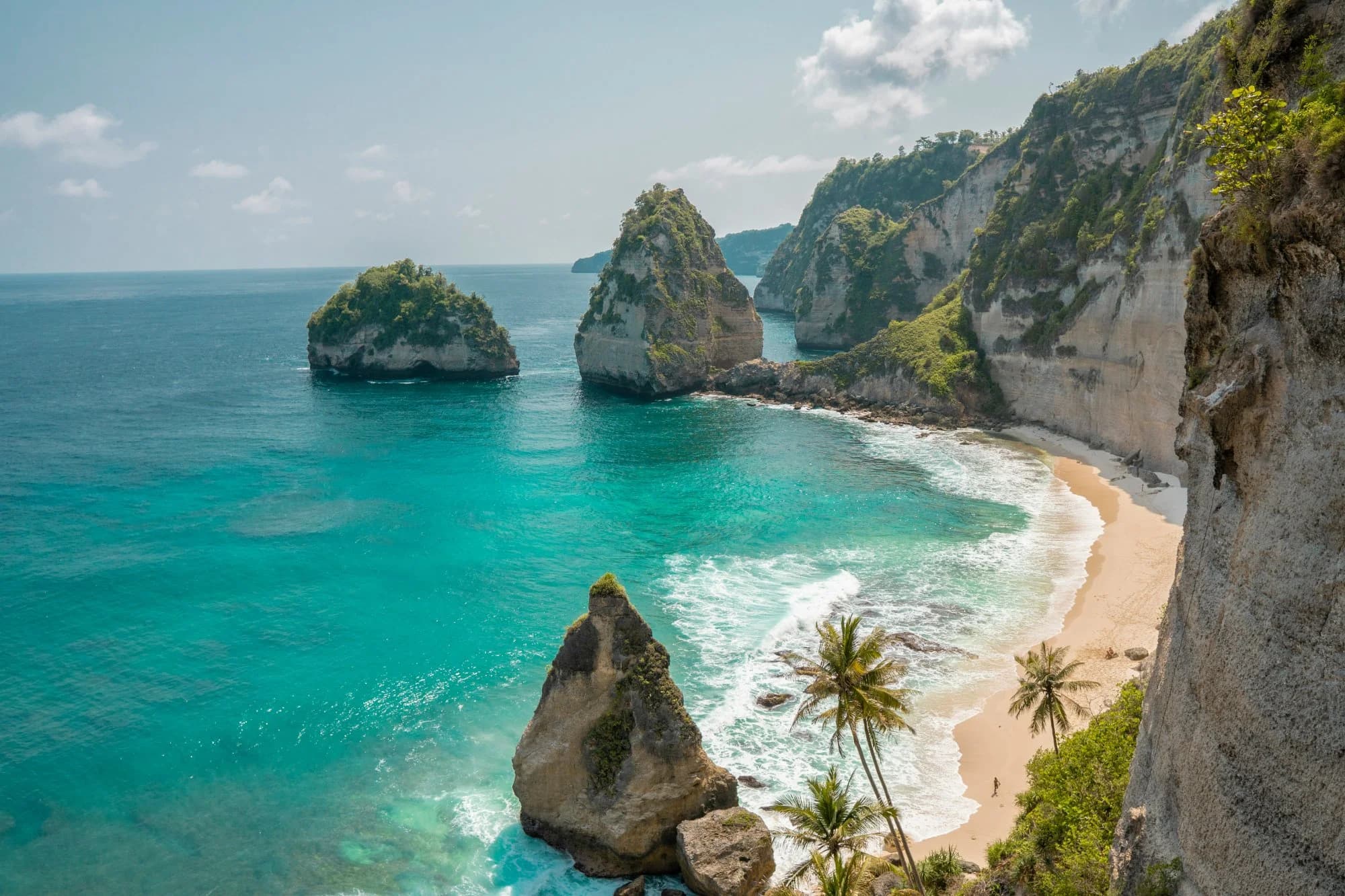
Best Neighbourhoods and Regions for Luxury Suites in Indonesia
Seminyak and Petitenget, Bali
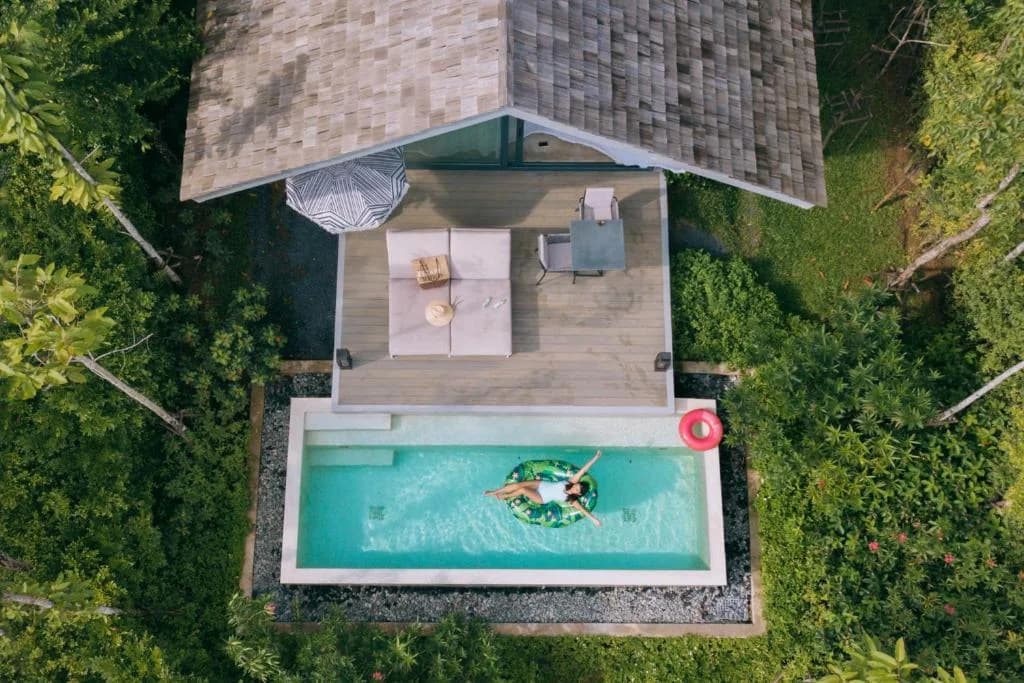
The southwestern coastal corridor of Bali — anchored by Seminyak and extending north into Petitenget — represents the island's most commercially refined hospitality zone. Properties here are architecturally dense, designed for proximity to the Indian Ocean, and calibrated toward a clientele that prioritizes design precision over seclusion. Suite configurations in this zone tend toward private plunge pools, open-plan pavilion structures, and elevated access to the restaurant and nightlife circuit. The streetscape is curated but pressured; this is Bali for those who want to be near the action rather than removed from it.
Ubud, Central Bali
Ubud operates on a different register entirely. Positioned in the island's interior, at elevation, and surrounded by dense jungle and working rice terraces, it functions as Bali's cultural and contemplative centre. Luxury properties here are typically set into the hillside, often with suite configurations that open directly onto forested ravines or river gorges. The architectural language leans toward Balinese vernacular materiality — volcanic stone, alang-alang thatch, hand-carved teak — interpreted through a contemporary lens. Ubud suits those for whom the suite itself is the destination.
Nusa Dua and Jimbaran, South Bali
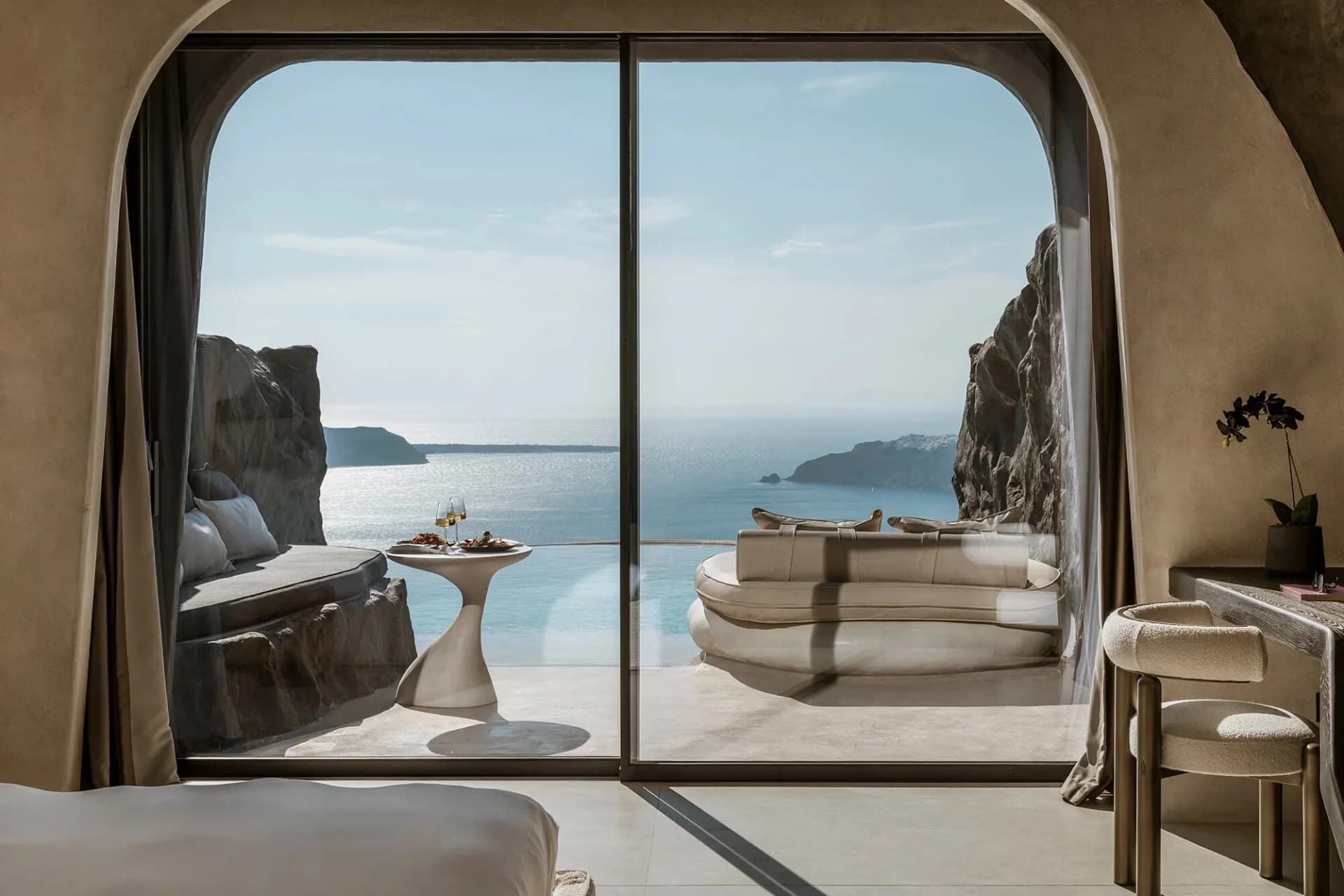
The southern peninsula concentrates Bali's most formally structured resort corridor. Nusa Dua in particular is an enclave development with controlled access, hosting several of the island's largest international luxury brands. Properties here offer expansive grounds, beach club infrastructure, and suites with direct ocean frontage. The environment is deliberate and insulated. Jimbaran, immediately to the west, carries a slightly softer residential quality and is known for cliff-edge properties with unobstructed sunset orientation.
Jakarta
Indonesia's capital functions as the country's primary urban luxury market. The Central Business District — specifically the corridor running through Sudirman and Thamrin — houses the highest concentration of internationally flagged luxury hotels. Suite inventory here is oriented toward the corporate and diplomatic traveler, with emphasis on altitude, city panorama, and executive-grade service infrastructure. Jakarta is not a leisure destination in the conventional sense, but for those transiting through or conducting business, the suite standard at the upper end is competitive with any Southeast Asian capital.
Lombok and the Gili Islands
Lombok remains the counterpoint to Bali's density — quieter, less commercially saturated, and carrying a rawer coastal aesthetic. The island's southwest coast and the elevated southern region of Kuta Lombok have attracted a newer generation of design-forward properties. The Gili Islands — particularly Gili Trawangan and the more secluded Gili Meno — host a handful of properties where the suite experience is defined by proximity to the reef, minimal motorization, and an almost absolute removal from urban infrastructure.
Komodo and East Nusa Tenggara
The eastern archipelago — encompassing Labuan Bajo, the gateway to Komodo National Park — represents Indonesia's most frontier-facing luxury tier. Properties here are fewer and more recently developed, but several have achieved a standard of suite design that is architecturally rigorous and ecologically considered. The primary experiential draw is access to one of the world's most biodiverse marine environments, and the best suites in this zone are positioned to leverage that geography without compromising material quality.
When to Visit Indonesia for a Suite Stay
Indonesia's climate is tropical and does not conform to a single national season pattern — the archipelago spans a significant geographic range, and weather windows differ meaningfully by region.
For Bali, the dry season runs from approximately April through October, with July and August representing peak visitor density and rate compression. The shoulder months of April to June and September to October offer the most favorable balance of weather reliability, lower occupancy, and suite availability. The wet season from November through March brings afternoon rainfall but rarely disrupts extended stays; properties in Ubud in particular carry a distinct atmospheric quality during the green season.
For the eastern islands — including Komodo and Flores — the optimal access window is April through August, when sea conditions allow reliable liveaboard and transfer operations. Lombok aligns closely with Bali's seasonal pattern.
Jakarta operates year-round as a business destination; its wet season (October to April) is of greater consequence for ground logistics than for hotel experience per se.
In terms of cultural calendar, the Balinese Hindu observances — including Nyepi (the Day of Silence, typically March) and Galungan — add a distinctive experiential layer but also impose operational constraints on properties. Nyepi in particular results in a near-total suspension of external movement for 24 hours, which some travelers find immersive and others logistically inconvenient.
Local Luxury Standards in Indonesia
Indonesia does not operate a formal national classification system equivalent to France's Palace designation or the UK's AA Five Star rating. The country's hotel classification framework, administered through the Ministry of Tourism, uses a star-rating system (bintang) up to five stars, but this designation is a minimum technical threshold rather than a marker of genuine luxury distinction.
In practice, the most meaningful quality signals in the Indonesian market are international brand affiliation — properties operating under the Aman, Four Seasons, Raffles, Rosewood, or Bulgari flags carry institutional accountability to a global standard — and independent properties with documented design and editorial recognition. The Aman group, in particular, has a foundational relationship with Bali that dates to the 1988 opening of Amanpuri in Thailand and the subsequent Amandari and Amanjiwo properties in Bali; these remain reference-grade benchmarks against which subsequent entrants are measured.
Beyond brand affiliation, Indonesian luxury is often most legibly expressed through spatial generosity — suite footprints are typically larger than European equivalents at comparable price points — and through the quality of craftsmanship embedded in the built environment. Hand-carved stone, hand-loomed textiles, and site-specific artistic commissions are recurring markers of upper-tier properties.
How to Choose the Best Suite in Indonesia
The selection calculus for Indonesia differs from a single-city destination because the country's scale and geographic diversity mean that suite quality is inseparable from locational logic. Several practical considerations apply.
First, define the experiential objective before selecting a property. Indonesia accommodates contemplative retreats (Ubud), beach-access resorts (Seminyak, Nusa Dua), marine-access bases (Gili, Komodo), and urban business stays (Jakarta) — but a suite optimized for one purpose is rarely transferable to another. A cliff-edge villa in Jimbaran is not a functional substitute for a Jakarta tower suite, regardless of the comparative star rating.
Second, assess the suite's relationship to natural infrastructure. In Bali specifically, the orientation of a suite — whether it faces the Indian Ocean, a rice terrace, a jungle ravine, or a garden — determines its sensory register more than almost any interior design element. Request specific villa or suite numbers rather than category designations where possible.
Third, evaluate transfer logistics. Several of Indonesia's most distinguished properties require sea transfer, small aircraft, or extended overland travel to reach. Factoring in transfer time and reliability against the length of stay is material to the value equation.
Fourth, consider the seasonality premium. Suite rates at Bali's leading properties during August can be two to three times the April equivalent for the same configuration. The shoulder season represents a structurally better value proposition for most itineraries.
Why Curation Matters in the Indonesian Market
With over 82 properties catalogued by La Suite across the Indonesian archipelago, and a broader market encompassing thousands of formally registered hotels, the informational burden of independent research is not trivial. The Indonesian luxury market has expanded rapidly since 2015, with a significant volume of new-build properties entering the Bali market in particular. Not all of these properties maintain the standard implied by their marketing.
A curated selection serves a filtering function that raw search results cannot replicate. La Suite's methodology prioritizes verifiable quality markers — spatial design integrity, documented service standards, material quality, and site-specific distinction — over volume or commercial arrangement. The result is a reference set within which comparative selection is meaningful rather than arbitrary.
For a destination as geographically distributed and experientially varied as Indonesia, curation also performs a navigational function: helping the traveler identify which region and which property typology is most aligned with their specific requirements, before the question of rate or availability becomes relevant.
Curated selection by La Suite
Frequently asked questions
Which regions of Indonesia offer the most distinguished luxury suite experiences?
Indonesia rewards the discerning traveller with remarkable regional diversity. Bali alone divides into contrasting worlds: Seminyak and Petitenget deliver design-forward suites close to dining and beach life, while Ubud offers clifftop and jungle retreats of deep cultural resonance. Beyond Bali, Lombok, the Gili Islands, Raja Ampat, and Komodo provide increasingly remote forms of exclusive accommodation, each suited to a different travel temperament.
When is the best time of year to book a luxury suite in Indonesia?
The dry season, running broadly from May through October, is considered peak season across most of Indonesia, particularly Bali and Lombok. Skies are clear, humidity is manageable, and outdoor living is at its finest. The shoulder months of April and November offer an appealing balance of good weather and slightly softer demand. The wet season brings lush landscapes and a quieter atmosphere, though some remote properties reduce operations during this period.
What suite categories should affluent travellers expect to find across Indonesia?
Suite typologies vary meaningfully by region. In Seminyak and Petitenget, expect open-plan pavilion suites with private plunge pools oriented toward the Indian Ocean. Ubud specialises in clifftop or valley-facing jungle villas with immersive outdoor living spaces. In remote archipelago destinations, overwater bungalows and eco-luxury tented suites represent the premium tier. Each configuration reflects its natural and cultural setting rather than a standardised international formula.
How far in advance should I book a luxury suite in Indonesia?
For peak season travel, particularly July, August, and the Christmas and New Year period, booking six to twelve months in advance is strongly advisable for the finest suites. Bali's most sought-after properties and remote island lodges in destinations such as Raja Ampat fill rapidly. Shoulder season travel allows somewhat more flexibility, though premium suite categories at acclaimed properties remain in consistent demand year-round and reward early commitment.
Is Indonesia well suited to luxury family travel?
Indonesia is exceptionally well suited to families travelling with children, provided the right property is selected. Many Bali resorts offer dedicated family suites or interconnecting villa configurations with private pools and tailored children's programming. Cultural experiences, from cooking classes to traditional craft workshops, translate beautifully across age groups. Families seeking more adventure may consider Komodo or Lombok, where guided wildlife and marine encounters add genuine educational depth to the itinerary.
What makes Indonesia a compelling destination for a romantic stay?
Few destinations rival Indonesia for romantic atmosphere. Ubud delivers candlelit dinners above forested gorges, private in-villa spa rituals, and a profound sense of stillness. Seminyak offers spectacular sunsets along one of the world's most celebrated ocean-facing coastlines. For the ultimate in seclusion, private island retreats in the Komodo or Raja Ampat regions provide an almost complete withdrawal from the wider world, with personalised service of the highest order.
What level of in-suite and resort services should guests anticipate?
At the finest Indonesian properties, service is deeply personalised and culturally warm. Dedicated butler or villa host arrangements are standard at the premium tier, attending to everything from in-suite dining and spa scheduling to cultural excursion curation. Many resorts assign a personal attendant to each villa or suite throughout the stay. Spa facilities drawing on Balinese and Javanese wellness traditions, private yoga instruction, and bespoke ceremonial experiences are commonly available.
How do guests typically travel between Indonesia's luxury destinations?
Bali's Ngurah Rai International Airport is the primary international gateway, with connections onward to Lombok, Labuan Bajo for Komodo, and Sorong for Raja Ampat via domestic carriers. For multi-destination itineraries, private charter flights and liveaboard or private yacht arrangements are the standard at the luxury tier, particularly for the eastern archipelago. Reputable properties invariably assist with seamless transfer coordination as part of their pre-arrival service.
What should guests expect from gastronomy and dining in Indonesian luxury suites?
Indonesia's culinary landscape is sophisticated and deeply regional. Balinese cuisine, with its layered spice profiles and ceremonial roots, features prominently across the island's top properties, often interpreted through refined contemporary menus. Many suites include in-villa dining with personalised menus prepared by a dedicated chef. In Ubud particularly, farm-to-table philosophies are deeply embedded in the dining culture. Guests can also expect strong international programmes alongside curated local tasting experiences.
How should I approach budgeting for a luxury suite experience in Indonesia?
Indonesia spans a wide spectrum within the luxury segment. Seminyak and Ubud offer considerable value relative to comparable Asian destinations, while ultra-remote properties in Raja Ampat or private island settings command a significant premium reflecting their exclusivity and logistical complexity. Budget should account not only for suite rates but also for inter-island transfers, curated excursions, spa programmes, and gratuities. Consulting a specialist travel curator ensures expenditure is matched precisely to experience.