Where to stay in Laos: distinct areas for suite travelers
Luang Prabang
The former royal capital sits at the confluence of the Mekong and the Nam Khan rivers and holds UNESCO World Heritage status for its ensemble of temples, French colonial mansions, and traditional wooden houses. This is where the country's most architecturally considered properties are concentrated. Suites here tend to occupy colonial residences or newly constructed lodges built in a vernacular style, set within walled gardens. The scale is intimate. The town itself is walkable, and the surrounding landscape, terraced hills, waterfalls, and rice paddies, is accessible within thirty minutes. Alms-giving ceremonies take place at dawn along the main street, and the night market operates with a quietness unusual for the region.
Vang Vieng
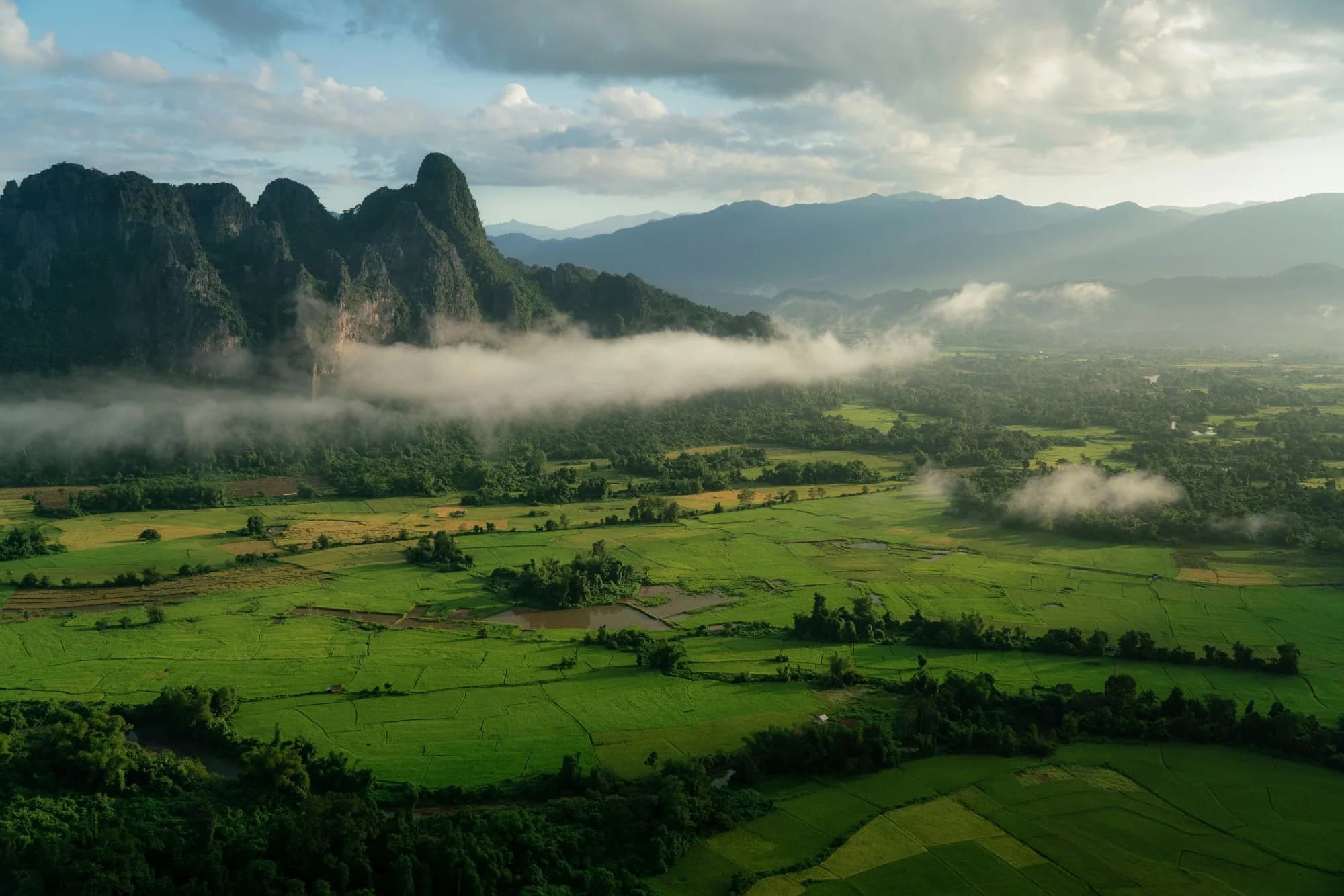
Positioned in a limestone karst landscape along the Nam Song River, Vang Vieng has undergone a significant repositioning over the past decade. The upper end of the market here offers properties with direct river views and mountain backdrops, oriented toward hiking, kayaking, and cycling. Suite options are more limited than in Luang Prabang, but properties in this area compensate with an immediate relationship to the natural landscape. The Mekong is not the river here; the Nam Song is narrower and more dramatic.
Vientiane
The capital is the least visited of Laos' principal destinations by foreign travelers, but it functions as the country's logistical and political center. French colonial buildings, Buddhist temples, and a broad riverside boulevard define its atmosphere. For suite travelers, Vientiane offers the country's most contemporary hotel infrastructure and is the natural entry and exit point for international flights. The pace is genuinely slow by regional capital standards.
The southern plateau and 4000 Islands
The Bolaven Plateau in the south is a highland agricultural zone known for coffee production and waterfalls. The 4000 Islands (Si Phan Don) area, where the Mekong widens dramatically near the Cambodian border, offers a different register entirely: river islands, traditional villages, and a near-total absence of urban infrastructure. Luxury accommodation at this level of the country remains sparse, but the landscape is singular.
When to visit Laos for a luxury suite stay
Laos has two primary seasons, and the distinction matters for how you experience both the landscape and the accommodation.
The dry season runs from November through April. This is the period when the country is most accessible, when dust roads are passable, and when the light in Luang Prabang has the quality that makes the town photogenic. Peak demand for premium suites falls between December and February, when European and American travelers arrive in volume. Advance planning is essential for this window, particularly in Luang Prabang, where the number of high-caliber properties is limited.
The wet season, from May through October, brings daily rainfall, a greener and more atmospheric landscape, and significantly reduced occupancy. Some smaller lodges close during this period. However, the Mekong rises and the surrounding vegetation becomes lush; for travelers comfortable with rain and occasional road closures, this season offers a more contemplative experience and greater flexibility in suite selection.
The Lao New Year (Pi Mai), celebrated in April, is the country's most significant cultural event. It involves water ceremonies across the country and is particularly concentrated in Luang Prabang. Booking well in advance is necessary during this period.
Local luxury standards: what to expect from top-tier suites in Laos
Laos does not operate within the same hotel classification system as France or Thailand. There is no official Palace designation or equivalent national prestige label. The country's finest properties are typically positioned as boutique lodges, heritage residences, or small luxury hotels, often with fewer than thirty rooms in total.
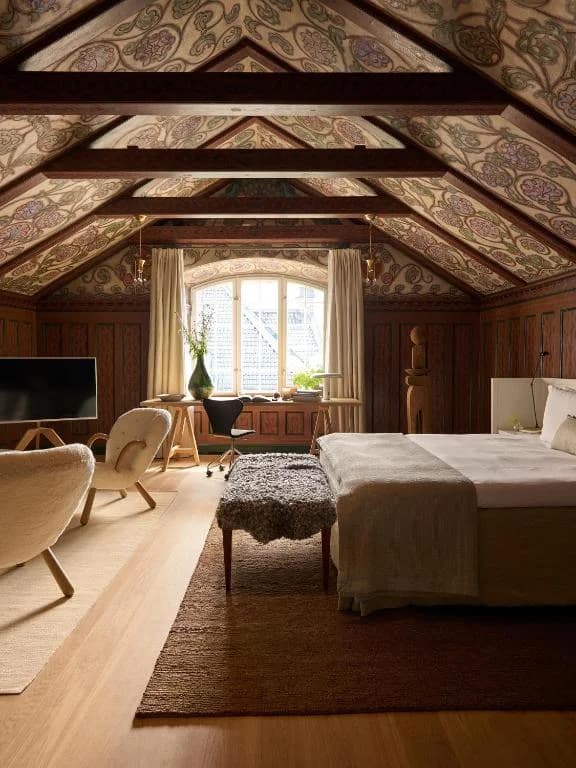
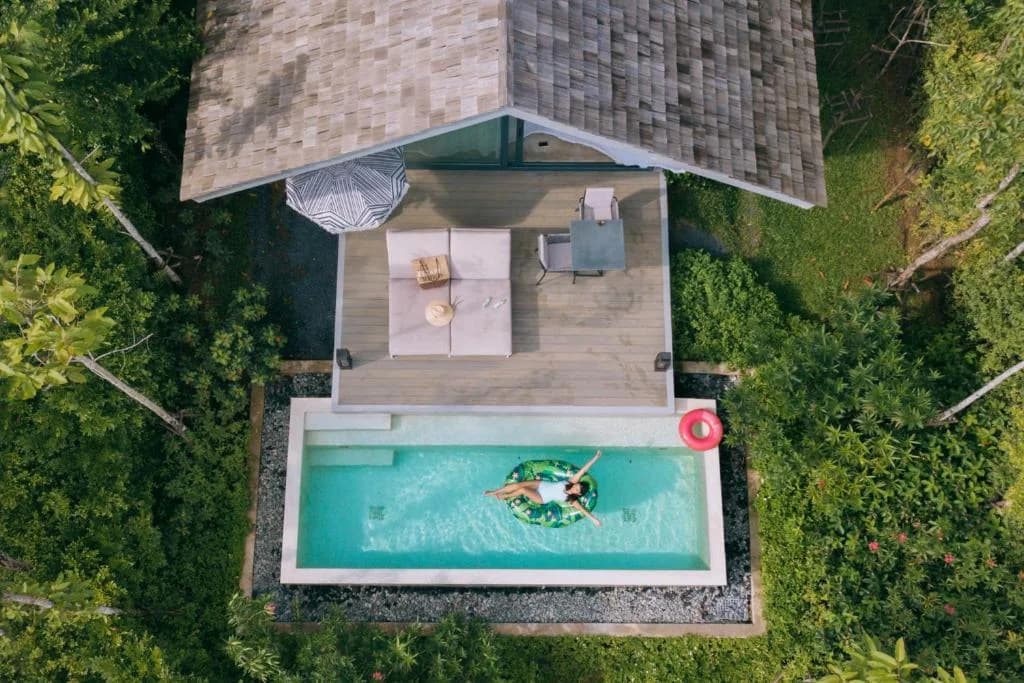
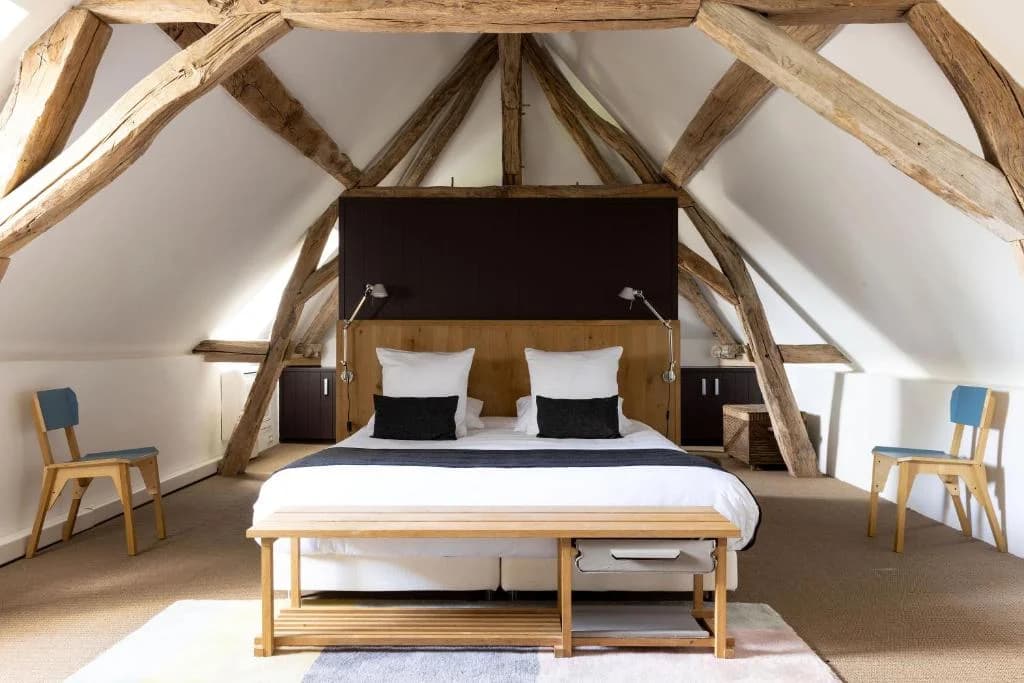
What defines the upper tier in Laos is a combination of architectural sensitivity and spatial generosity. The best suites occupy converted colonial buildings or structures built with local materials: teak, sandstone, and hand-woven textiles. Service models are attentive but unhurried, reflecting the national character. Air conditioning is standard in all credible properties at this level. Private plunge pools appear in the top-category suites, particularly in properties overlooking the Mekong.
International luxury hotel groups have a presence in both Luang Prabang and Vientiane. Alongside these, a number of owner-operated properties have established strong reputations for design quality and personal service. The distinction between a large-group property and an independent lodge in Laos is often significant in terms of atmosphere, and worth considering carefully when selecting a suite.
How to choose the best suite in Laos: practical considerations
Several factors are specific to Laos that do not apply in the same way elsewhere in Southeast Asia.
River orientation matters. In Luang Prabang and Vientiane, suites with a direct view of the Mekong command a premium and deliver a qualitatively different experience from those facing gardens or town streets. The river at this latitude is wide, slow, and dramatically lit in the early morning and at dusk.
Architecture is a legitimate selection criterion. Colonial-era buildings in Luang Prabang have thick walls, high ceilings, and a thermal quality that reduces dependence on air conditioning during cooler months. More recently built properties in a contemporary vernacular style vary considerably in execution quality.
Connectivity and distance are relevant practical factors. Laos has limited road infrastructure outside its main towns. If you intend to use your suite as a base for day excursions, proximity to the town center or to a private vehicle service is a practical consideration, not a luxury preference.
Suite size in Laos rarely reaches the floor areas found in urban hotels in Bangkok or Singapore. This is a function of building stock and site constraints. However, the best properties compensate with generous terrace space, private gardens, and direct pool access.
The value of curation in a small and opaque market
With twelve properties listed, La Suite's selection covers the credible upper tier of suite accommodation in Laos without inflation. This is a country where the gap between a property that markets itself as luxury and one that genuinely delivers on architectural quality, service consistency, and spatial comfort is significant.
The Laos hotel market has limited online visibility compared to Thailand or Vietnam. Review aggregators are inconsistent, and the properties that invest in digital marketing do not always correspond to those with the strongest product. Curated selection by La Suite filters by physical quality, suite experience, and the character of the location rather than by marketing spend or star count.
For travelers allocating a meaningful portion of their travel budget to accommodation in Laos, independent research in this market is time-consuming and unreliable. La Suite's editorial process applies consistent standards across the region, allowing travelers to make a considered decision from a pre-qualified shortlist rather than an unfiltered marketplace.