Best areas in Malaysia for a luxury suite stay
Kuala Lumpur and the Klang Valley
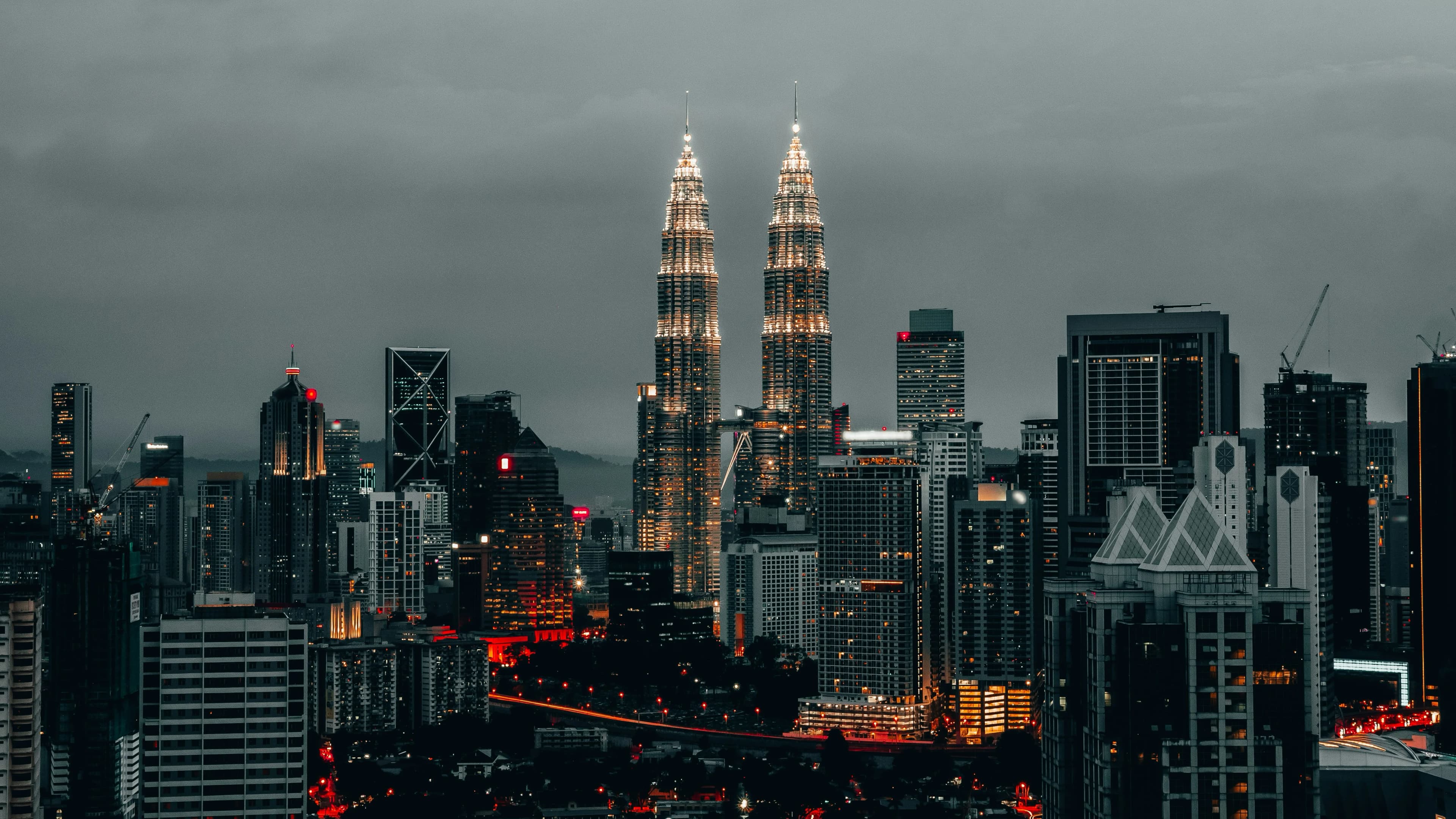
The capital and its surrounding corridor, which includes Petaling Jaya, Subang Jaya, and the administrative city of Putrajaya, represent Malaysia's most concentrated supply of upper-tier hotel suites. Properties here are predominantly high-rise, with suites designed around panoramic city views, private plunge pools on elevated terraces, and butler services calibrated to international business travel. The formal dining culture, proximity to KLCC, and infrastructure density make this corridor the default choice for corporate and mixed-purpose trips.
Penang
Penang operates on an entirely different register. George Town, a UNESCO World Heritage Site, gives the island an architectural density unusual in this part of the world: clan jetties, prewar shophouses, and colonial civic buildings compressed into a walkable grid. The finest suites here tend to occupy sensitively restored heritage structures, where materials are original and spatial decisions reflect curatorial intent rather than generic hospitality templates. Penang is also Malaysia's most serious food destination, a factor that informs the cultural texture of any stay.
Langkawi
Langkawi is duty-free, geologically ancient, and largely undeveloped relative to its regional peers. The island's rainforest interior and mangrove coastline create a resort context that rewards properties built into the landscape rather than imposed upon it. Luxury suites here typically feature private infinity pools, direct beach access, or elevated positions within the forest canopy. The absence of mass tourism infrastructure is a deliberate policy choice, which has preserved the island's spatial quality for upper-tier travelers.
Kota Kinabalu and Borneo
Kota Kinabalu is the gateway to Sabah, the Malaysian state occupying the northern tip of Borneo. The surrounding region includes Mount Kinabalu, the Coral Triangle, and some of the world's oldest intact rainforest. Suites in this context tend toward eco-luxury, with architectural choices that prioritize connection to the natural environment over urban formality. Kuching, the capital of Sarawak on the southwestern coast of Borneo, offers a distinct colonial-era character and a slower pace that appeals to culturally oriented travelers.
The east coast and islands
The states of Pahang and Terengganu, along Malaysia's South China Sea coastline, include destinations such as Kuala Besut (the main departure point for the Perhentian Islands) and Tanah Rata in the Cameron Highlands. The Highlands, at elevations above 1,500 metres, offer a temperate alternative to Malaysia's coastal heat, with tea plantations, colonial bungalows, and a quiet that is structurally different from resort island noise.
When to visit Malaysia for a luxury hotel stay
Malaysia's position near the equator means temperatures remain broadly consistent year-round, between 25 and 35 degrees Celsius at sea level. The distinction between seasons is primarily about rainfall patterns, which vary significantly by coast.
The west coast, including Langkawi, Penang, and the Klang Valley, is driest between November and April. The east coast, including the Perhentians and Bayan Lepas, is best visited between March and October, with the northeast monsoon making some island properties inaccessible between November and February. Borneo follows its own rainfall patterns, with the best conditions in Sabah generally between March and October.
For cultural context: the Formula 1 Malaysian Grand Prix historically drew significant international traffic to Kuala Lumpur, and the George Town Festival in July and August brings an elevated arts programme to Penang. Hari Raya (Eid al-Fitr) and Chinese New Year generate domestic travel peaks that affect suite availability in major cities.
Local luxury standards: what to expect from top-tier suites in Malaysia
Malaysia does not operate a formal national palace hotel designation equivalent to France's Palace label. However, several internationally affiliated properties hold Forbes Travel Guide Five-Star ratings, and the country's hospitality sector has developed recognizable categories that matter to informed travelers.
The most significant local luxury typology is the heritage hotel, particularly concentrated in Penang and Malacca. These are properties installed within colonial-era architecture, where the suite design must negotiate between preservation requirements and contemporary comfort expectations. The most accomplished versions achieve a spatial coherence that generic luxury hotels cannot replicate.
In resort contexts, particularly Langkawi and Borneo, the defining quality metric is the relationship between the suite and its natural setting: the sight line from the bathtub, the acoustic privacy of the terrace, the degree to which the building reads as part of the landscape rather than an intrusion upon it. Butler service, airport transfers by private boat or vehicle, and in-suite dining from full kitchen menus are standard at this tier.
In Kuala Lumpur, the luxury hotel suite market is competitive and spatially generous. Floor areas in the top percentile frequently exceed 150 square metres, with separate living quarters, private dining rooms, and city panoramas that use the Petronas Towers as a reference point. Malaysia's favorable exchange rate for travelers holding US dollars or British pounds represents a meaningful value differential relative to comparable suite experiences in Singapore or Hong Kong.
How to choose the best luxury suite in Malaysia
The primary decision is geographic, since Malaysia's internal diversity means the right suite depends entirely on what kind of experience the traveler is prioritizing. A heritage suite in Penang and a rainforest suite near Kota Kinabalu are both defensible choices at the luxury tier, but they serve fundamentally different travel intentions.
For travelers combining urban and resort stays within a single itinerary, the Kuala Lumpur to Langkawi pairing is the most established, with direct flights of under two hours. The Johor Bahru to Singapore corridor is increasingly relevant for travelers entering or exiting via Singapore's Changi Airport.
Architectural preference is a meaningful filter. Travelers drawn to modernist or contemporary design will find the most resolved examples in Kuala Lumpur's newer towers and in purpose-built Langkawi resorts. Those with a preference for historical fabric and material honesty should direct their attention to Penang and Malacca. Borneo properties occupy a distinct category: ecological credentials, proximity to protected wilderness, and the spatial logic of buildings designed for a rainforest climate.
Practical considerations include monsoon timing by coast, internal flight connectivity (Kuala Lumpur International Airport is the primary hub, with Bayan Lepas in Penang and Kota Kinabalu serving as secondary gateways), and the question of suite size relative to party composition. Many of Malaysia's top suites are configured for couples; properties offering multi-room suite configurations suited to families or small groups are a more specialized segment requiring specific curation.
Why a curated selection by La Suite matters in Malaysia
Malaysia's hotel market is large, geographically dispersed, and inconsistently represented across standard booking platforms. A property that performs exceptionally well on spatial quality in Langkawi may be invisible on generalist platforms optimized for volume rather than discernment. Conversely, properties with high marketing budgets do not always correspond to the highest suite quality.
La Suite's editorial approach treats Malaysia as a collection of distinct destinations, each assessed on its own terms. The 32 properties currently listed represent selection based on verifiable criteria: suite floor area, architectural quality, service structure, and the integrity of the guest experience. This is part of La Suite's broader coverage of Asia, where the same editorial standards apply across the region's most significant luxury hotel markets. The result is a set of options that can be compared meaningfully, rather than ranked by price alone or sorted by review volume.