Amara Singapore, Singapore
Within a 5-minute walk from Tanjong Pagar MRT Station, Amara Singapore features a Balinese-style pool and spa. A fitness center is available. The hotel features multiple dining options and free Wi-Fi

Singapore's Chinatown (known locally as Niu Che Shui, or "ox-cart water") is one of the island's five historic districts gazetted for conservation. Unlike many urban Chinatowns, Singapore's version has been subject to careful, government-led heritage preservation since the 1980s, resulting in a district that reads more like a curated open-air museum than a commercial enclave. The shophouses that line streets such as Keong Saik Road and Club Street follow strict conservation guidelines covering facade color, proportions, and material. This architectural discipline gives the neighborhood an unusual coherence for travelers attentive to built environments.
5 hotels available

Within a 5-minute walk from Tanjong Pagar MRT Station, Amara Singapore features a Balinese-style pool and spa. A fitness center is available. The hotel features multiple dining options and free Wi-Fi

Located within the hustle and bustle of the Tanjong Pagar district, Duxton Reserve offers accommodations in Singapore. Guests can enjoy meals at the in-house restaurant. Free WiFi is available through

Set in a restored heritage shophouse, Maxwell Reserve features tastefully decorated guest rooms and suites. Located in the heart of Chinatown, this boutique hotel features 5 dining options, a lap pool

Elegant Accommodations Mondrian Singapore Duxton in Singapore offers a 5-star experience with a restaurant, bar, and a year-round outdoor swimming pool. Guests enjoy private check-in and check-out

Providing free WiFi, Sofitel Singapore City Centre is located in Singapore. The property is close to several well-known attractions, a 4-minute walk from Singapore City Gallery, 0.4 miles from Sri Mar

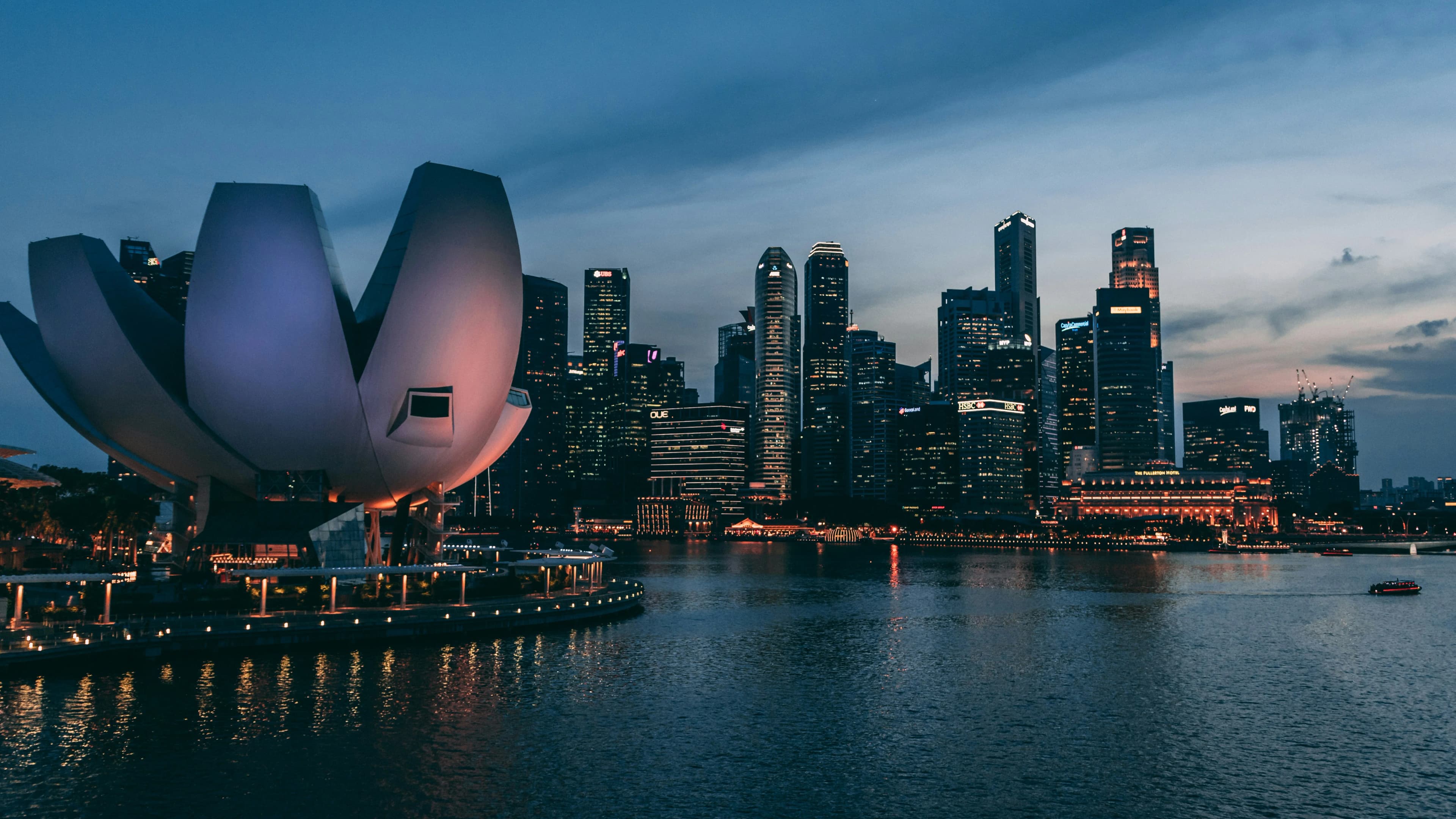
Downtown Singapore is not a neighborhood in any conventional sense. It is a precisely managed urban environment where planning decisions, architectural ambitions, and commercial priorities coalesce into one of the densest concentrations of high-end hospitality infrastructure in Asia. The Marina Bay waterfront alone frames some of the most recognized silhouettes in contemporary architecture: the triple-tower integrated resort, the lotus-shaped ArtScience Museum, and the helical bridge that connects the financial district to the Gardens by the Bay. For a traveler choosing a luxury hotel suite in this district, the immediate surroundings function as part of the experience itself.

Orchard Road is frequently described through the lens of retail, and while its concentration of flagship boutiques is notable, that framing understates the neighbourhood's significance as a luxury accommodation corridor. The street and its immediate surroundings form one of Singapore's most institutionalised zones for high-end hospitality. The hotels here were not built to be incidental to the street. They were designed as anchors of it. Understanding the neighbourhood means understanding this relationship between public-facing luxury and the private experience available within a suite above street level.

Marina Bay occupies a reclaimed peninsula at the southern edge of Singapore's central area. Developed from the 1970s onward and substantially completed in the 2000s, it represents a singular example of planned urban design at civic scale. The district is bounded by the Singapore River to the west, the Padang and civic district to the north, and Marina Bay Sands to the east. Every element, from the Gardens by the Bay conservatories to the ArtScience Museum's lotus-form structure, was commissioned as part of a coherent long-term vision. For guests staying in a luxury hotel suite here, the architectural density is not noise. It is context.
The heart of Chinatown, centered on Pagoda Street, Trengganu Street, and the Sri Mariamman Temple, is the most historically concentrated zone. Properties here or immediately adjacent provide immediate pedestrian access to morning markets, clan associations, and the Buddha Tooth Relic Temple, a structure completed in 2007 in the style of Tang dynasty architecture. The scale is walkable and intimate by Singapore standards.
A short walk from the traditional core, the Keong Saik Road and Ann Siang Hill corridor has evolved into Singapore's most design-forward hospitality zone. Boutique hotels occupy restored two- and three-story shophouses, many featuring internal courtyards. For travelers seeking a luxury hotel suite with architectural character rather than tower-block scale, this sub-district is the most compelling option within the broader Chinatown precinct. If you are exploring Singapore through its distinct neighborhoods, this corridor rewards extended stays.
Directly adjacent to the traditional Chinatown boundary, Tanjong Pagar has shifted from a Cantonese-dominated area into a mixed district notable for its food culture and its concentration of corporate offices. Several larger hotels operate here, offering full-service luxury hotel amenities with straightforward access to Chinatown on foot. The MRT station at Tanjong Pagar connects directly to the city's financial district and to Orchard Road.
Singapore operates without meaningful seasons in the European sense. The island sits one degree north of the equator, and temperatures remain between 25 and 33 degrees Celsius year-round. Humidity is persistent. The primary seasonal consideration for visitors planning a stay around Chinatown is the Chinese New Year period, typically falling between late January and mid-February. During this time, the district transforms: lantern installations, temporary street markets, and lion dance performances concentrate the neighborhood's cultural identity into a two-week event of genuine intensity. Suite availability contracts sharply during this window and should be secured well in advance.
The Hungry Ghost Festival, observed in the seventh lunar month (usually August), brings a quieter but equally atmospheric dimension to the neighborhood, with roadside offerings and getai performances. For travelers interested in Singapore's Chinese ritual calendar, this period is underappreciated. The Mid-Autumn Festival in September or October adds lantern markets around the Sri Mariamman Temple. Outside these periods, late January and June through August represent peak tourist traffic island-wide, while February (outside New Year) and September offer more availability. Singapore's position in Asia makes it a natural regional hub, and many luxury travelers use a Chinatown base as a starting point for broader regional itineraries.
Singapore operates one of Asia's most demanding hospitality regulatory environments. The Singapore Tourism Board classifies hotels on a star system, but the most relevant quality signal at the top end is the property's international affiliation or its standing within boutique luxury categories. Unlike Paris, Singapore has no official "Palace" classification. Instead, quality stratification is evident through space standards, staff ratios, and the precision of service delivery, attributes for which Singapore properties consistently rank at the highest levels in global surveys.
In Chinatown specifically, the luxury suite offer divides into two architectural typologies. The first is the converted shophouse: narrow footplints, high internal ceilings, internal light wells, and materials that include original timber, terrazzo, and Peranakan tilework. These suites offer a spatial intelligence and material honesty that tower hotels cannot replicate. The second typology is the full-service hotel within or adjacent to the district, offering larger floor plates, pools, and the full amenity stack expected at this price point. The choice between these two is fundamentally a question of what kind of luxury the traveler is seeking: intimacy and context, or scale and convenience.
Several practical considerations apply specifically to this district. First, the conservation area imposes height restrictions, which means most properties within the traditional Chinatown boundary are low-rise. Travelers expecting upper-floor panoramic views should consider properties on the district's periphery rather than within its conservation core.
Second, Chinatown is compact. Most points of interest, including the Buddha Tooth Relic Temple, the Chinatown Heritage Centre, and the wet market on Smith Street, are within a ten-minute walk of any address in the district. Proximity to a specific attraction should not be the primary driver of suite selection here.
Third, noise levels vary. Streets closest to the tourist market areas experience foot traffic and amplified sound, particularly on weekends. Properties on quieter residential lanes, such as those running off Ann Siang Hill, offer a noticeably different acoustic environment. For travelers prioritizing sleep quality and a sense of removal from commercial activity, this distinction matters.
Finally, connectivity: Chinatown MRT station (North East and Downtown lines) sits at the district's northern edge, providing direct access to Marina Bay, Orchard Road, and Changi Airport via the Thomson-East Coast Line interchange at Outram Park. A property within ten minutes' walk of Chinatown or Outram Park station can function as an efficient base for island-wide movement.
Singapore's hospitality market is mature, deeply competitive, and dense with options across every tier. The challenge for a high-intent traveler is not finding a hotel, it is identifying the specific property and suite configuration that aligns with a precise set of priorities: architectural character, spatial quality, service register, neighborhood access. Generic booking platforms optimize for transaction volume. Singapore curated through La Suite means working from a filtered selection where each property has been assessed for the qualities that matter to a discerning traveler. The Chinatown precinct, despite its small footprint, contains genuinely distinct options across the boutique and full-service categories. Navigating that difference is exactly what La Suite's curation is designed to do.

Chinatown sits within walking distance of Singapore's financial district, Marina Bay, and the Southern Ridges, making it a practical and culturally rich base. The district's concentration of conserved shophouses, temples, and design-led hospitality offers a spatial and material experience distinct from Singapore's glass-tower corridors. For travelers who value architectural context alongside service precision, it is one of the most coherent neighborhood choices on the island.
Yes, several boutique properties operate within the gazetted conservation boundary, occupying restored shophouse terraces with suite configurations that incorporate original building fabric, including timber beams, terrazzo floors, and internal courtyards. These properties tend to offer fewer than thirty rooms, with suites that prioritize spatial intelligence over square footage. Availability is limited, and these properties book quickly during peak cultural calendar periods.
Chinese New Year in Singapore falls between late January and mid-February depending on the lunar calendar. The Chinatown district is the primary venue for the official street light-up and market, which runs for several weeks. Suite inventory at quality properties tightens significantly from early January onward for this window, and rates reflect seasonal demand. Booking three to four months in advance is a practical minimum for securing preferred options.
Singapore properties consistently perform at the highest levels in service precision and physical maintenance, reflecting the city-state's regulatory standards and its hospitality industry's long-standing emphasis on operational excellence. Compared to destinations such as Tokyo or Hong Kong, Singapore suites tend to offer more floor space at equivalent price points. The absence of a formal Palace classification (as exists in France) means quality assessment requires attention to international brand affiliation, staff ratios, and suite specification rather than a single official label.
Two primary typologies define the luxury suite offer in and around Chinatown. The first is the conserved shophouse: a two- or three-story terrace with a narrow street frontage, high internal ceilings, and materials including Peranakan tilework and original timber. The second is the contemporary full-service hotel on the district's periphery, offering larger floor plates and full amenity infrastructure. The choice between these typologies reflects a fundamental preference: contextual intimacy versus operational scale.
Chinatown MRT station serves the North East and Downtown lines, and Outram Park station (a short walk away) connects to the Thomson-East Coast Line, which runs directly to Changi Airport. From Chinatown, Marina Bay is approximately three stops, and Orchard Road is reachable in under fifteen minutes by rail. The district is also served by multiple bus routes and is within comfortable walking distance of Clarke Quay and Tanjong Pagar.
The Peranakan community (also called Straits Chinese) developed a hybrid material culture from the fusion of Chinese immigrant traditions with Malay and European colonial influences. In Chinatown and the adjacent districts, this manifests in the decorative tilework, carved timber shutters, and plasterwork detailing of conserved shophouses. Several boutique hotels in the area incorporate these elements into suite interiors, treating historic fabric as a design asset rather than obscuring it behind contemporary fitout.
Suite sizes in the Chinatown district vary significantly by property typology. Shophouse-based boutique properties tend to offer suites in the 40 to 70 square meter range, constrained by the original building footprint but often featuring double-height volumes or private terraces that expand the sense of space. Full-service hotels on the district's edges can offer suites from 70 to over 150 square meters. Travelers prioritizing raw floor area should focus on properties outside the conservation core.
Within a ten-minute walk of most Chinatown addresses, travelers can access the Buddha Tooth Relic Temple and Museum, the Sri Mariamman Temple (Singapore's oldest Hindu temple, built in 1827), the Chinatown Heritage Centre, and the wet market and cooked food centre on Smith Street. The Tanjong Pagar Conservation Area, Keong Saik Road's restaurant corridor, and the Ann Siang Hill park connector are also within easy pedestrian range. The district is unusually self-contained for a neighborhood of its scale.
Singapore's hotel market presents a wide range of options that share similar price points but differ substantially in spatial quality, architectural character, and service register. A curated platform removes the noise of high-volume booking aggregators and focuses selection on properties that meet a precise standard across those dimensions. For a district as specific as Chinatown, where the difference between a well-located boutique suite and a generic business hotel can define the entire experience of the stay, curation is a practical tool rather than a luxury.