Where to stay in Singapore: distinct neighbourhoods for suite travellers
Marina Bay and the financial district
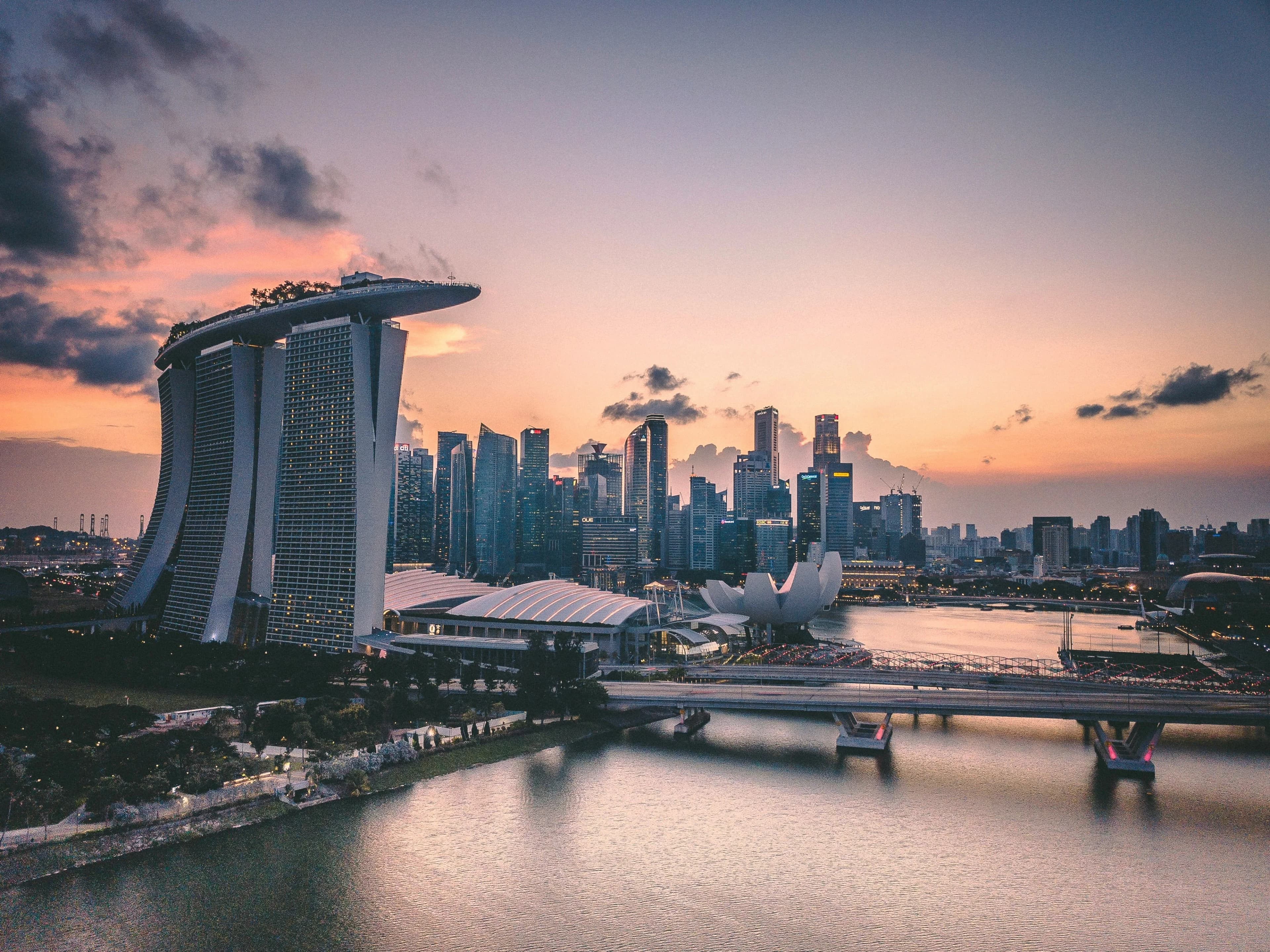
The Marina Bay corridor is Singapore's most architecturally assertive address. Towers of glass and steel frame a waterfront designed with civic ambition, and the hotel suites here occupy some of the most spatially dramatic positions in Southeast Asia. Floor-to-ceiling glazing, double-height living rooms, and private terraces overlooking the bay typify the upper floors of the district's flagship properties. This is the address for travellers who want the city as a permanent backdrop.
Orchard Road and the civic district
Singapore's traditional luxury corridor runs along Orchard Road, where colonial-era building envelopes have been preserved alongside contemporary additions. Suites in this area tend toward classical proportions: high ceilings, formal sitting rooms, and access to the city's most established retail and dining infrastructure. The pace is deliberate and the residential quality of many streets in the adjacent Tanglin and Nassim areas provides a counterpoint to Marina Bay's density.
Sentosa Island
Separated from the main island by a short causeway, Sentosa offers a resort typology that is rare in Singapore: low-rise villas, private pool access, and a sensory distance from the urban core. Suites here prioritise outdoor living, with tropical garden settings and beach adjacency. The atmosphere is more weekend retreat than business travel, and the demographic of guests reflects that distinction clearly.
Kampong Glam and the historic quarters
For travellers drawn to cultural texture, the Kampong Glam, Chinatown, and Tanjong Pagar quarters offer proximity to Singapore's most layered streetscapes. Boutique luxury properties here occupy shophouse conversions and heritage buildings, where architectural restraint and local craft inform the interior language. Suite sizes are typically smaller than in the Marina Bay towers, but the sense of place is considerably more specific.
When to visit Singapore for a luxury suite stay
Singapore sits approximately one degree north of the equator, which means its climate is consistently warm and humid throughout the year. There is no cold season and no dramatic shift in vegetation or landscape tied to the calendar. Rainfall is distributed across the year, with the Northeast Monsoon bringing heavier precipitation between November and January, and the Southwest Monsoon creating a wetter period from June through September. Neither season renders travel impractical: the city's infrastructure is engineered for tropical conditions, and hotel suites in Singapore are climate-controlled to a degree that makes the exterior temperature largely irrelevant.
From a luxury events perspective, the Formula 1 Singapore Grand Prix, held on the Marina Bay Street Circuit in September, is the city-state's most high-profile hospitality occasion. Suite demand across the Marina Bay properties during this period is significant, and booking windows of six months or more are not unusual for the most sought-after floors. The Singapore Art Week in January and the Singapore International Festival of Arts in May draw a culturally oriented international audience and align well with the travel calendar of design-literate visitors.
February through April represents a period of lower rainfall and slightly reduced humidity, and is often cited as the most comfortable time to engage with Singapore's outdoor spaces: the Gardens by the Bay conservatories, the Southern Ridges trail network, and the historic civic quarter all reward daytime exploration when the intensity of the sun is at its most manageable.
Understanding luxury standards in Singapore's hotel sector
Singapore does not operate a Palace designation equivalent to France's formal classification system. Instead, the city-state's hotel quality is largely communicated through international brand positioning, property age, and the reputation of the management group. The Tourism Court and the Singapore Tourism Board set a regulatory framework, but the clearest signal of quality for suite travellers remains the track record of the hotel's ownership and the consistency of press and professional recognition over time.
The concept of the luxury hotel suite in Singapore has evolved considerably since the 1980s, when a small number of colonial-heritage properties defined the market almost entirely. Contemporary Singapore now offers a full typological range: heritage conversions with teak floors and plantation shutters, purpose-built towers with automated systems and panoramic glazing, and resort-style villas with private lap pools. At the upper end of the market, butler service is standard across most flagship suites, and the expectation of 24-hour dedicated floor concierge is well established.
Singapore's F&B culture is internationally recognised, and the finest hotel suites maintain direct access to restaurants and bars operating at the same level of ambition as independent venues. In-suite dining in the city's leading properties reflects the same sourcing standards and culinary precision as the main dining rooms. This integration of food culture into the suite experience is a defining characteristic of Singapore's hospitality sector.
How to choose the right suite in Singapore
The primary variable in Singapore suite selection is orientation and elevation. In a city where the visual experience is fundamentally shaped by its skyline and equatorial light, the floor level, aspect, and glazing specification of a suite determine the quality of the stay to a degree that is more consequential here than in most European capitals. A suite facing the Marina Bay reservoir at the 50th floor operates in a completely different register from a suite of equivalent size facing an internal courtyard at the 10th floor.
The second consideration is the relationship between indoor and outdoor space. Singapore's climate makes terrace access relevant year-round, and suites with private terraces, plunge pools, or covered outdoor lounges offer a qualitatively different experience from those with sealed window walls. This is particularly true on Sentosa Island, where the outdoor component is central to the product design.
Heritage versus contemporary architecture is also a meaningful axis. Singapore's colonial-era hotels carry a cultural authority that modernist towers cannot replicate, and travellers who value historical layering will find the older properties particularly resonant. Conversely, travellers who prioritise technological specification, fitness infrastructure, and visual minimalism will generally find the post-2000 tower hotels more aligned with their preferences.
Why a curated selection by La Suite matters in Singapore
Singapore's hotel market is dense, competitive, and subject to significant variation in quality between floors, room categories, and even individual suites within the same property. The difference between a standard suite designation and a true suite product, in terms of spatial quality, service access, and design investment, is not always legible from a hotel's own marketing materials.
La Suite applies a consistent editorial framework to suite selection, prioritising spatial integrity, design specificity, and service architecture over brand name alone. In a market as sophisticated as Singapore, this kind of curation removes the friction of an opaque booking landscape and allows the traveller to make decisions grounded in verified, comparative information rather than promotional content. The curated selection by La Suite reflects the same standard of discernment that the traveller brings to every other dimension of their trip.