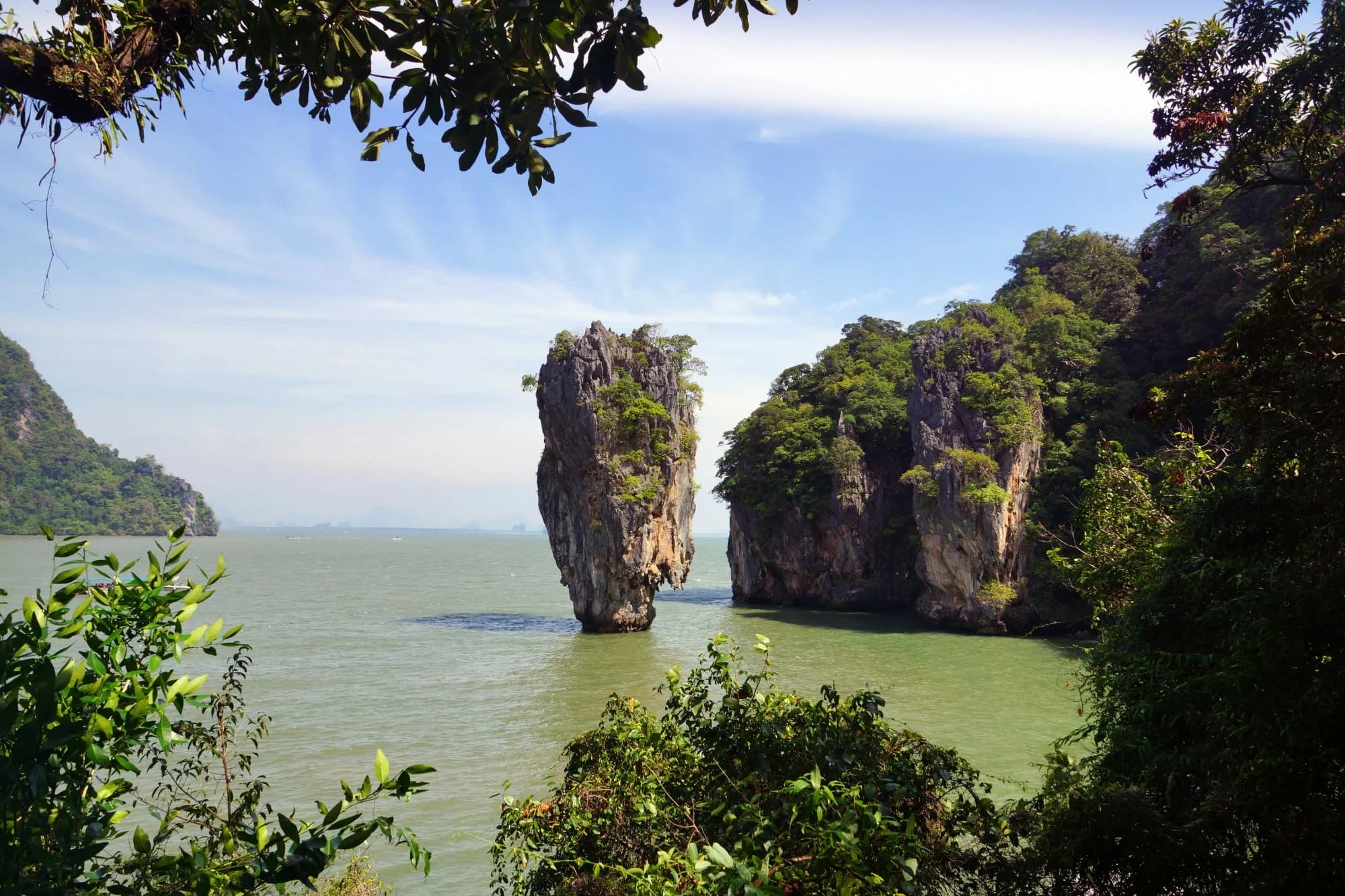
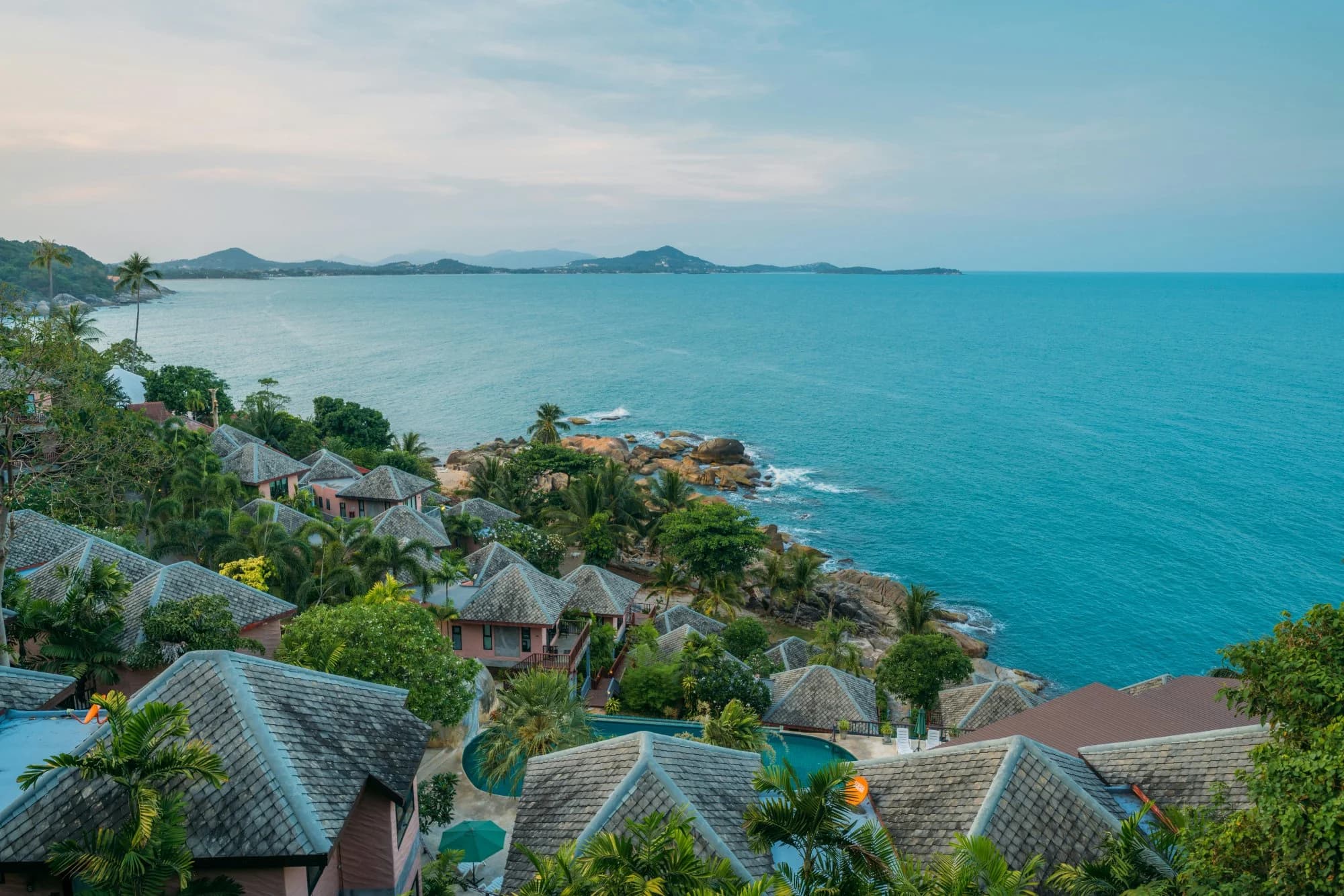
Best areas to stay in Ko Pha Ngan for a luxury suite experience
The northern and northeastern coast
The northern shore, anchored around Chalok Lam and the quieter bays beyond, offers the most consistent sense of remove. The coastline here faces a narrower channel of the Gulf, and the settlements remain small. Properties positioned on elevated ground above these bays tend to capture prevailing breezes and provide unobstructed water views. The pace is deliberately slow, and the absence of a commercial strip is, for many travelers, precisely the point.
The southwestern coast and Thong Sala
Thong Sala is the island's administrative and commercial center, functioning as the main ferry port. The southwestern coast benefits from calm, shallow water for much of the year, and the area around Ban Tai and Ban Khai has seen steady growth in upper-tier accommodation. Proximity to logistics (ferries, the night market, medical facilities) makes this zone pragmatic without sacrificing the island's essential character.
The eastern coast and Haad Thien
The eastern shoreline remains the least developed section of the island. Haad Thien and the bays south toward Haad Yuan are accessible only by boat or on foot, which functions as a self-selecting filter. The properties that have established themselves here operate with a conscious emphasis on privacy and environmental integration. For travelers arriving with the specific intention of disconnecting, this is the most architecturally honest part of the island.
Srithanu and the inland wellness corridor
The western coast around Srithanu has consolidated its identity around yoga, long-term wellness stays, and a quieter form of culinary exploration. A cluster of residences and boutique properties here attract guests measuring stays in weeks rather than nights. Suites in this zone tend to prioritize indoor-outdoor spatial flow and garden privacy over sea-facing orientation.
When to visit Ko Pha Ngan for a luxury hotel suite stay
Ko Pha Ngan's climate is governed by two distinct monsoon systems, which directly affects suite availability and the physical experience of the island.
The primary dry season runs from December through April. Gulf-facing eastern beaches receive the most consistent sunshine during this period, and sea conditions are generally calm. January and February represent peak conditions: clear water, reliable temperatures in the low-to-mid thirties Celsius, and the widest selection of available suites. Advance reservation at this time of year is not optional; it is a structural necessity for securing specific properties.
The southwest monsoon, arriving broadly from May and intensifying through October, brings rain to the western coast with greater frequency. However, the eastern coast often remains drier during this period due to the island's topography. Experienced travelers use this seasonal asymmetry to access premium suites at reduced rates, accepting occasional rain in exchange for significantly greater availability and a quieter island atmosphere.
September and October are the months of highest rainfall across the island. Some smaller properties close entirely during this window. Travelers planning shoulder-season visits (May, June, or November) will find a functional compromise: moderate prices, green and humid interiors, and fewer competing guests.
The full moon party, held monthly on Haad Rin beach, is worth noting as a logistical variable. Properties on the southern end of the island experience increased ambient noise and foot traffic on these nights. Suites positioned on the northern or eastern coast are effectively insulated from this.
Local luxury standards: what to expect from top-tier suites in Ko Pha Ngan
Ko Pha Ngan does not operate within a formally codified luxury classification system in the way that France's Palace designation functions. Thailand's hotel star ratings provide a baseline, but for island properties of genuine quality, the relevant markers are architectural and operational rather than bureaucratic.
The most considered properties here are typically low-density: a small number of villas or suites distributed across significant land, with meaningful spatial separation between units. Private plunge pools are standard at the upper tier. The construction materials in better properties reflect a considered engagement with local craft: natural stone, hardwoods sourced with attention to provenance, and architectural forms that channel ventilation rather than defaulting to mechanical air conditioning as the primary thermal strategy.
Service ratios at serious properties tend to be high. A suite catering to two guests may have a dedicated butler or villa host. In-villa dining, private transfers by longtail or speedboat, and customized itineraries (diving, snorkeling to Ang Thong Marine Park, private cooking instruction) are operational norms rather than exceptional add-ons.
It is worth noting that Ko Pha Ngan's luxury tier is structurally different from that of Thailand's urban hotel market. The emphasis is on spatial generosity, natural setting, and experiential privacy rather than on branded amenities or formal grandeur. Travelers accustomed to large-format city luxury hotels should recalibrate their expectations toward intimacy and ecological attentiveness.
How to choose the best luxury suite in Ko Pha Ngan
Several practical considerations should govern the selection process.
First, orientation matters more on this island than on most. A suite facing east receives morning light and benefits from calmer water during the northeast monsoon season; a suite facing west offers afternoon light and tends to be more exposed during the southwest monsoon. Knowing the travel dates and cross-referencing them with the relevant coast is a basic but often overlooked step.
Second, access should be assessed honestly. Some of the island's most private suites require a boat transfer as part of the arrival sequence. This is an experience in itself, but it also has practical implications for those traveling with significant luggage, young children, or mobility considerations.
Third, the distinction between a private villa and a hotel suite carries real operational meaning here. A standalone villa offers complete autonomy: your own pool, kitchen, and entrance, with staff available on call. A hotel suite shares the property's public infrastructure but typically delivers a more managed experience with on-demand dining and concierge services. Neither is categorically superior; the choice should reflect the intended rhythm of the stay.
Fourth, for travelers interested in the broader Gulf of Thailand context, Ko Pha Ngan serves as a practical base for day or overnight excursions to Ang Thong Marine National Park, Koh Tao, and neighboring Koh Samui. Suites with access to private boat charters extend the island's geographic reach considerably. Across Asia, the principle holds: the quality of a suite stay is often measured by what it enables beyond its own walls.
The value of curation: why La Suite for Ko Pha Ngan
Ko Pha Ngan's accommodation market is uneven. The island's reputation as a backpacker destination has historically compressed the visible luxury tier, and the properties that genuinely qualify are not always those with the largest marketing budgets or the most prominent search placement. The distance between a well-photographed property and one that delivers at the level a discerning traveler requires is, on this island, particularly wide.
La Suite approaches Ko Pha Ngan with the same editorial framework applied across its global portfolio: direct property assessment, attention to spatial and service quality, and a categorical refusal to list properties that do not meet a defined threshold. The curated selection by La Suite for Ko Pha Ngan reflects this standard, filtering out the noise and presenting only those suites where the physical reality matches the photographic representation.
For travelers arriving with specific requirements, whether a suite above a private beach, a wellness-oriented villa with a dedicated practice space, or a family configuration with genuine room separation, the La Suite selection provides a navigable starting point rather than an undifferentiated list.