Chainarai Riverside, Mueang Chiang Rai
Comfortable Accommodations Chainarai Riverside in Chiang Rai offers family rooms with air-conditioning, private bathrooms, and modern amenities. Guests enjoy lake, garden, or river views, ensuring

Mueang Chiang Rai is the administrative and cultural heart of Chiang Rai Province, positioned in Thailand's far north near the borders of Myanmar and Laos. The district is not a mass-market destination. Its appeal is selective, drawing travelers who prioritize cultural depth, architectural intrigue, and landscape over beach infrastructure or nightlife. Within Thailand's broader luxury travel geography, Mueang Chiang Rai occupies a distinct register: quieter, cooler, and more oriented toward art, spirituality, and natural terrain than Bangkok or the southern islands.
13 hotels available

Comfortable Accommodations Chainarai Riverside in Chiang Rai offers family rooms with air-conditioning, private bathrooms, and modern amenities. Guests enjoy lake, garden, or river views, ensuring

Featuring free WiFi, a restaurant and a salted pool, Grand Vista Hotel Chiangrai offers accommodations in Chiang Rai. Guests can enjoy the on-site bar. Free private parking is available on site. Ever

Rooted in the cultural richness of Northern Thailand, Kahavadi Chiang Rai is a serene riverside retreat that captures the timeless charm of a Lanna merchant’s residence, where heritage meets contempor

A riverside resort within the city limits, Le Méridien Chiang Rai Resort is a 5-star sanctuary where urban convenience meets tranquil nature. Perfectly positioned directly on the banks of the Kok Rive

Elegant Accommodations MORA Boutique Hotel in Chiang Rai offers a 5-star experience with family rooms, a swimming pool, and a fitness center. Guests enjoy free WiFi, a saltwater pool, and a sun te

Nestled amid lush tropical gardens, emerald rice fields, bamboo groves, and tranquil lotus ponds, Pa Sak Tong Estate offers an exclusive retreat in the heart of Northern Thailand. This unique private

Elegant Accommodations Palin Family Cottage in Chiang Rai offers a 4-star hotel experience with a beautiful garden, terrace, and restaurant. Guests enjoy free WiFi, a work desk, and private bathro

Comfortable Accommodations Phufa Waree Chiangrai Resort in Tha Sut offers family rooms with air-conditioning, private bathrooms, and modern amenities. Each room includes a mini-bar, TV, and free W

Elegant Accommodations Riva Vista Riverfront Resort Chiang Rai in Chiang Rai offers luxurious family rooms with private balconies, terraces, and scenic views. Each room features air-conditioning,

Comfortable Accommodations Sirin Farm Chiang Rai in Chiang Rai offers family rooms with air-conditioning, private bathrooms, and river views. Each room includes a mini-bar, TV, and free WiFi.

Elegant Accommodations The Heritage Chiang Rai Hotel and Convention in Chiang Rai offers a 5-star experience with a saltwater swimming pool, fitness center, sun terrace, and lush garden. Guests en

Located along the banks of Mae Kok River, The Legend Chiang Rai Boutique River Resort & Spa - SHA certified features Thai Lanna architecture, panoramic views of the hills, mountains and river, an outd

Nestled on the island in the middle of the Kok River, The Riverie by Katathani offers luxurious rooms surrounded by lush garden, diverse plants and seasonal flowers. Conveniently located in the Chiang

152 km away
Chiang Mai's geography is compact but its accommodation character shifts considerably from one neighborhood to the next. Understanding these zones is the first step toward choosing a suite that suits the nature of your visit.

Chiang Mai is not a destination that performs for its visitors. It asks something quieter: attention, slowness, a willingness to engage with a culture that is layered, specific and architecturally coherent. The Lanna kingdom left behind a visual language expressed in tiered temple rooflines, carved teak interiors and terracotta tile. The best luxury hotels in Mueang Chiang Mai understand this inheritance and work with it rather than against it. A well-chosen luxury hotel suite here functions as a base for sensory engagement: morning alms-giving on Wualai Road, an afternoon at a master silversmith's workshop, an evening at the Sunday Walking Market. The suite is the counterweight, the place of considered return.

166 km away
Hang Dong is not a resort enclave. It is an administrative district that has developed quietly along the southern corridor connecting Chiang Mai to the highlands beyond. Its reputation rests on a concentration of antique dealers, furniture workshops, and craft vendors that attract interior designers, collectors, and culturally informed travelers from across the world. The landscape is flat to gently rolling, framed by the distant ridgeline of Doi Inthanon National Park. For a traveler seeking a luxury hotel suite in this part of Thailand, the appeal is contextual: proximity to design culture, access to nature, and a pace that allows genuine absorption of place.
The luxury hotel landscape here reflects that register. Properties tend toward architectural restraint and integration with the surrounding terrain. Expect suites that foreground views of forested hills, morning mist, and traditional Lanna design motifs rather than ocean panoramas or urban skylines. This is a destination where the quality of silence is itself a considered amenity.
The city of Chiang Rai, within the Mueang district, sits along the Kok River. The central zone offers proximity to the Night Bazaar, major temples including Wat Phra Kaew, and the broader civic infrastructure of the province. Luxury accommodations here position guests within walking or short transfer distance of cultural landmarks, making the city center a logical base for those prioritizing temple circuits and local market engagement.
Beyond the city core, the Mueang Chiang Rai district extends into highland terrain where boutique properties and private resort compounds offer a more insular experience. These locations trade urban access for altitude, privacy, and landscape immersion. Guests staying in hillside suites here typically engage with the destination through guided excursions, spa programming rooted in northern Thai herbal traditions, and direct views of the agricultural valleys below.
The optimal window for visiting Mueang Chiang Rai runs from November through February. During these months, temperatures in the highland north drop to levels that feel genuinely cool by Thai standards, often between 15 and 25 degrees Celsius, and the air quality is at its clearest. The landscape is green and resolved after the monsoon season, and morning mist over the hills is a consistent atmospheric feature.
March and April bring warmer temperatures and, in some years, smoke from agricultural burning that affects air quality across the north. The rainy season, from June through October, renders the countryside intensely verdant but can complicate road access to more remote properties. For travelers seeking the fullest sensory engagement with the region's highland character, the cool season remains the decisive choice.
Chiang Rai's annual Flower Festival, typically held in December, and the broader Lanna cultural calendar of temple festivals provide additional context for scheduling a visit. These events are locally rooted rather than internationally scaled, which suits the temperament of the traveler this destination attracts.
Thailand does not operate a formal national suite classification equivalent to France's Palace designation. Quality at the top of the market is instead signaled through brand affiliation, architectural investment, and service philosophy. In Mueang Chiang Rai specifically, the most considered properties tend to be independently operated or affiliated with smaller regional groups that have made deliberate choices about design and cultural integration.
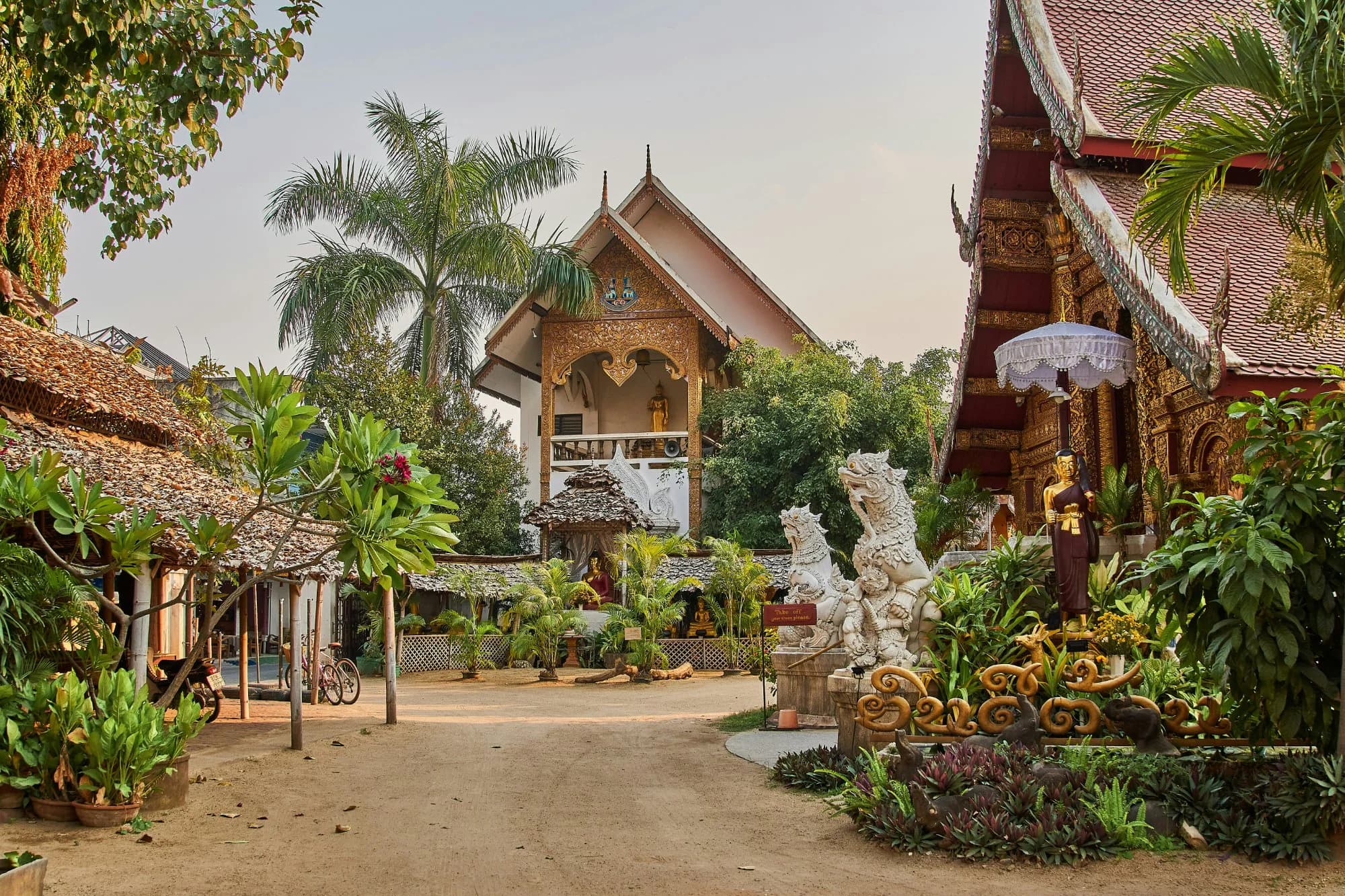
Lanna architecture, the traditional building idiom of northern Thailand, is a recurring reference point. Pitched teak rooflines, hand-carved detailing, terracotta and dark wood palettes, and open-air sala structures appear across the better properties. Suites in this context often feature private plunge pools, outdoor bathing areas, and dedicated butler or villa host service. The spatial standard at the upper tier is generous, with suites typically beginning at 60 to 80 square meters and scaling upward in private villa configurations.
Spa programming in the north draws on a distinct tradition from Bangkok or the south. Northern Thai massage techniques, herbal compress treatments using local botanicals, and steam therapies informed by hill tribe practices are characteristic of what the better properties offer. This is not a generic wellness proposition. It is regionally specific and, at the best properties, genuinely differentiated.
The first decision point is whether to prioritize traditional Lanna architectural character or a more contemporary design sensibility. Both exist in the market. Heritage-inflected properties offer cultural immersion through material choices and spatial arrangement. Contemporary properties, sometimes designed by architects with international profiles, offer a different kind of precision. Neither is categorically superior. The choice depends on the traveler's orientation and the kind of visual environment they wish to inhabit for the duration of the stay.
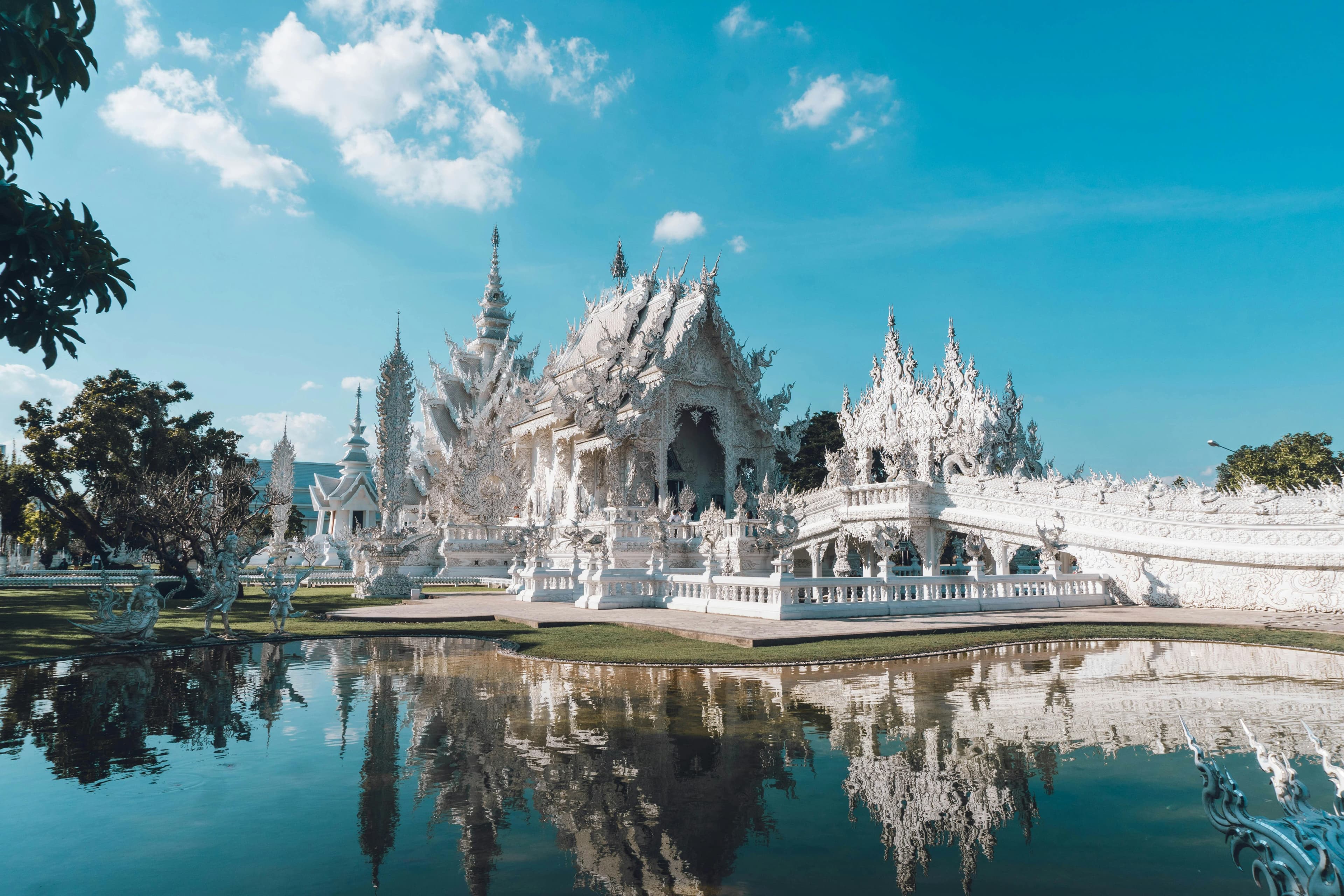
Mueang Chiang Rai's key cultural draw points, including the White Temple (Wat Rong Khun), the Blue Temple (Wat Rong Suea Ten), the Black House (Baan Dam Museum), and the hill tribe villages of the surrounding countryside, are distributed across a significant geographic spread. Travelers who wish to move through these sites efficiently should consider properties with reliable transfer infrastructure or in-house vehicles. Those who prefer fewer excursions and deeper immersion in a single environment may prioritize a hillside property with strong on-site programming.
The cool season allows for full use of outdoor suite elements: private terraces, plunge pools, and open-air dining areas. During warmer months, climate control and indoor amenities become more relevant. Suite selection should account for the season of travel, particularly in properties where architectural design emphasizes natural ventilation over mechanical cooling.
Mueang Chiang Rai's luxury hotel market is smaller and less documented than Bangkok's or Phuket's. Information asymmetry is real. Properties that present well in photography do not always deliver at the level their imagery implies. Equally, some of the most considered accommodations in the district operate with minimal digital presence and are difficult to surface through standard search processes.
La Suite's curation addresses this gap directly. Within the broader context of Asia's luxury suite landscape, northern Thailand occupies a specific and underserved niche. A curated selection filters for properties that meet a consistent standard across space, service, and cultural integrity, removing the research burden from the traveler and replacing it with a resolved set of options. For a destination as particular as Mueang Chiang Rai, that resolution is not a convenience. It is the difference between a considered trip and a compromised one.

The cool season, running from November through February, is the optimal period for booking a luxury suite in Mueang Chiang Rai. Temperatures are moderate, air quality is at its best, and outdoor suite amenities such as private terraces and plunge pools are fully usable. This period also represents peak demand, so advance booking is advisable.
The most considered properties in Mueang Chiang Rai draw on Lanna architectural traditions, which include pitched teak rooflines, hand-carved decorative elements, and a restrained palette of dark wood, terracotta, and natural stone. Some contemporary properties offer a more internationally inflected design language, with clean geometry and local material references used selectively.
Mueang Chiang Rai operates at a quieter, more culturally specific register than Bangkok or Phuket. The focus is on highland landscapes, Lanna cultural heritage, and artisanal craft rather than urban energy or beach infrastructure. Suites here tend toward privacy and spatial generosity rather than amenity density or resort scale.
Yes, a number of properties in and around Mueang Chiang Rai offer private villa configurations with dedicated outdoor space, plunge pools, and butler service. These are more commonly found in hillside or rural properties on the periphery of the city rather than in the urban center. La Suite's curated selection identifies the properties that meet this standard.
Guests staying in the city center have practical access to Wat Phra Kaew, the Night Bazaar, and the Oub Kham Museum, which houses a significant collection of Lanna artifacts. The White Temple and Black House are located further afield and typically require a dedicated half-day excursion by vehicle.
Spa programming in northern Thailand draws on a distinct regional tradition that includes northern-style Thai massage, herbal compress treatments using locally sourced botanicals, and steam therapies informed by hill tribe practices. This differentiates the wellness offering from what is available in Bangkok or the southern resort destinations.
Mueang Chiang Rai can accommodate family travel at the luxury level, particularly in private villa configurations that offer space and separation between adults and children. The cultural circuit of temples, craft markets, and elephant sanctuaries provides substantive programming for older children and teenagers. The destination is better suited to families seeking cultural engagement than those prioritizing beach or water-park infrastructure.
For travel during the November to February cool season, booking three to six months in advance is a reasonable approach for the most considered properties, which have limited inventory by design. Key holiday windows, particularly late December and early January, warrant earlier reservation to secure preferred suite categories.
At the upper tier of the market in Mueang Chiang Rai, suites typically begin at 60 to 80 square meters and may extend to 150 square meters or more in villa configurations. Most top-tier suites include a separate living area, private outdoor terrace, and either a plunge pool or large outdoor bathing facility. Butler or dedicated host service is standard at this level.
Mueang Chiang Rai's luxury market is smaller and less documented than major Thai destinations, and information quality on general booking platforms is inconsistent. La Suite curates specifically for suite-level accommodation, filtering for spatial standards, service quality, and cultural integrity. This removes the research burden and reduces the risk of a property that presents well in imagery but underdelivers in reality.