Why Guanajuato rewards a considered approach to accommodation
What makes it unusual among Central American destinations is the density of its cultural life relative to its size. The city has a permanent university population, a serious theatre scene, and a culinary identity rooted in local ingredients: enchiladas mineras, the region's signature chiles, artisanal mezcal from nearby producers. For a traveller who chooses suites deliberately, all of this creates an environment worth inhabiting slowly.
The best areas to stay in Guanajuato
The historic centre
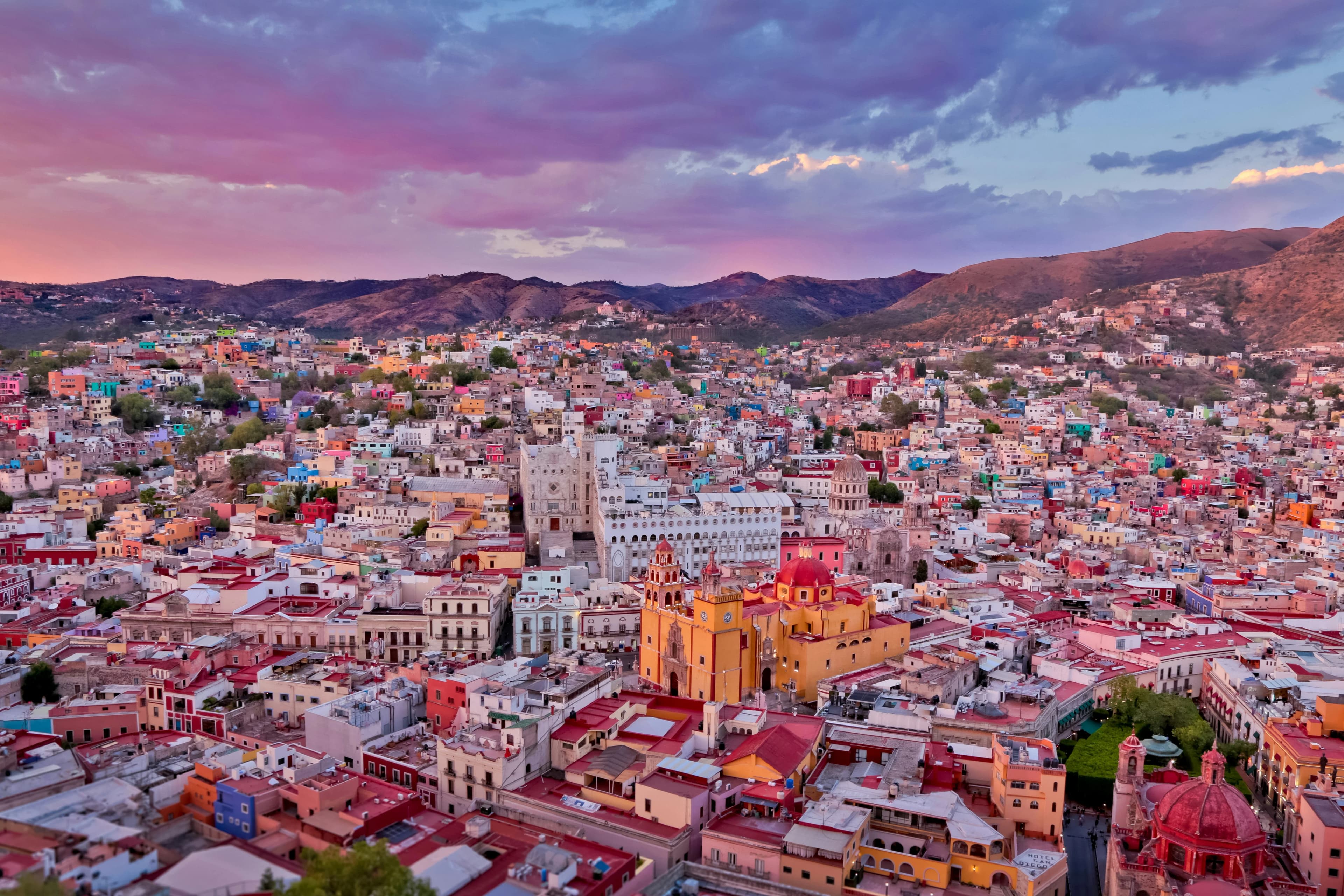
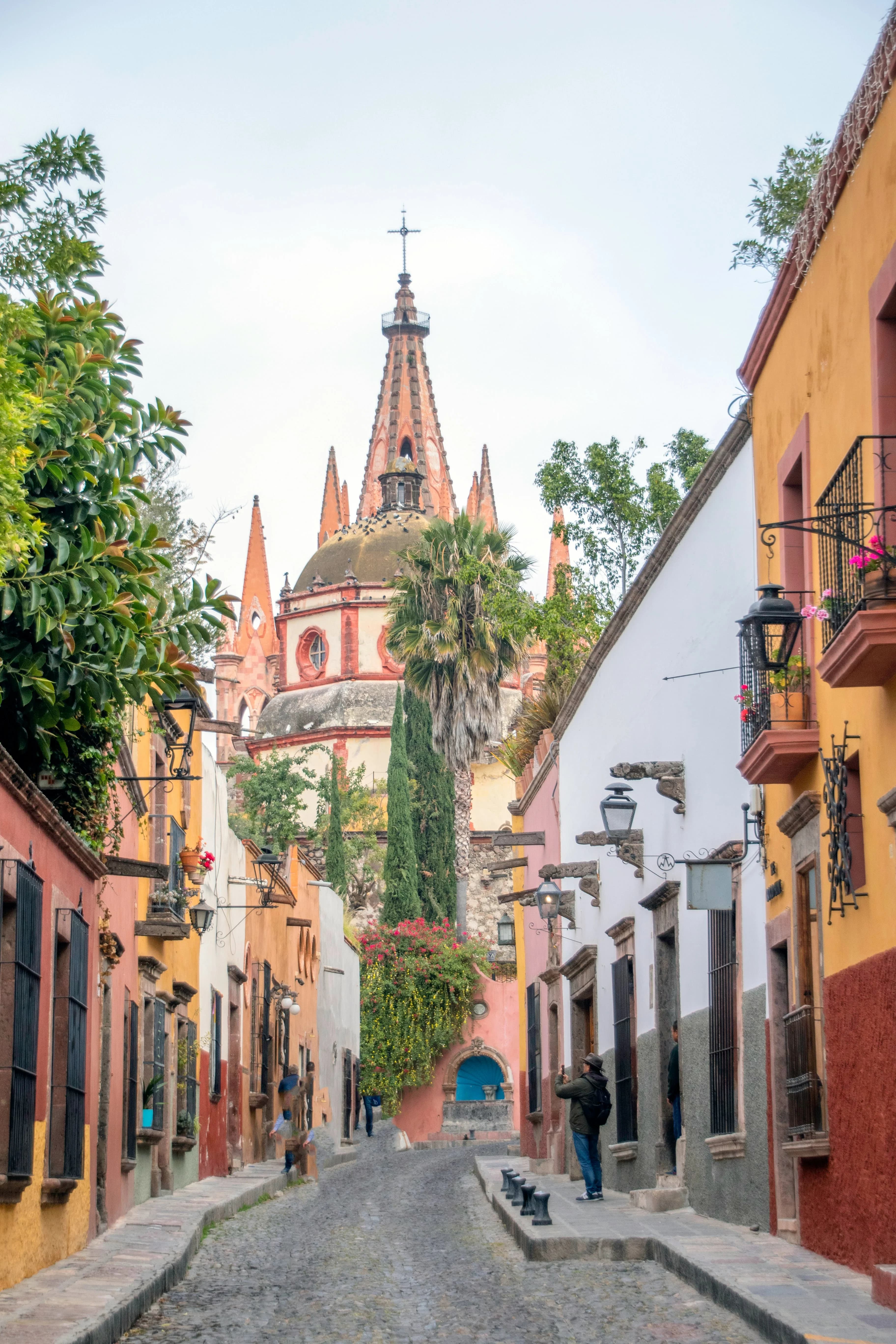
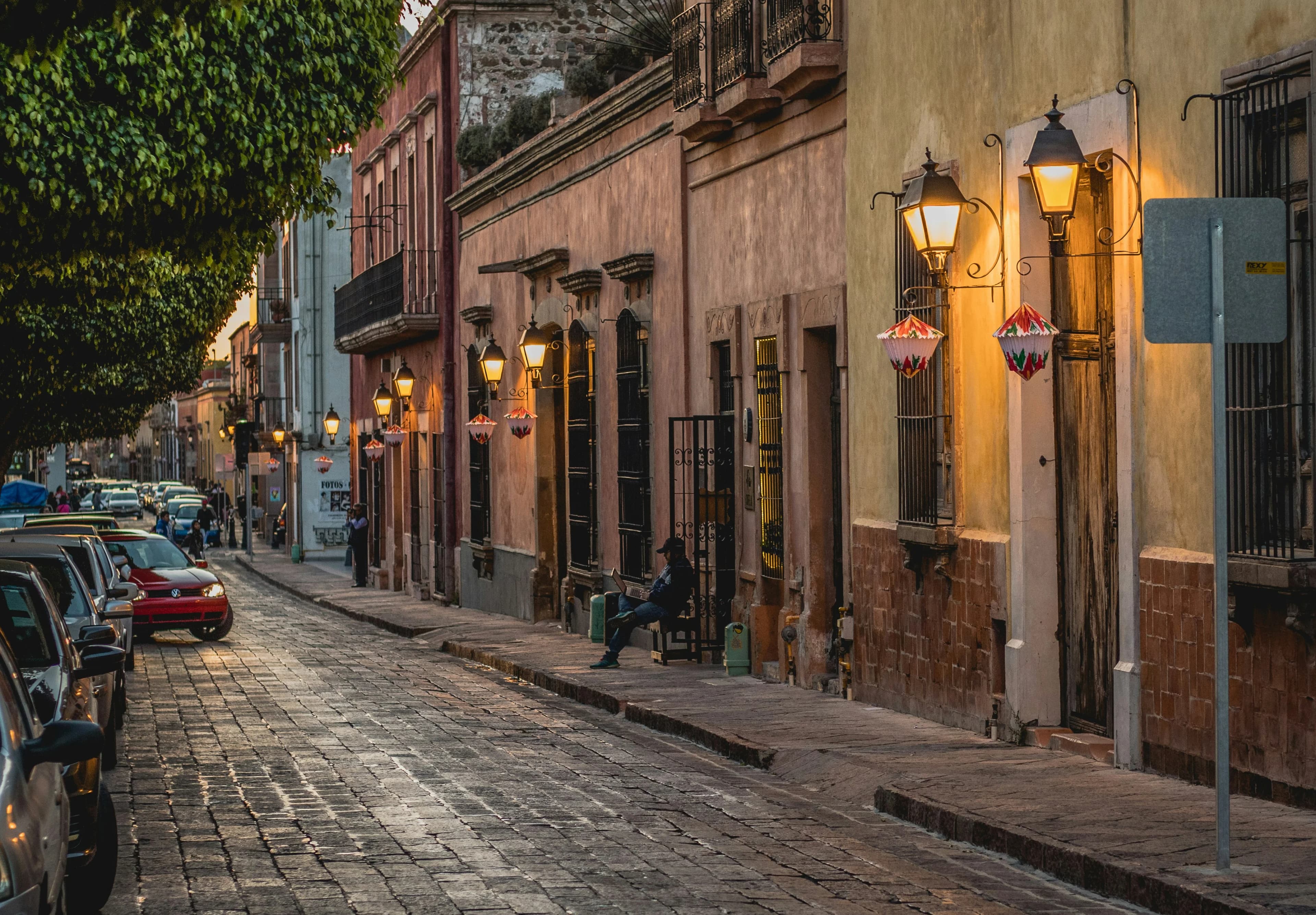
The centro histórico is the architectural heart of the city. Streets are narrow and largely pedestrianised, callejones wind between buildings painted in ochre, terracotta, and deep blue, and the topography means that most movement is on foot. Luxury hotel suites in this zone tend to occupy converted colonial mansions, offering interior courtyards, carved stone facades, and elevated terraces with views over the city's roofscape. Proximity to the Teatro Juárez, the Alhóndiga de Granaditas, and the central Jardín de la Unión makes this the most culturally immersive option.
The hillside districts
Guanajuato's residential hillside barrios, particularly those above the city centre, offer a different register. Suites in this zone tend to prioritise panoramic views and quieter surroundings. The tradeoff is accessibility: reaching the centre requires effort, but the reward is a vantage point that few travellers secure. For those who want to feel the city's geography rather than simply pass through it, a hillside property delivers that experience with clarity.
The pericentral neighbourhoods
Areas immediately adjacent to the historic core, including zones near the university and the Mercado Hidalgo, sit between the two extremes. They offer walkable access to the centre while maintaining slightly more breathing room. These neighbourhoods tend to attract a mix of boutique hotel operators and independent restaurateurs, creating conditions that suit a traveller looking for local texture alongside considered comfort.
When to visit Guanajuato for a luxury suite stay
Guanajuato's high season for cultural tourism clusters around October, when the Festival Internacional Cervantino takes place. Founded in 1972, the Cervantino is one of the most significant performing arts festivals in Latin America, drawing theatre, dance, and music productions from across the world. Suite availability during this period tightens considerably, and rates reflect the demand. Booking three to six months in advance is standard practice for travellers who have specific properties in mind.
The dry season, running broadly from November through April, offers the most reliable conditions for exploring the city on foot. Temperatures during the day remain in the low to mid-20s Celsius, with cooler evenings. The wet season, from June through September, brings afternoon rain that is typically brief but intense. The city's underground road system, the subterranean tunnels carved through what were once riverbeds, mitigates some of the disruption, but outdoor activity in the afternoon becomes less predictable.
Semana Santa (Holy Week, in March or April) draws significant domestic tourism, and the city's processional traditions are worth witnessing. It is also a period when certain hotels offer curated programming around the cultural calendar. For a traveller interested in the intersection of local ritual and refined hospitality, this window is underutilised.
Understanding luxury hotel standards in Guanajuato
Mexico does not operate a formal national classification equivalent to France's Palace designation, but the top tier of Guanajuato's hotel market is defined by a consistent set of characteristics. Properties at this level tend to occupy heritage buildings, with architectural conservation as a genuine operating constraint rather than a marketing claim. The integration of original stonework, carved wooden beams, and tiled interior courtyards is a marker of authenticity rather than decoration.
Service standards at the upper end reflect a Mexican hospitality tradition that is attentive without being performative. Staff in the best properties typically hold specific knowledge of the city: its history, its current cultural programming, and the kind of off-menu local experience (a mezcal producer who receives visits, a private tour of the Mina de Valenciana) that cannot be sourced from a guidebook. This is what separates a luxury hotel suite in Guanajuato from a well-appointed room: access to a city that does not fully disclose itself to visitors who arrive without introduction.
Room categories worth noting include terrace suites with direct views of colonial church facades, interior courtyard suites that trade the view for acoustic privacy, and upper-floor corner units that capture cross-ventilation in a city where air conditioning is rarely needed but sometimes absent. Understanding these distinctions before booking is material.
How to choose the right suite in Guanajuato
The first consideration is mobility. Guanajuato's topography is not incidental. Streets rise sharply, cobblestones are uneven, and distances that look short on a map frequently require more effort than anticipated. For travellers with mobility constraints, or for those who plan to arrive with significant luggage, understanding the access conditions of a specific property matters. Some historic buildings have no elevator and require negotiating several flights of stone stairs to reach upper-floor suites.
The second consideration is noise. The centro histórico is active, and sound carries in stone-built environments. Street-facing rooms on festival weekends can be loud well into the night. Interior courtyard suites, or properties set back from main pedestrian routes, offer greater acoustic control. This is a detail that photographs do not communicate and that standard booking platforms rarely flag.
The third is architecture versus amenity. Guanajuato's most characterful properties are historic buildings, and historic buildings sometimes involve compromises: irregular room shapes, limited natural light in lower floors, the absence of certain modern facilities. The best suites in the city have resolved these tensions thoughtfully, but the resolution is not universal. Reading the property closely, rather than relying on category and star rating, is the operative skill.
Why curation matters in a destination like Guanajuato
Guanajuato is not a city that generates the volume of luxury hotel commentary that more commercially prominent destinations do. The properties that perform best at this level are frequently boutique in scale, locally owned, and relatively limited in their marketing presence. Finding them requires a different kind of attention than searching a major booking platform by price filter.
La Suite's curated selection for Guanajuato is built on direct knowledge of the properties, the city's neighbourhoods, and the specific conditions (seasonal, architectural, operational) that shape a stay here. The goal is not to surface every option but to identify the suites that deliver consistently on the terms that matter to a traveller who has chosen this city with intention. That precision is the value of curation in a destination where the difference between a good suite and the right suite is not always visible from the outside.