Why Himara is becoming a serious destination for suite travelers
For context on the wider country and how Himara fits within it, the Albania destination page on La Suite provides a broader framework for planning a suite-focused itinerary across the country. And for travelers considering the region within a continental strategy, the Europe destination overview covers the full curatorial scope of what La Suite tracks across the continent.
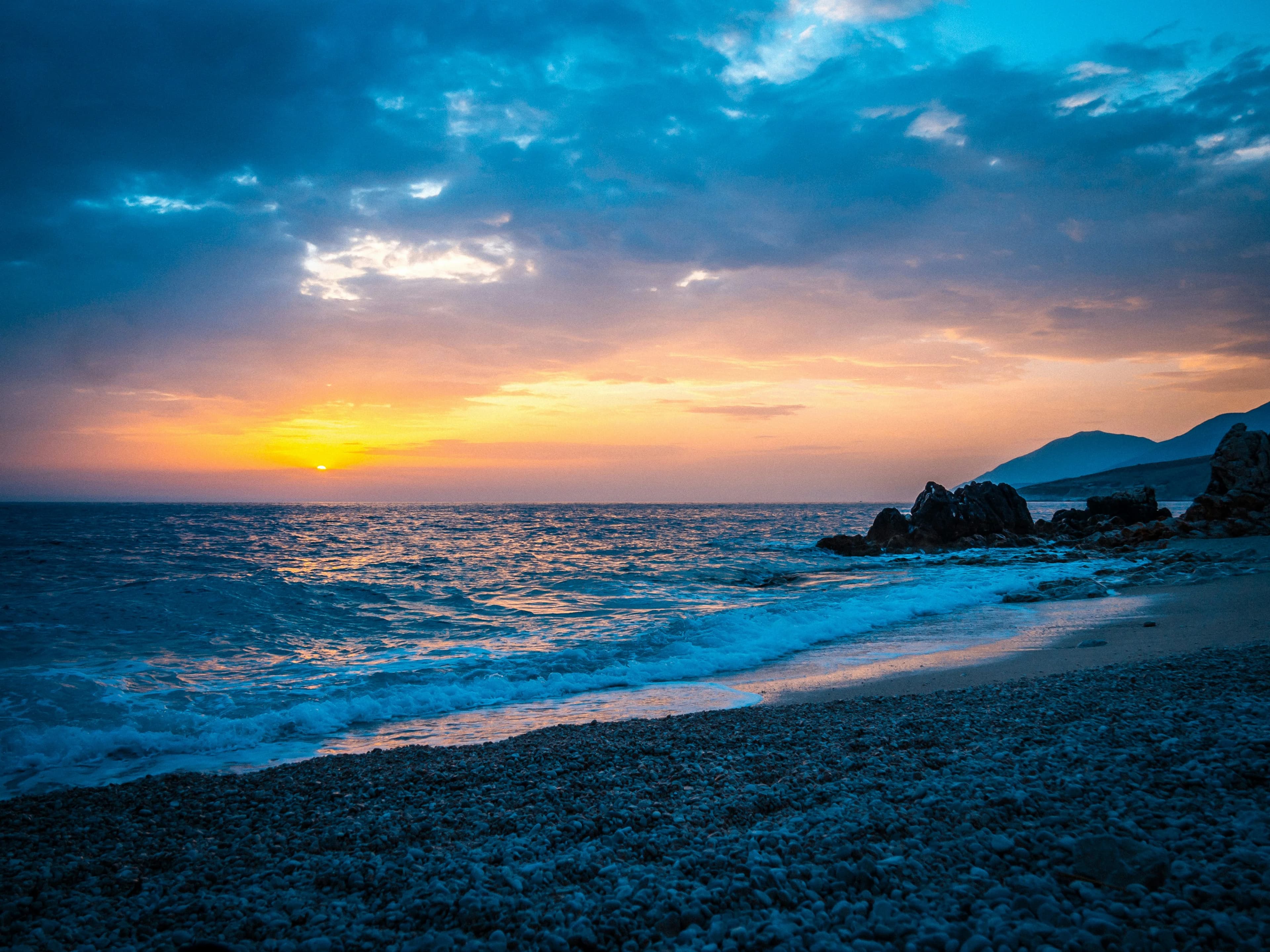
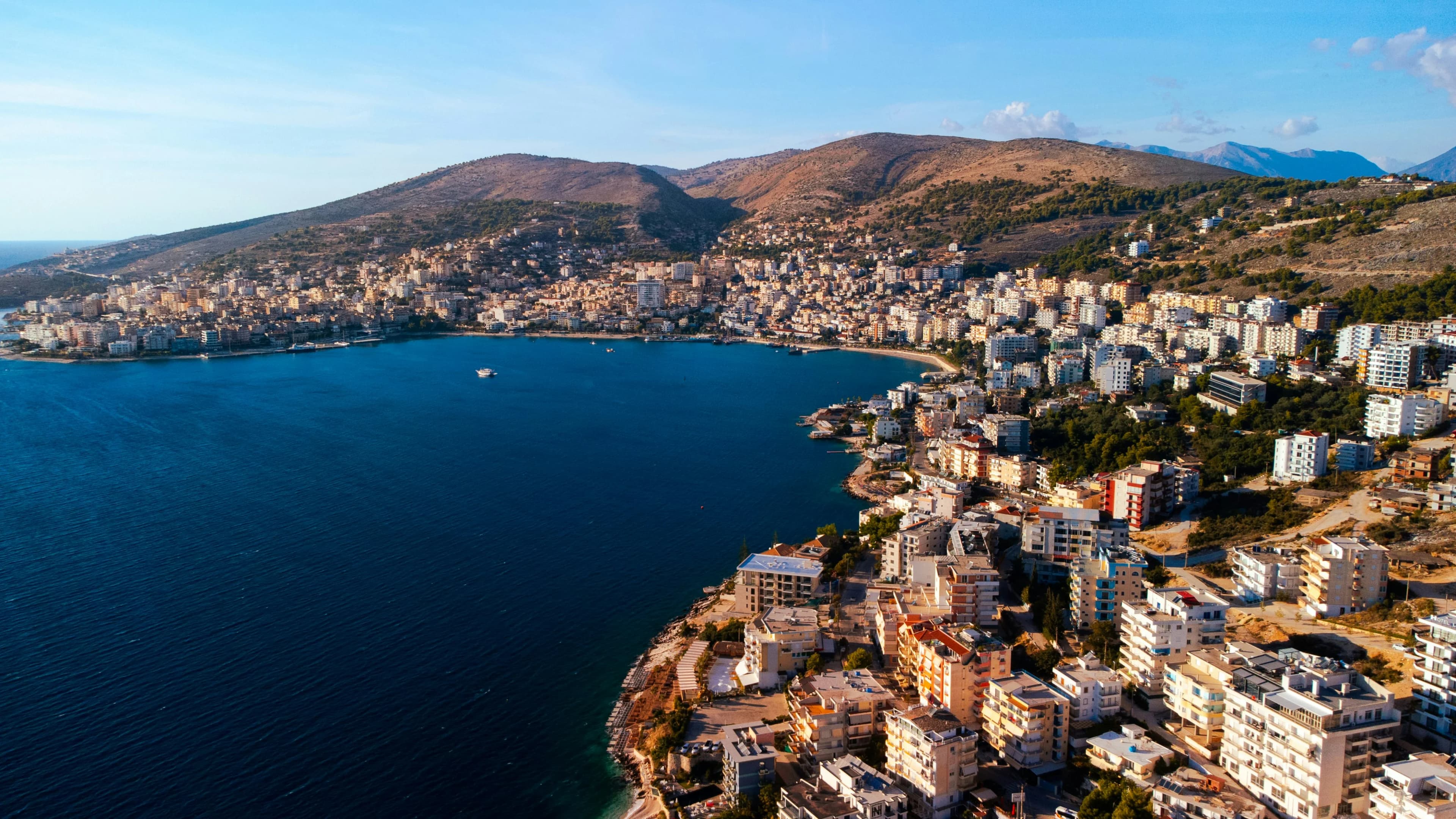
What distinguishes Himara from other Ionian coastal towns is its layered character. The old village, perched on a hill above the modern settlement, retains Byzantine and Ottoman stonework. The beaches below, including Livadhi and Jale, are long, clean, and structurally different from the cove-based beaches of the Greek islands nearby. The water clarity is measurable: the Ionian here registers among the cleanest in the Mediterranean basin.
Best areas to stay around Himara
The old village (Himara Castle area)
The upper village is where the architecture speaks most directly. Stone houses built into the hillside, narrow paths between walls that have absorbed several centuries of salt air, views that extend south toward the Greek border and north along the Riviera. Accommodation here tends toward boutique scale, with an emphasis on material authenticity: exposed stone, timber, and terraces that function as primary living spaces. For travelers whose priority is spatial honesty and historical weight, this is the logical base.
Livadhi beach and the lower town
The lower settlement is more contemporary in character. This is where the hospitality infrastructure has developed most rapidly since the early 2010s, with a range of properties oriented toward the beach and the sea horizon. Suites in this area typically offer direct or near-direct water access, larger floor plans, and the kind of amenity stack (private pools, rooftop terraces, in-suite dining) that defines the modern luxury hotel suite offer in emerging Mediterranean markets.
Jale and the northern coves
North of Himara proper, toward the village of Dhermi, a series of coves offer a more isolated experience. Jale is a beach that has attracted a younger, design-aware traveler profile. Properties here are fewer and tend to be smaller in scale, with a strong emphasis on outdoor living and proximity to the water. This area suits travelers for whom privacy and landscape access outweigh amenity density.
When to visit Himara for a suite stay
The Albanian Riviera operates on a compressed high season. July and August concentrate the majority of domestic and regional tourism, which means suite availability in Himara tightens considerably and rates reflect that pressure. Travelers who book into this window should do so early, three to six months in advance for the best properties.
The more considered choice, for most suite travelers, is June or September. Temperatures remain warm (averaging 26 to 28 degrees Celsius in June, slightly cooler by late September), the sea is fully swimmable, and the texture of the place is perceptibly different. Restaurants are less stretched, beaches are quieter, and the properties themselves function at a pace that allows for genuine service attention rather than throughput management.
May is viable for travelers whose priority is landscape over swimming. The mountains behind Himara are still green, the light is long and angled, and the sense of a destination not yet in season produces its own kind of appeal. October begins the wind season and properties start to close from mid-month onward.
Local luxury standards: what to expect from top-tier properties in Himara
Albania does not operate a formal hotel classification system equivalent to the French Palace designation or the Italian five-star L rating. This matters for the suite traveler because brand-name signals are largely absent. The quality differential between properties is real but it is expressed differently: in construction materials, in the ratio of staff to rooms, in the sourcing of food, and in the coherence of the design approach.
The best suites in Himara tend to share certain characteristics. Terraces are primary, not secondary, spaces. The relationship between indoor and outdoor is treated as the central architectural problem rather than an afterthought. Local stone, Ionian-sourced seafood, and the absence of corporate hotel language are reliable markers of a property that has been built with intention.
What Himara lacks, relative to more established luxury destinations, is the deep infrastructure of concierge knowledge and curated experience that a city like Tirana or a destination like Corfu can offer. This is not a failure. It is a condition of the destination's current moment. Travelers who understand this, and who value raw coastal quality over service density, are the ones who leave most satisfied.
How to choose the right suite in Himara
The first decision is elevation versus proximity. Suites in the old village or on the hillside above Livadhi offer views and architectural character but require a short journey to reach the water. Suites at beach level offer immediacy and ease but sacrifice the panoramic spatial quality that the terrain makes possible from height.
The second consideration is scale. Himara's best properties are not large hotels. Many of the most carefully built options have ten to twenty rooms at most. This means suite categories are limited, and the distinction between a standard room and a suite may be more a matter of terrace size and floor plan than the category difference that a larger luxury hotel in an established city would express.
Third: assess the food offer directly. In a destination where restaurant infrastructure is still consolidating, the in-property dining experience matters more than it would in a city. The best suites in Himara are attached to kitchens that work with the daily catch and local produce from the Ionian hinterland. This is a meaningful differentiator.
The value of curation in a destination like Himara
Himara presents a specific curatorial challenge. The destination is developing quickly, the signal-to-noise ratio in online booking platforms is poor, and the gap between a property with strong photography and one with genuine quality is wider here than in most established luxury markets.
La Suite applies the same editorial standard to Himara that it applies to Europe as a whole: direct knowledge of the properties, a consistent framework for assessing what a luxury suite should deliver, and a refusal to list on the basis of marketing materials alone. For a destination at Himara's current stage of development, this kind of curatorial filter is not a convenience. It is a material advantage for the traveler making a serious investment of time and money in an emerging coastal territory.
The Albanian Riviera will not remain undiscovered. The infrastructure is consolidating, international interest is measurable, and the quality ceiling of the best properties is rising. The window for experiencing Himara before it reaches the saturation point of better-known Ionian destinations is a real and finite one.