Why Baden-Baden rewards suite-level travel
The city's thermal tradition dates to Roman occupation, when the springs at Aquae Aureliae were already in use. That continuity of purpose, nearly two thousand years of people arriving to restore themselves, shapes the ambient culture of Baden-Baden in ways that no marketing language can fully capture. Guests arrive with different intentions than they might elsewhere. A luxury suite becomes the private anchor of a longer, more interior journey.
The distinct character of Baden-Baden's luxury districts
The Kurhaus quarter
The area immediately surrounding the Kurhaus and the Casino represents the historical and architectural core of Baden-Baden's prestige. The casino, designed by Friedrich Weinbrenner in the early nineteenth century and expanded later in the French style, remains one of the most formally impressive gaming establishments in Europe. Hotels in this zone benefit from proximity to the Festspielhaus, one of the largest opera and concert venues in Europe, and to the formal gardens that frame the thermal district. Suite guests here are within walking distance of Baden-Baden's most concentrated cultural infrastructure.
Lichtentaler Allee and the park corridor
This two-kilometre riverside promenade, lined with rare trees and connecting the centre to the Lichtentaler Abbey, defines the softer, more residential character of Baden-Baden's luxury geography. Hotels positioned along or near this corridor offer a quieter relationship to the city. The Museum Frieder Burda, housing one of Germany's most significant private collections of classical modernism and contemporary art, sits directly on this axis. For culturally motivated travelers, proximity to this corridor is a meaningful consideration when selecting a suite.
The hillside and forest perimeter
Baden-Baden's western and southern edges climb into the Black Forest proper. Properties positioned at higher elevations offer a different proposition: forest views, reduced urban noise, and a more explicit connection to the landscape that has defined the region's therapeutic identity for centuries. The tradeoff is distance from the central thermal facilities and cultural venues, which for some guests is precisely the appeal.
When to visit Baden-Baden for a luxury suite stay
Baden-Baden operates year-round, which distinguishes it from seasonal resort destinations. The thermal baths, including the historic Friedrichsbad and the contemporary Caracalla Therme, are available in every season. That said, the calendar has distinct peaks that affect suite availability and pricing.
Late spring, from May through June, brings mild temperatures and the full activation of the outdoor promenade culture. The International Tennis Tournament, part of the WTA tour, draws a well-traveled crowd and compresses suite availability in the city centre. Summer through August sees the highest general occupancy, aligned with German domestic travel and European touring patterns.
September and October are arguably the most refined months to visit. The Festspielhaus season opens with significant opera and orchestral programming. The Black Forest foliage shifts, and the city settles into a more considered, less tourist-dense rhythm. Suite rates often reflect this, with better availability than peak summer while the cultural calendar remains full.
Winter in Baden-Baden is genuinely atmospheric. The Christmas market at the Kurhaus is among the more elegant iterations of that German tradition, and the thermal facilities feel most purposeful when the temperature drops. Occupancy is lower, and extended suite stays at more competitive rates become negotiable with the right approach.
Understanding luxury standards in Baden-Baden
Germany does not operate a formal palace hotel classification equivalent to France's Palace label, but Baden-Baden's top-tier properties benchmark themselves against European grand hotel traditions rather than national standards alone. The reference points here are the historic grand hotels of Switzerland and Austria as much as anything within Germany itself.
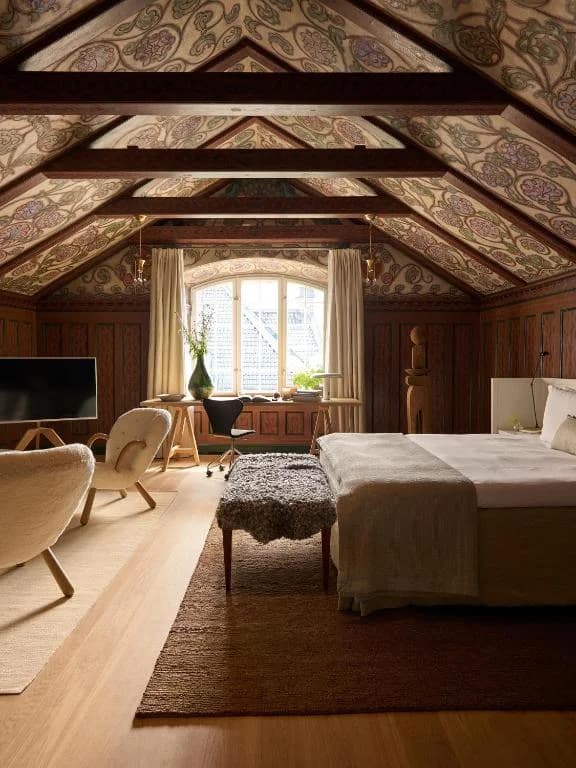
Guests should expect suites in the upper tier to reflect the city's Belle Epoque heritage in their spatial design, with high ceilings, formal proportions, and an emphasis on crafted materials rather than minimalist reduction. Baden-Baden's luxury hotel culture leans toward the classical rather than the contemporary. That is not a limitation. It is a coherent aesthetic position that suits the city's identity precisely.
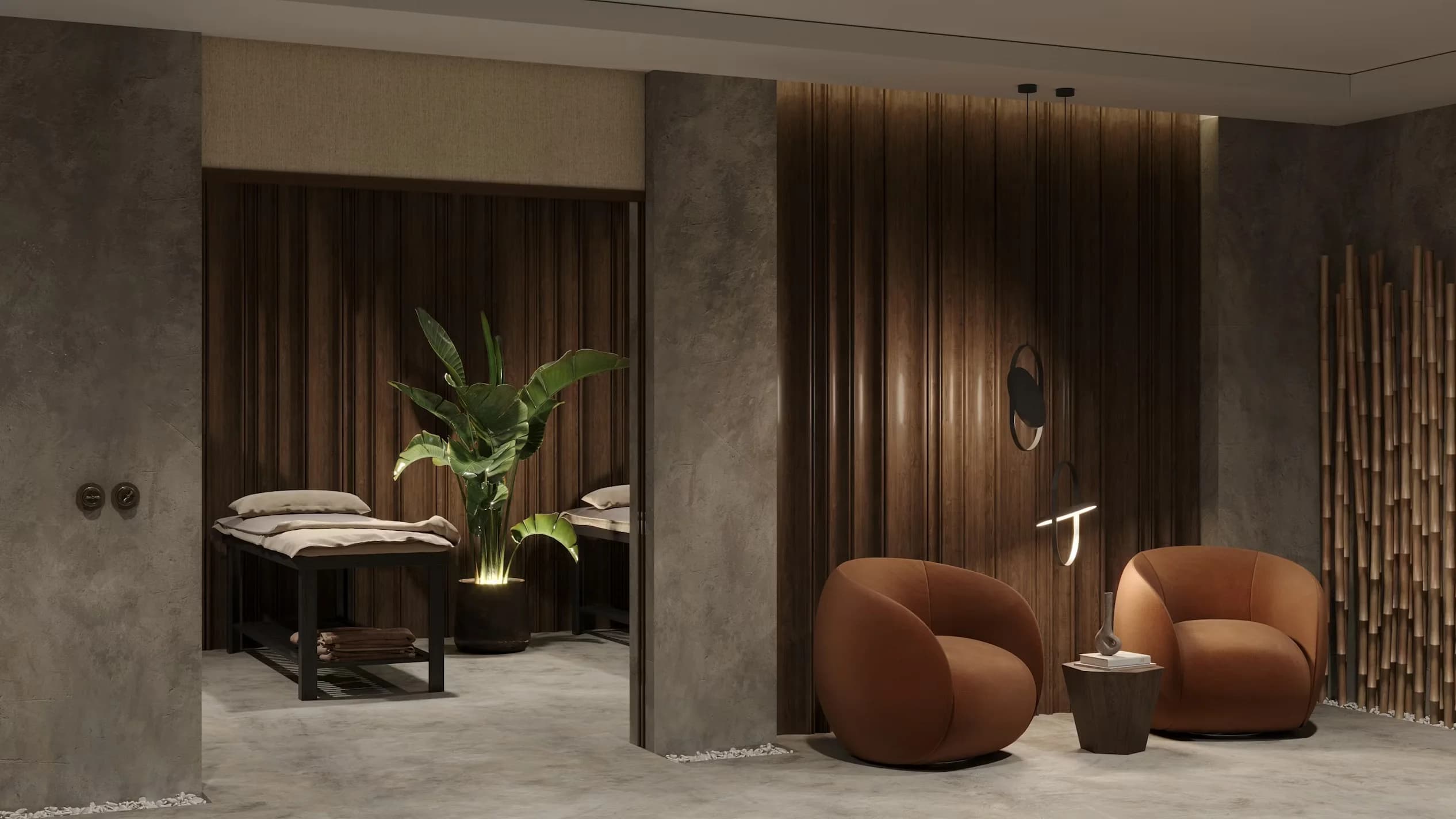
Thermal access is a meaningful differentiator among suite offerings in Baden-Baden. Properties with direct or private thermal facilities represent a distinct category from those that offer proximity to the public baths. When evaluating suites, the relationship between in-suite amenities and access to thermal infrastructure is worth examining in detail. The Friedrichsbad, a nineteenth-century Roman-Irish bath house, operates on a strict protocol with no swimwear permitted. Understanding what each property offers in relation to this landscape is part of making an informed choice.
How to choose the right luxury suite in Baden-Baden
The first consideration is spatial: Baden-Baden is a compact city, and the meaningful distinctions between locations are measured in walking time rather than distance. A suite positioned near the Kurhaus places you inside the formal thermal and cultural district. A suite along the Lichtentaler Allee places you inside the park corridor. Both are central. The question is which urban texture you want at the edge of your window.
The second consideration is architectural register. Baden-Baden's luxury hotel stock skews toward nineteenth-century construction, and the quality of suite renovation within these buildings varies. Original architectural detail, ceiling height, and the integrity of the historical fabric are worth prioritising over floor area alone. A smaller suite that retains its Belle Epoque character will generally produce a more coherent experience than a larger, heavily refurbished space that has lost its material memory.
Third, consider the role of the thermal journey in your stay. If the Friedrichsbad or Caracalla Therme will anchor your daily rhythm, proximity to those facilities is a functional concern as much as an aesthetic one. If the thermal dimension is secondary and cultural programming is primary, the Festspielhaus quarter becomes the more logical orientation.
The value of curation in Baden-Baden
Baden-Baden has a relatively small number of properties that genuinely operate at luxury suite level. The city is not diluted by mass tourism infrastructure in the way that larger German cities can be. However, the distinction between a very good hotel and a suite experience calibrated to the city's specific character is significant and not always visible in standard booking interfaces.
La Suite's curated selection for Baden-Baden isolates the properties where the suite product, the spatial quality, the service architecture, and the relationship to the city's thermal and cultural identity, converge into something coherent. For travelers arriving with a considered intention, that specificity matters. The curated selection by La Suite removes the noise from a market where surface-level presentation can obscure meaningful differences in actual experience.