Where to stay in the Alpilles: understanding the territory
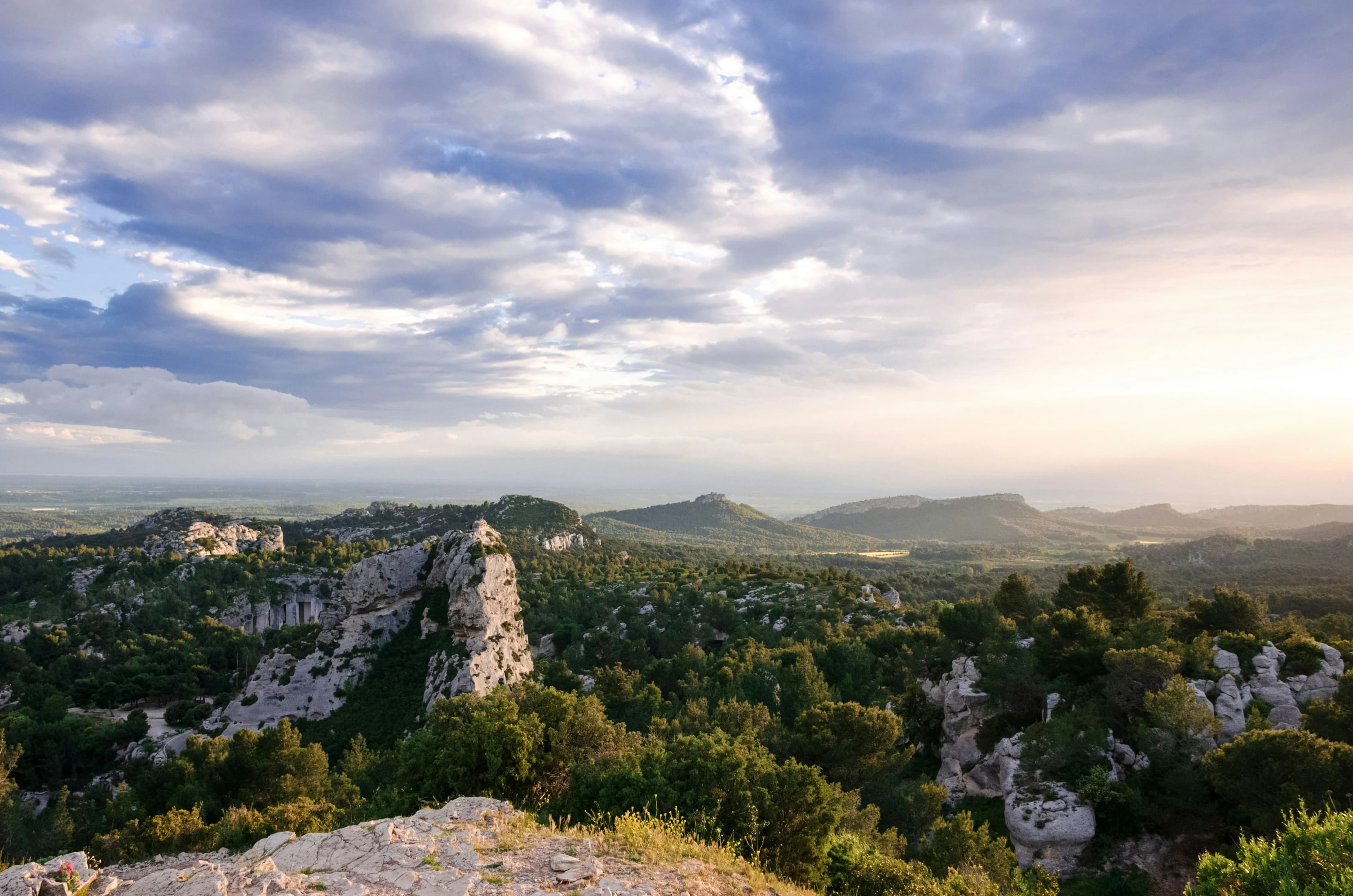
To the south, the village of Les Baux-de-Provence sits on a rocky outcrop above the Val d'Enfer, the Valley of Hell, a landscape of eroded limestone formations that gives the area a distinctly geological character. Properties in this corridor offer a more dramatic setting, with suites often positioned to frame views of the Alpilles ridge itself.
The western edges towards Fontvieille and the Abbaye de Montmajour are quieter and more agricultural. Estates here are fewer but tend towards larger footprints, with olive production and vineyard land integrated into the property. For travelers seeking absolute privacy, this corridor rewards attention.
When to visit the Alpilles for a luxury suite stay
The Alpilles follows a classic Provençal seasonal rhythm, but the window for optimal conditions is somewhat more specific than the broader region. Late April through June offers the most balanced combination of mild temperatures, low occupancy at top properties, and the full botanical display of the garrigue in flower. This period also precedes the summer concentration of visitors that defines July and August.
July and August bring the most intense light and warmth, which has its own architectural logic for a region whose palette is built on bleached stone and silver-green foliage. Suite availability at leading properties tightens considerably during this period, and advance planning becomes essential. The Fête de la Transhumance in Saint-Rémy-de-Provence, held in late June, marks a cultural moment of genuine local character.
September and October represent perhaps the most sophisticated window for a suite stay. The harvest season activates the olive estates and vineyards, temperatures remain entirely comfortable, and the quality of light shifts to something warmer and more lateral. November through March brings closures at a number of smaller properties, though a selection of year-round hotels maintain full service and offer a markedly quieter, more intimate version of the Alpilles.
Luxury standards in the Alpilles: what the designation means here
France operates a formal prestige classification for its top hotels, the Palace label, awarded by Atout France to properties that exceed the five-star standard across architecture, service, and cultural contribution. While Palace-designated hotels are concentrated in Paris and the Côte d'Azur, the Alpilles contains properties that approach or meet this standard without necessarily holding the formal title, given the scale and rural nature of the inventory.
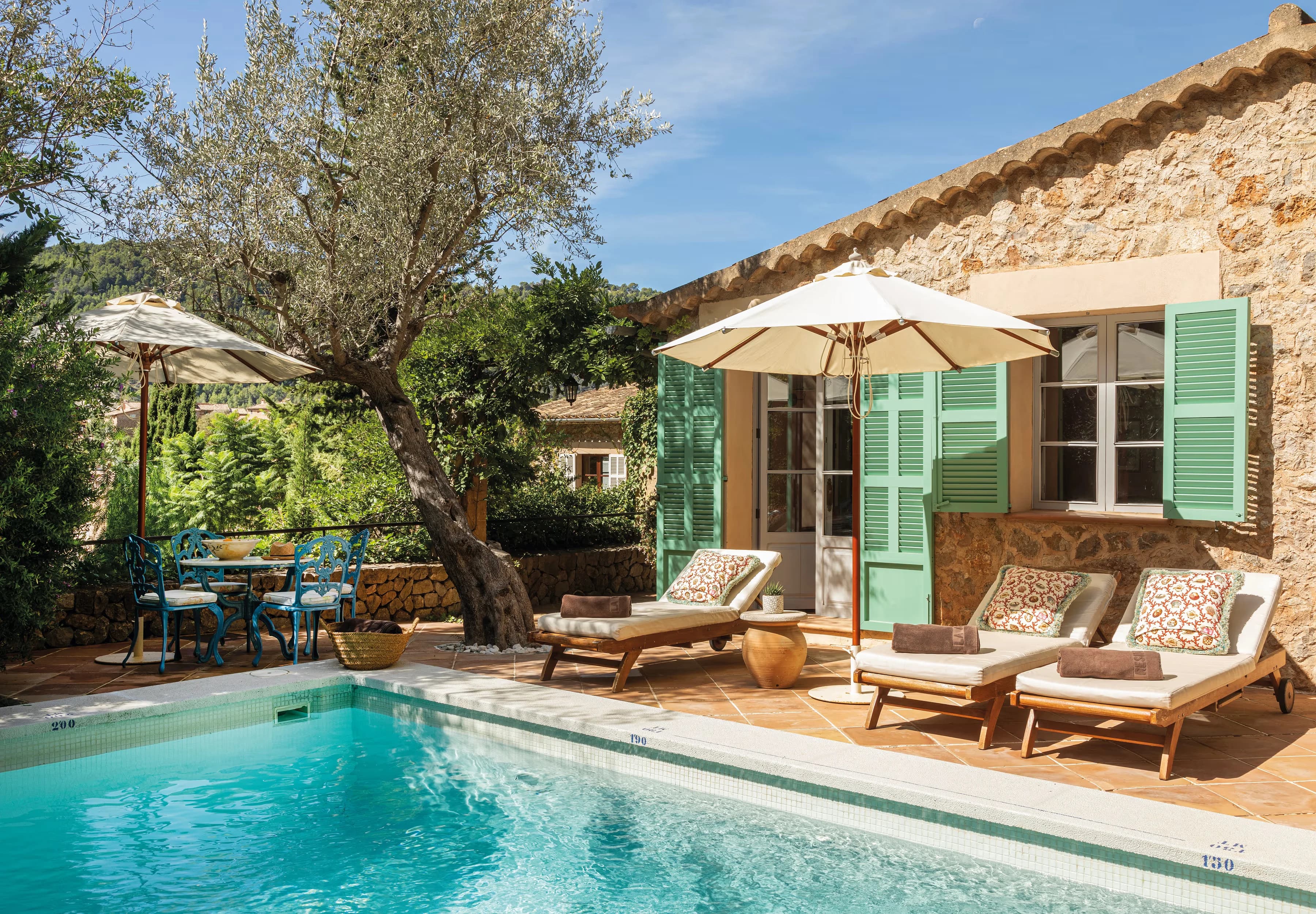
The prevailing typology here is the mas, the traditional Provençal farmhouse, converted and extended into a luxury hotel. The best of these retain the original stone construction, irregular volumes, and relationship to agricultural land that defines the form, while integrating contemporary suite appointments: climate control calibrated for thick-walled interiors, private pools positioned for solar exposure, and culinary operations built around the immediate terroir.
A number of properties in the Alpilles hold Relais and Châteaux membership, a designation that implies a verified standard of independence, architecture, and table quality. For travelers using property classification as a decision framework, this affiliation is a useful signal in a market where branding can sometimes outpace the actual experience on offer.
How to choose the right luxury suite in the Alpilles
The primary decision axis in the Alpilles is the relationship between enclosure and openness. Properties converted from historic mas tend to organise their suites around interior courtyards, with privacy achieved through stone walls and planted screening. The experience is immersive and contained, shaped by the architecture itself. Properties built on more exposed sites, particularly those facing the limestone ridge, offer a different proposition: broader sightlines, more direct engagement with the landscape, and a sense of elevation that changes the quality of the stay.
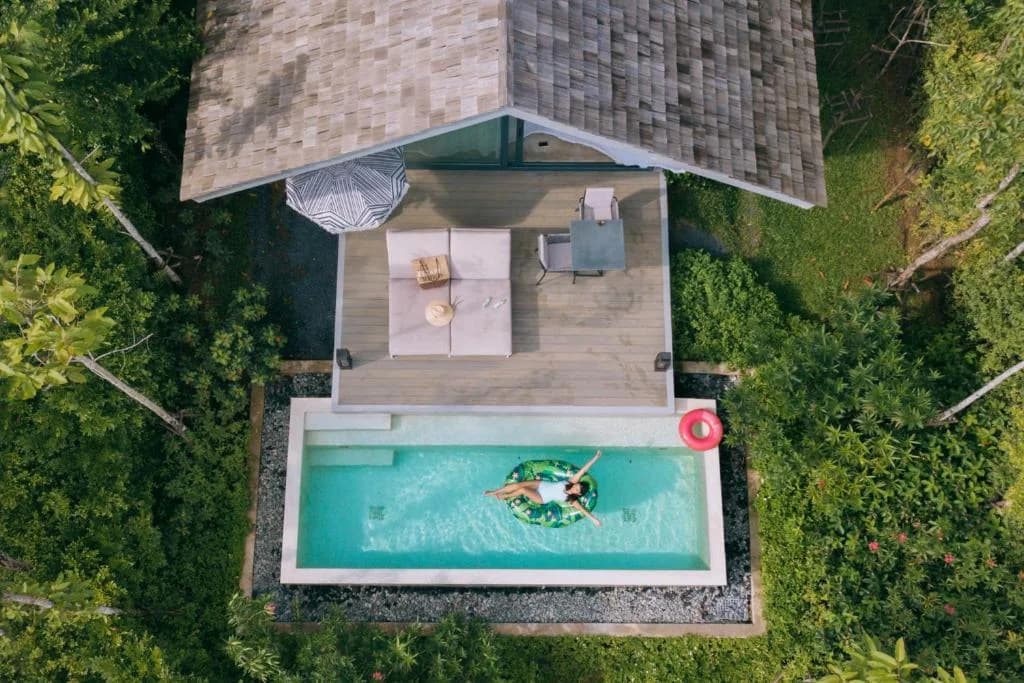
A second consideration is the relationship to water. Private pool access at the suite level, rather than shared pool access at the property level, represents a meaningful distinction in a region where summer temperatures regularly exceed 35 degrees Celsius. Suites with dedicated plunge pools or direct terrace access to a shared pool in a private configuration are worth specifying at the point of inquiry.
For travelers arriving by car from Paris or Marseille, proximity to the A7 autoroute and the TGV connection at Avignon TGV station is a practical factor. Saint-Rémy-de-Provence sits approximately 20 minutes from the Avignon TGV, making properties in the northern Alpilles accessible without requiring a long transfer after a high-speed rail journey.
Finally, the culinary dimension of a suite stay in the Alpilles carries weight. Several properties operate restaurants of significant standing, with access to the olive oils, cheeses, and market produce of the immediate area. For travelers for whom the table is a primary consideration, verifying the operational status of a property's restaurant, particularly in shoulder season, is a reasonable step before confirming a reservation.
Why curated selection matters in the Alpilles
The Alpilles is a geographically concentrated area, but the range in quality across properties marketed as luxury hotels is considerable. The category includes historic estates with genuine architectural distinction and serious culinary programmes alongside renovated farmhouses where the luxury positioning is primarily a function of price rather than experience.
La Suite applies a consistent editorial framework to this market: architectural coherence, suite-level privacy, service depth, and a verifiable connection to the surrounding terroir. In a destination where the experiential gap between properties is often not apparent from photography or standard review platforms, that curation has a direct bearing on the outcome of a stay.
The curated selection by La Suite for the Alpilles reflects properties that meet these criteria across seasons, not simply during peak summer when most operations are at full capacity. This distinction matters for travelers planning visits in April, October, or December, when the character of the destination is often at its most considered and the quality of the property experience becomes the primary variable.