Maya Beach Resort, Massa Lubrense
Prime Beachfront Location Maya Beach Resort in Massa Lubrense offers a private beach area and direct beachfront access. Guests enjoy stunning sea views and a saltwater infinity swimming pool.

The Sorrentine Peninsula is one of the most geographically complex coastal territories in Italy. Massa Lubrense, its westernmost municipality, is composed of more than thirty scattered hamlets, each sitting at a different elevation above the sea. This fragmented topography is not incidental. It is the defining quality of the destination. A luxury hotel suite here does not place you at the center of a resort complex. It places you within a specific landscape: a terrace above a fishing cove, a room angled toward the silhouette of Capri at dusk, a garden where the scent of citrus is structural rather than decorative.
2 hotels available

Prime Beachfront Location Maya Beach Resort in Massa Lubrense offers a private beach area and direct beachfront access. Guests enjoy stunning sea views and a saltwater infinity swimming pool.

Located in Massa Lubrense, Villa Fiorella has a terrace with views of the Gulf of Naples. It offers an outdoor pool, free WiFi and traditionally furnished accommodations with a satellite LED TV. Room
Hotels in the area, but in a neighbouring town.

Offering panoramic views across the Gulf of Naples, Bellevue Syrene is an elegant choice for your stay in Sorrento. It offers an outdoor swimming pool and free Wi-Fi throughout. This 18th-century vil

On a rock overlooking the Bay of Naples, the Vittoria includes 3 historic buildings set in a private Mediterranean park. The property's entrance is in Sorrento’s main square. A elevator links directly

Parco dei Principi is surrounded by a 3 hectare park. Set on a cliff at 0.6 mi from Sorrento city center, it offers free Wi-Fi, a free fitness center and panoramic views across the Gulf of Naples. Ro

12 km away
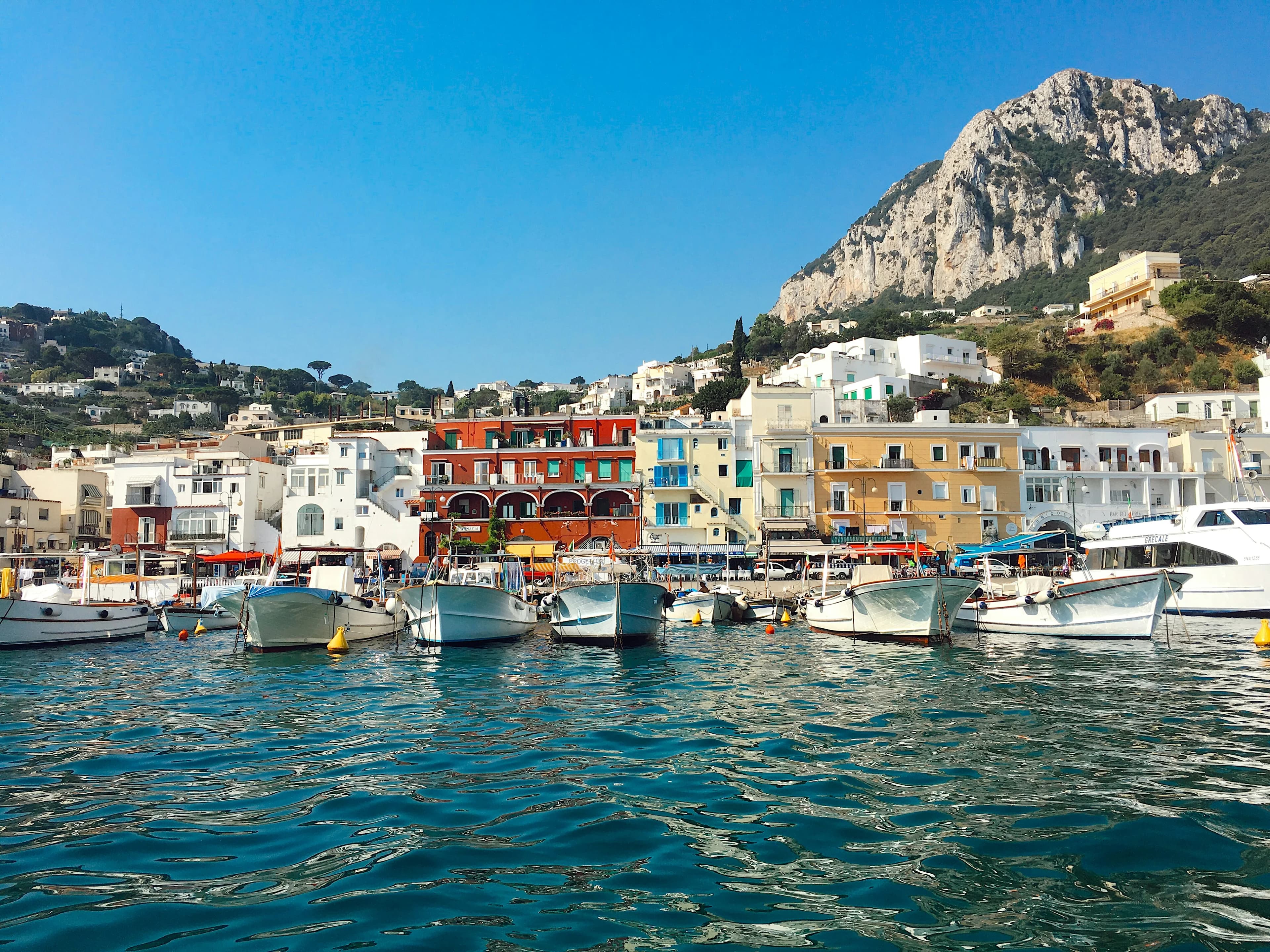
Capri is small by design. At roughly ten square kilometres, the island enforces a particular rhythm: slower, more attentive, governed by light rather than schedule. This compression is an asset for the suite traveler. When the day-trip crowds return to the mainland by late afternoon, the island shifts register entirely. Streets empty. The scent of lemon and rosemary reasserts itself. Restaurants settle into quiet service. What remains is exactly the kind of environment where a well-chosen luxury hotel suite becomes the natural centre of gravity for the entire stay.

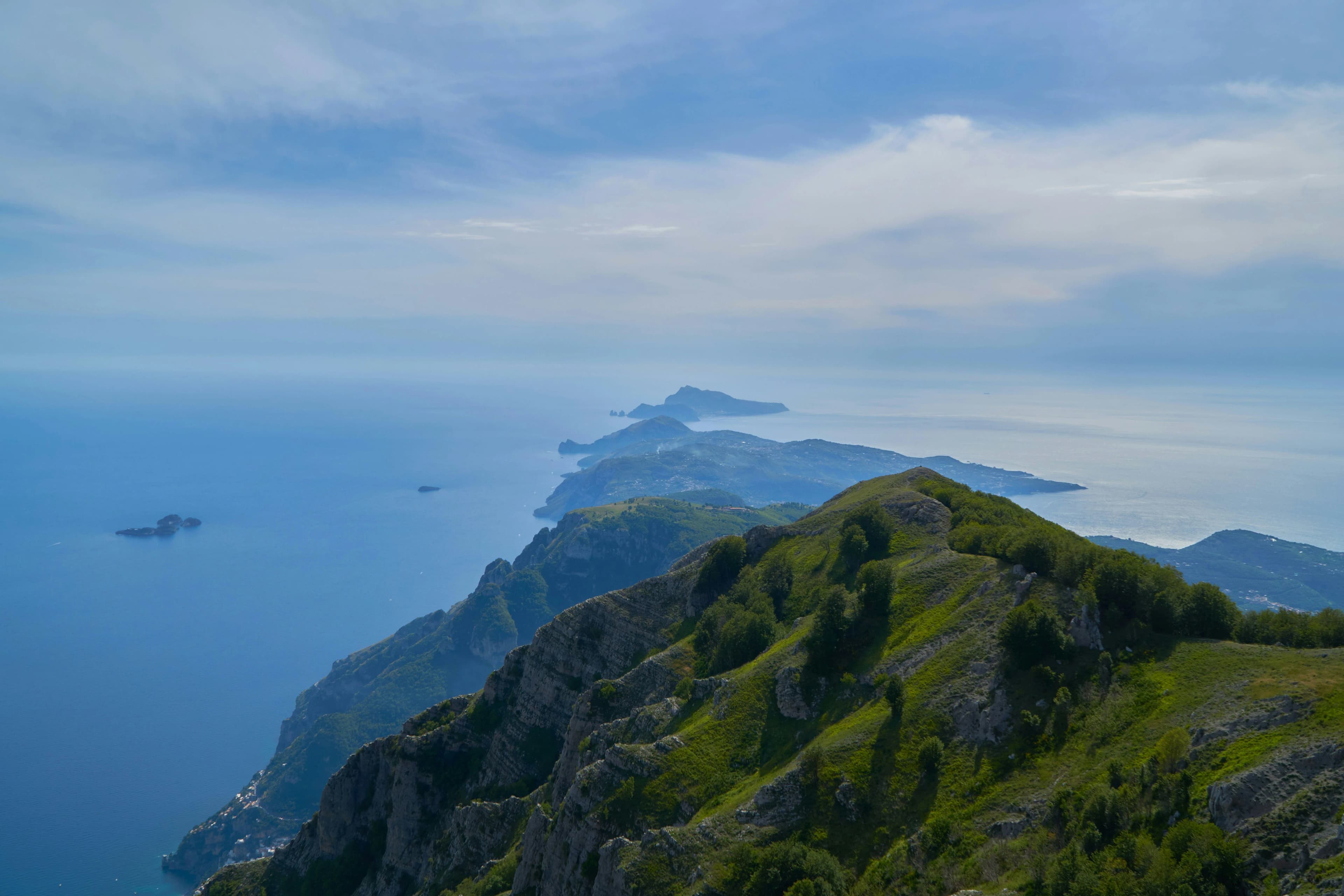
Vico Equense is not a resort town. It is a working coastal commune that has retained its civic identity while sitting on one of the most dramatically beautiful coastlines in Italy. The cliffs drop sharply into the Tyrrhenian Sea. The streets narrow into passages flanked by tufa stone walls. The local market operates by its own calendar. For travelers who choose their suite with the same care they give to their itinerary, this is exactly the kind of place that rewards attention.

23 km away
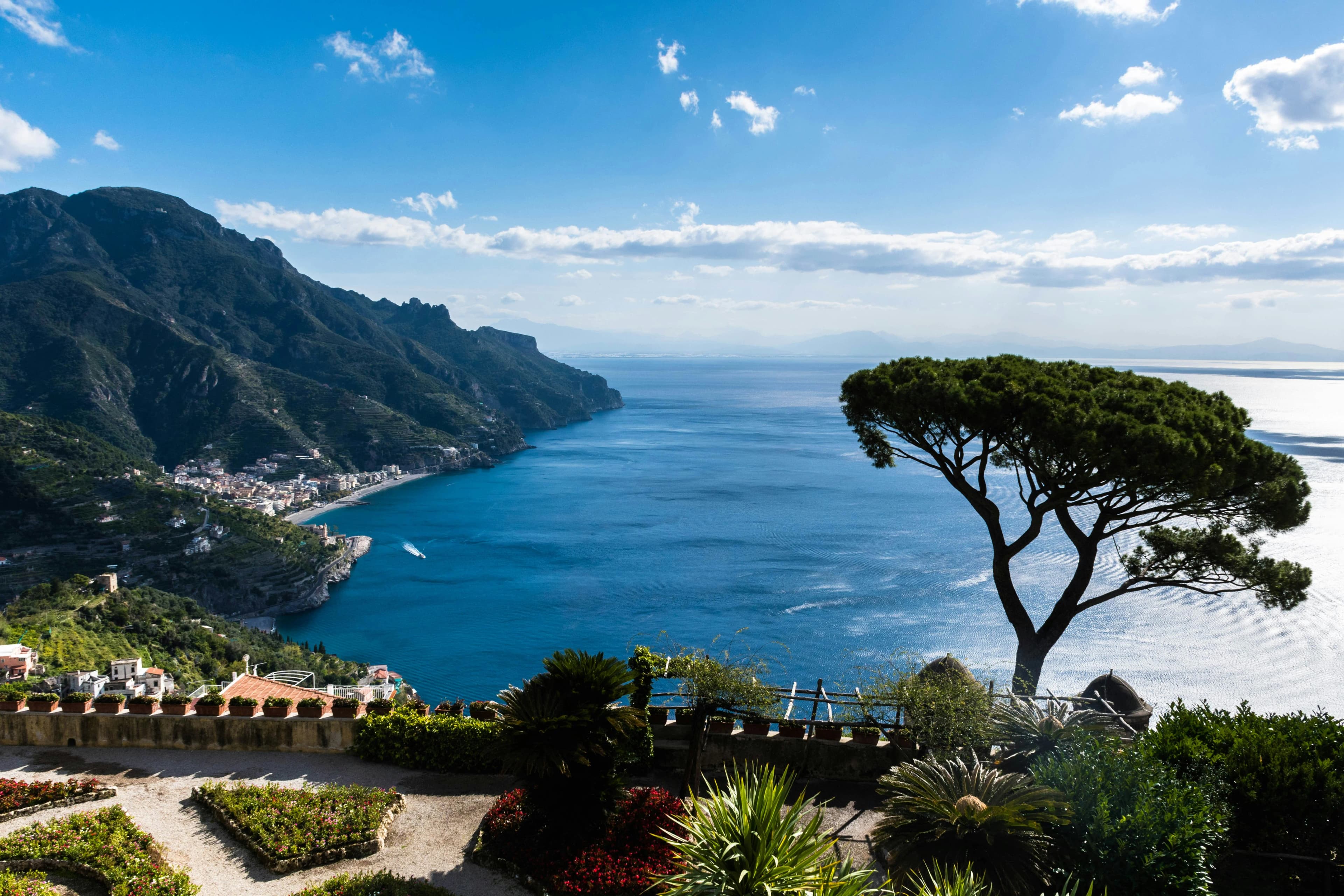
Ravello is not a resort town in any conventional sense. It has no beach of its own. Its streets are narrow, its population small, and its identity built entirely around aesthetic contemplation rather than commercial hospitality. What draws high-end travelers here is precisely this refusal to perform. The town sits on a ridge of the Lattari Mountains within the UNESCO World Heritage-listed Amalfi Coast, and its position isolates it from the noise and congestion that characterise the coastal road below.
Travelers who have already experienced the main Amalfi Coast circuit tend to arrive in Massa Lubrense with a clear set of priorities. They want fewer crowds, more considered architecture, and the kind of quiet that allows the coastal light to register properly. The luxury hotel offer here reflects that demand, with properties that favor restraint over spectacle and terraces over lobbies.
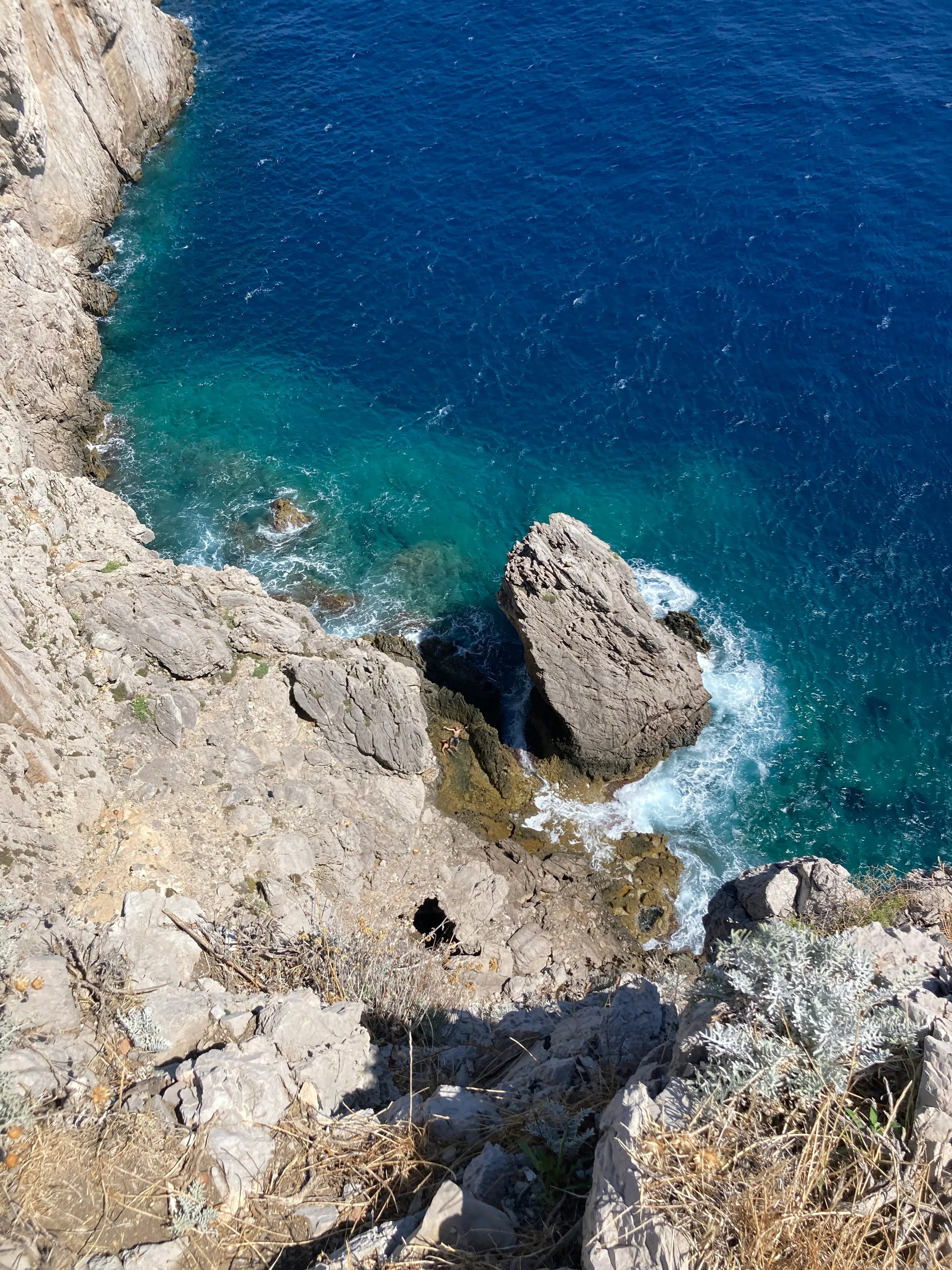
The southernmost point of the peninsula, Punta Campanella, faces Capri across a strait of roughly four kilometers. The hamlets nearest this point, particularly Termini, offer the most dramatic orientation: open sea on two sides, minimal traffic, and a protected marine reserve below. Properties in this zone tend to be small, with a high ratio of outdoor space to built volume. The experience is defined by exposure, to wind, to light, to the horizon itself.
Nerano sits slightly inland from one of the few accessible bays on this stretch of coast, Marina del Cantone. The area has a culinary reputation that extends well beyond the region, anchored by a specific pasta preparation that has become closely associated with the village. For suite travelers, the combination of a working fishing bay, serious local restaurants, and properties with direct water access makes this one of the most coherent luxury micro-destinations on the peninsula.
Positioned on the ridge between the Gulf of Naples and the Gulf of Salerno, Sant'Agata sui Due Golfi is one of the few places in Europe where both bodies of water are visible simultaneously from a single point. The elevation brings a different quality of light and a cooler microclimate relative to the lower hamlets. It has historically attracted the most architecturally ambitious hotel projects in the Massa Lubrense territory, including one of the most cited fine dining addresses on the entire peninsula.
The Sorrentine coast operates on a compressed seasonal calendar. The months of July and August concentrate the highest volumes of visitors across the broader region, which affects road access and restaurant availability even in quieter municipalities like Massa Lubrense. For suite travelers prioritizing space and ease of movement, the optimal windows are late April through June and September through mid-October.
Spring brings the lemon groves into full productivity and the coastal footpaths are navigable without heat. September restores a comparable quality of light to summer while reducing the volume of day visitors substantially. The sea temperature remains comfortable through mid-October. Winter is mild by northern European standards but many smaller properties close between November and March, so confirming availability directly before planning travel in that period is advisable.
There are no large-scale annual events in Massa Lubrense that significantly affect suite pricing the way major cultural festivals do in other Italian destinations. Availability is largely driven by the broader Amalfi Coast and Capri demand cycle, which means that booking well in advance for June and the entire July-August period is structurally necessary rather than optional.
Southern Italian coastal hospitality has its own register, distinct from the formality of a Milanese design hotel or the institutional scale of a Roman palace property. In Massa Lubrense, the most considered properties tend to be family-managed, built into existing agricultural structures or converted villas, and oriented toward the relationship between interior space and terrace. The suite offer at this level prioritizes private outdoor space: a plunge pool, a pergola, a terrace with an unobstructed sightline to the sea or to Capri.
Italy does not apply a formal equivalent of the French Palace designation, though the national five-star classification system is standard. In Campania, the term Relais is often used by independent properties to signal a level of personal service and architectural character that sits above the generic hotel category. For suite travelers, the more reliable indicators are room count, the ratio of staff to guests, and whether the property manages its own boat or vehicle transfer service, all details that La Suite evaluates as part of its curation process.
The primary decision is between elevation and sea-level access. Suites at higher elevations, particularly around Sant'Agata or the upper hamlets, offer panoramic views across both gulfs and a greater sense of remove from the coast's summer activity. Sea-level suites, particularly those near Nerano and Marina del Cantone, offer direct access to the water but a more contained visual frame.
Architecture matters here in a specific way. The most coherent properties work with the existing vernacular: whitewashed volumes, ceramic tile detailing, thick walls that hold the morning cool into the afternoon. Properties that apply a generic Mediterranean resort aesthetic, regardless of their star rating, tend to feel disconnected from the specific character of the Sorrentine territory. When evaluating a suite, the quality of the terrace, its privacy, its orientation, and its furniture are more reliable indicators of the experience than the size of the room itself.
Access is a practical consideration that affects every day of a stay in Massa Lubrense. The roads are narrow and the terrain is steep. Some properties offer boat transfer from Sorrento or from Naples as an alternative to the coastal road. For longer stays, understanding the logistics of daily movement, to restaurants, to the ferry for Capri, to the trailheads of the Punta Campanella reserve, is as important as the suite specification itself.
Massa Lubrense does not have an oversaturated hotel market. The number of properties operating at a genuine luxury standard is limited, and they are not evenly distributed across the territory. Some of the most considered suite experiences here are attached to small properties that maintain almost no digital marketing presence. The gap between what appears in a standard search and what actually represents the best available experience in this municipality is wider than in more commercially developed destinations.
La Suite applies the same editorial framework here as it does across all Italian coastal territories: direct property knowledge, evaluation of the suite as a complete spatial experience rather than a room category, and a curation process that is indifferent to brand recognition. The result is a selection that reflects what Massa Lubrense actually offers at its highest level, not what it advertises.

Massa Lubrense is part of the Sorrentine Peninsula rather than the Amalfi Coast proper, and it retains a predominantly agricultural and residential character that the more visited coastal towns have largely lost. For luxury travelers, this translates to smaller properties, less road congestion, and a more direct relationship with the landscape. The territory faces Capri directly across the Tyrrhenian strait, which gives many suite terraces one of the most architecturally specific views on the entire coastline.
Late April through June and September through mid-October represent the optimal periods for suite travelers prioritizing both availability and quality of experience. July and August bring the highest visitor volumes to the broader Sorrentine Peninsula, which affects road access and restaurant reservations even in quieter areas. Spring and early autumn offer comparable light and sea temperatures with significantly less congestion.
The Punta Campanella promontory at the tip of Massa Lubrense is approximately four kilometers from Capri at its closest point. Ferry services operate seasonally from the nearest landing points, and some properties in the area can arrange private boat transfers for guests. Travel time by regular ferry is typically under thirty minutes from the port of Sorrento, which is roughly twelve kilometers from the central areas of Massa Lubrense.
A number of properties in the Massa Lubrense territory offer suites with private plunge pools or pool terraces, typically integrated into the external volume of a converted villa or agricultural building. These tend to be found in elevated positions above the sea rather than at water level, given the topography of the peninsula. Availability is limited relative to demand in peak season, so booking several months in advance for July and August is advisable.
The area around Nerano is associated with a specific pasta preparation using local zucchini and provolone del Monaco cheese that has become one of the most referenced dishes on the entire Amalfi Coast circuit. Beyond that signature, the territory offers access to serious fine dining, particularly in Sant'Agata sui Due Golfi, where one of the most cited restaurants on the peninsula has operated for decades. Seafood sourced from the Punta Campanella marine reserve is a consistent feature of the highest-quality menus in the area.
Massa Lubrense suits both profiles but with different area preferences. Families with children tend to find the accessible bay at Marina del Cantone, with its calm shallow water and direct beach access, the most practical base. Couples and solo travelers seeking a more contemplative experience often prefer the elevated hamlets, where the visual and acoustic environment is defined entirely by the sea and the landscape rather than by beach activity.
From Naples, the most practical route is by ferry to Sorrento followed by a local taxi or transfer to the specific hamlet within Massa Lubrense. The drive from Naples by road takes approximately ninety minutes without traffic, though summer congestion on the coastal roads can extend this considerably. From Rome, the high-speed train to Naples followed by the Circumvesuviana railway to Sorrento is a reliable option for travelers not renting a vehicle. Many higher-end properties offer private transfer arrangements from Naples airport or Sorrento port.
Terrace quality is the primary variable in this territory: its size, privacy from adjacent rooms, orientation relative to the sea, and the quality of its furniture and shade structures are more indicative of the actual experience than the interior square footage. The view axis matters significantly, with properties facing southwest toward Capri offering a different and arguably more singular visual experience than those facing north toward the Gulf of Naples. Access logistics, including whether the property offers boat transfers or vehicle assistance, are also worth confirming before booking.
Italy applies a standard national classification system of one to five stars, and there is no regional equivalent of the French Palace designation in Campania. Some independent properties in the Sorrentine area use the designation Relais to signal a level of personal service, architectural character, and room count that distinguishes them from larger chain hotels. For suite travelers, the most reliable indicators are the property's total room count, the staff-to-guest ratio, and the specific amenities associated with the suite category rather than the star rating alone.
The luxury hotel offer in Massa Lubrense is small and unevenly distributed, with some of the most considered properties maintaining minimal visibility on mainstream booking platforms. La Suite evaluates suites as complete spatial experiences, assessing terrace quality, privacy, architectural coherence, and service infrastructure rather than relying on category labels or aggregate review scores. For a destination where the gap between marketed image and actual experience can be significant, that editorial filter is a practical tool rather than a marketing claim.