Hotel Don Ferrante, Monopoli
Once an ancient fortress, Don Ferrante now offers luxury accommodations in a panoramic location on the cliffs of Monopoli. It features a small pool with hydromassage jets. Don Ferrante - Dimore di Ch

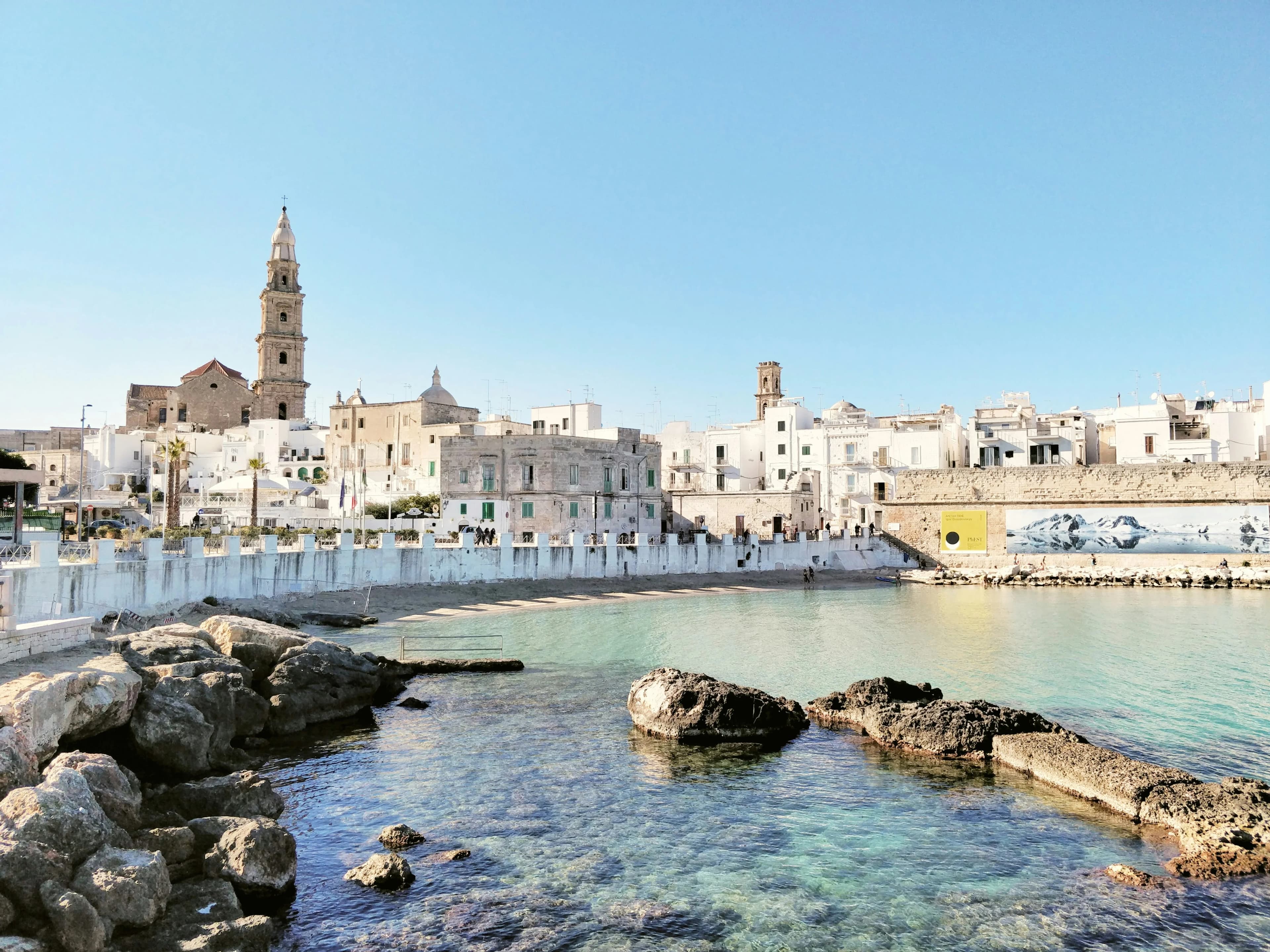
Monopoli is not a name that appears on every high-end itinerary, and that is precisely its advantage. Located in the province of Bari, roughly midway along Puglia's Adriatic coastline, it functions as a fully realized town rather than a resort construct. The centro storico is compact and walkable, organized around a 16th-century castle, a working fishing harbor, and a series of baroque churches that reward close attention. The surrounding territory, the Valle d'Itria and the flatlands toward Fasano, is carpeted with centuries-old olive trees and dotted with masserie: fortified farmhouses that have become one of the defining typologies of Puglian luxury hospitality.
4 hotels available

Once an ancient fortress, Don Ferrante now offers luxury accommodations in a panoramic location on the cliffs of Monopoli. It features a small pool with hydromassage jets. Don Ferrante - Dimore di Ch

With a beach 0.9 mi away, Hotel Masseria Fortificata Donnaloia is a restored farmhouse 820 feet from the seaside. The restaurant is a converted hay barn with roof terrace. All the elegant rooms have w

La Peschiera is a luxury 5-star hotel on the Adriatic Sea in Monopoli. It offers natural spring-water pool, a sauna and panoramic views of the sea. WiFi is free throughout. Guests can enjoy free acces

Featuring an outdoor pool, Masseria Il Melograno is surrounded by olive trees in the countryside of Puglia, 3.1 mi from Monopoli. It offers a paid private beach, Tamerici Beach Club, 4.3 mi away. Roo
Hotels in the area, but in a neighbouring town.

Featuring traditional architecture from Puglia and a panoramic setting in the Mediterranean vegetation, Borgo Egnazia - The Leading Hotels of the World Hotel offers 4 swimming pools and a 1800-m² well

Luxurious Borgobianco Resort enjoys a stunning location on the hills overlooking Polignano and the Adriatic sea, providing exceptional facilities in the heart of the peaceful Apulian countryside. Most

Located in Savelletri di Fasano, 3.1 mi from Archaeological Museum Egnazia, Masseria Calderisi features accommodations with a restaurant, free private parking, a seasonal outdoor swimming pool and a f

This luxury hotel is set in an ancient watchtower close to the beautiful coast of Puglia. Surrounded by olive groves, it is 1.9 mi from the Savelletri exit of the SS16 national road. The Masseria Tor

Masseria Torre Maizza is set in a large estate in the area of Savelletri di Fasano. The property offers a stylish restaurant, a pool bar and a rooftop bar, as well as a 20-yard pool and a private beac

Comfortable Accommodations Rooms feature air-conditioning, private bathrooms with walk-in showers, and sea views. Additional amenities include mini-bars, free WiFi, and soundproofing. Exceptio

Featuring free WiFi, Suite 10 Design & Spa offers accommodations in Polignano a Mare. Bari is 21 mi away. Private parking is available on site. All units are air conditioned and feature a flat-screen

34 km away
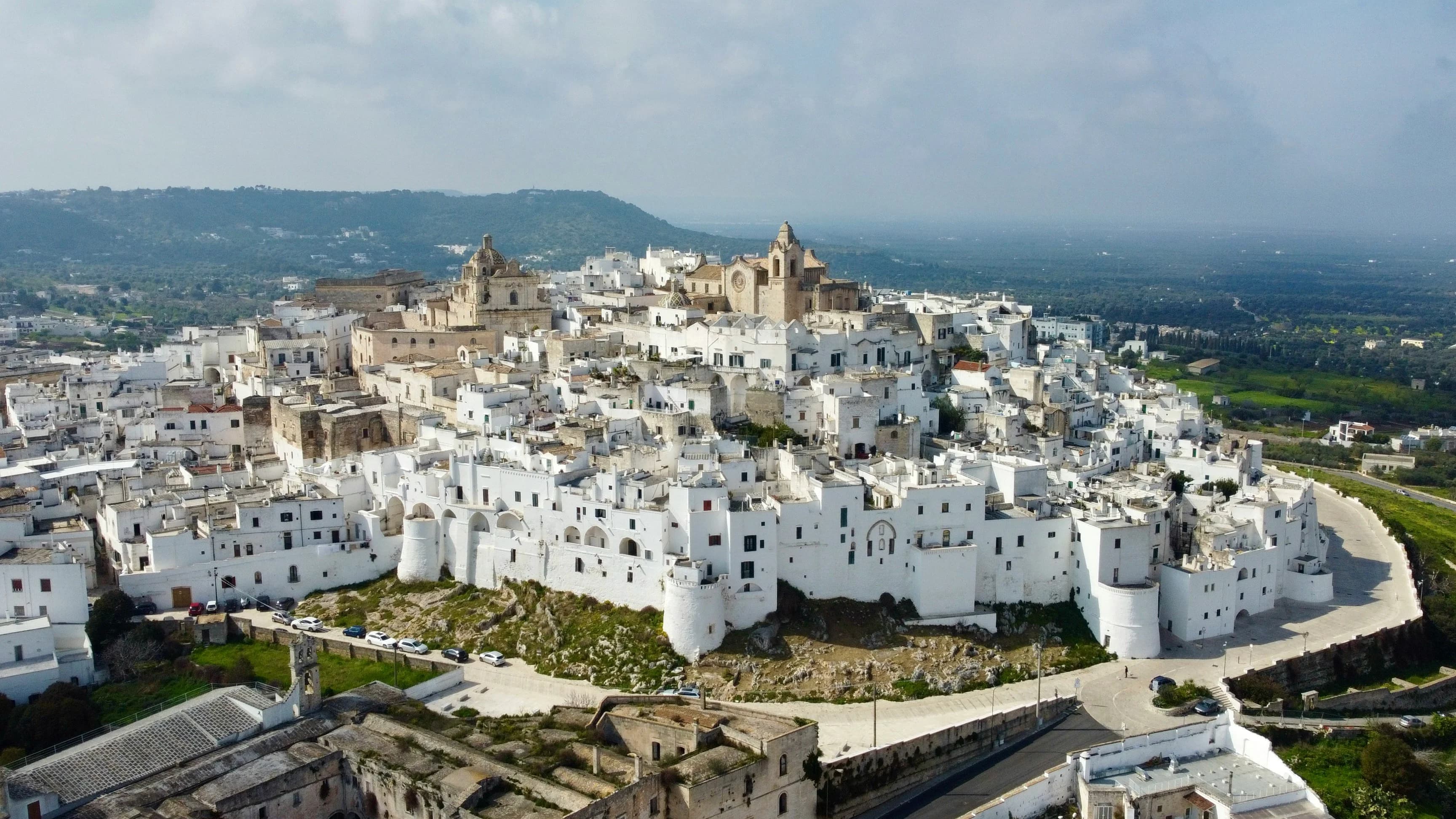
Ostuni itself sits at the centre of a broader landscape that offers meaningfully different experiences depending on where you position yourself. The hilltop historic centre, known locally as the Città Bianca, offers intimate accommodation within converted palazzi and former noble residences. The architecture here is dense and vertical: arched passageways, internal courtyards, and rooftop terraces that face the Adriatic on clear days. Space is finite, and suites within the walls tend to reward guests with architectural character rather than expansive grounds.

14 km away
Fasano is not a name that appears on every itinerary. That is precisely its appeal. Located in the province of Brindisi, in the Itria Valley of Italy, it sits at an elevation that keeps temperatures bearable well into late summer, surrounded by one of the densest concentrations of centuries-old olive trees in the Mediterranean. The territory is agricultural in character but architecturally singular. The dry stone walls, the trulli, the low whitewashed masserie: these are not decorative elements but functional vernacular architecture built over generations. For travelers approaching Europe as a design destination, Fasano and its surrounds represent a category of place that is increasingly rare: a landscape that has remained coherent.

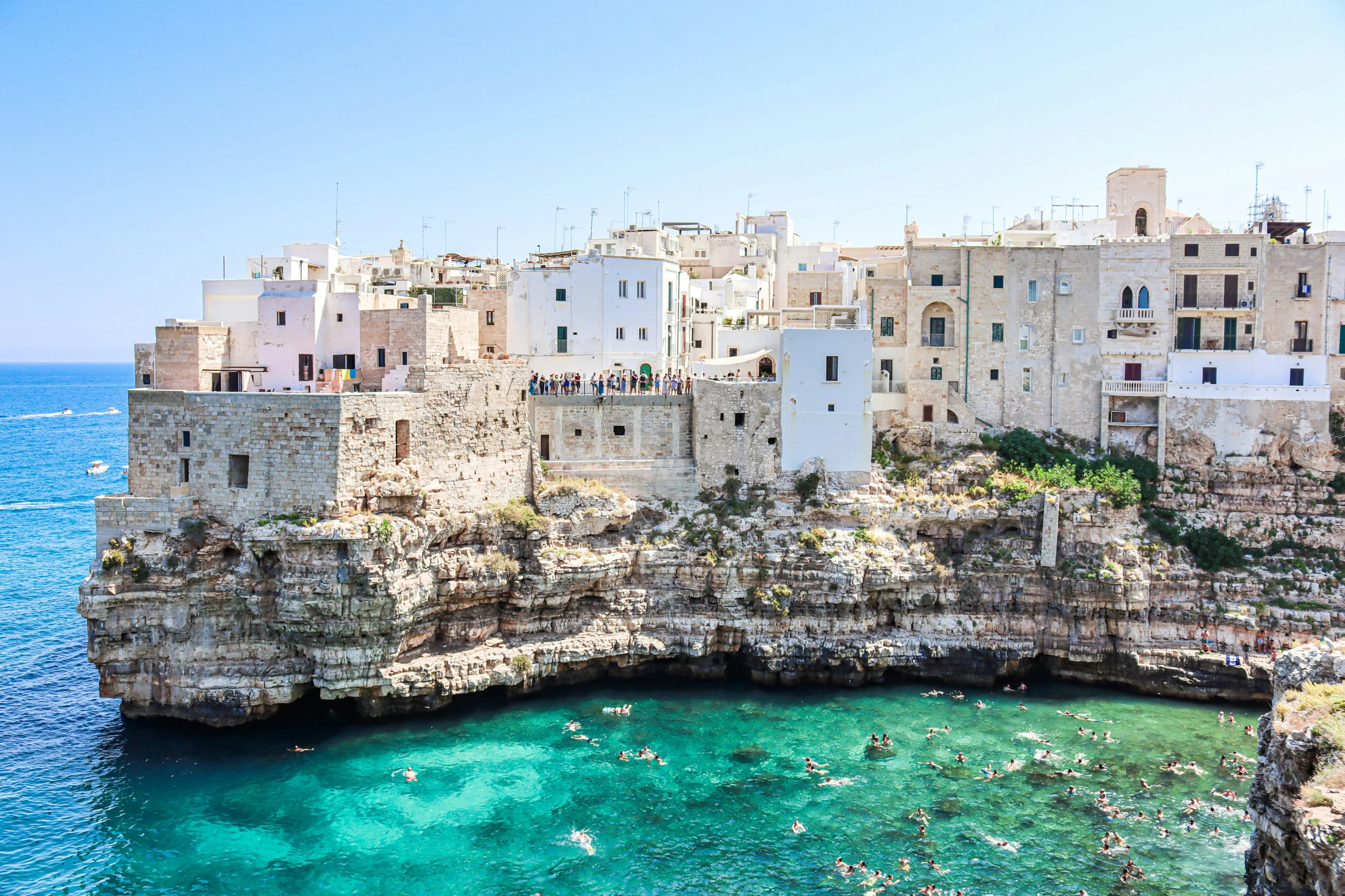
Polignano a Mare is one of the most architecturally singular towns on the European Mediterranean coast. Built atop Cretaceous limestone cliffs that drop directly into the Adriatic, it offers a spatial experience that conventional hotels rarely capture. A luxury hotel suite here is not simply a room with a view. It is a vantage point above one of Italy's most photographed coastlines, a base from which the textures of Puglia unfold at a measured pace.
For travelers exploring Italy with a focus on the south, Monopoli offers something that the more marketed destinations of the Amalfi Coast or Tuscany cannot replicate: a genuinely local rhythm, an architecture that has not been softened for tourism, and a food culture rooted in the land and sea rather than in performance.
Staying within the historic center places you inside the lived texture of the city. Streets are narrow, facades are limestone white, and the sea is never more than a few minutes on foot. Properties here tend to occupy converted palazzi or historic structures, offering the kind of architectural detail that purpose-built hotels rarely achieve. The tradeoff is that vehicular access can be limited, so arrivals require coordination.
The countryside immediately around Monopoli, particularly the zone stretching toward Fasano and Savelletri, is the heartland of the masseria hotel. These are working agricultural estates converted into accommodation, typically featuring thick stone walls, internal courtyards, and grounds planted with olive and almond trees. They offer complete seclusion, serious pools, and a physical separation from the outside world that urban properties cannot replicate. Many operate seasonally, with peak service concentrated between late spring and early autumn.
Monopoli's position makes it a practical base for exploring the wider territory. Polignano a Mare, with its clifftop position above the Adriatic, is a short drive north. Alberobello, the trulli town, is accessible inland. For travelers interested in covering Europe's southern Adriatic with depth rather than speed, this stretch of coastline rewards a stay of at least four or five nights.
The optimal window for a luxury suite stay in Monopoli runs from late April through June and from September through mid-October. During these months, temperatures are warm but not punishing, the coastal waters are swimmable, and the masserie and boutique properties operate at full capacity without the density of August crowds.
July and August bring the full weight of Italian summer tourism to Puglia. Rates peak, availability at the most sought-after properties contracts sharply, and the roads between Monopoli, Polignano, and Alberobello carry significant traffic. Travelers who value quiet and space should either book well in advance for this period or shift their travel dates.
The winter months, November through March, see many of the masserie close entirely. The centro storico properties remain open, and the town itself takes on a different character: quieter, more local, and entirely stripped of the seasonal hospitality infrastructure. For certain travelers, this is precisely the point.
Italy does not have a formal national classification for prestige hotels equivalent to the French Palace designation. In Puglia, the operative typology for luxury accommodation is the masseria. The term refers specifically to a fortified agricultural estate, and the best examples in the Monopoli area have been converted with serious architectural restraint, preserving original stonework, vault ceilings, and courtyard geometries while adding contemporary service infrastructure.
The luxury suite within a Puglian masseria typically occupies a former agricultural outbuilding or a wing of the main farmhouse. Expect thick walls that regulate temperature naturally, private terraces oriented toward the olive groves or the sea, and interior finishes that draw on local craft traditions: hand-painted ceramic tiles, linen textiles woven in nearby towns, furniture made from reclaimed olive wood.
Service in the best Monopoli-area properties is attentive rather than theatrical. Staff tend to have deep local knowledge, and the relationship between the kitchen and the surrounding agricultural land is often direct and traceable. This is a region where the food culture is a genuine extension of the landscape, and the best hotels understand that.
The first decision is architectural context. A suite within the centro storico places you inside the urban fabric of the city, with proximity to the harbor, restaurants, and the lived social life of the town. A masseria suite offers seclusion, grounds, and a relationship with the agricultural landscape that is specific to this part of Italy. These are fundamentally different experiences, and the choice should be made deliberately.
The second consideration is the season and the property's operational calendar. Many of the finest masserie around Monopoli operate for only six or seven months of the year. Confirm open dates before building an itinerary around a specific property.
The third is pool access and outdoor space. In Puglia, where temperatures from June through September make outdoor living central to the experience, the quality and privacy of a suite's outdoor area is not incidental. A suite with a private terrace or direct pool access is a materially different proposition from one that relies on shared facilities.
Finally, consider connectivity and arrival logistics. The nearest major airport is Bari Karol Wojtyla, approximately 55 kilometers north. Some masserie are located on unpaved roads that require a vehicle. If you are arriving without a car, confirm transfer arrangements directly with the property.
The luxury hotel market around Monopoli is small but uneven. A handful of properties operate at a genuinely high standard; others trade on the aesthetic appeal of the masseria format without delivering the service or finish quality that the category implies. The difference is not always visible from a website or a listing.
La Suite applies editorial criteria to every property in its selection: architectural integrity, suite-level quality, service consistency, and the kind of experiential detail that justifies the category. For a destination like Monopoli, where the total inventory of serious properties is limited, that curation is the difference between a trip that meets expectations and one that defines them. Browse the curated selection by La Suite and approach Monopoli with the same precision the city itself rewards.

The two primary options are the centro storico and the surrounding masserie. The historic center offers proximity to the harbor, the castle, and the town's daily life, within converted limestone palazzi. The masserie to the northwest and south provide agricultural seclusion, serious outdoor spaces, and a quieter relationship with the Puglian landscape. The choice depends entirely on whether you prioritize urban access or rural privacy.
Late April through June and September through mid-October are the most favorable windows. The weather is warm, the sea is swimmable, and the best properties are operating at full capacity without the August congestion. For peak summer travel in July and August, booking several months in advance is essential, as the finest suites in the area fill quickly.
A masseria is a traditional Puglian fortified farmhouse, historically used as an agricultural estate. The finest examples around Monopoli have been converted into high-end accommodation while preserving original stonework, vaulted ceilings, and courtyard structures. They represent the defining typology of luxury hospitality in this part of Italy and offer a spatial and sensory experience that conventional hotels cannot replicate.
The most practical arrival point is Bari Karol Wojtyla Airport, located approximately 55 kilometers north of Monopoli. Direct connections from major European hubs are available, with some seasonal routes from the UK and northern Europe. A private transfer or rental car is recommended, particularly if your suite is located in a masseria outside the town center, as some properties are reached via unpaved rural roads.
Properties within the centro storico typically remain open through the year. Many of the masserie and countryside properties, however, operate on a seasonal calendar running from April or May through October. If you are planning a winter visit, confirm the property's operational dates directly before finalizing arrangements.
The key variables are architectural context (historic urban or rural masseria), the quality and privacy of outdoor spaces including terraces and pool access, the operational season, and the proximity to the coast. In Puglia, the relationship between the property's kitchen and local agricultural producers is also a meaningful indicator of overall quality, as the region's food culture is a central part of the experience.
Monopoli offers a balance between authentic urban character and access to the masseria countryside that some neighboring towns lack. Polignano a Mare is more photographically dramatic but smaller and more tourist-concentrated. Alberobello is architecturally singular but limited in terms of serious luxury accommodation. Fasano and Savelletri, to the north, host some of Puglia's most established luxury properties and are within easy reach of Monopoli.
Suites in the centro storico are generally housed within 17th and 18th-century limestone palazzi, featuring high ceilings, stone floors, and facades that absorb and reflect the distinctive Adriatic light. Masseria suites are built from the same local stone but organized around agricultural structures: thick walls, vaulted interiors, and courtyards. Both typologies favor craft-led interiors using local ceramic, linen, and olive wood.
Monopoli rewards a minimum of four nights. The town itself can be absorbed in a day or two, but the surrounding territory, the Valle d'Itria, the trulli landscape, the coastal drives north toward Bari and south toward Lecce, requires time to engage with properly. Travelers who treat it as a base rather than a stop tend to leave with a significantly richer experience.
The total inventory of genuinely high-quality suite-level properties in and around Monopoli is small. General booking platforms aggregate volume without applying consistent quality criteria. La Suite curates exclusively at the suite level, applying editorial standards around architecture, service, and experiential quality. For a destination where the difference between a good property and a great one is not always visible online, that curation is a practical rather than a cosmetic advantage.