Why Porto Ercole occupies its own category in Italian coastal travel
This is where Caravaggio died, in 1610, on his way back to Rome. That biographical detail tells you something about the town's historical gravity. It is also where, from the 1950s onward, a certain stratum of Roman and Milanese society established its summer ritual. The discretion has been consistent ever since. Porto Ercole does not advertise itself. Its visitors tend to know exactly why they are here.
For the traveler staying in a luxury hotel suite in Italy, Porto Ercole represents a specific argument: that the most compelling version of the Italian coastal experience is often found away from the most photographed coastlines.
The best areas to consider around Porto Ercole
The harbor and old town
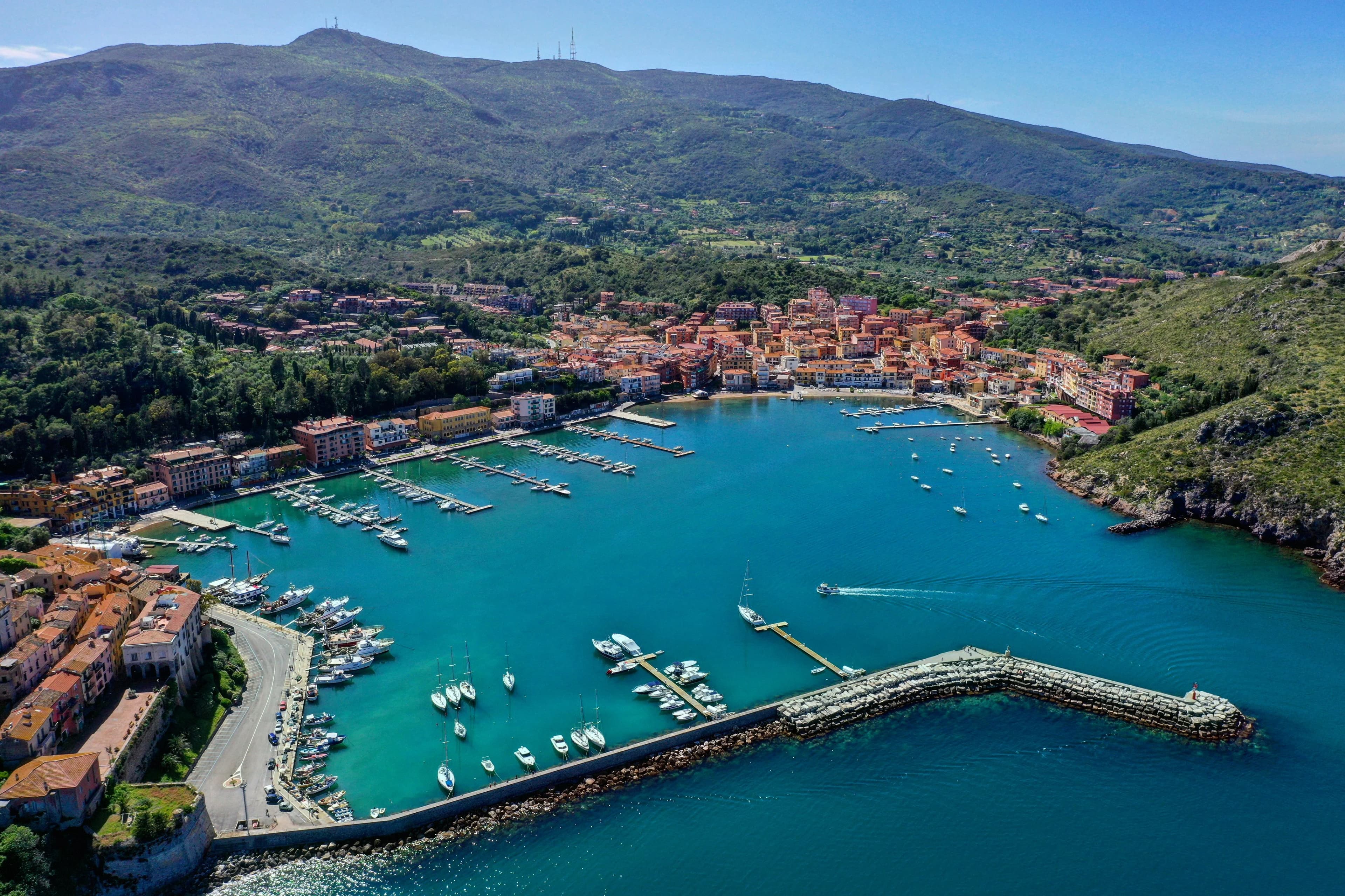
The lower harbor area is the social and visual center of Porto Ercole. The waterfront promenade, the boats, the evening passeggiata: this is the texture of the place at its most concentrated. Hotels positioned close to the harbor allow you to participate in the rhythm of the town without effort. The old town climbs steeply above, through narrow lanes and Spanish-era gates, offering a quieter counterpoint to the activity below.
The Argentario headland
Monte Argentario is not a flat promontory. It rises sharply, with roads that wind through Mediterranean scrub, pine forest, and sudden coastal views. Properties positioned on the headland rather than in the town itself offer a different proposition: seclusion, elevated terraces, direct sea access from private coves. The tradeoff is distance from the village, which suits some travelers precisely because of that distance.
The tomboli and lagoon edge
The three causeways connecting Argentario to the mainland frame the Orbetello lagoon, a protected wetland of considerable ecological interest. Staying near this transition zone, between the lagoon and the sea, offers a landscape that is unusual by any standard of Italian coastal geography. The light here, particularly in early morning and late afternoon, is a reason in itself.
When to visit Porto Ercole for a suite stay
The high season runs from late June through August, when the harbor fills with sailing vessels and the town operates at full social intensity. Suite availability during this period is limited and lead times are long. Rates reflect demand without apology.
The more considered choice, for travelers who prioritize experience over social calendar, is May through early June and September through October. The water is warm enough for swimming in both windows. The town is present but not overwhelmed. Properties operate with more attentiveness, and the landscape reads differently without the compression of peak season.
Winter in Porto Ercole is quiet to the point of near-closure for many establishments. Some properties remain open and offer a version of the place that only long-standing visitors ever encounter: empty harbor, low light, the specific pleasure of a town returned to itself. This is not for everyone. For certain travelers, it is exactly the point.
Understanding Italian coastal luxury standards
Italy does not have a single national classification for its top-tier hotels equivalent to the French Palace designation. Quality signals here are more distributed: a property may carry five stars under the Italian regional system, but the more reliable indicators are membership in collections such as Relais and Chateaux or The Leading Hotels of the World, the age and management continuity of the property, and the specificity of its architectural and design language.
In a coastal context like Porto Ercole, the most significant luxury suites tend to occupy one of two typologies. The first is the converted historical property: a fortified building, a noble residence, or a structure integrated into the town's existing fabric. The second is the purpose-built coastal retreat, designed around views and sea access, with an architectural vocabulary that responds to the Argentario landscape rather than ignoring it.
Expect top-tier suites in this area to offer direct or near-direct sea access, private terraces calibrated to the sunset orientation, and a level of service that reflects the small scale of the properties. Porto Ercole does not have the grand-hotel tradition of Rome or Florence. Its luxury is more residential in character, which is part of its appeal to the kind of traveler who finds formal grandeur less interesting than intimate precision.
How to choose the right luxury suite in Porto Ercole
The first decision is whether you want to be in the town or on the headland. These are genuinely different experiences. Town-side properties give you the harbor, the restaurants, the ability to walk to everything. Headland properties give you solitude, private coves, and a physical relationship with the sea that is more elemental and less social.
The second consideration is terrace orientation. On the Argentario promontory, the difference between a suite facing east and one facing west is not cosmetic. Evening light on the Tyrrhenian Sea is a defining feature of the experience. Ask the question before you book.
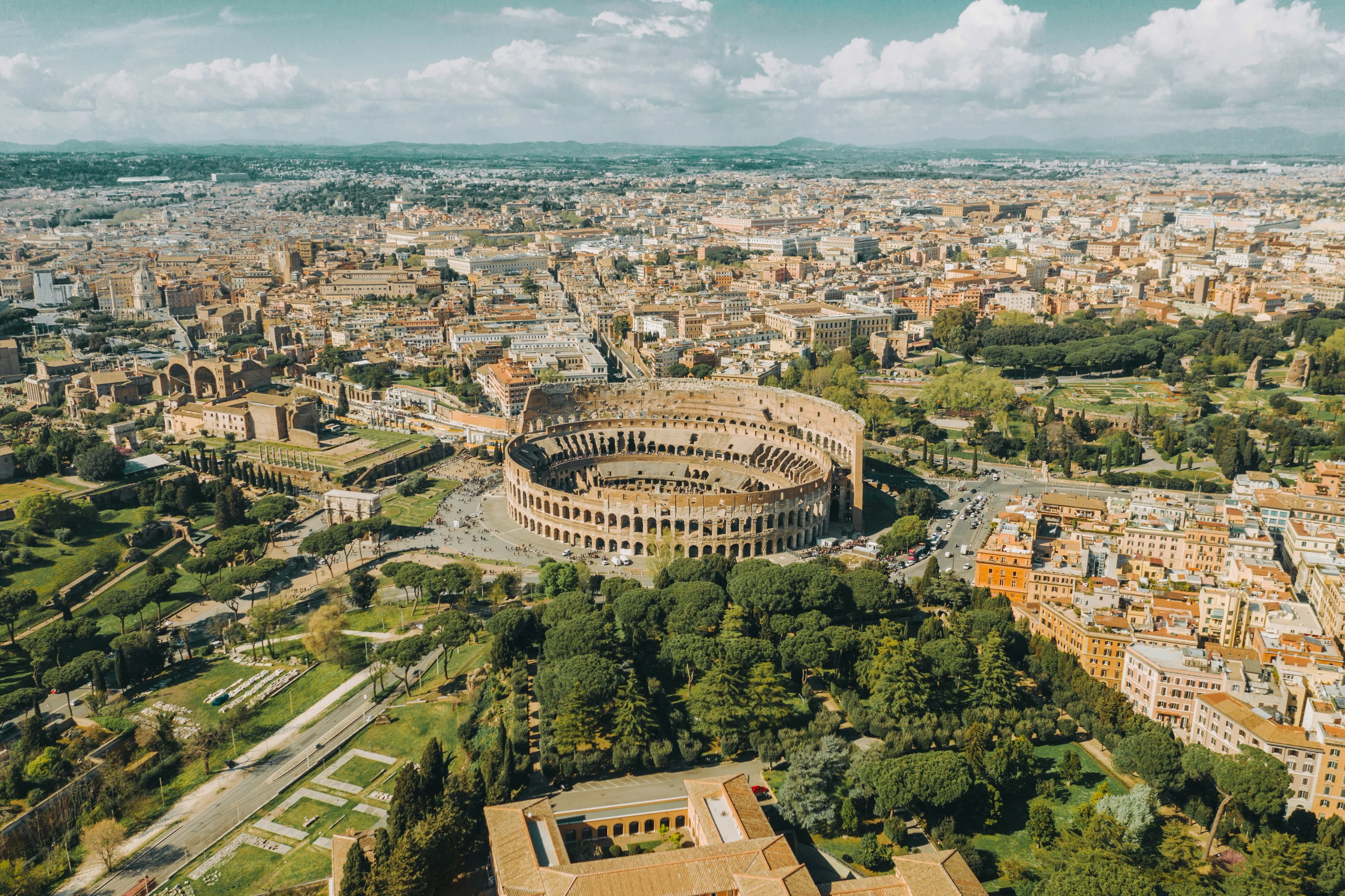
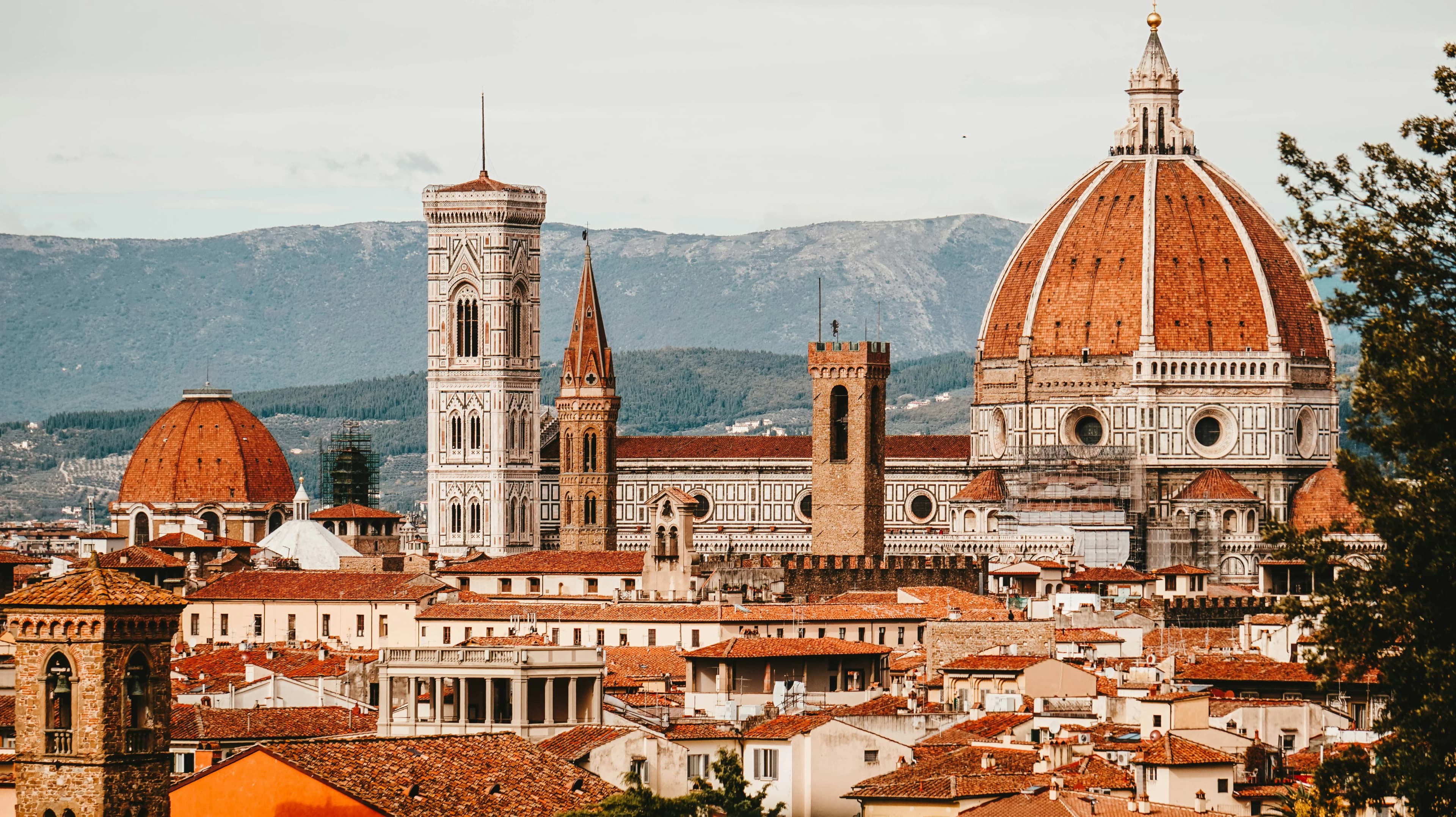
Third: access. Porto Ercole is reachable by car from Rome in roughly two hours, or from Florence in approximately two and a half. There is no direct train connection to the town. If you are arriving by private transfer or driving, the road approach through the Maremma, past the Orbetello lagoon, is a considered part of the arrival sequence. Some guests arrive by sea, which remains the most coherent way to approach the place architecturally.
For travelers building a wider Italian itinerary, Porto Ercole connects naturally with southern Tuscany, the Maremma wine region, the thermal baths of Saturnia, and the Etruscan coast. It is a destination that rewards being treated as a base rather than a single stop. For broader context on luxury hotel suites across Italy, or the wider European suite landscape through La Suite's European curation, the platform offers the full geographical range.
The value of a curated selection in Porto Ercole
Porto Ercole has a small number of exceptional properties and a larger number of adequate ones. The difference between them is not always visible from a hotel website or a star rating. It lives in the quality of the suite itself, the management ethos of the property, the specificity of its relationship to the landscape, and the kind of experience it has consistently delivered to guests who share your priorities.
La Suite applies the same editorial standard here that it applies across Europe and beyond. The curated selection for Porto Ercole is not exhaustive. It is selective by design. The properties included have been assessed against criteria that matter to design-literate, experience-focused travelers: architectural integrity, suite quality, service calibration, and site specificity. That selectivity is the service.