Central Location Campo Marzio Luxury Suites in Rome offers a convenient location with Trevi Fountain a 7-minute walk away, Piazza Navona 2625 feet nearby, and the Pantheon just 5 minutes on foot.

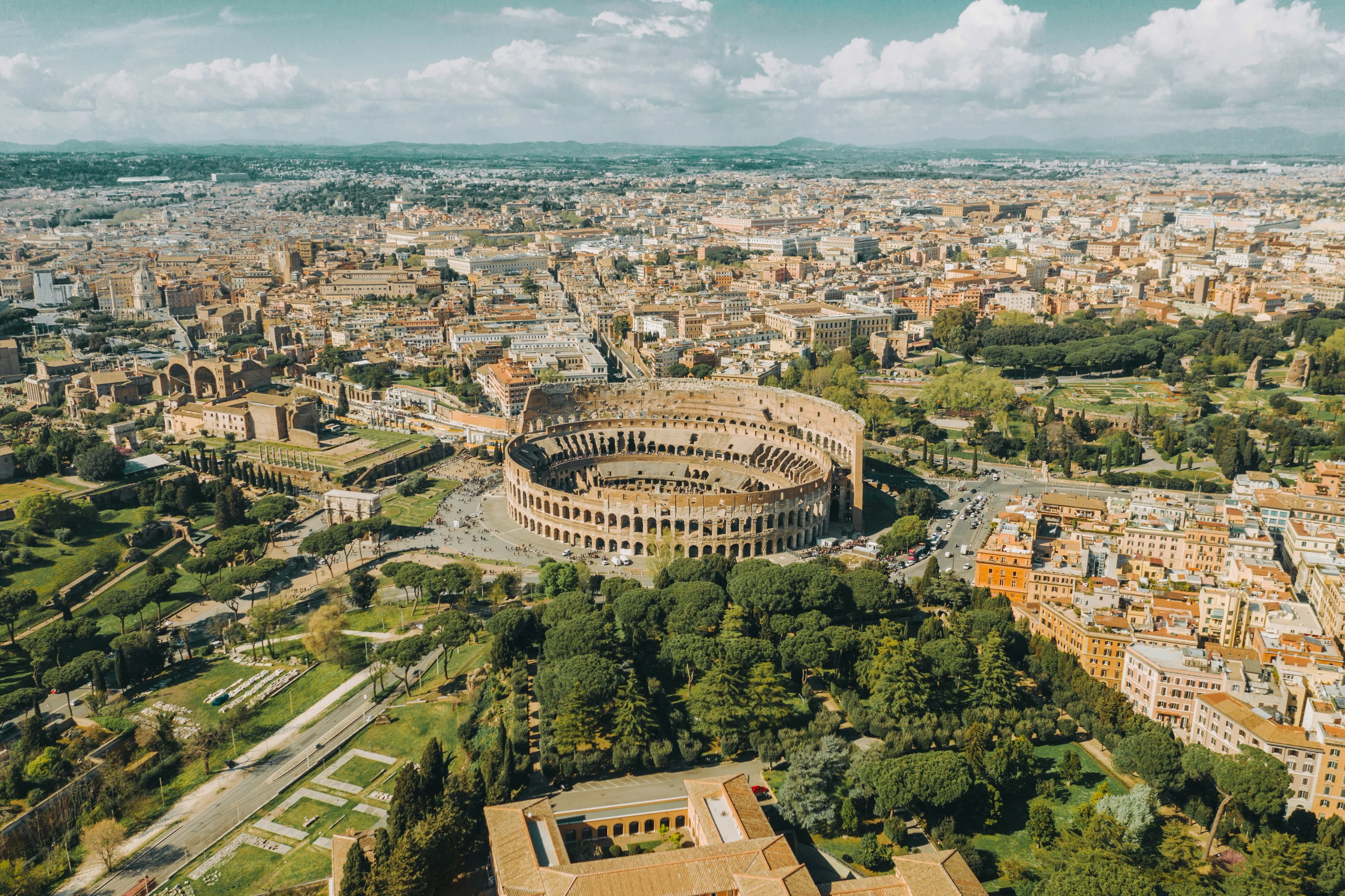
Centro Storico is not a marketing construct. It is the administrative and historical nucleus of Rome, bounded roughly by the Tiber to the west, Via del Corso to the east, and the ancient civic monuments to the south. Within this perimeter, the urban grain is medieval and baroque in character: narrow, stone-paved streets, palazzo facades that have absorbed centuries of use, and piazzas designed for public ceremony rather than pedestrian flow. For guests occupying a luxury hotel suite here, that context becomes the primary amenity. The view from a piano nobile window or a private terrace is not incidental. It is the product.
25 hotels available

Central Location Campo Marzio Luxury Suites in Rome offers a convenient location with Trevi Fountain a 7-minute walk away, Piazza Navona 2625 feet nearby, and the Pantheon just 5 minutes on foot.

Prime City Center Location Casa JK Place Roma is located in Rome city center, offering proximity to key attractions. Piazza Navona is a 7-minute walk away, while Trevi Fountain lies 2297 feet near

Set in a 19th-century building in Rome’s center, Chapter Roma is a 5-minute walk from Campo de' Fiori square, and just 2953 feet from the Pantheon and Piazza Navona square. It offers free Wi-Fi throu

Corso 281 Luxury Suites offers modern accommodations located in Roma, 656 feet from Piazza Venezia. Free Wi-Fi access is available in all areas. Each air-conditioned suite will provide you with a fla

Centrally located in Piazza Navona, in Rome, DOM Hotel Roma - Preferred Hotels & Resorts offers an à la carte restaurant and free WiFi throughout. The design hotel is a 5-minute walk from Palazzo Bras

Fendi Private Suites is located in Rome, a few steps from the popular Via dei Condotti, and 1640 feet from Piazza di Spagna. All guest rooms in the hotel are equipped with a flat-screen TV with satel

Featuring free WiFi throughout, G-Rough, Rome, a Member of Design Hotels is located 164 feet from Piazza Navona Square. It offers individually designed and air-conditioned accommodations in Rome's cit

One street from Piazza Navona, Hotel Raphaël - Relais & Châteaux offers luxurious rooms with marble bathroom and parquet floors. Its roof terrace features panoramic views of Rome, from St. Peter's to

Offering stylish rooms with free WiFi, J.K. Place Roma is located in the heart of Rome with the Spanish Steps and the Pantheon each a 10-minute walkaway. A breakfast à la carte is included. All the r

Featuring free WiFi throughout the property, Le Quattro Dame is centrally set in Rome, 656 feet from Palazzo Venezia. The rooms feature an elegant and contemporary décor and are equipped with a flat-

Elegant Accommodations Maalot Roma in Rome offers a 5-star experience with a fitness center, restaurant, bar, and free WiFi. Private check-in and check-out, a 24-hour front desk, and concierge ser

Prime City Center Location NH Collection Roma Fori Imperiali in Rome offers a central position with stunning city views. Piazza Venezia is a 2-minute walk away, while the Colosseum lies 0.7 mi fro

Elegant Accommodations Nomos Hotel in Rome offers a 5-star experience with a restaurant, bar, and free WiFi. Guests enjoy air-conditioning, private bathrooms, and balconies. Dining Options Th

Orient Express La Minerva is nestled in the heart of Rome, only 2-minutes’ walk from the Pantheon, 1476 feet away from Piazza Navona and 15 minutes’ walk from the Spanish Steps. The hotel also feature

Historic Setting Palazzo Delle Pietre - Luxury Apartments in Rome is housed in a historic building, offering a unique setting in the city center. Modern Amenities Guests enjoy a fitness cente

Elegant Accommodations Palazzo Roma in Rome offers a 5-star experience with a romantic restaurant and bar. Guests enjoy free WiFi, private check-in and check-out, and a 24-hour front desk. Com

Elegant Accommodations Palazzo Talìa in Rome offers a 5-star experience with a spa and wellness center, indoor swimming pool, sauna, fitness center, and a beautifully maintained garden. Guests enj

Set in a 16th-century building, Residenza Napoleone III offers rooms in the very heart of Rome, a 5-minute walk from Piazza di Spagna. The property features free Wi-Fi throughout. With a spacious ter

Roma Luxus Hotel offers free WiFi and stylish rooms in Rome's Monti district. Set 984 feet from the Roman Forum, the property also features a bar and an à la carte restaurant. Rooms at the Luxus Hote

Sina Bernini Bristol, Autograph Collection is located in Rome's Piazza Barberini, the famous square with the Triton Fountain. The hotel's rooftop offers a unique view of the historic center. The ho

Trastevere is not Rome's most obvious address for a luxury hotel suite. That distinction has historically belonged to the area around Via Veneto, the Spanish Steps, or the Pantheon. What Trastevere offers instead is something more considered: a sense of inhabiting the city rather than merely visiting it. The neighbourhood's street grid, largely unchanged since the medieval period, creates a texture of experience that larger, more institutional districts cannot replicate. For guests exploring Rome through the lens of a well-chosen suite, Trastevere represents a specific kind of editorial choice.

Termini is not Rome's most celebrated address, but it is arguably its most strategic one. The district functions as the city's logistical spine, connecting travelers by rail to Florence, Naples, and the international airport at Fiumicino. For those arriving from abroad or moving between cities, a luxury suite in Termini removes the friction that often accompanies Roman travel. The neighborhood's central position means that the Colosseum, Trastevere, and the historic center are all accessible within minutes, whether by metro, taxi, or on foot.

2 km away
Monti is Rome's oldest rione, a designation that predates modern municipal boundaries and reflects its continuous habitation since antiquity. The neighbourhood was once known as the Suburra, the densely populated district that sat below the imperial forums and served as the commercial and social heart of ancient Rome. Today, its character is shaped by that layered history: medieval churches, Renaissance palazzi and 19th-century residential buildings coexist within a compact area that remains navigable on foot.
The neighborhood sits at the intersection of Italy's most concentrated cultural heritage and its most competitive luxury hospitality market. Properties that hold their position here do so through architectural distinction, room volume (a genuine rarity in a dense historic center), and service culture calibrated to an internationally mobile clientele.
This pocket of the neighborhood offers the closest thing to a residential luxury experience within the historic center. The streets around the Pantheon are relatively quieter after dark, the scale of the buildings is human, and the density of significant architecture per block is exceptional. Properties in this zone tend to be converted palazzi, with suite configurations that favor high ceilings, original stone or fresco detail, and considered light management given the narrow street geometry.
Navona is baroque Rome at its most theatrical. The piazza itself, built on the footprint of Domitian's stadium, is defined by Borromini's Sant'Agnese in Agone and Bernini's Fontana dei Quattro Fiumi. Hotels near Navona benefit from proximity to this civic drama while accessing the quieter residential lanes immediately behind the piazza. Suite guests here are well-positioned for the gallery circuit, including the nearby Palazzo Altemps, a branch of the Museo Nazionale Romano.
Historically a market and execution ground, Campo de' Fiori operates today as a daily produce market in the morning and a gathering point for Romans in the evening. The surrounding streets retain a working character that contrasts usefully with the more polished areas near the Pantheon. Luxury properties here tend to be smaller in scale, occasionally occupying former merchant buildings, and appeal to guests who prefer an embedded urban experience over a more ceremonial hotel address.
Rome operates year-round, but the optimal windows for a Centro Storico suite stay are spring (April to early June) and autumn (late September through November). These periods offer moderate temperatures suitable for the extended walking that the neighborhood rewards, lower humidity than the Roman summer, and reduced visitor density relative to the peak July-August corridor.
July and August bring significant heat to the city. Daytime temperatures regularly exceed 35 degrees Celsius, which compresses the useful hours for outdoor exploration. Well-serviced suites in this period become functional retreats, and properties with private terraces or internal courtyard access gain measurable value. The cultural calendar thins in August as Roman institutions follow traditional closure patterns.
The period from late October through March is the least visited and often the most atmospheric. The light at low angles across baroque stone is a condition that photography and architecture writers have documented extensively. Suite availability is generally broader, rate negotiations carry more weight, and the rhythm of the neighborhood reverts to something closer to its working civic self.
Italy's highest formal designation for hotel excellence is the Hotel di Charme classification, though in practice the market has organized itself around the Leading Hotels of the World membership, Relais and Chateaux affiliation, and the five-star superior category recognized by the Italian national tourism authority. In Rome specifically, a select group of properties holds the French-origin Palace Hotel designation, awarded by the French Ministry of Tourism and recognized internationally as a marker of exceptional service consistency and architectural integrity.
In Centro Storico, the suite product varies meaningfully by building typology. Converted Renaissance and baroque palazzi often offer suites with original frescoed ceilings, stone floors, and room proportions that contemporary construction cannot replicate. The trade-off is occasionally in infrastructure: older buildings present challenges for climate control uniformity, acoustic separation, and elevator access. Guests with specific physical requirements or strong preferences for contemporary technical standards should evaluate these factors explicitly before booking.
Service at the upper end of the Centro Storico market is generally concierge-driven, with properties maintaining relationships with private guides, museum reservation channels, and the network of ateliers and dealers that constitutes Rome's serious cultural commerce. A well-briefed concierge in this neighborhood can access experiences that are structurally unavailable to independent visitors.
The primary decision axis is the relationship between the room and the city. In a neighborhood as texturally dense as Centro Storico, the orientation, floor level, and acoustic exposure of a suite determine the quality of the stay to a degree unusual in less compressed urban environments. A suite facing an internal courtyard offers silence and diffuse light. One facing a major street or piazza offers spectacle and noise in proportion.
Consider also the question of operational scale. Smaller boutique properties in Centro Storico, often operating with twenty to forty rooms, provide a service ratio and discretion that larger international brands cannot match by structural default. For guests whose priority is privacy and consistency of personal attention, boutique palazzo hotels frequently outperform the flagship urban properties of major chains, even when the chain product is technically superior on amenity specification.
Terrace access is a meaningful differentiator in this neighborhood. Rome's roofline, viewed from a private terrace above the baroque fabric of Centro Storico, is a distinct and non-reproducible experience. Properties with suite-specific terrace access command premiums that are, for most guests in this category, straightforwardly justified.
Centro Storico contains a high volume of hotel product at every price point. The concentration of tourism in this zone has historically produced a market where the gap between a property's presentation and its delivered experience is wider than in less visited destinations. Facades are frequently impressive. Room quality, service consistency, and value integrity vary considerably behind them.
La Suite's curated selection for Rome and Italy more broadly is built on direct assessment criteria: suite volume and proportion, architectural authenticity, service infrastructure, and the coherence between what a property presents and what it delivers. In a neighborhood where marketing investment is high and discernment among travelers is being actively tested, a pre-filtered selection removes the category noise and focuses the decision on properties that have earned their position. For guests with limited time and high standards, that filtering is not a convenience. It is the starting point.
Centro Storico is one of the most demanding addresses in Europe for luxury suite travel. The rewards for choosing correctly are proportionate to the precision of the choice.

The streets around the Pantheon and Piazza della Rotonda are generally considered the most refined residential pocket within Centro Storico, offering converted palazzo properties with high ceilings and significant architectural detail. Piazza Navona and its immediate surroundings provide a more theatrical baroque setting, while Campo de' Fiori suits guests who prefer a more embedded, working-neighborhood atmosphere. The optimal zone depends on whether a guest prioritizes architectural immersion, civic spectacle, or day-to-day urban texture.
Spring (April to early June) and autumn (late September to November) offer the most favorable combination of moderate temperatures, manageable visitor density, and full cultural programming. Summer provides maximum daylight and event activity but brings significant heat and compressed availability at the top tier of the market. Winter, from November through March, is the quietest period, with broader suite availability and a more authentic sense of the neighborhood's working civic character.
The Palace Hotel designation, originating in France and recognized internationally, applies to properties that meet rigorous standards across architecture, service consistency, food and beverage offering, and suite quality sustained over time. In Rome, only a small number of properties hold this designation. A five-star superior classification from the Italian national authority covers a broader range of properties and applies less stringent criteria across the same categories.
Several properties in Centro Storico offer suite configurations with connecting rooms or multi-room layouts suited to family use, though the neighborhood's building typology, primarily converted historical palazzi, can present constraints on elevator access and room adjacency. Families should confirm suite layout, floor access, and the specific property's approach to child amenities directly before confirming. The pedestrianized character of many streets in the area makes the neighborhood itself manageable for families on foot.
Entry-level luxury suites in Centro Storico typically begin at approximately 700 to 1,000 euros per night in shoulder season, with senior suites and private terrace configurations at established five-star properties ranging from 1,500 to 3,500 euros or more per night. Rates compress somewhat in winter outside of holiday periods and expand significantly during high-profile events such as the Rome Film Festival or the Easter-Holy Week period, when demand across the market peaks sharply.
A select number of properties in Centro Storico offer suite-specific private terrace or rooftop access, which in this neighborhood constitutes one of the most distinctive amenities available. Terraces overlooking the Roman roofline, baroque domes, and the dense historic fabric of the center are not replicable elsewhere in the city. Guests prioritizing this feature should verify at the suite level rather than assuming terrace access is a general property amenity, as configurations vary significantly building by building.
Concierge services at top-tier properties in Centro Storico typically maintain access to private after-hours museum visits, reserved entry to Vatican and Borghese Gallery appointments (which require advance booking under normal public access conditions), introductions to private art dealers and restoration ateliers, and reservations at restaurants that manage their own booking lists independently of public platforms. The quality of concierge provision is a meaningful differentiator between properties in this neighborhood and worth evaluating explicitly when selecting a suite.
Centro Storico provides central access to the majority of Rome's significant cultural and architectural sites within walking distance, including the Pantheon, Piazza Navona, Campo de' Fiori, the Tiber island, and easy transit connections to the Vatican and the Borghese Gallery. For guests whose itinerary prioritizes the historic center and its immediate surroundings, it is logistically the most efficient base. Guests with significant interest in the Parioli residential quarter, the EUR district, or Trastevere may find a property in those zones more practical for specific itinerary shapes.
The key variables are ceiling height and original architectural detail (frescoes, stone floors, molded cornices), acoustic separation from adjacent rooms and street-level noise, climate control quality (a genuine engineering challenge in older buildings), floor level relative to natural light penetration in narrow Roman streets, and elevator access for guests with mobility requirements. Properties that have invested in contemporary infrastructure while preserving architectural character represent the most reliable category, though the balance between the two varies considerably across the Centro Storico market.
La Suite applies a structured assessment framework covering suite spatial quality, architectural authenticity, service infrastructure, and the coherence between a property's market positioning and its delivered experience. For a neighborhood as commercially dense as Centro Storico, where hotel marketing investment is high across a wide quality range, pre-filtered curation removes the category noise and reduces the selection to properties that have demonstrated consistent performance at the level the luxury suite category requires. The full curated selection for Rome is available on the La Suite platform.