What makes Valtournenche a compelling destination for suite travelers
For the traveler accustomed to luxury hotel suites in destination ski resorts, Valtournenche offers a contrast to the more commercialized circuits of Courmayeur or Cortina. The scale is smaller. The atmosphere is more contained. That containment, for the right traveler, is precisely the point.
Best areas to stay in the Valtournenche valley
Cervinia and the high plateau
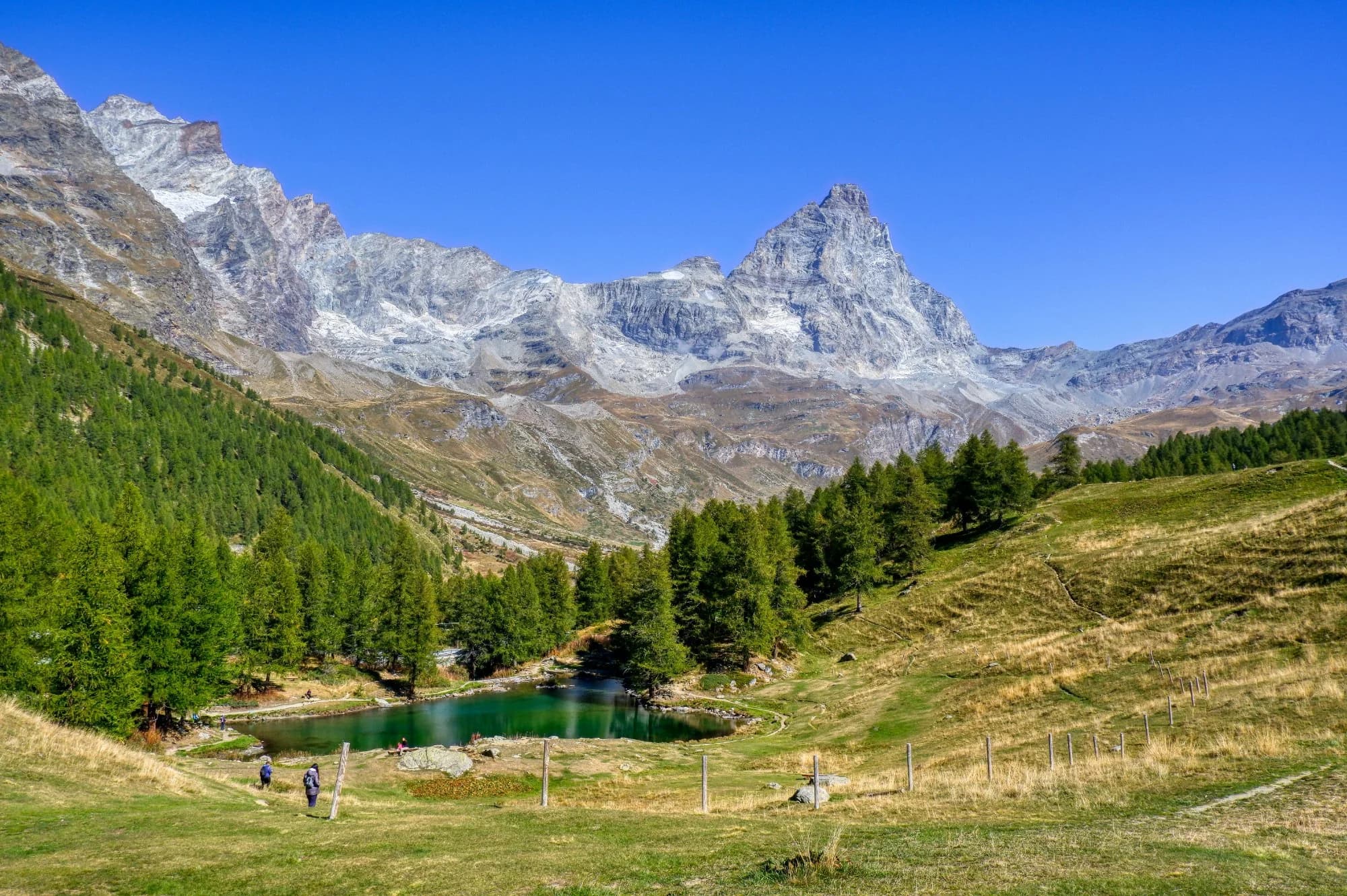
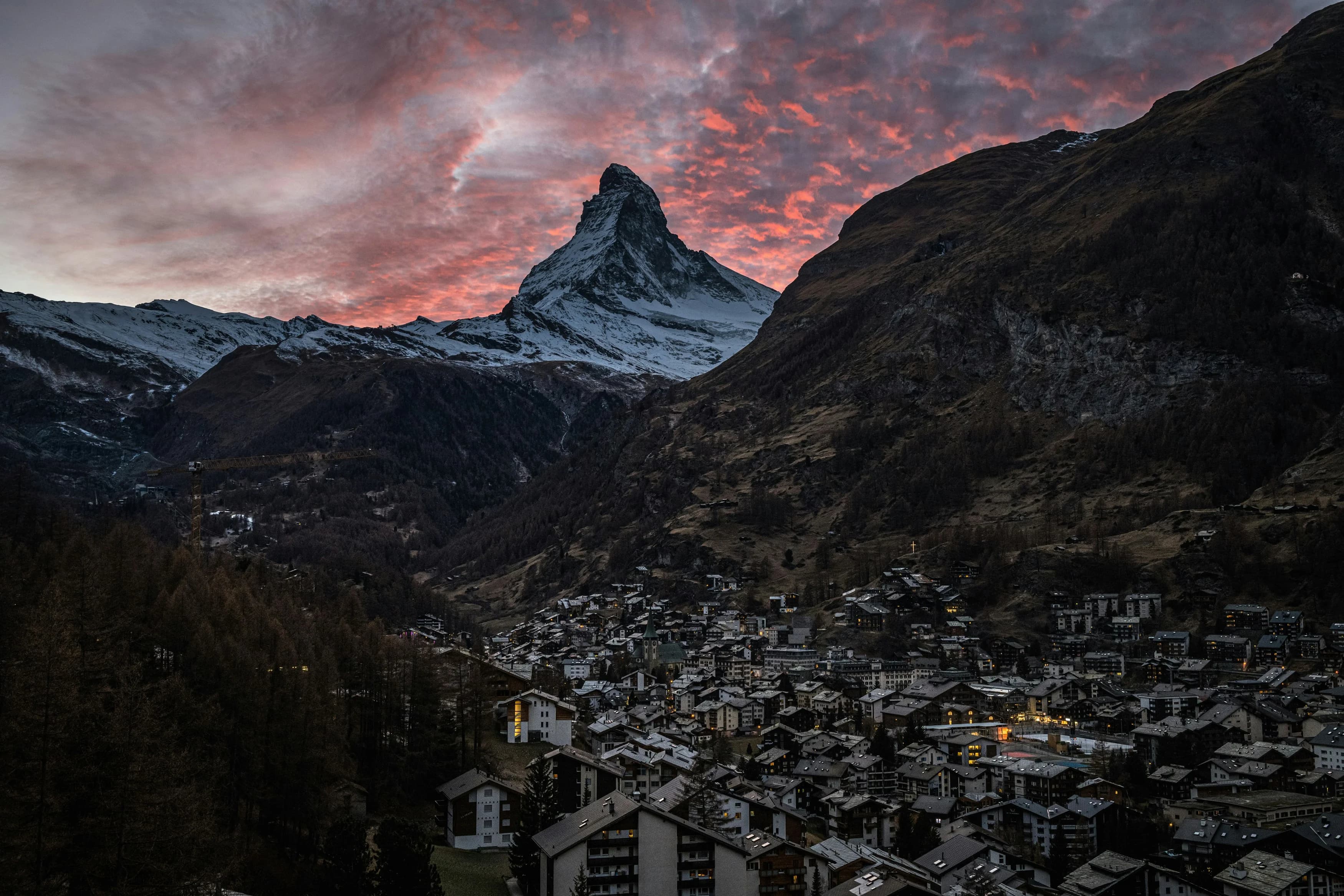
The upper end of the valley, centered on Breuil-Cervinia, sits at approximately 2,050 metres and gives direct access to the ski lifts connecting to the Plateau Rosa glacier. Properties at this altitude offer genuine ski-in, ski-out positioning and unobstructed sightlines toward the Matterhorn's Italian face. For winter suite travelers, proximity to the piste network is a functional priority, and properties here are designed with that logic in mind. Summer access to high-altitude hiking trails and glacier terrain makes this zone viable year-round for the physically active traveler.
The valley floor and mid-valley villages
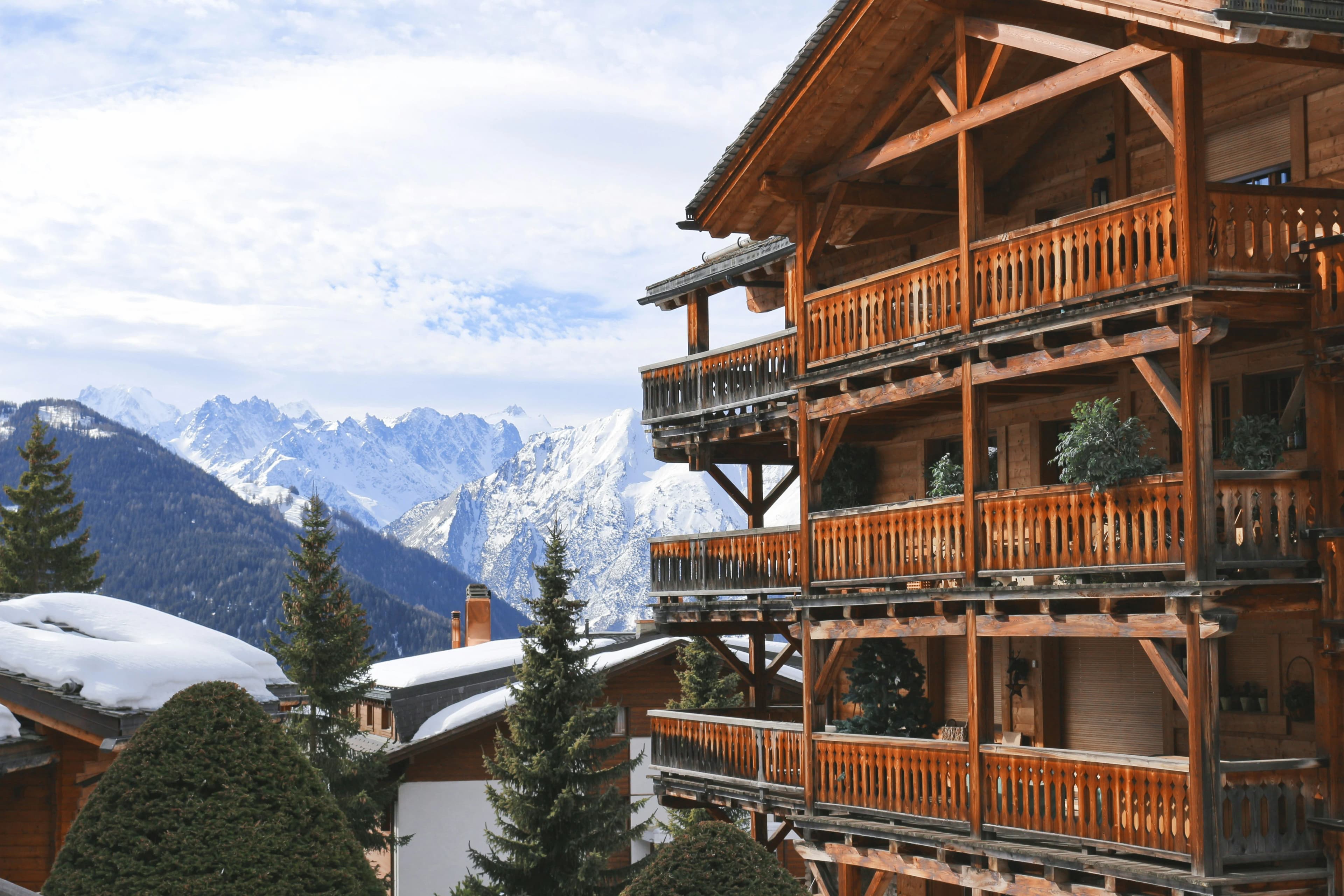
Below Cervinia, the valley drops through a series of smaller settlements including Valtournenche village itself, Antey-Saint-André, and Chamois, the only car-free village in the Alps accessible by cable car. These zones appeal to travelers prioritizing architectural authenticity and quieter surroundings over ski-lift proximity. Stone-built properties here reflect traditional Valdostan construction methods, with thick walls, wooden galleries, and south-facing orientations calibrated to capture winter sun. A luxury suite in this register tends toward warmth, material texture, and a deliberate removal from resort noise.
When to visit Valtournenche
The valley operates on two distinct seasonal logics. Winter, from December through April, is the primary draw for most international visitors. Snow reliability at Cervinia is among the highest in the Alps due to altitude and glacier access, and the connection to Zermatt extends the skiable terrain considerably. The period between Christmas and early January, and again around the February school holidays, represents peak demand. Suite availability at serious properties narrows sharply during these windows, and advance planning of several months is advisable.
July and August bring a different demographic: hikers, cyclists, and travelers using Cervinia as a base for high-altitude trekking including routes toward the Matterhorn base and the Tour du Cervin. Temperatures on the valley floor are moderate and the light in late summer carries a particular clarity that photographers and design-conscious travelers tend to notice. The shoulder seasons of May, June, and October are largely quiet, with many properties operating on reduced schedules or closed entirely. Travelers seeking near-solitude and preferential suite rates will find this period interesting if flexibility is not a constraint.
Local luxury standards: what to expect from top-tier alpine properties
Italy does not apply a formal state-conferred distinction to mountain properties equivalent to the French Palace classification. Quality at the upper end of the Valtournenche market is therefore best assessed through a combination of suite size, material specification, service structure, and spa provision. The most considered properties in this valley tend to work with regional materials: local stone, larch and pine woodwork, and hand-woven textiles that reference Valdostan craft traditions. Wellness infrastructure is a consistent feature at the top tier, with thermal facilities, hammams, and altitude-calibrated treatment programs increasingly standard.
Italian alpine hospitality at this level is markedly less formal than its Swiss counterpart across the border in Zermatt. The service register tends toward warmth and informality without sacrificing precision. Dining in serious properties draws on the specific larder of the Aosta Valley: fontina cheese, lard d'Arnad, valdostana veal preparations, and local wines from high-altitude vineyards that remain among the least-known fine wine sources in Europe. For the food-literate traveler, this regional specificity is a significant asset.
How to choose the right luxury suite in Valtournenche
The first decision is altitude and access. A suite at Cervinia level delivers convenience for ski access and panoramic mountain exposure. A suite in the mid-valley or village properties delivers a more intimate, architecturally grounded experience, with the trade-off of requiring transfer to the lifts. Neither choice is superior in the abstract; it depends entirely on the purpose of the visit.
The second variable is suite configuration. For couples traveling without children, a junior suite with a private terrace oriented toward the Matterhorn is often the more considered choice than a larger suite facing the valley rear. For families or groups, properties offering split-level or connecting suite arrangements with dedicated living space matter considerably more. Altitude travel also has physiological specifics: good suite ventilation, humidification systems, and blackout capacity for the long summer evenings are worth verifying before confirming a booking.
Spa access, in-suite dining capability, and the property's position relative to the village center all affect the texture of daily life during a stay. In a contained mountain destination like Valtournenche, where the village infrastructure is limited compared to larger resorts, the quality of the property's internal offering matters more than it might in an urban context.
Why a curated selection matters in a destination of this scale
Valtournenche is not a large market. The number of properties operating at a level appropriate for the discerning suite traveler is limited, and the range of quality within that small pool is wider than it might appear from standard booking platforms. Some properties present well photographically but underdeliver on suite specification, service consistency, or positioning. Others are quietly exceptional and consistently underrepresented in mainstream travel media.
La Suite applies editorial judgment to this selection. We assess properties on behalf of travelers who value their time and have no interest in correcting a poor booking decision mid-trip. For Italy as a whole, and for the Aosta Valley specifically, the difference between a good property and the right property is frequently invisible to the traveler until they are already there. Our curation exists to close that gap. The European alpine landscape contains many compelling destinations, but few combine Valtournenche's specific combination of altitude, Matterhorn proximity, Italian cultural texture, and relative quietude. Choosing it deliberately, and from the right suite, is a qualitatively different experience from the more traveled alpine circuits.