Why Maastricht rewards the suite traveler
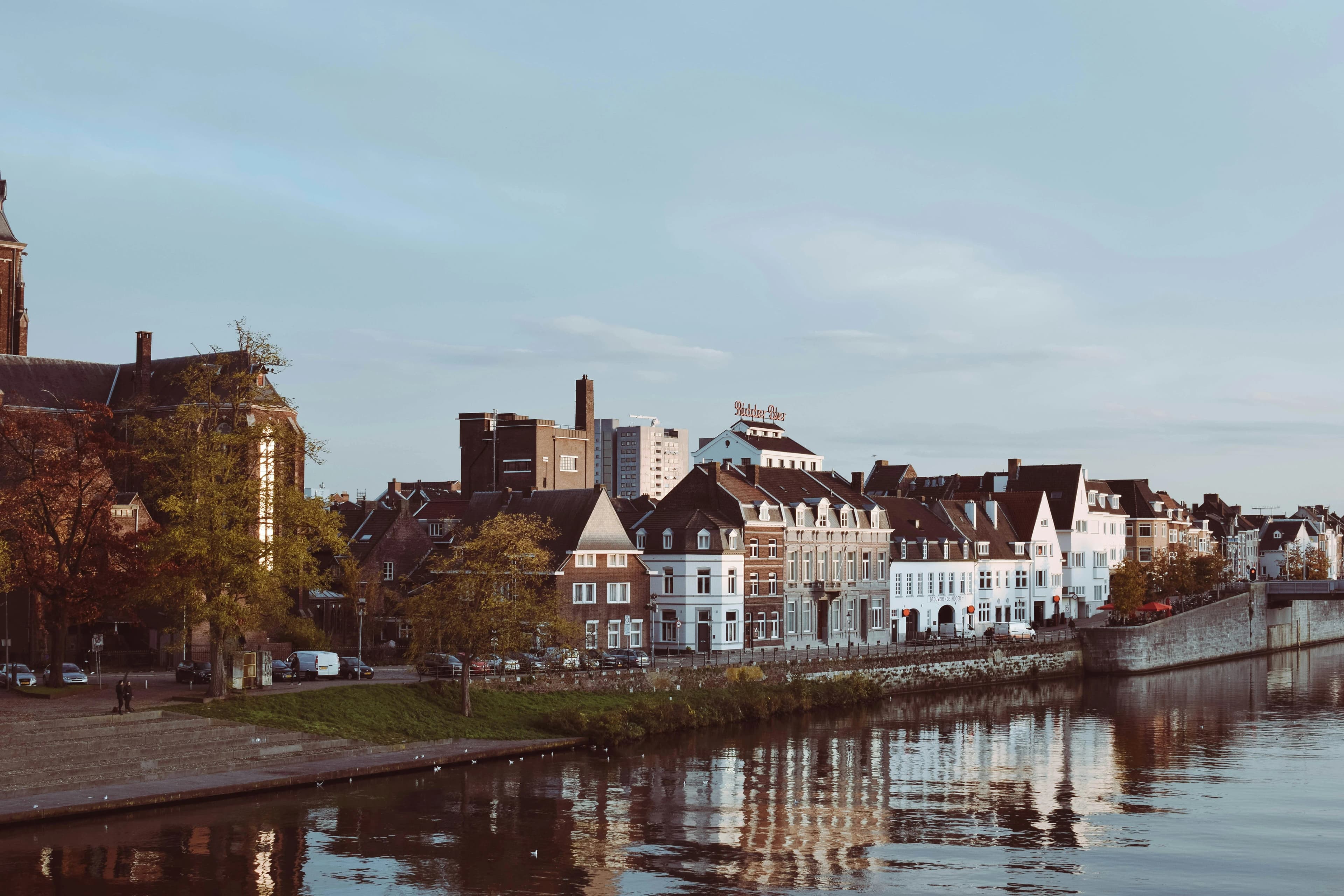
The Meuse (Maas) divides the city into distinct quarters. The historic center, anchored by the Vrijthof square and the basilicas of Sint Servatius and Sint Jan, is compact and walkable. Wyck, the eastern neighborhood across the river, holds the design boutiques, wine bars, and independent architecture that attract a younger affluent demographic. Both sides reward slow movement and direct observation.
Best areas to stay in Maastricht
The historic center and the Vrijthof
The area surrounding the Vrijthof is the gravitational core of Maastricht. Roman catacombs run beneath Romanesque basilicas; the terraces fill in summer with a clientele that is visibly different from the tourist crowds of Amsterdam. Hotels positioned here offer immediate access to the city's most architecturally significant streets, including the Stokstraat quarter, a preserved seventeenth-century neighborhood of narrow lanes and gabled facades. For travelers prioritizing cultural density and walkability, this is the natural address.
Wyck and the eastern bank
Wyck functions as Maastricht's design district. The streets between the train station and the Meuse bridge concentrate independent retailers, wine specialists, and hospitality concepts with considered interiors. Properties here tend toward the boutique scale, with an aesthetic sensibility closer to contemporary Belgian design than to Dutch minimalism. The neighborhood is also the most practical arrival point, given its adjacency to Maastricht Centraal station.
The Sint Pietersberg plateau and southern edges
South of the city center, the Sint Pietersberg hill rises above the Meuse valley and the Belgian border. The area is defined by the marl stone quarries (the groeves) that run for hundreds of kilometers beneath the plateau. Properties at this periphery offer a quieter register: larger grounds, direct access to walking routes, and a sense of remove from the urban core. For families or travelers seeking privacy alongside cultural access, this southern edge merits consideration.
When to visit Maastricht for a luxury suite stay
Maastricht operates on a cultural calendar that is unusually precise for a city of its size. TEFAF (The European Fine Art Fair) takes place each March, drawing collectors, gallery directors, and institutional buyers from across Europe and North America. Suite availability during this period is limited and must be secured well in advance. Rates reflect the demand. For travelers with a serious interest in art, decorative objects, or design history, the timing is non-negotiable.
The summer months bring an entirely different atmosphere. The Vrijthof terraces become the social center of the city; the André Rieu outdoor concerts draw international audiences in July and August. Autumn is the most composed season: the Burgundian food culture reaches its peak, the crowds thin, and the light on the Meuse acquires a particular quality that photographers and architects tend to pursue. Winter in Maastricht has genuine character: the Christmas market is considered among the most architecturally sympathetic in the Benelux region.
For Netherlands travel more broadly, Maastricht is often positioned as a secondary destination after Amsterdam, but for the traveler focused on historical depth and culinary seriousness, it is frequently the more rewarding primary stop.
Local luxury standards: what to expect from top-tier suites in Maastricht
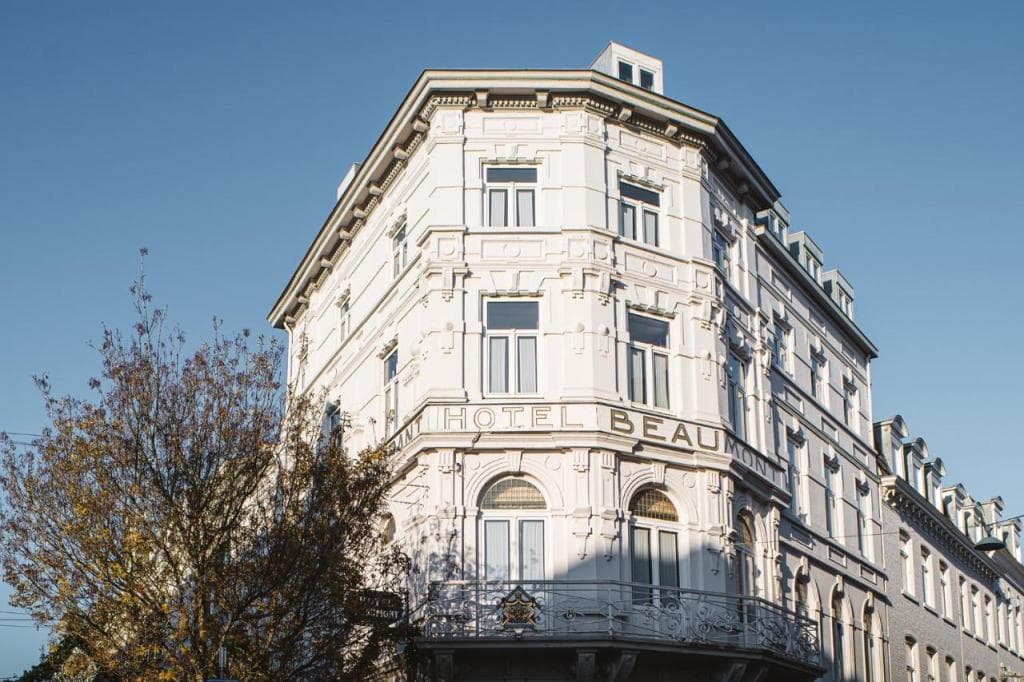
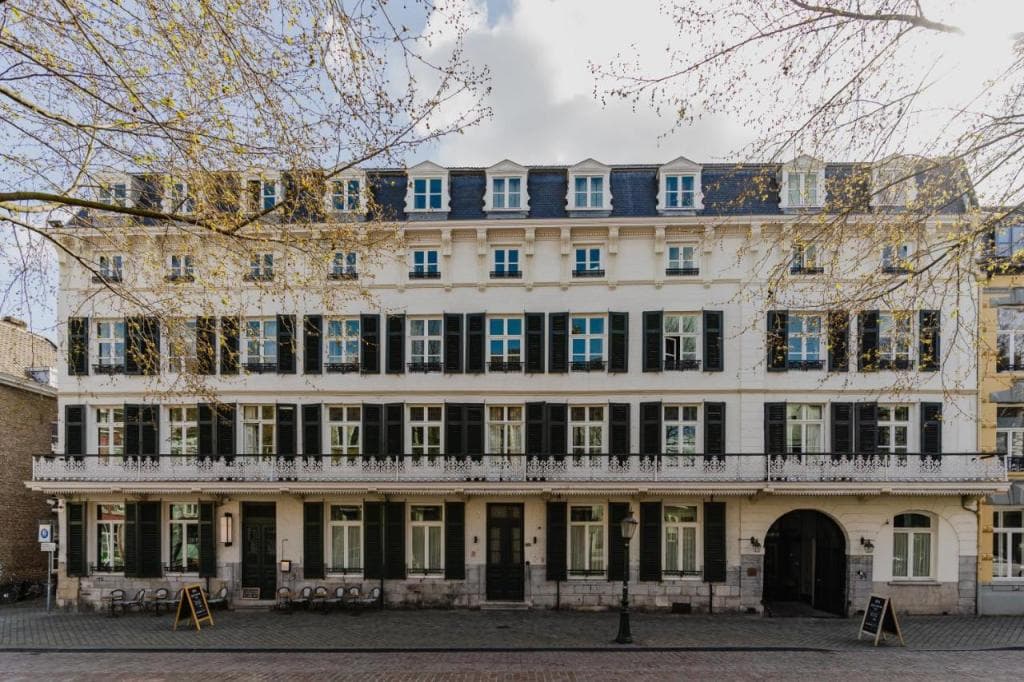
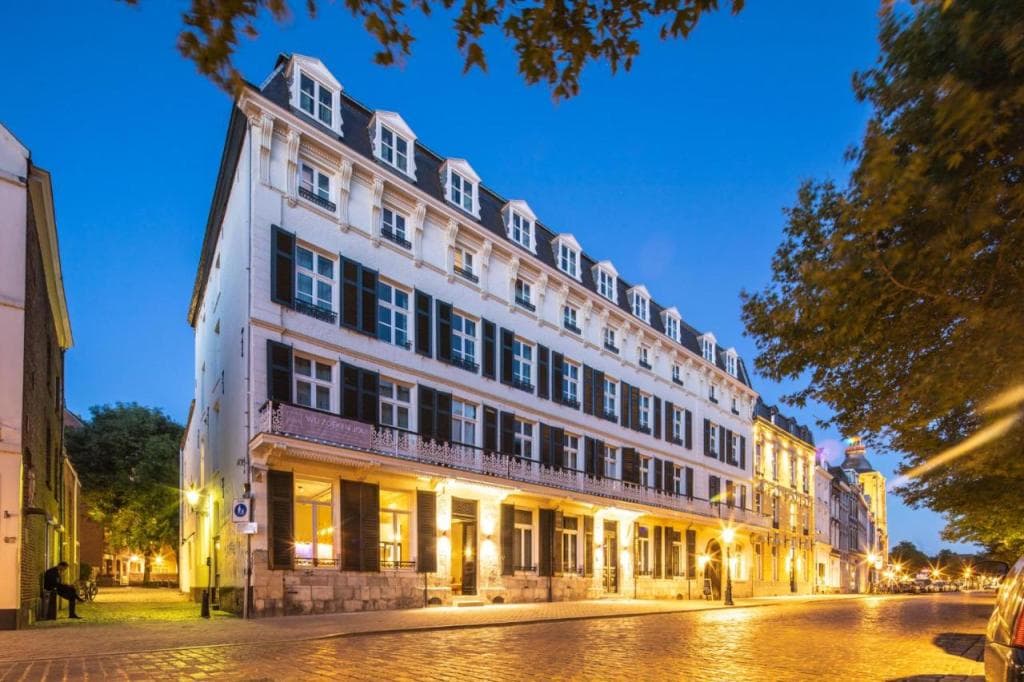
The Netherlands does not operate a formal national classification system equivalent to the French Palace designation. Dutch hotel quality is assessed through standard star ratings, but the most significant properties in Maastricht distinguish themselves through architectural provenance rather than institutional labeling. Several of the city's leading hotels occupy converted historic buildings: a former Dominican church, a medieval gatehouse, a nineteenth-century bank. The quality of the conversion, the integrity of the original structure, and the precision of the interior fit-out are the primary indicators of suite excellence here.
Maastricht's proximity to Belgium is architecturally and gastronomically relevant. The culinary standard in the city's best restaurants reflects Burgundian French influence more than Dutch tradition: longer meals, serious wine programs, and menus oriented around regional products from Limburg province. A luxury hotel suite in Maastricht should be evaluated not only on its own terms but in the context of the dining and cultural programming that surrounds it. The best properties position themselves as platforms for the whole city, not merely as accommodation.
How to choose the best suite in Maastricht
Maastricht's hotel landscape is compact. The number of properties operating at the highest level is deliberately limited, which makes curation essential rather than optional. Several criteria distinguish the exceptional from the merely adequate.
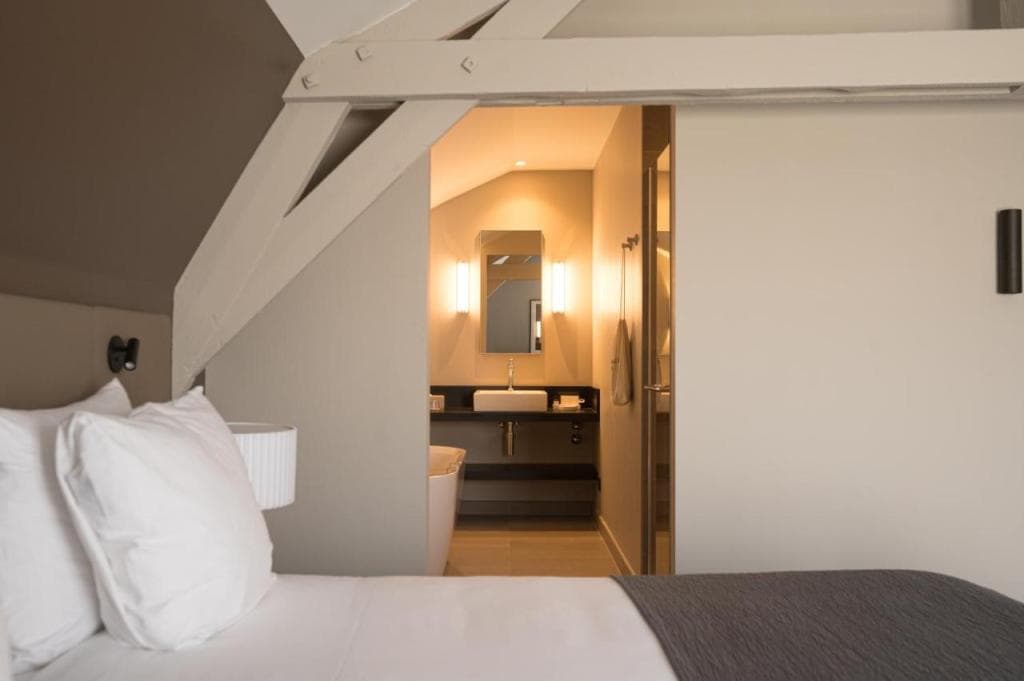
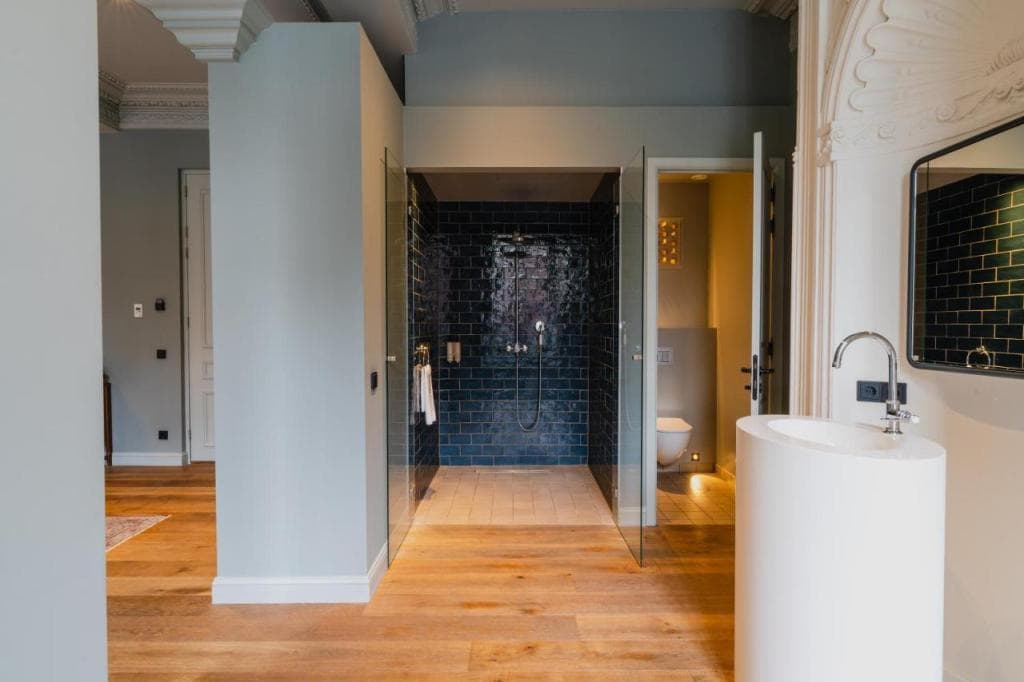
First, architectural context: a suite within a converted historic structure carries a spatial experience that a purpose-built hotel room cannot replicate. Volume, original stone, light from unexpected angles, the presence of preserved architectural detail. These are not decorative choices. They are the product of centuries of construction and use.
Second, proximity to the Vrijthof or the Stokstraat quarter confers immediate cultural access without requiring transport. Maastricht is a city best experienced on foot; a suite positioned within ten minutes of the major basilicas and the best restaurants is structurally superior to one that requires navigation.
Third, for travelers arriving during TEFAF or the summer festival season, the relationship between the hotel and the event infrastructure matters. Some properties maintain direct relationships with fair organizers; others position themselves as quiet retreats at a deliberate remove. Both approaches are legitimate, but they serve different traveler profiles.
Exploring Europe from a base in Maastricht also opens practical advantages: the city is within two hours of Brussels, Cologne, and Amsterdam by train, making it an effective anchor for a wider regional itinerary.
The value of curation in Maastricht
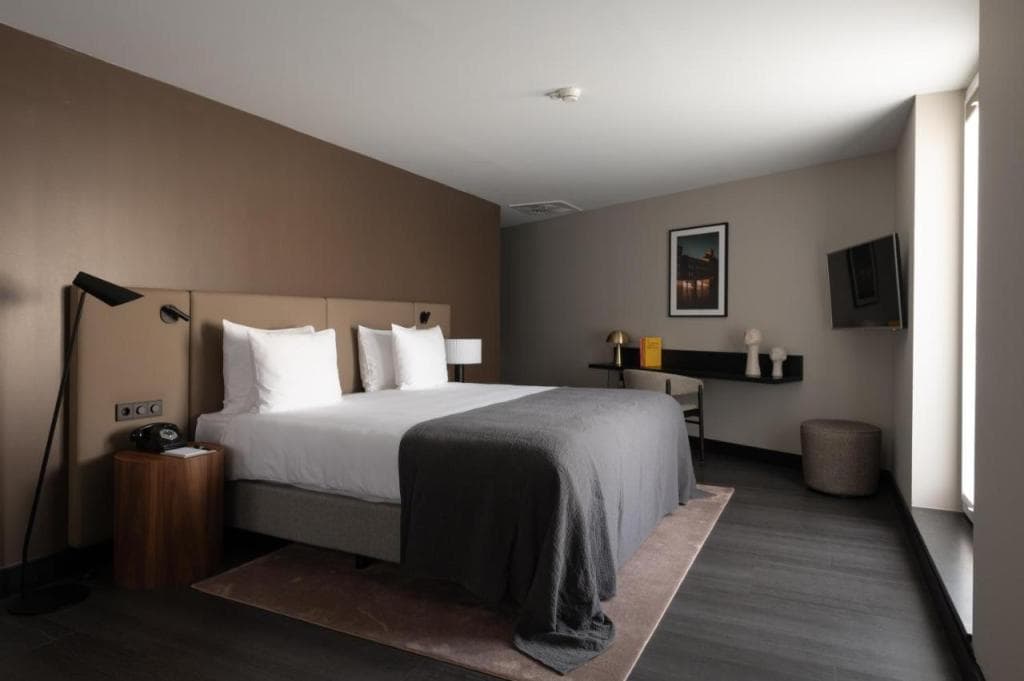
In a city with a small and architecturally heterogeneous hotel landscape, the difference between an adequate stay and an exceptional one is not obvious from a standard booking interface. Photography flattens spatial quality; star ratings do not capture the distinction between a suite in a repurposed Dominican cloister and one in a mid-century block.
La Suite curates luxury suites in Maastricht on the basis of direct assessment: architectural integrity, suite scale and configuration, service precision, and coherence with the city's cultural identity. The curated selection by La Suite removes the research burden and ensures that the property you choose is genuinely commensurate with the city it occupies.
Maastricht demands a certain quality of attention from its visitors. The hotels that serve it well reflect the same standard.