Understanding Bergen as a luxury destination
For the discerning traveler, Bergen offers cultural density without urban overwhelm. The Bergen Philharmonic Orchestra, one of the oldest in the world, anchors a serious arts scene. The KODE museum complex holds one of the largest collections of Edvard Munch works outside Oslo. The fish market at Torget has operated continuously since the 1200s. These are not tourist constructions. They are the actual fabric of the city.
Best areas to stay in Bergen
The city centre and Bryggen
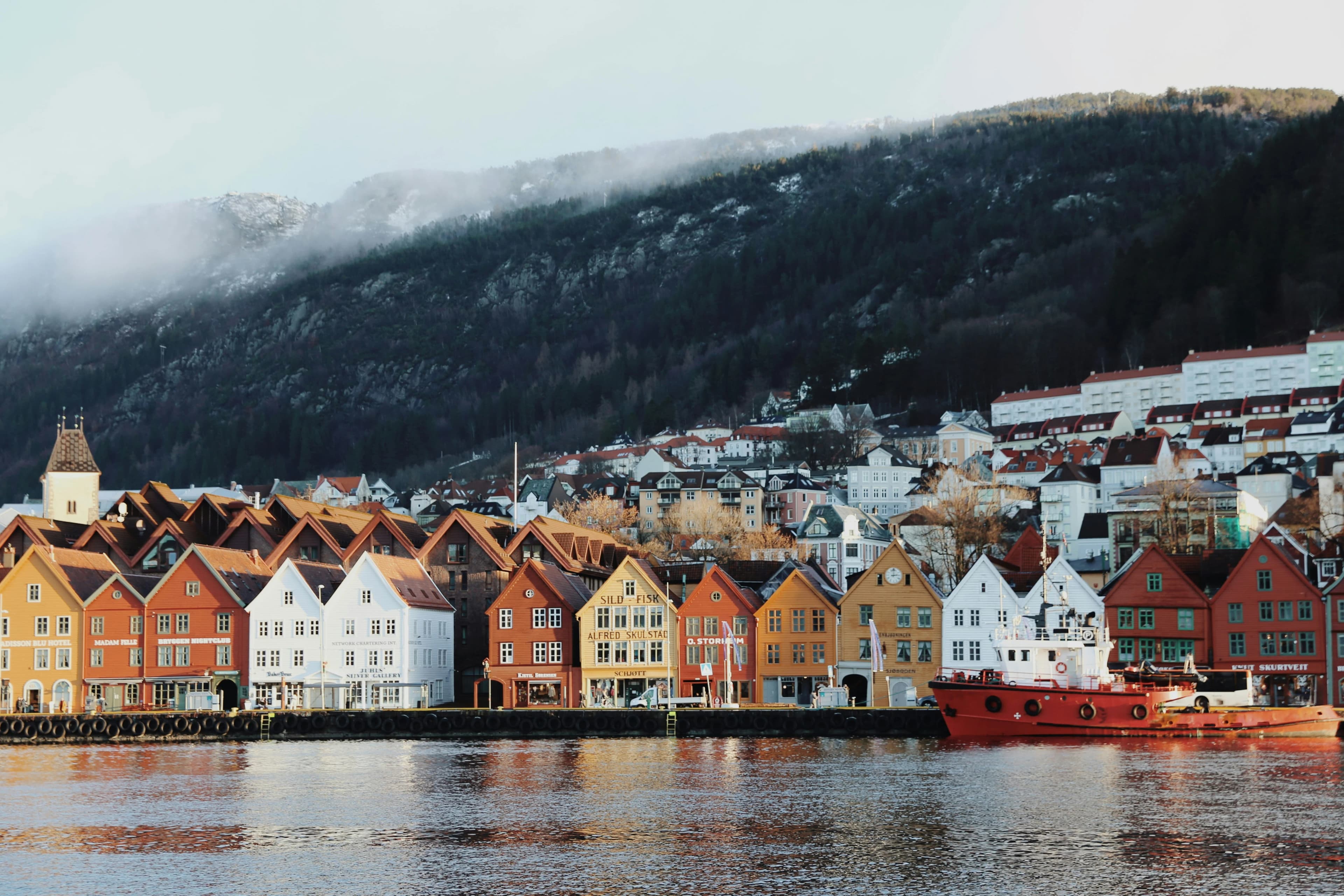
The historic core, centred on Bryggen and Vågen harbour, is where Bergen's architectural character is most concentrated. Properties in this zone place guests within walking distance of the principal cultural sites, the covered fish market, and the Fløibanen funicular that ascends to Mount Fløyen at 320 metres. The proximity to the harbour also means access to boat departures toward the Hardangerfjord and Sognefjord, two of Norway's defining natural corridors.
Nordnes and the western peninsula
The Nordnes peninsula, extending westward from the city centre, offers a quieter residential character with views across both the inner harbour and the open Byfjord. Properties here tend to be smaller in scale and offer a degree of separation from the commercial activity of the centre, while remaining within comfortable reach of it.
The hillside districts
Bergen's topography means that elevated positions, whether on Sandviken to the north or the slopes above Møhlenpris, yield unobstructed views over the roofscape and water. A suite situated on higher ground in Bergen carries a qualitatively different experience from one at quay level: the city reads differently from above, and the surrounding mountains become a constant spatial reference.
When to visit Bergen for a luxury stay
Bergen is famously one of the wettest cities in Europe, receiving rain on approximately 239 days per year. This is not a deterrent so much as a defining atmospheric condition. The city's light in rain, particularly in autumn, has a particular quality, silvered and diffuse, that is entirely its own. Travelers who approach Bergen on its own meteorological terms, rather than in search of guaranteed sunshine, tend to find it more rewarding.
The most temperate window is from late May through August, when daylight extends well beyond 10 pm and average temperatures sit between 15 and 20 degrees Celsius. The Bergen International Festival, held in late May and early June, is the largest festival of the performing arts in the Nordic countries and draws significant international attendance. Suite availability tightens considerably during this period, and advance planning is advisable.
September and October offer a compelling alternative: reduced visitor density, the onset of autumn colour on the surrounding hillsides, and a cultural calendar that continues through the shoulder season. Winter, from November to February, delivers dramatic skies, Christmas market activity in the centre, and the possibility of aurora sightings from the surrounding highlands, though not from the city itself due to light pollution.
Luxury standards in Bergen: what to expect
Norway does not operate a formal national luxury classification equivalent to the French Palace designation. Hotel quality is assessed through the Nordic Swan Ecolabel and standard international star ratings, but neither framework maps precisely onto what a luxury traveler would recognise as an authoritative quality benchmark. In Bergen, the relevant indicators are more architectural and spatial than categorical.
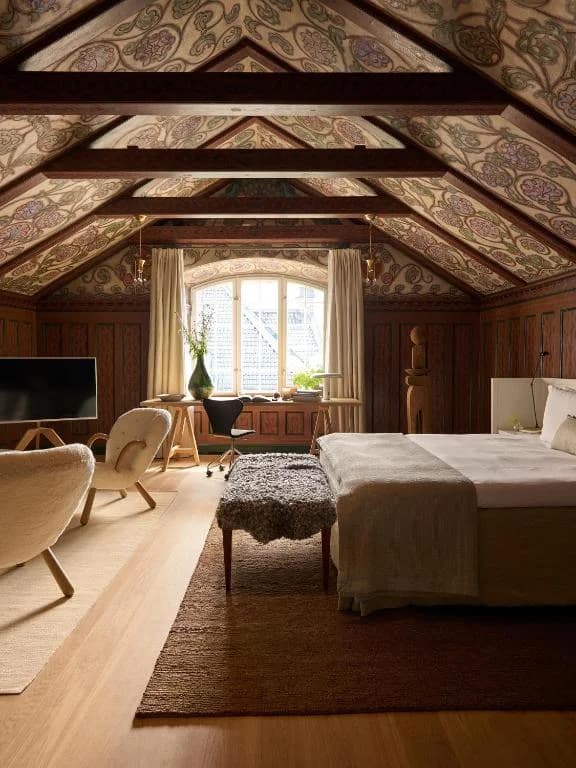
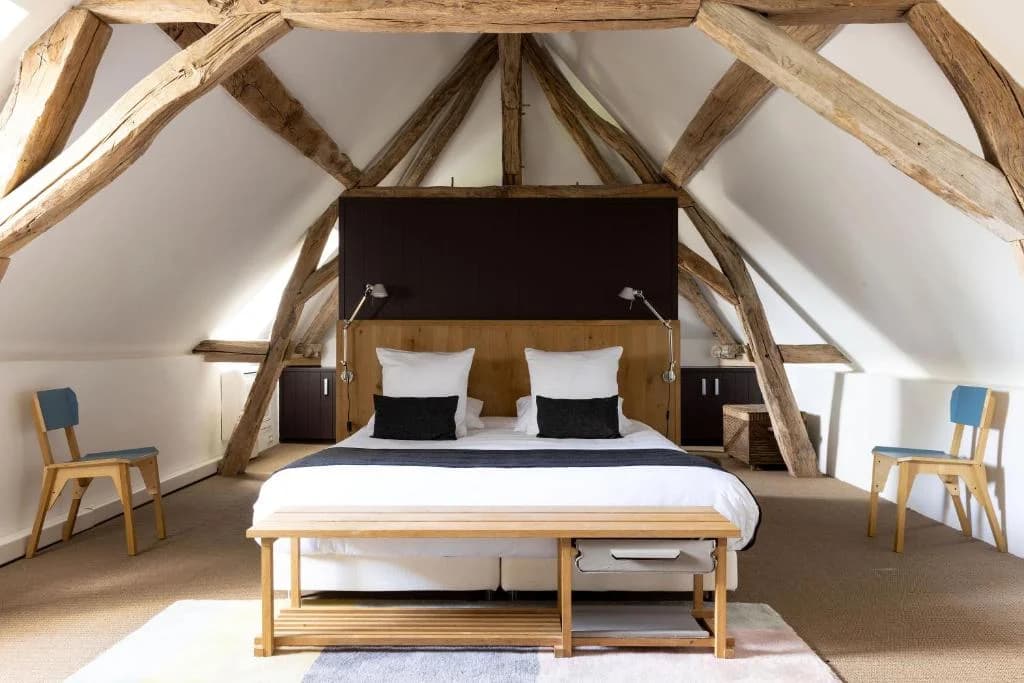
Top-tier suites in Bergen tend to distinguish themselves through considered interior design that references the city's maritime and timber-building traditions, without resorting to decorative pastiche. Expect high ceilings, restrained material palettes centred on natural oak, stone, and wool textiles, and views that are treated as primary design elements rather than incidental features. Service standards in the best Bergen properties are characteristically Scandinavian: attentive, unpretentious, and precise without formality.
The Norwegian hospitality culture values understatement. There is no tradition of theatrical luxury here in the manner of, say, a Parisian grand hotel. What Bergen's best properties offer instead is a form of considered comfort, one that prioritises material quality, spatial generosity, and environmental integrity over ornament.
How to choose the right luxury suite in Bergen
Historic versus contemporary properties
Bergen's building stock includes significant 19th-century merchant architecture alongside more recent developments. A suite within a converted historic building will typically offer the atmosphere of the city's commercial past, with the associated pleasures of original timber construction, irregular room geometries, and the particular acoustic quality of older structures. Contemporary properties, by contrast, tend to maximise views and deploy the full vocabulary of current Scandinavian interior design.
View orientation
Given Bergen's topographic complexity, view orientation is a material consideration when selecting a suite. Harbour-facing rooms address the constant activity of the waterfront and the Bryggen skyline. Mountain-facing rooms engage the forested ridgelines and, on clear evenings, the last light held on the peaks long after the city has settled into dusk. Both are valid choices; they represent genuinely different relationships with the city's geography.
Suite size and configuration
For extended stays or for travelers arriving as a small group, the configuration of the suite, whether it includes a separate sitting room, a private terrace, or a kitchen facility, will significantly affect the quality of the experience. Bergen rewards slow engagement. A suite that functions as a genuine private residence rather than an upgraded hotel room allows the city's texture to accumulate over several days.
Why curated selection matters in Bergen
Bergen's hotel market is relatively small by international luxury standards. The city does not have the volume of five-star inventory found in Paris, London, or Dubai, and the distinction between genuinely exceptional properties and those that merely present well on booking platforms is not always obvious from standard search interfaces.
The curated selection by La Suite applies consistent editorial criteria to Bergen's available luxury hotel suite inventory: spatial quality, service standard, architectural integrity, and the capacity of the property to function as a meaningful extension of the destination itself. For a city as precise and particular as Bergen, that level of curation is not an indulgence. It is a practical necessity for travelers who arrive with considered expectations.