Where to stay in Warsaw: districts and their distinct character
Srodmiescie: the historical and commercial centre
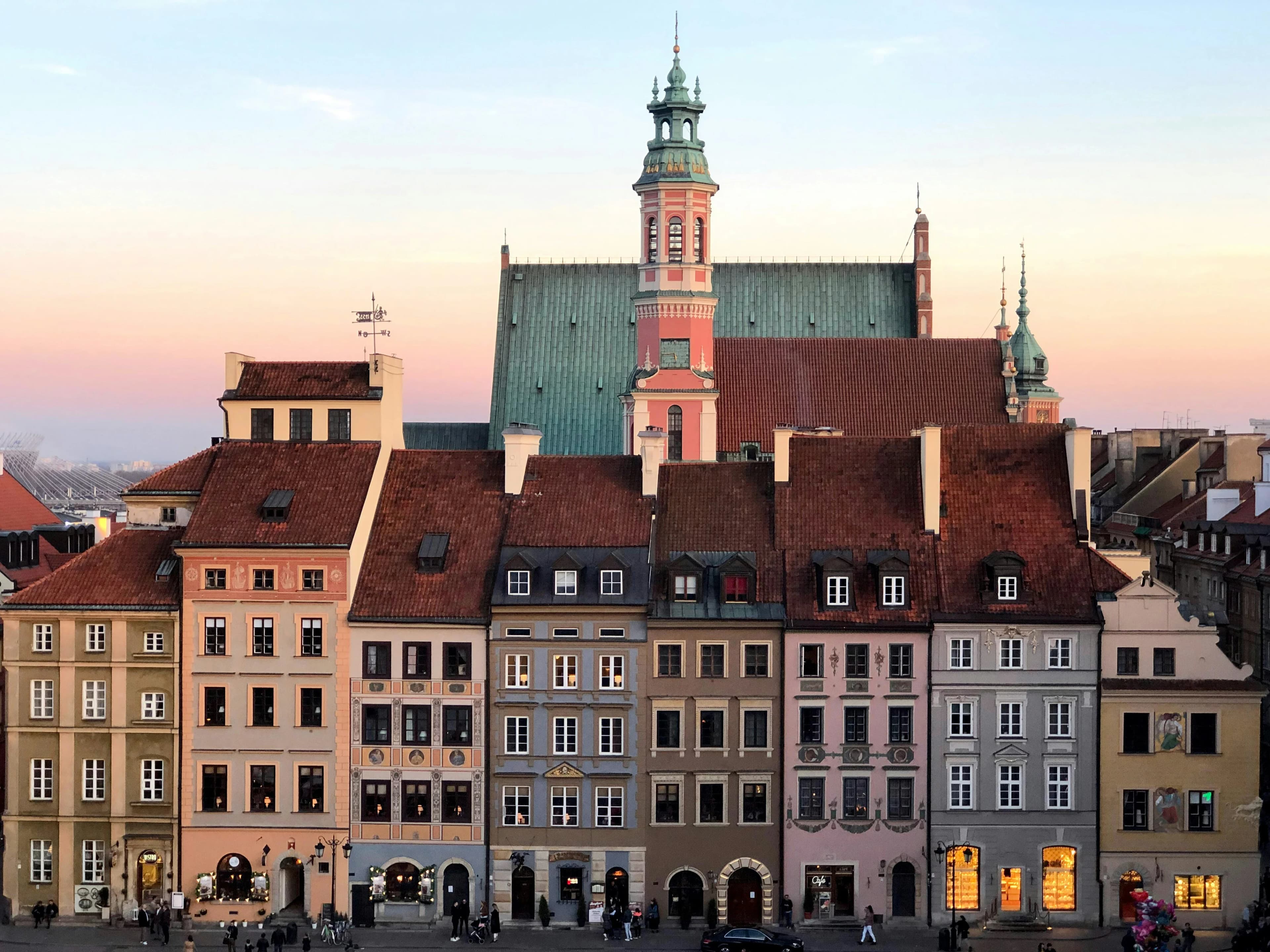
The central district, Srodmiescie, contains Warsaw's most recognisable landmarks alongside its most established luxury hotel addresses. The Old Town (Stare Miasto), a UNESCO World Heritage Site reconstructed stone by stone after 1945, sits at the northern edge of this zone. Staying here places guests within walking distance of Royal Castle Square and the Royal Route. The district's density means cultural institutions, private galleries, and high-end dining are all within reach on foot. A luxury suite in this part of the city functions as a proper urban base: quiet above street level, close to everything without being overwhelmed by it.
Powisle and the riverfront corridor
Powisle, running along the left bank of the Vistula, has undergone significant transformation over the past decade. The neighbourhood now attracts architecture practices, creative studios, and independent cultural venues. Its proximity to the river gives it a different quality of light and a lower density of commercial activity. For travelers who prioritise a more residential atmosphere with easy access to the centre, this corridor offers a compelling alternative to the strictly central addresses.
Wilanow and the southern palatial axis
Further south, Wilanow is defined by the Wilanow Palace complex, a late 17th-century royal residence surrounded by formal gardens. The area is quieter, more residential, and carries a different pace entirely. Some luxury properties in this zone lean into the palatial context, offering an experience closer to a private estate than a metropolitan hotel. This makes it a credible option for travelers whose itinerary centres on Polish heritage and formal cultural visits rather than urban mobility.
When to visit Warsaw for a luxury suite stay
Warsaw's climate follows a continental pattern, with clearly defined seasons. Each period has a different logic for the high-end traveler.
Late spring, from May through June, represents the most balanced window. Temperatures are moderate, cultural programming is at its most active, and the city's public spaces operate at full capacity. The Warsaw Philharmonic, the National Museum, and the seasonal outdoor cultural calendar are all in strong form during this period.
Summer (July and August) brings warmth and extended daylight, but also a degree of tourist density in the Old Town and a partial departure of the city's professional community during August. Suite availability tends to improve during this period, and rates can reflect the lower business travel demand. For travelers focused on leisure and cultural exploration, the summer remains highly functional.
Autumn, particularly September and October, is widely regarded by the city's cultural class as the optimal period. Major international festivals, gallery openings, and business events concentrate in these months. The light quality in September is particularly noted by photographers and design-sensitive travelers.
Winter in Warsaw is cold and often grey, but carries an interior social life that compensates: concert halls, private dining, and the city's modernist interiors take on particular relevance when the outdoor temperature makes them necessary. Christmas and New Year bring a specific aesthetic to the city's public spaces that attracts a distinct type of visitor.
Understanding luxury hotel standards in Warsaw and Poland
Poland does not operate a formal Palace classification equivalent to France's system, but the country's top-tier hotels are increasingly benchmarked against international luxury standards. The leading properties in Warsaw are typically members of global luxury hotel groups or design-led independent collections, and their suite offerings reflect current European expectations for space, material quality, and service.
What distinguishes Warsaw's luxury hotel landscape from older Western European capitals is the architectural modernity of much of its high-end stock. Because the city was rebuilt after 1945, there are fewer converted historic palaces operating as hotels than in comparable Central European capitals. The luxury experience here tends to be expressed through precision of design rather than accumulation of historical ornament. Suites in the upper tier typically offer genuine spatial separation between living and sleeping areas, dedicated concierge access, and a level of interior specification that reflects contemporary international standards.
Polish hospitality has a particular directness and formality that differs from Mediterranean warmth or Nordic restraint. Service at the senior level tends to be attentive without being deferential, and English is spoken to a high standard across the luxury sector. For business travelers and cultural visitors alike, this translates into a functional, frictionless experience at the top of the market.
How to choose the right luxury suite in Warsaw
Several practical considerations are specific to Warsaw that do not necessarily apply to other European capitals.
Architecture and era matter more here than in cities with a continuous built heritage. A suite in a contemporary tower will offer a fundamentally different sensory experience from one in a restored pre-war building, of which there are a limited number. Travelers with a strong preference for historical context should prioritise properties that either occupy or reference Warsaw's architectural history before 1939. Those who value modernist clarity and contemporary spatial design will find it more readily available here than in many comparable cities.
Location relative to business infrastructure is a meaningful filter for corporate travelers. Warsaw's conference and business district is concentrated around the central station area and the nearby financial district, and suites within this zone reduce transit time significantly during intensive work trips.
For leisure travelers, proximity to the Royal Route and the major museum cluster is the more relevant filter. The distance between Warsaw's key cultural sites and its luxury hotel addresses is generally walkable, but the choice of district affects the quality of the immediate streetscape and the ease of moving between appointments.
Why a curated selection by La Suite matters in Warsaw
Warsaw's luxury hotel market is not as extensively documented as Paris, London, or Rome. International travelers arriving without prior knowledge of the city's geography and hotel landscape face a more complex decision than they might in a more heavily curated destination. La Suite applies the same editorial standards to Warsaw as to the world's most established luxury capitals: only suites that meet rigorous criteria for space, service, design, and privacy are included in the selection.
The value of this curation is particularly pronounced in a city where the gap between a genuinely high-end suite and a standard superior room marketed with aspirational language can be significant. La Suite's selection removes that ambiguity, presenting only the properties and suite categories that deliver on the full promise of elevated travel.