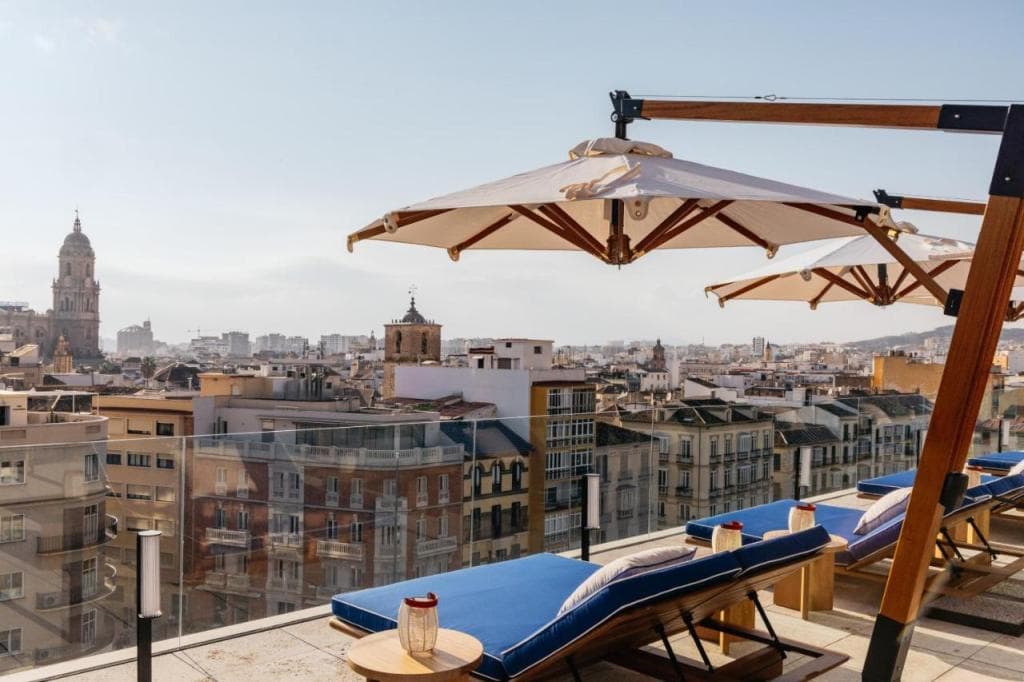
Malaga's distinct neighbourhoods for luxury stays
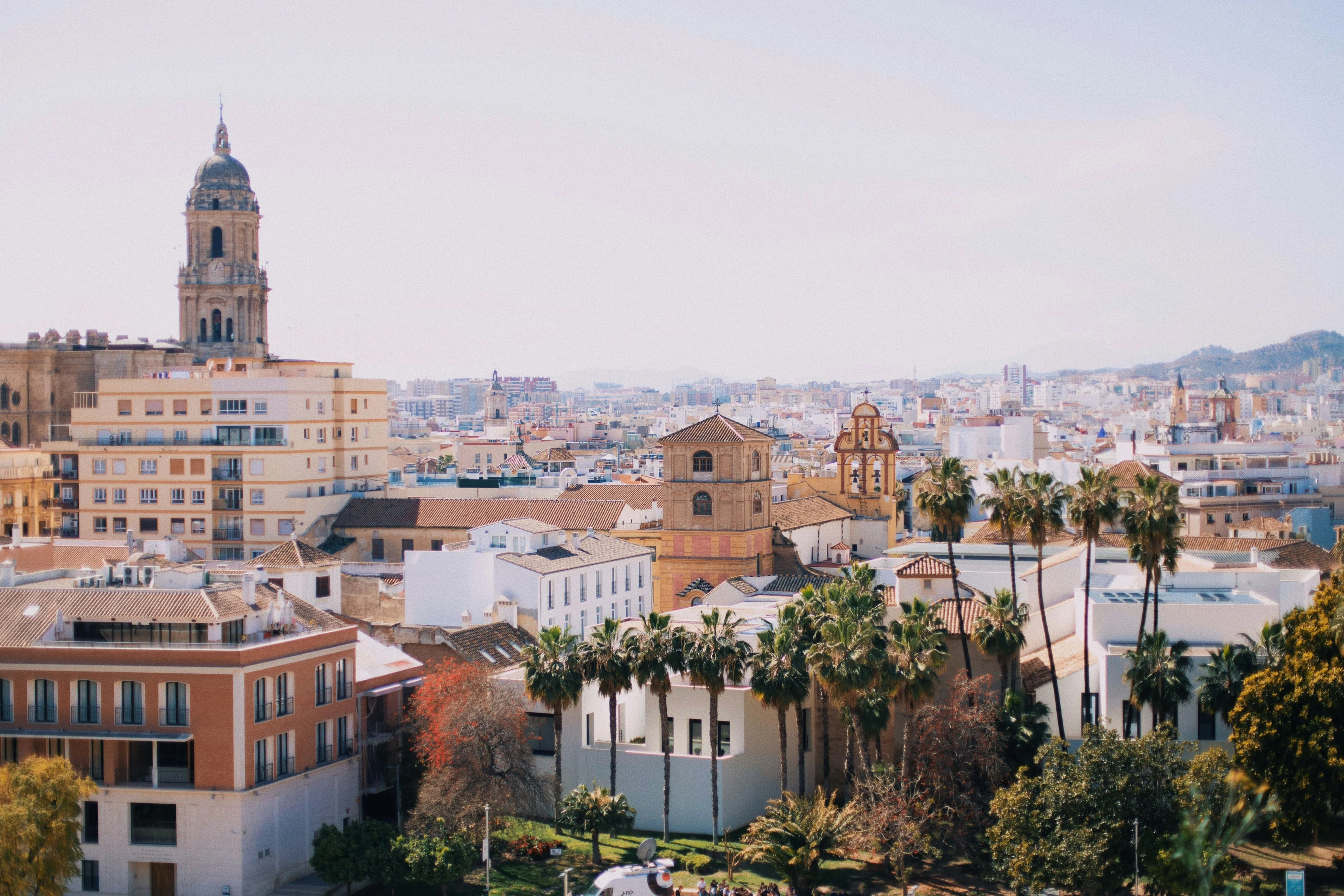
The historic centre, anchored by the Alcazaba and the Roman theatre, is the most culturally dense area of the city. Properties here tend to occupy converted palaces or buildings with deep historical fabric, where suite design must negotiate original structure. The Soho district, just south of the old town, has evolved into Malaga's contemporary art corridor, with the Centre Pompidou Malaga as its institutional anchor. Hotels in this zone tend toward cleaner, more architectural aesthetics.
The Muelle Uno waterfront and the port adjacency offer suites with direct Mediterranean orientation, where the relationship between interior space and sea light is the primary design consideration. Further east, the Pedregalejo and El Palo districts maintain a quieter residential character, attractive to travelers seeking proximity to the city without its central density.
When to visit Malaga for a suite stay
Malaga's climate is one of the most consistent in continental Europe, with over 300 days of annual sunshine recorded by the Spanish Meteorological Agency. This makes timing a question of preference and event alignment rather than weather avoidance.
Spring, from March through May, offers the most balanced conditions: mild temperatures, lower occupation rates than peak summer, and the Semana Santa processions in April, which transform the historic centre into a theatrical space of extraordinary ritual intensity. This period also coincides with the Malaga Film Festival, held each March, which draws an international cultural audience to the city.
Summer concentrates the Mediterranean population on the coast, and suite availability at the most sought-after properties narrows considerably from late June through August. Rates are at their annual peak, and the city operates at full social register. For travelers who prefer density and energy, this is the correct season. For those who prioritise space and service attention, September and October offer a more considered experience with the sea still warm.
Winter in Malaga is mild by northern European standards, with average temperatures remaining above 12 degrees Celsius. This is the season for cultural immersion without crowd pressure, and hotels frequently offer their most competitive suite rates during this window.
Luxury standards in Malaga: what to expect from the top tier
Spain does not operate the Palace designation system found in France, but the Gran Lujo category functions as the operative marker for the highest tier of hotel classification within the Spanish system. Properties holding this status are subject to specific requirements around service ratios, room dimensions, and facility provision.
In Malaga specifically, the luxury hotel landscape has matured significantly since the early 2010s, when the city repositioned itself culturally through museum investment and infrastructure renewal. The current generation of high-end properties integrates the city's Moorish architectural heritage, its Mediterranean light conditions, and contemporary Andalusian design into a coherent guest experience.
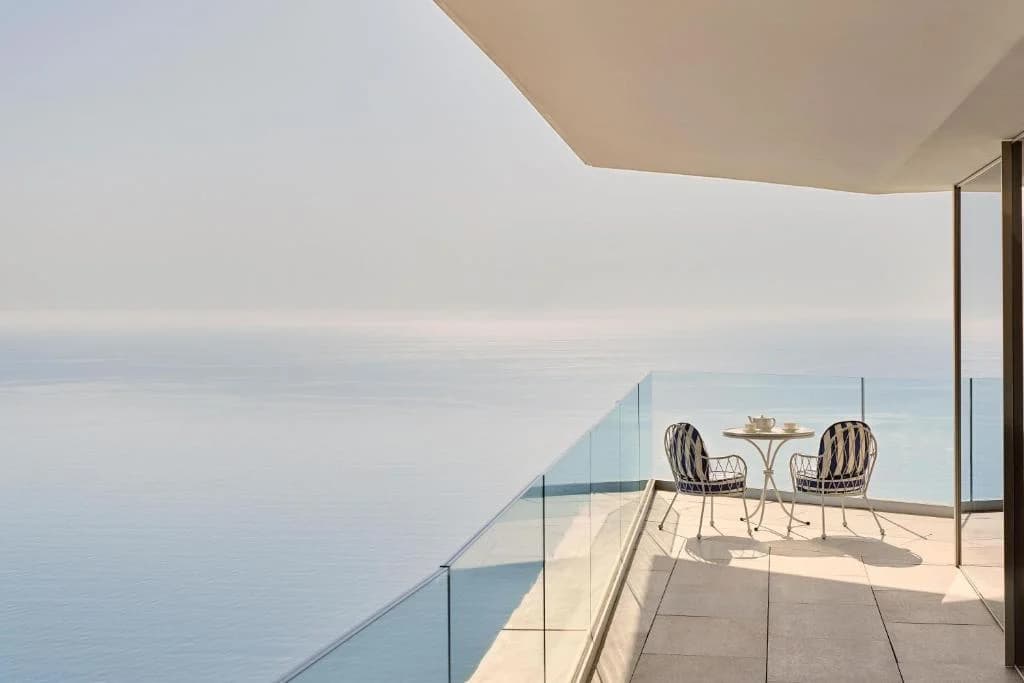
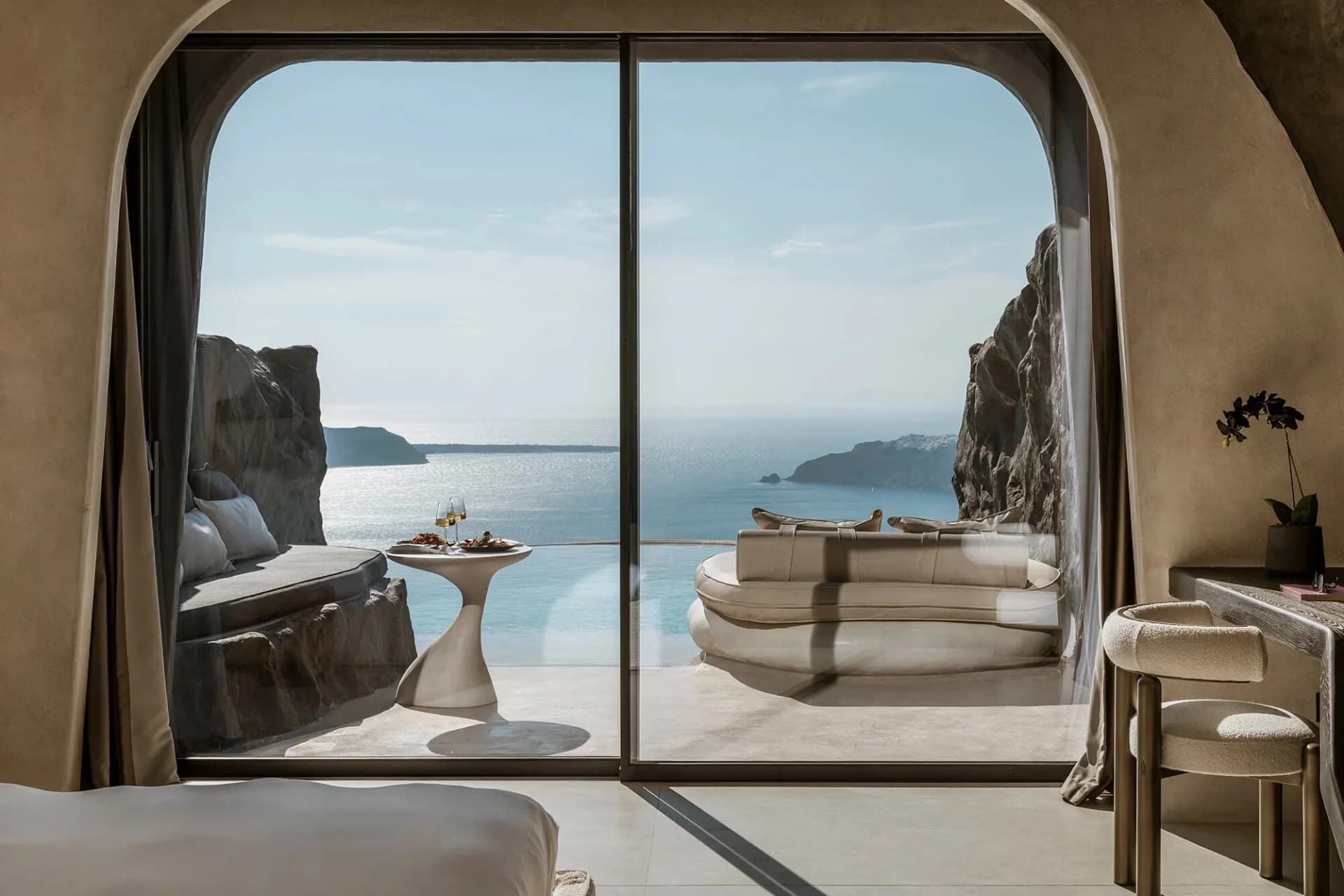
Suites in Malaga's best hotels frequently feature private terraces oriented toward the sea or the Alcazaba, with room volumes that reflect the spatial generosity of traditional Andalusian courtyard architecture. Spa facilities tend to incorporate local thermal and hammam traditions. Gastronomy at the suite tier typically connects directly to Malaga's exceptional local produce: anchovies from Malaga Bay, subtropical fruits from the Axarquia, and wines from the Sierras de Malaga denomination.
How to choose the right suite in Malaga
The first decision is architectural register. Malaga offers both historic palaces converted to hotel use and purpose-built contemporary properties. The former provides spatial character and cultural texture; the latter delivers precision in acoustic control, technology integration, and modern service infrastructure. Neither is superior in absolute terms: the choice depends on the traveler's relationship to place and materiality.
The second consideration is orientation. Suites facing the port and the Mediterranean receive direct sea light from the west and south, which changes the character of the interior across the day. Suites in the historic centre often face internal courtyards or narrow streets, which offer shade and quiet but a different relationship to the city's exterior life.
Terrace access is a consistent priority for suite travelers in Malaga. The climate makes outdoor private space a functional amenity for most of the year, and the best suites are designed with this in mind. It is worth verifying terrace dimensions and orientation before confirming a reservation.
Service language and hotel scale also matter. Smaller boutique properties offer a higher ratio of staff attention per guest but may have more limited spa and food and beverage infrastructure. Larger international properties bring consistent service protocols and broader amenity depth but can sacrifice the specificity of place that characterises the best Malaga experiences.
Why a curated selection by La Suite makes sense in Malaga
Malaga's hotel market has expanded rapidly over the past decade, and the gap between properties marketed as luxury and those that genuinely perform at that level is significant. The visual language of prestige is easy to replicate in photography; the quality of suite construction, the depth of service training, and the coherence of the guest experience are not.
La Suite applies a consistent editorial framework across every destination, with criteria that go beyond star rating or brand affiliation. In a city like Malaga, where several independently operated boutique properties compete directly with international luxury brands, this framework is particularly useful. It identifies the suites that deliver on the promise of the destination rather than simply reflecting the global average of the category.
For travelers arriving in Malaga with specific requirements, whether architectural, experiential, or logistical, the La Suite selection removes the research burden and replaces it with a direct, considered answer. The curation is the service.