The distinct character of Seville's luxury neighbourhoods
The Barrio Santa Cruz, the former Jewish quarter, is the most historically dense part of the city. Its whitewashed lanes, private patios, and proximity to the Alcázar and the Cathedral make it the natural address for travellers who want the historical core on foot. Properties here tend to be converted palaces or manor houses, often built around a central courtyard, a typology known locally as a casa-palacio. The intimacy is genuine: these are small-scale structures with thick stone walls and a silence that holds even in high summer.
El Arenal, bordering the Guadalquivir river, offers a slightly more open urban grain. It sits between the bullring of La Maestranza and the old port infrastructure, and it carries a certain civic dignity. Hotels here tend toward the classical grand hotel format, with generous public spaces and direct access to the riverside promenade.
Triana, across the river, has traditionally been the working district of Seville: the home of flamenco, ceramic workshops, and the city's fish and produce market. Luxury accommodation in Triana is limited but growing, and staying here communicates a deliberate choice to engage with a less touristic Seville. The visual texture is different: azulejo tile facades, iron balconies, a lower skyline.
The Nervión district and the area around the Palacio de Congresos attract business travellers and those attending international events. Suites here are more contemporary in finish, aligned with the expectations of a corporate audience.
When to visit Seville for a luxury suite stay
Seville has a clear climatic rhythm that directly affects both availability and the character of the visit.
Spring is the most sought-after season, and for good reason. March through May brings mild temperatures, blooming orange trees, and the city's two most significant cultural events. Semana Santa, Holy Week, transforms the streets with centuries-old religious processions that move through the city at night, accompanied by drums and the scent of incense and orange blossom. The Feria de Abril follows two weeks later: a private fair of casetas, flamenco dress, and fino sherry that functions largely on invitation and personal connection. Suite availability during both periods is extremely limited and should be secured months in advance.
Summer in Seville is serious heat. July and August regularly exceed 40°C, and the city empties of residents. For travellers who choose this period, a suite with a private pool or a high-floor terrace becomes a functional necessity rather than a luxury. Rates can be more competitive, and the city's monuments are navigable in the early morning and at dusk.
September and October represent a secondary peak: temperatures drop to a genuinely comfortable range, the cultural calendar resumes, and the light takes on the particular quality of Andalusian autumn. This is arguably the most refined moment to experience Seville without the pressures of spring.
Winter from December to February is mild by northern European standards, with average temperatures around 15°C. The city is calm, the monuments are accessible without crowds, and suite rates reflect the lower demand. Christmas in Seville has its own visual grammar: nativity displays, specific local confectionery, and a pace of life that opens to longer lunches and evening conversation.
Local luxury standards: what defines a prestige suite in Seville
Spain does not operate the same formal palace classification as France, but Seville has its own markers of prestige that are worth understanding before making a selection.
The Gran Lujo designation, Spain's highest official hotel category at five stars superior, identifies properties that meet an elevated set of criteria across service, facilities, and spatial standards. In Seville, a number of properties carry this status, and it provides a reliable baseline for expectations.
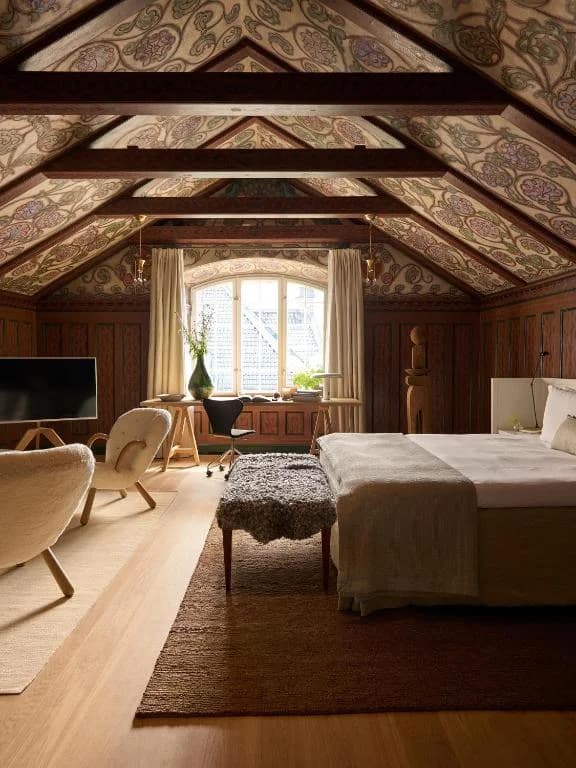
Beyond formal classification, the most meaningful indicator of quality in Seville is the building itself. The city's finest suites are typically housed in converted aristocratic palaces, 16th to 19th-century structures with original tiled floors, painted ceilings, and interior courtyards. These buildings operate under heritage protections that prevent structural alteration, which means the integrity of the architecture is preserved. A suite in a casa-palacio is a fundamentally different experience from a suite in a purpose-built hotel: the proportions are historical, the materials are original, and the sense of place is irreducible.
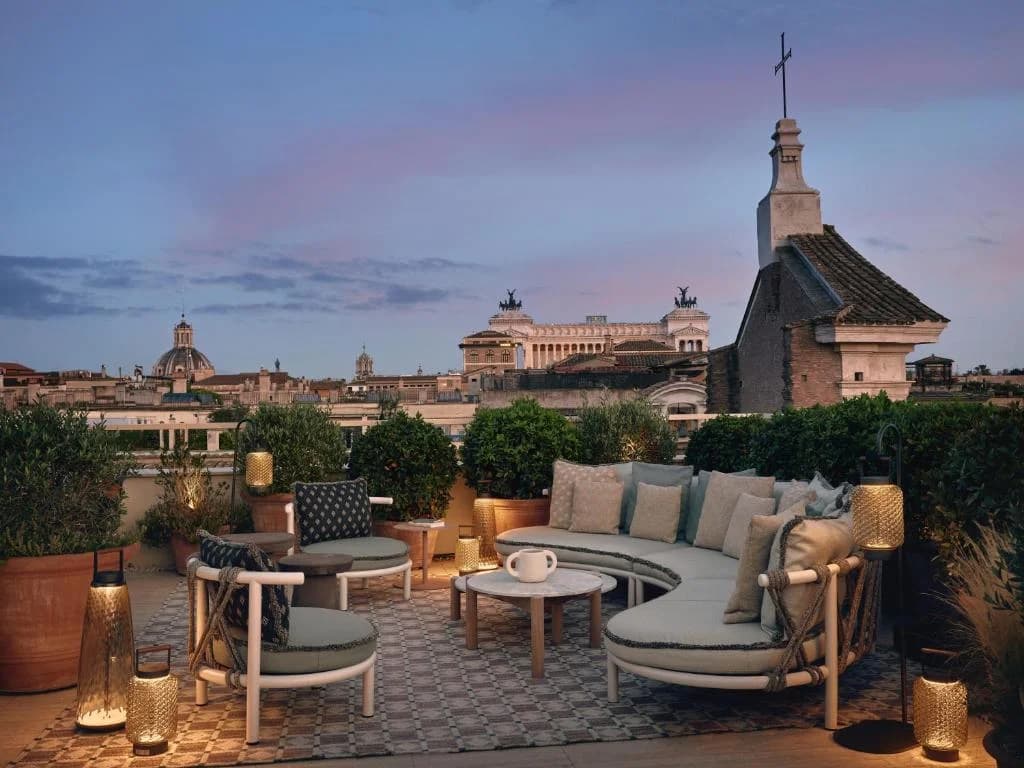
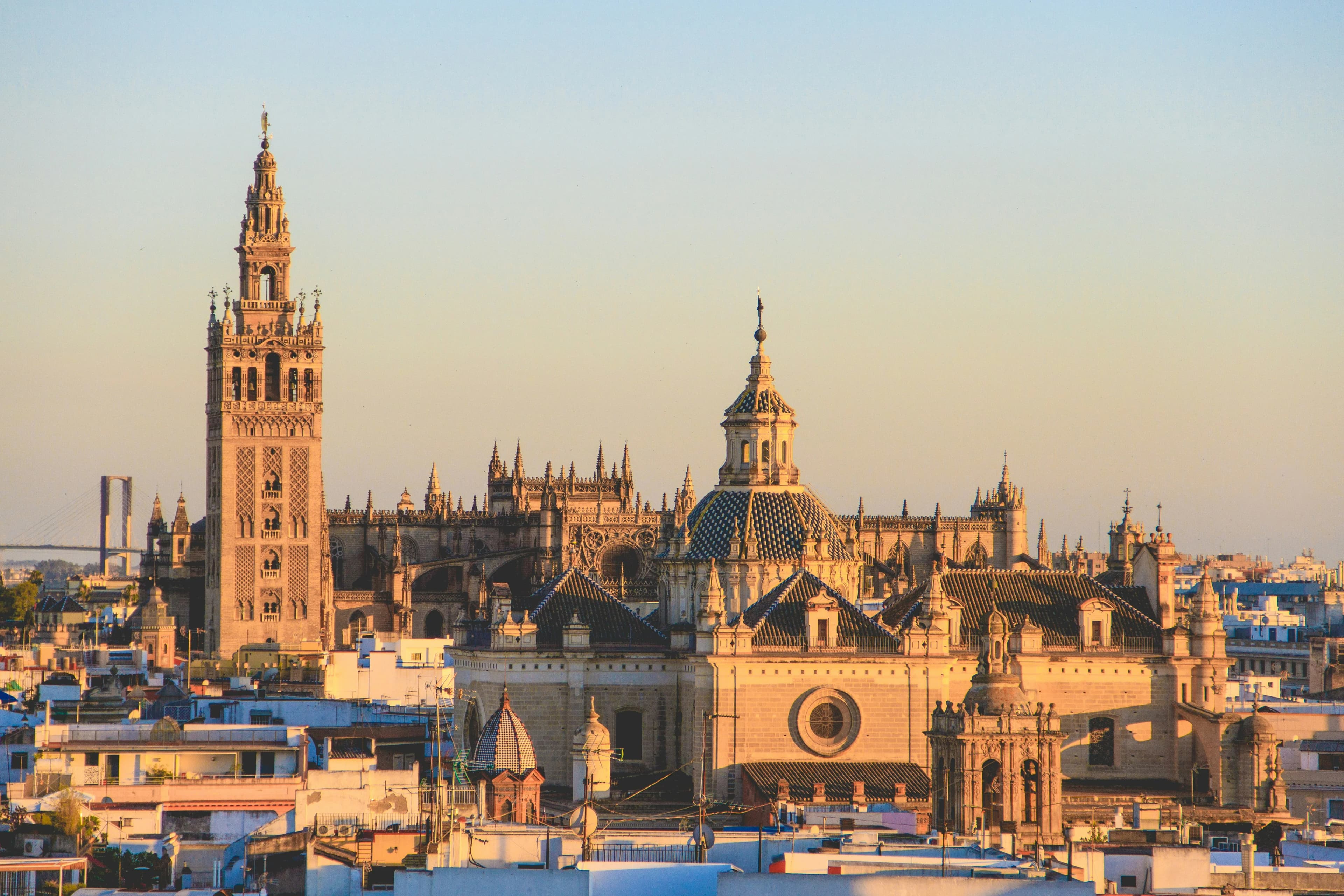
Rooftop terraces are a significant amenity in Seville, given the cityscape of cathedral towers, the Giralda minaret, and the terracotta roofline. A suite with private or semi-private rooftop access commands a substantial premium and provides a perspective on the city that is otherwise inaccessible.
Service in Seville's top properties tends toward personal and attentive rather than formally hierarchical. The Andalusian character is warm and direct, and the best hotel teams reflect this without sacrificing precision.
How to choose the right luxury hotel suite in Seville
The choice between a historical property and a contemporary one is the primary axis of decision in Seville.
Historical properties offer architecture as experience. The trade-off is sometimes in facility scope: smaller spas, fewer rooms, and infrastructure that reflects the constraints of a protected building. For travellers who prioritise spatial character and cultural authenticity, this is an acceptable and often desirable exchange.
Contemporary luxury hotels in Seville, typically located on the periphery of the historic centre or along the river, offer full facility suites: dedicated spa floors, large pools, fitness infrastructure, and meeting capacity. The interiors may reference Andalusian motifs without being constrained by them. For travellers combining leisure with business, or for families requiring flexible space configurations, these properties offer practical advantages.
Views deserve careful attention. A suite facing an interior courtyard offers sound insulation and a meditative quiet. A suite facing the street places you inside the city's sound fabric, including church bells and, during festival periods, procession noise. Neither is objectively superior, but the choice should be intentional.
Suite size in Seville's historical properties can be modest by international standards. Confirming square footage, terrace access, and bathroom configuration before committing to a booking is advisable.
Why a curated selection by La Suite matters in Seville
Seville's luxury hotel market is smaller than those of Madrid or Barcelona, but it is also more concentrated and more specific in character. The difference between a genuinely exceptional suite and an adequately decorated room in a well-reviewed property is not always visible in the standard booking interface.
La Suite applies editorial and experiential criteria to every property in its selection. For a city like Seville, where the building itself is often the primary luxury, understanding the distinction between a true casa-palacio conversion and a property that uses the language without the substance is precisely the kind of intelligence that changes the quality of a trip.
The curated selection by La Suite for Seville is built for travellers who have already decided that the suite matters, and who want the decision to be correct the first time.