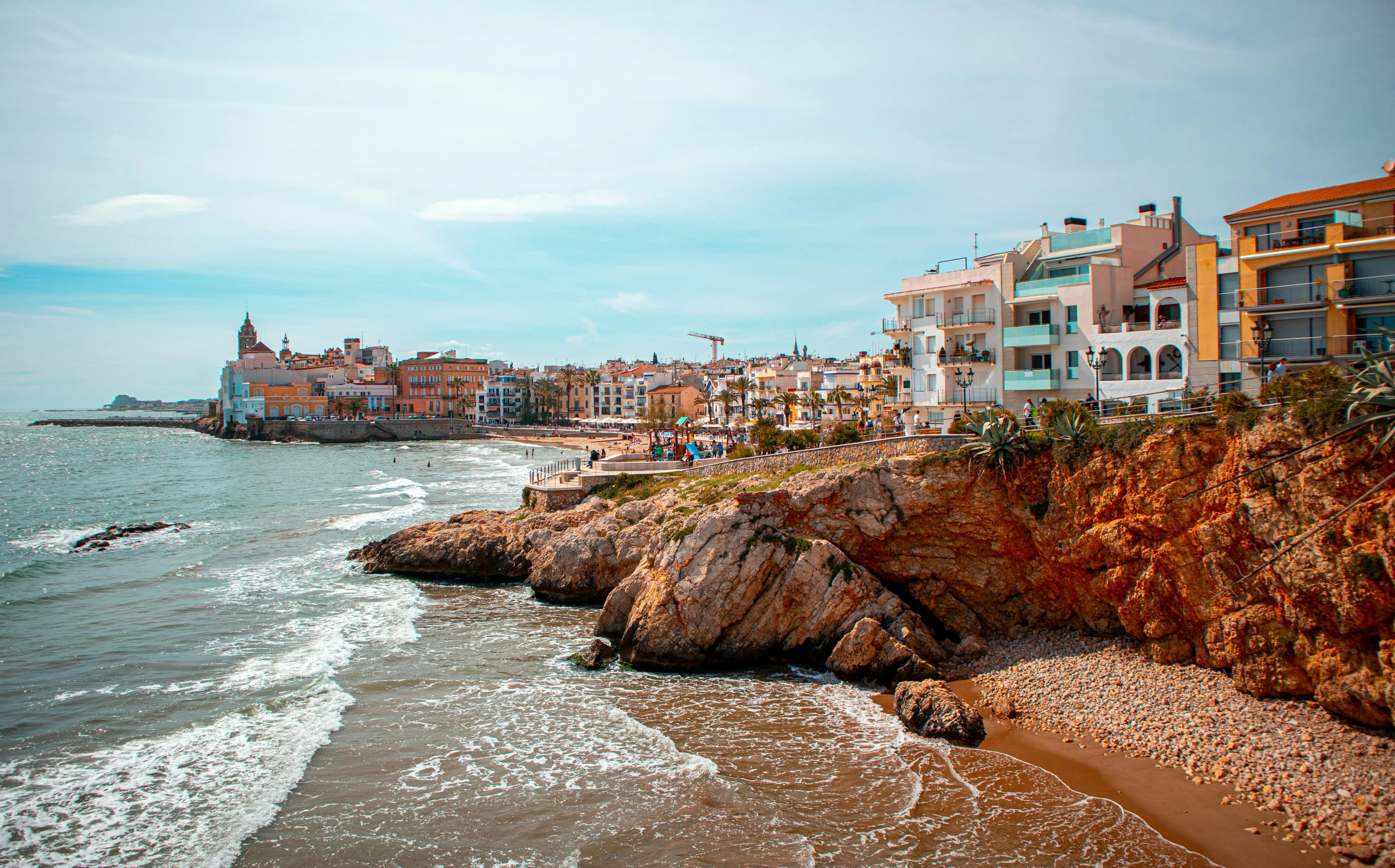
Understanding Sitges as a luxury destination
For the traveler selecting a luxury hotel suite, this context matters. The built environment here rewards attention. Staying in a property that respects, or actively engages with, the local architectural vocabulary is not a minor aesthetic preference; it defines the quality of the entire visit.
The distinct areas of Sitges worth considering
The historic centre and seafront
The Ribera district and the streets radiating from the Church of Sant Bartomeu i Santa Tecla represent the most architecturally resolved part of Sitges. Properties here offer immediate access to the seafront promenade, the town's primary commercial streets and the cultural institutions that give Sitges its intellectual weight, including the Cau Ferrat Museum, once the studio of the Catalan artist Santiago Rusiñol. Suites in this area benefit from proximity to the sea and from the specific quality of light that the Mediterranean orientation and whitewashed surfaces produce.
The modernist villas belt
Several streets on the periphery of the historic centre contain the late nineteenth and early twentieth century villas that define Sitges's architectural identity. Properties converted from or inspired by this typology offer more space, garden access and a degree of separation from the pedestrian density of high season. For travelers who prioritise architectural coherence and privacy, this zone is worth specific attention.
The Garraf coast and immediate surroundings
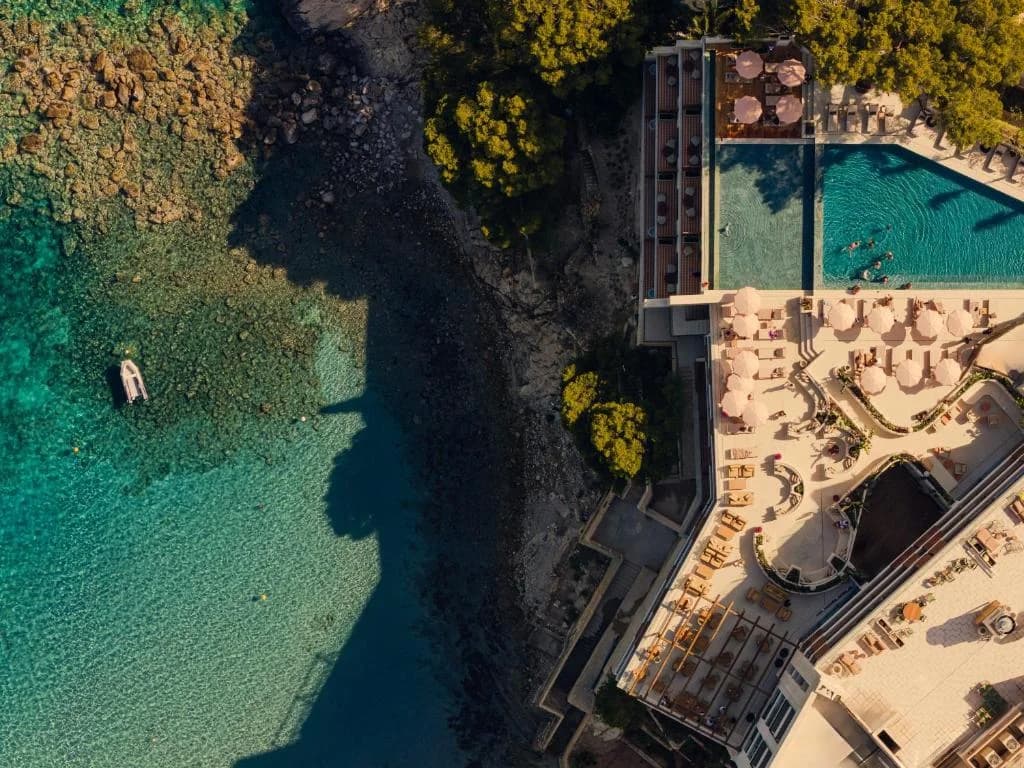
Beyond the town itself, the Garraf natural park extends northward along a coastline of limestone cliffs and coves. Properties positioned on or near this stretch offer a quieter relationship with the landscape, greater architectural freedom and the possibility of genuine seclusion. The trade-off is distance from Sitges's cultural infrastructure, which some travelers will consider irrelevant and others will not.
When to visit Sitges for a suite stay
The climate of Sitges is Mediterranean, with mild winters, low annual rainfall and long, warm summers. The high season runs from late June through early September, when the town's beaches reach maximum occupancy and hotel rates are at their peak. Suite availability in the most sought-after properties becomes constrained from July onwards; planning well in advance is not optional at this level of the market.
The shoulder seasons, April to early June and September to October, offer a more considered version of Sitges. The light remains strong, temperatures are comfortable for both coastal and cultural activity, and the town recovers a degree of the quietness that makes its architectural character legible. Many experienced travelers in this segment actively prefer October, when the Sitges International Film Festival, one of the oldest and most respected genre and fantasy film festivals in Europe, brings a specific cultural energy to the town without the volume of the summer peak.
February hosts the Sitges Carnival, one of the most attended in Catalonia, which transforms the town for several days with a concentrated intensity. For travelers drawn to cultural spectacle, this period is worth considering; for those who require quiet, it is worth avoiding.
Local luxury standards and what to expect
Spain does not operate a formal state-designated luxury hotel category equivalent to the French Palace label, though the Gran Lujo classification within the national hotel rating system identifies properties that meet the highest service and facility benchmarks. In Catalonia specifically, the regulatory framework for hotel classification follows national standards, but the most authoritative indicator of quality at the top of the market remains track record, physical plant and, increasingly, the discernment of specialist curators.
In Sitges, the luxury hotel stock is smaller in absolute terms than in Barcelona or Madrid. This is not a criticism; it reflects the town's scale and its resistance to the kind of large-format resort development that has altered other sections of the Spanish Mediterranean coast. The properties that do operate at the upper end here tend to be characterised by restraint, architectural particularity and a service model calibrated to a guest who knows what they want and does not require demonstration.
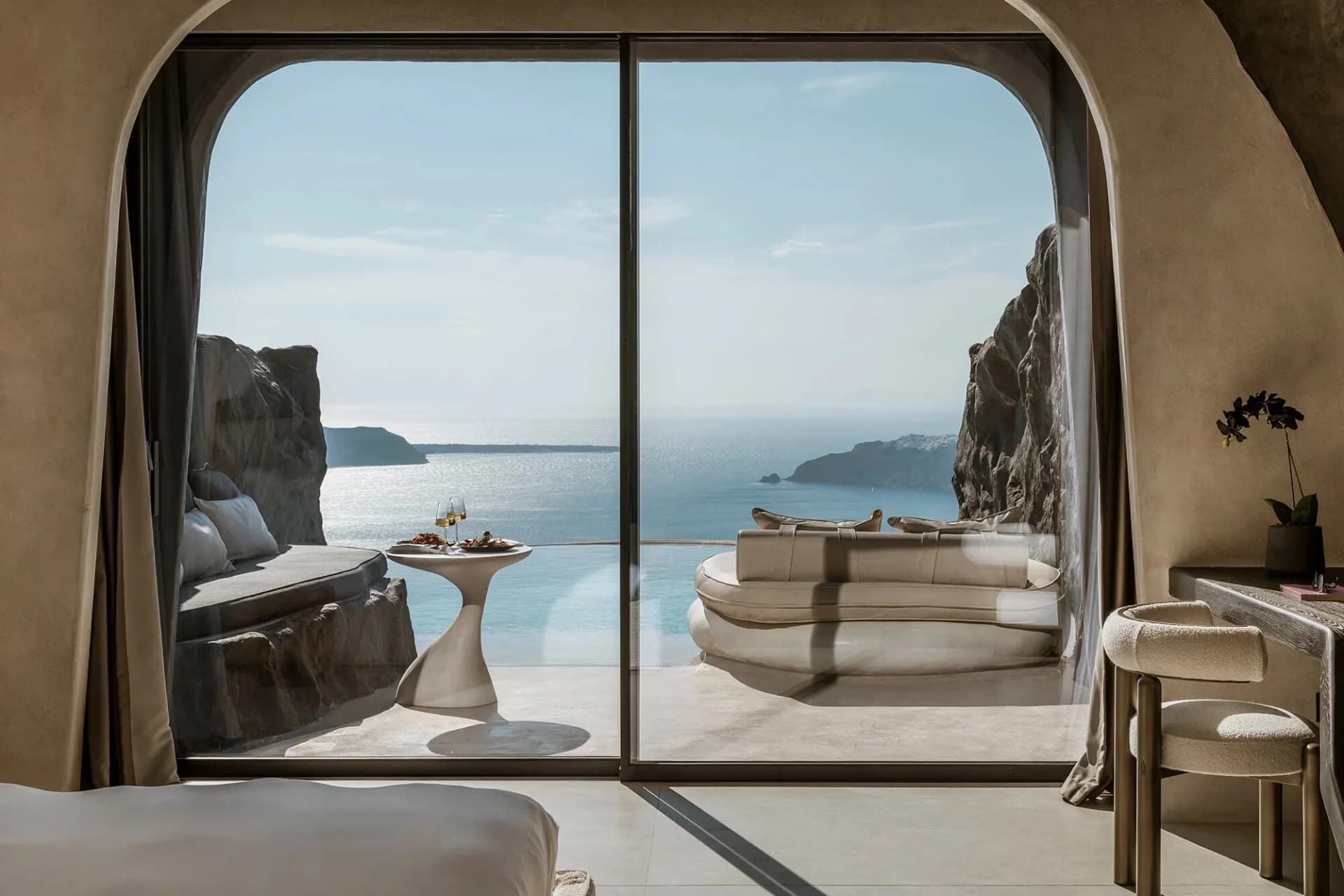
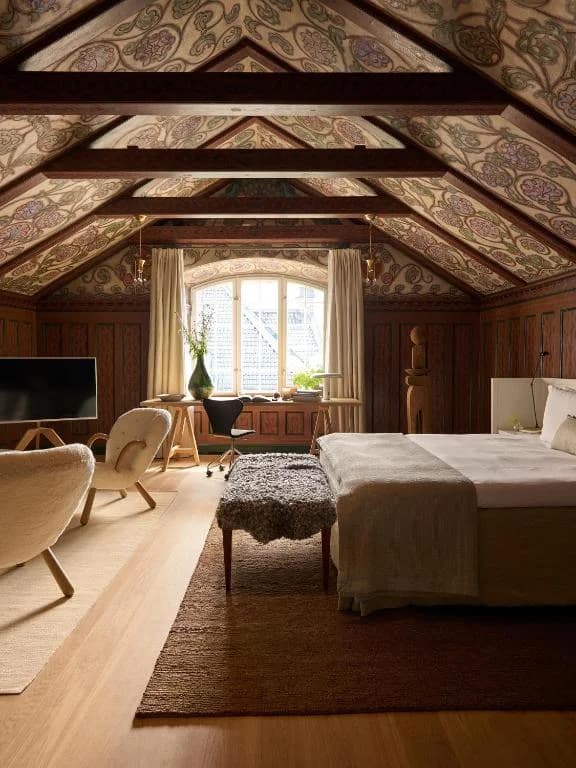
Top-tier suites in Sitges typically offer sea views or garden access, a generous floor area relative to standard room categories and a level of finish that acknowledges the architectural context of the building. Air conditioning, blackout systems and soundproofing are baseline expectations at this price point.
How to choose the right suite in Sitges
Historical versus contemporary architecture
Sitges contains both carefully restored historic buildings and more recent constructions attempting to operate at a comparable level. The question is not which typology is superior in the abstract, but which is appropriate for the individual traveler's priorities. A modernist villa conversion offers a different sensory experience from a purpose-built contemporary property. Neither is automatically preferable; both require scrutiny of the specific execution.
Sea view versus interior orientation
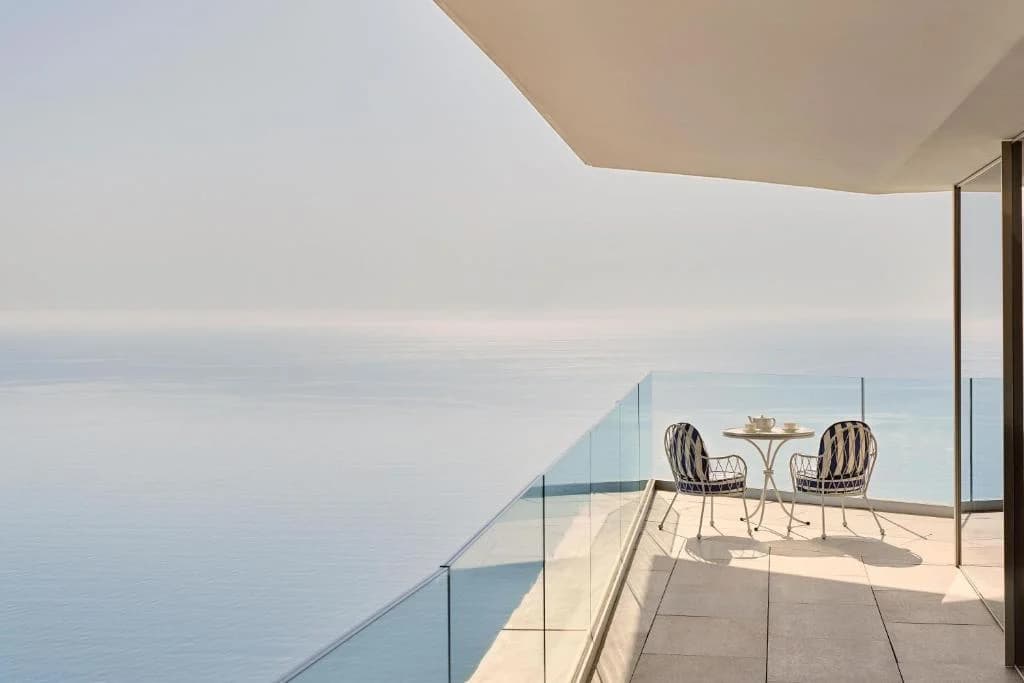
In a coastal town of this character, the orientation of the suite is a primary variable. Sea-facing rooms receive the full force of Mediterranean light and, depending on the season, wind. Interior-facing rooms in well-designed properties can offer genuine calm and, in the case of garden-facing suites, a different but equally valid relationship with the landscape. The preference depends on whether the traveler is primarily seeking spectacle or retreat.
Proximity to the town centre
Sitges is walkable at its core, but the distance from a property to the seafront promenade, the cultural institutions or the primary restaurant streets affects the quality of the stay materially. Travelers who intend to move through the town on foot, as the scale of the place invites, should assess walking distance as a concrete variable rather than a general consideration.
The value of a curated selection in Sitges
Because the luxury hotel stock in Sitges is limited and the quality differential between properties can be significant, the case for working with a curated platform is stronger here than in a market with dozens of comparable options. The effort required to distinguish a genuinely exceptional suite from one that presents well in photography but underdelivers in execution is not trivial.
La Suite applies consistent editorial criteria across every property in its selection: architectural quality, suite size and finish, service record and the degree to which a property earns its position at the top of the local market. In a town where the number of properties meeting these criteria is small, the curated selection by La Suite reduces the decision-making process to what it should be: a choice between genuinely excellent options rather than a search through an undifferentiated inventory.