Understanding Mecca as a luxury destination
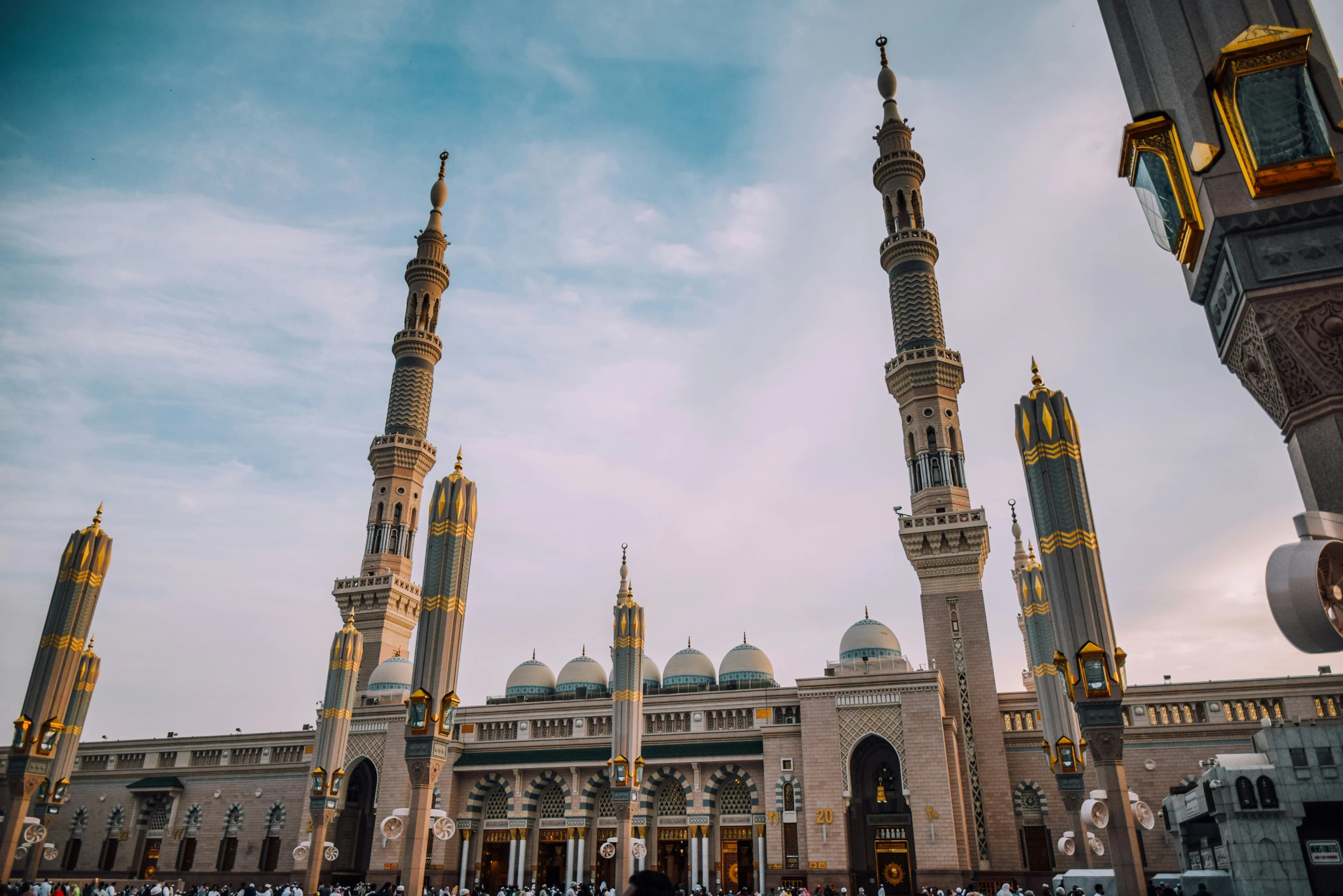
The towers surrounding the Grand Mosque, particularly those of the Abraj Al-Bait complex, have redefined what a hotel stay near a religious site can mean architecturally. The verticality of these buildings, their scale relative to the mosque below, and their capacity to deliver private, elevated perspectives on one of the world's most significant structures create an accommodation dynamic found nowhere else.
Best areas to stay in Mecca
The Masjid al-Haram perimeter
The most sought-after location for a luxury hotel suite in Mecca is the immediate perimeter of the Grand Mosque. Suites in towers facing the Kaaba deliver an experience that is both architectural and deeply personal. The distance between the room and the point of prayer is not measured in meters but in intention. Properties within direct walking distance of the mosque gates command a premium that reflects demand across every pilgrimage season.
Aziziyah and outer districts
For travelers who prefer greater calm, the Aziziyah district and surrounding neighborhoods offer a less concentrated environment. Hotels here tend to be larger in footprint, quieter in atmosphere, and better suited to extended stays. Shuttle access to the mosque is reliable and well-organized. This area is particularly practical for families or for those who require more living space across a longer visit.
Mina and Arafat (seasonal)
During the Hajj season specifically, the plains of Mina and the hill of Arafat become temporary cities of their own. Luxury accommodation in these areas is purpose-built and seasonal, offering organized comfort rather than design architecture. The experience is distinct from a standard hotel stay and should be understood in its own ritual context.
When to visit Mecca
Mecca operates on two distinct travel rhythms. The first is the Hajj, which occurs once per year according to the Islamic lunar calendar and draws upward of two million pilgrims over a concentrated period. This is the most demanding window in terms of logistics, pricing, and availability. Luxury hotel suites during Hajj are booked months in advance, and rates reflect the intensity of demand.
The second rhythm is Umrah, which can be performed at any time of year. Outside of Ramadan and the weeks immediately preceding Hajj, the city is significantly more accessible. Ramadan itself, while spiritually intense, draws very large crowds and requires careful planning. The quieter months between Muharram and Rajab offer the most manageable conditions for a composed, private visit. Travelers seeking genuine calm and suite availability will find the shoulder seasons most accommodating.
Local luxury standards in Mecca
Luxury hospitality in Mecca is shaped almost entirely by proximity to the Masjid al-Haram and by the capacity to accommodate the specific needs of Muslim travelers. This includes prayer facilities within the room or on the floor, Qibla direction markers, halal dining across all outlets, and staff trained to assist with the practical dimensions of pilgrimage.
The top-tier properties adjacent to the mosque are operated by international luxury hotel groups and deliver service standards consistent with their global portfolios. Suites in these towers can span several hundred square meters and are designed to serve as private retreats during an experience that is, by its nature, communal and physically demanding. The suite functions as a place of recovery, reflection, and preparation.
There is no French-style Palace classification or equivalent formal designation in Saudi Arabia. The market instead relies on international hotel brand positioning and on location as the primary quality signal. A luxury hotel suite in a tower overlooking the mosque carries its own implicit category of prestige that requires no external label.
How to choose the best suite in Mecca
Elevation and view orientation
In Mecca, the view from a suite is not aesthetic in the conventional sense. It is spatial and spiritual. Higher floors with direct orientation toward the Kaaba offer a perspective that shapes the entire stay. When reviewing suite options, the floor level, the window alignment, and the angular relationship to the mosque are the primary spatial considerations.
Distance and mobility
For guests with limited mobility or for families with young children and elderly members, the walking distance to the mosque gates is a critical variable. Some towers connect directly via elevated walkways. Others require a short ground-level transfer. Understanding this distinction before arrival determines the practical quality of the experience.
Suite size and configuration
Mecca attracts family groups traveling together across generations. Multi-room suites and connected configurations are common in the leading properties. Reviewing the exact floor plan, the number of bathrooms, and the kitchen or pantry provisions is more important here than in most other luxury hotel contexts.
Service infrastructure
The best luxury hotels in Mecca maintain dedicated concierge teams fluent in Arabic, English, Urdu, and Malay, reflecting the global composition of their guest base. These teams can coordinate with local religious authorities, arrange private transportation, and manage the logistical dimensions of pilgrimage. This operational depth is part of what a luxury suite rate covers.
The value of a curated selection by La Suite
Choosing a luxury hotel suite in Mecca without guidance means navigating a market shaped by extreme seasonal pricing, variable availability, and a range of properties whose descriptions do not always reflect reality on arrival. The gap between a suite that delivers and one that disappoints is significant, particularly in a context where the visit itself carries personal and spiritual weight.
La Suite approaches Mecca with the same editorial discipline applied to every destination in its portfolio. The curation focuses on verified quality, honest spatial descriptions, and properties whose service infrastructure genuinely supports the demands of the visit. For a destination this particular, a curated selection is not a convenience. It is the difference between a stay that honors the journey and one that simply fills a calendar date.