Address Istanbul, Üsküdar
Located in Istanbul, 4.6 miles from Maiden's Towers, Address Istanbul has accommodations with a fitness center, free private parking, a shared lounge and a restaurant. The property is around 7.2 miles

Üsküdar is not a conventional luxury hotel district. That distinction is important. The European side of Istanbul concentrates most of the city's five-star inventory, its palace hotels, and its rooftop bars. The Asian shore operates differently. It is residential, deeply local, and architecturally coherent in a way that the more touristic quarters are not. For the traveler who has already done the European side, or who simply prefers a less performed version of Istanbul, Üsküdar and the broader Anatolian shore present a genuinely different proposition.
5 hotels available

Located in Istanbul, 4.6 miles from Maiden's Towers, Address Istanbul has accommodations with a fitness center, free private parking, a shared lounge and a restaurant. The property is around 7.2 miles

Located in Istanbul and with 15 July Martyrs Bridge reachable within 2.1 miles, Altunizade Suites Istanbul, Curio Collection By Hilton has concierge services, non-smoking rooms, a terrace, free WiFi t

Located in Istanbul, 3.6 miles from Maiden's Towers, Arbor Hotel - Signature Collection has accommodations with a garden, free private parking, a terrace and a restaurant. Attractively set in the Usku

Boasting a stunning location along the Bosphorus in Beylerbeyi, this historic building has been beautifully restored to feature 12 luxurious rooms and offer a personalized service. With great attenti

Located in Istanbul, 2.5 miles from 15 July Martyrs Bridge, Vakko Hotel Sumahan Bosphorus provides accommodations with a garden, free private parking, a terrace and a restaurant. Providing a bar, the
Hotels in the area, but in a neighbouring town.

Well situated in Istanbul, Çırağan Palace Kempinski Istanbul provides air-conditioned rooms with free WiFi, private parking and room service. Among the various facilities of this property are a terrac

Located in the city center, the award-winning Conrad Istanbul Bosphorus features panoramic views of the Bosphorus. Featuring luxurious rooms and upscale suites with a contemporary design, state-of-the

Overlooking the vibrant city skyline or Bosphorus, the hotel offers soundproofed rooms with free WiFi. The hotel houses Fairmont Spa with a fully equipped gym, and indoor and seasonal outdoor pool, a

Mandarin Oriental Bosphorus, Istanbul features a fitness center, a garden and a sun terrace with swimming pool and buffet breakfast in Istanbul. Well situated in the Besiktas district, this hotel prov

Located in Istanbul and with Dolmabahce Palace reachable within 1.9 miles, Marriott Executive Apartments Istanbul Fulya has concierge services, non-smoking rooms, a fitness center, free WiFi throughou

Shangri-La Bosphorus, Istanbul is located between Dolmabahce Palace and Naval Museum on the European coast of the Bosphorus. This luxurious hotel offers an indoor pool, CHI, The Spa and elegantly deco

With magnificent views of the Bosphorus, carefully restored The Stay Bosphorus combines late 19th-century architecture with a contemporary design. The restaurants and shops of the Ortaköy area are nea

Ulus G Residences in Istanbul provides accommodations with a fitness center and a garden. This condo hotel offers free private parking, a 24-hour front desk, and free Wifi. The accommodation features

Istanbul is not a city that reads uniformly. Its topography, history, and social geography vary sharply from district to district, and the choice of neighbourhood is among the most consequential decisions a suite traveller will make.

Fatih is the administrative district that encompasses the historic peninsula of Istanbul, the original settlement that became Byzantium, then Constantinople, then the Ottoman capital. It is not a glossy, contemporary neighbourhood. It is layered, dense, and architecturally extraordinary. The luxury traveler who chooses Fatih is making a deliberate statement: history and cultural weight matter more than rooftop bars and designer boutiques. That is a sophisticated choice, and it requires equally sophisticated accommodation to match.

Beyoğlu is not Istanbul's most touristed district, and that is precisely its advantage. Where the historic peninsula concentrates the great Ottoman monuments, Beyoğlu contains the city's cosmopolitan memory: the late Ottoman embassies turned cultural institutions, the Art Nouveau facades along İstiklal Avenue, the backstreets of Cihangir where architects and writers have lived for decades. A luxury hotel suite here places you inside a living urban text rather than beside a postcard.
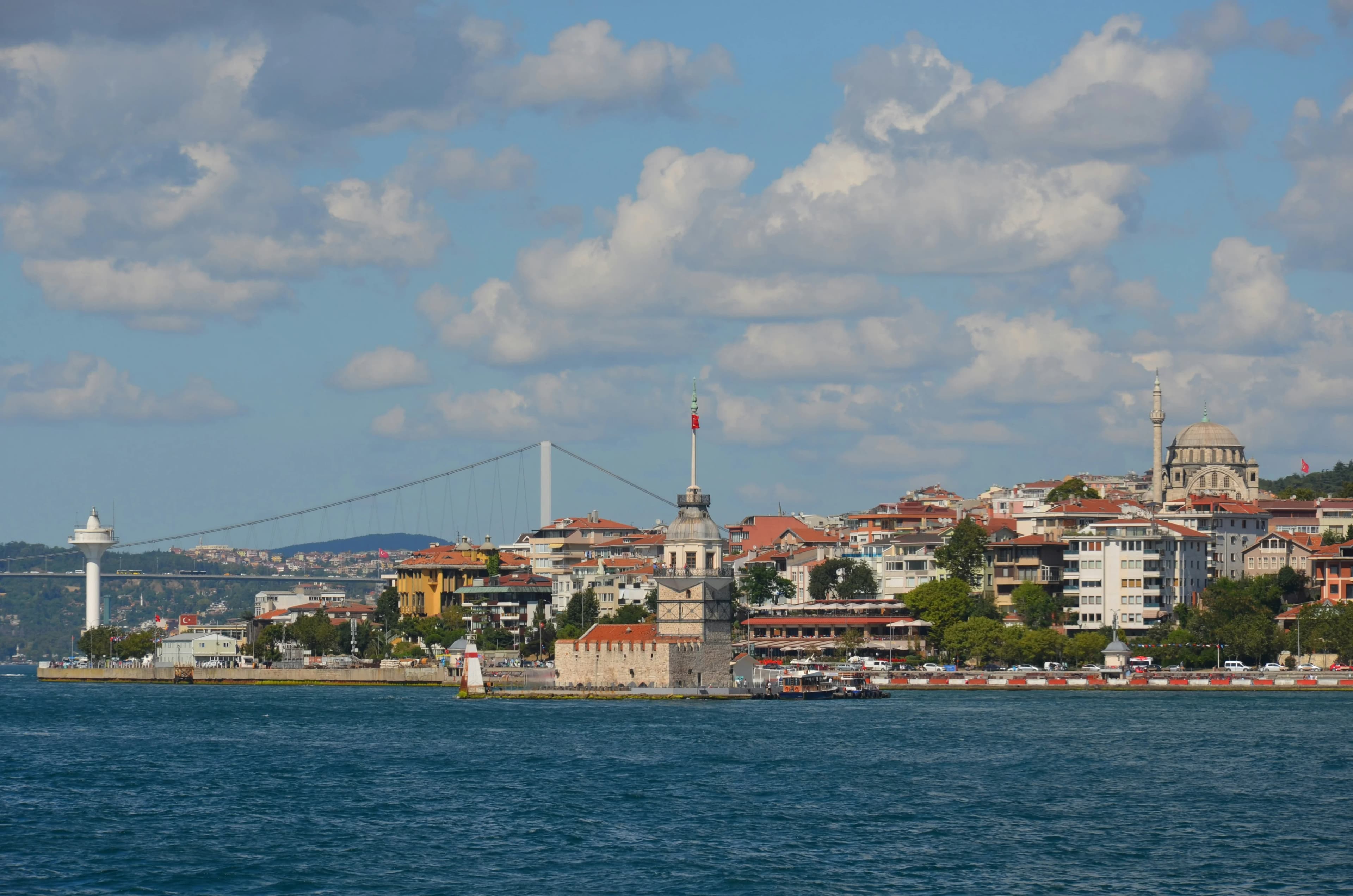
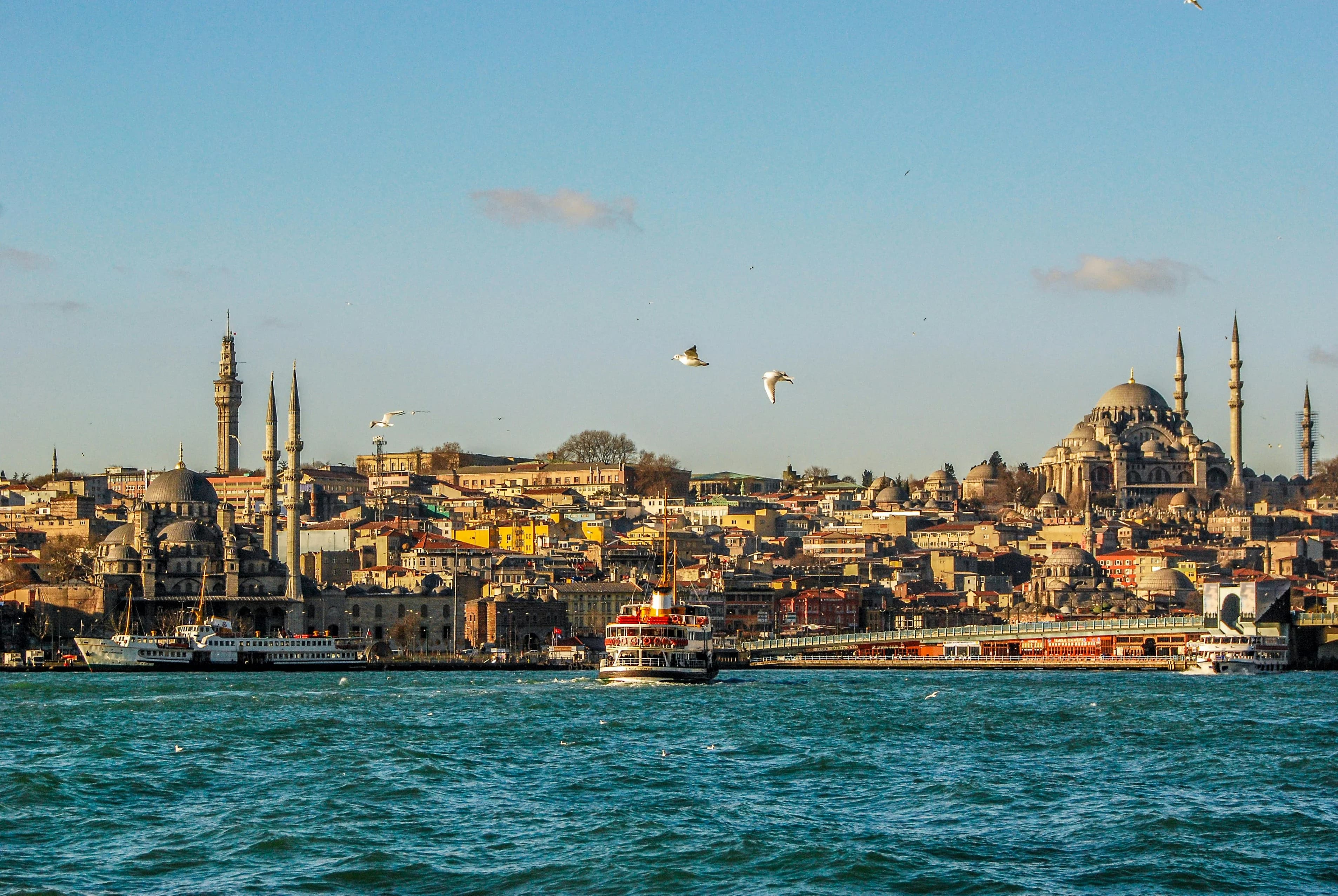
The district's waterfront, known as the Üsküdar iskele, frames some of the most composed views of the Topkapi skyline and the Bosphorus that Istanbul offers. Luxury accommodation here tends toward boutique scale: converted Ottoman mansions called yalis, small design-forward properties, and hotels that prioritize intimacy over spectacle. For those exploring Turkey with genuine curiosity, this corner of Istanbul rewards the deliberate traveler far more than its reputation suggests.
Üsküdar anchors a stretch of the Asian shore that extends north toward the Bosphorus villages of Cengelkoy, Beylerbeyi, and Anadolu Hisari, and south toward the creative energy of Kadikoy and its Moda neighbourhood. Each zone carries a distinct character.
The Bosphorus villages north of Üsküdar are among Istanbul's most architecturally preserved corners. Wooden yali mansions line the water's edge, some converted into private residences, a handful operating as small hotels. The pace is genuinely slow. Beylerbeyi Palace sits here, a formal Ottoman summer residence that contextualizes the domestic architecture surrounding it.
Kadikoy and Moda, to the south, attract a younger, design-literate crowd. The covered market, the independent coffee culture, and the street-level restaurant scene make this area particularly relevant for travelers who want proximity to authentic Istanbul daily life alongside the comfort of a considered suite.
Istanbul's shoulder seasons, April through early June and September through November, consistently offer the most rewarding conditions for a suite stay on the Asian shore. Temperatures are measured, the Bosphorus light is at its most cinematic, and the city operates without the compression of peak summer tourism.
Summer (July and August) is warm and busy on the European side. The Asian shore remains comparatively calm, which is part of its appeal, but heat and humidity are real considerations for anyone planning extended outdoor time. Winter in Istanbul is mild by northern European standards, and the city's cultural life, its concerts, gallery openings, and hamam culture, continues without interruption. The Middle East region broadly shares this pattern of spring and autumn excellence, and Turkey follows that rhythm precisely.
Major cultural events worth aligning a visit with include the Istanbul Biennial (held in odd-numbered years, September to November), the Istanbul Film Festival in April, and the jazz festival in June and July. None of these are specifically Asian-shore events, but the ferry access from Üsküdar makes European-side venues entirely practical.
Turkey does not operate a formal hotel classification system equivalent to France's Palace designation. The market self-regulates through international chain affiliations, design reputation, and word of mouth among informed travelers. In Üsküdar and the Asian shore, the most respected properties tend to be independently operated boutique hotels and converted historic structures rather than branded towers.
The yali tradition is central to understanding what a prestige suite here can offer. These waterfront Ottoman mansions, historically summer residences of the Istanbul elite, combine formal architectural proportion with direct water access. A suite within a restored yali is a genuinely different experience from a contemporary hotel room: the ceilings are higher, the materials are older, and the relationship to the Bosphorus is immediate rather than panoramic.
Expect top-tier properties to include private hamam access, rooftop or terrace space oriented toward the water, and staff-to-guest ratios that reflect a boutique scale. Service in this part of Istanbul is characteristically warm without being intrusive, a quality that distinguishes Turkish hospitality from more performative luxury cultures.
The first decision is architectural preference. Historic conversion properties deliver atmosphere and material richness but may involve irregular room configurations, older plumbing infrastructure, and less acoustic insulation than purpose-built hotels. Contemporary boutique properties on the Asian shore offer more predictable comfort standards but fewer of the spatial surprises that make a suite stay memorable.
The second consideration is orientation. On the Bosphorus, a suite facing the strait directly commands a premium that is entirely justified. The ferry traffic, the tankers, the fishing boats at dawn, and the European skyline at dusk compose a view that remains engaging across multiple days. A suite facing inland, even in the same property, is a materially different experience.
Third, consider connectivity. Üsküdar is well served by ferry and metro, but the Asian shore does require intentional transit to reach European-side landmarks. For travelers whose itinerary is heavily weighted toward Sultanahmet, Beyoglu, or the Grand Bazaar, proximity to a ferry terminal matters. For those who intend to spend significant time on the Asian shore itself, it is irrelevant.
The Asian shore of Istanbul is not comprehensively indexed by the major booking platforms. Smaller yali conversions, family-operated boutique properties, and newer design hotels with limited marketing budgets frequently fail to appear in standard search results with accurate representation. The gap between a property's visual presentation online and its actual suite quality can be significant.
La Suite's curated selection for Turkey applies the same editorial standard used across every destination: direct assessment of suite quality, spatial proportion, service consistency, and the degree to which a property genuinely reflects its location. In a district as contextually specific as Üsküdar, that assessment process removes considerable ambiguity from the booking decision. The result is a shortlist of properties where the suite experience is already verified, rather than a long list of options requiring individual research.
For travelers approaching Istanbul with the same deliberateness they bring to a stay in, for example, a carefully chosen Anatolian interior property, the curation model offers a reliable shortcut to the right choice. Explore the full La Suite selection for Turkey and the broader Middle East region to identify properties aligned with your specific travel priorities.

Yes, a number of boutique properties and converted yali mansions on the Asian shore offer suites with direct Bosphorus views. The waterfront in Üsküdar and the villages north toward Cengelkoy and Beylerbeyi provide some of the most unobstructed views of the strait available in Istanbul, facing the historic European skyline.
Üsküdar is quieter, more residential, and architecturally less altered by tourism than Beyoglu or Sultanahmet. A suite on the Asian shore offers proximity to authentic local life, a calmer street environment, and Bosphorus views oriented toward the European skyline. Ferry connections make the European side straightforward to access.
A yali is a traditional Ottoman waterfront mansion, historically built as a summer residence for Istanbul's elite along the Bosphorus. Some have been converted into boutique hotels or private rental properties, offering suites with period architectural details, high ceilings, and direct water frontage. They represent the most distinctive form of luxury accommodation on the Asian shore.
April to early June and September to November are the optimal periods. Temperatures are comfortable, the Bosphorus light is particularly clear, and hotel availability is better than in the peak summer months. Winter is mild and culturally active, making it a viable option for travelers who prioritize atmosphere over sunshine.
Frequent ferry services connect Üsküdar to Eminonu and Besiktas on the European side, with crossings typically taking ten to fifteen minutes. The Marmaray rail tunnel also connects the Asian and European shores at Üsküdar station. Transit is reliable and the journey itself, across the Bosphorus, is a meaningful part of the experience.
Üsküdar is a well-established residential district with a consistent local population and low levels of tourist-targeted activity. It is considered one of Istanbul's more settled neighbourhoods. Standard urban awareness applies, as in any major city, but the area does not present specific safety concerns for international visitors.
The accommodation offer near Üsküdar leans toward boutique scale: small design hotels, restored Ottoman structures, and independently operated properties rather than large international chains. Suite quality varies considerably, which makes editorial curation from a platform like La Suite particularly useful for identifying properties with verified standards.
Üsküdar contains some of Istanbul's most significant Ottoman mosques, including the Mihrimah Sultan Mosque designed by Sinan. The Camlica Hill offers broad city panoramas. The district's tea houses, covered market, and cemetery landscape, including the large Karacaahmet cemetery, reflect a distinctly local Istanbul culture that differs from the more touristic European quarters.
Üsküdar's luxury market is smaller and more boutique-oriented than Istanbul's European districts or the established resort corridors of Bodrum and Cappadocia. It appeals specifically to travelers prioritizing authenticity and a lower density of tourism over comprehensive hotel infrastructure. For a broader overview of suite options across the country, the La Suite selection for Turkey covers the full range.
Yes. The Asian shore of Istanbul attracts significantly fewer international tourists than Sultanahmet or Beyoglu. Boutique properties in Üsküdar and the surrounding Bosphorus villages can offer a degree of privacy and local immersion that is difficult to achieve on the European side, particularly during the summer peak season.