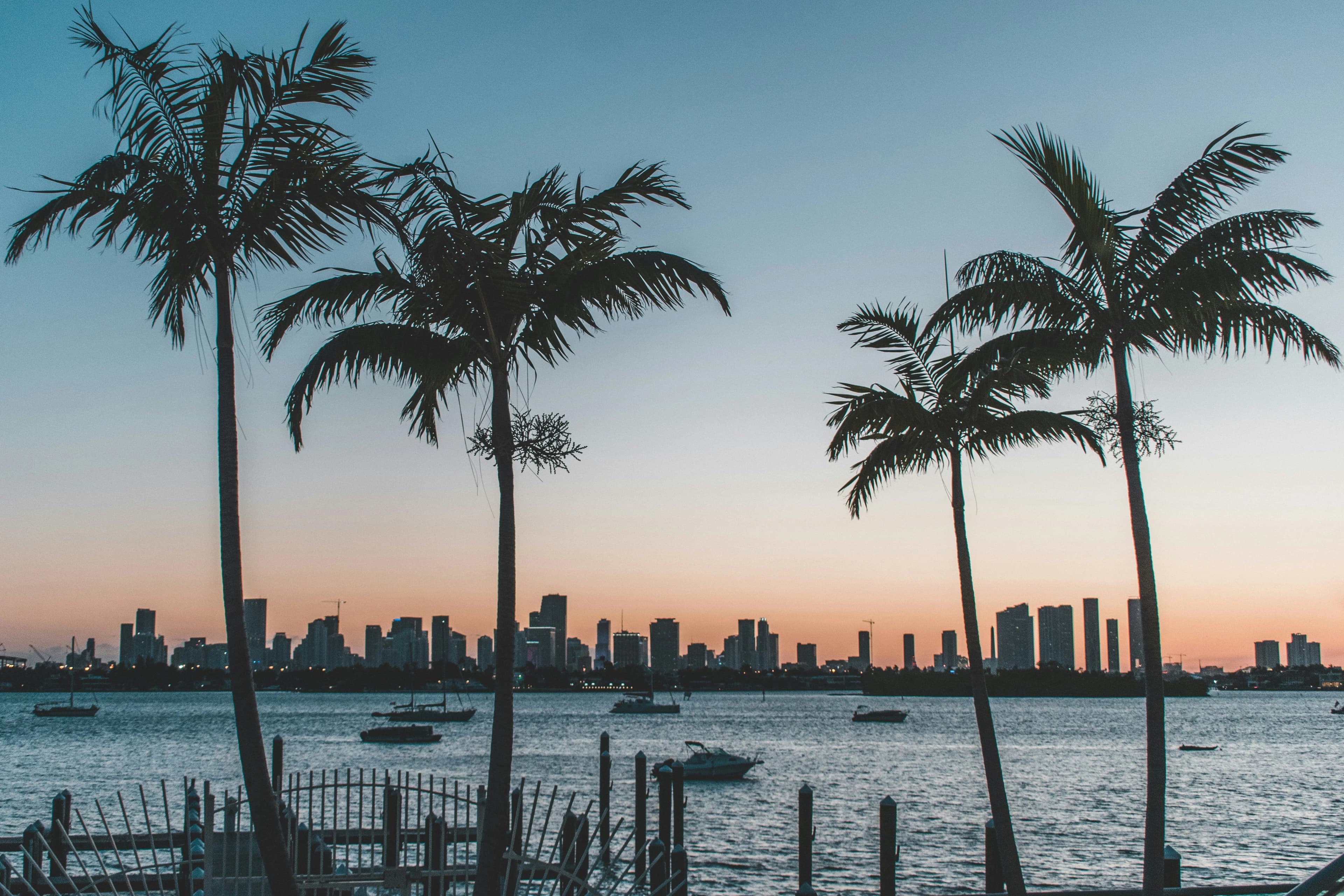
Understanding Downtown Miami as a luxury base
Within the broader context of Miami, Downtown functions as the city's most architecturally legible district. Where South Beach is defined by Art Deco horizontality, Downtown Miami reads as vertical ambition: towers by internationally recognized firms, elevated pedestrian infrastructure, and bayfront parks that bring a measure of civic calm to the commercial grid. A luxury hotel suite positioned in this district typically offers floor-to-ceiling glass, bay or river views, and a level of spatial generosity that reflects the high-rise typology of the area.
Best areas within Downtown Miami for a luxury suite stay
The bayfront corridor
The stretch along Biscayne Boulevard, from the American Airlines Arena (now Kaseya Center) northward toward the Pérez Art Museum, concentrates the highest density of premium hotel product in the district. Suites facing east in this corridor deliver unobstructed views across Biscayne Bay toward Miami Beach, with the light shifting from sharp morning clarity to amber late afternoon. This is the most sought-after orientation for the upper floors of any tower property in the area.
Brickell adjacency
The southern edge of Downtown, transitioning into Brickell, has absorbed significant luxury hotel investment over the past decade. Properties here serve a clientele that moves fluidly between corporate meetings in Brickell's financial towers and cultural programming at Bayside or the Design District to the north. Suite formats in this zone tend toward the residential: larger floor plans, kitchen facilities, and layouts designed for extended stays.
The Miami River edge
The northern bank of the Miami River offers a quieter, more textured urban experience. The restaurant and marina infrastructure here has matured considerably, and the river itself provides a counterpoint to the bay-facing properties: smaller in scale, more industrial in character, and increasingly appreciated by travelers who prefer specificity over panorama.
When to visit Downtown Miami for a luxury stay
The optimal window for a Downtown Miami stay spans from mid-November through April. Temperatures during this period remain in the low-to-mid 20s Celsius, humidity is significantly reduced, and the cultural calendar reaches its peak intensity. Art Basel Miami Beach, held each December, drives one of the most concentrated periods of luxury hotel demand in Florida. Suite inventory at this time is limited and commands a significant premium; advance booking of four to six months is standard practice for upper-floor accommodations.
January through March brings the best combination of weather stability and post-holiday availability. The Pérez Art Museum and the Adrienne Arsht Center maintain full programming schedules, and the Brickell City Centre and related retail infrastructure operate at their most active. For travelers arriving primarily on business, the spring conference season (February through April) aligns with peak corporate event activity in the district.
Summer months (June through September) are marked by heat, elevated humidity, and hurricane season risk. Hotel rates drop substantially, and the district operates at reduced intensity. For travelers with schedule flexibility and a preference for quieter urban environments, this window offers genuine value, though the outdoor experience of the city is compressed into early morning and evening hours.
Luxury standards to expect from hotel suites in Downtown Miami
The United States does not operate a national palace designation equivalent to the French classification system. In North America, the relevant quality benchmarks are set by brand affiliation (Ritz-Carlton, Four Seasons, Mandarin Oriental, St. Regis) and by Forbes Travel Guide star ratings, which assess service, facilities, and suite product independently of room count or tower height. In Downtown Miami specifically, the luxury suite market is dominated by tower properties with high-floor room configurations, rooftop pool decks, and dedicated concierge floors that operate with a degree of separation from the broader hotel population.
Suite finishes in this market reflect the city's design sensibility: a preference for contemporary materials (polished concrete, large-format stone, warm wood paneling), oversized glazing, and outdoor terraces where the building envelope allows. The spatial benchmark for a credible luxury suite in this district begins at approximately 80 square meters, with upper-tier configurations (penthouse and duplex formats) extending to several hundred square meters. Butler service, in-suite dining menus calibrated to dietary specificity, and direct elevator access to amenity floors are standard at the upper end of the market.
How to choose the right luxury suite in Downtown Miami
The primary variable in suite selection within this neighborhood is orientation. East-facing suites command the bay view and the Miami Beach skyline across the water; west-facing suites offer the Miami sunset and the city's inland grid, which has its own visual logic after dark. North-facing and south-facing units vary considerably by tower and floor, and the value proposition shifts depending on whether the guest prioritizes natural light, privacy, or panoramic breadth.
A second consideration is the relationship between the suite and the property's amenity infrastructure. In high-rise tower hotels, the distance between a suite floor and the pool deck, spa, or dining facilities can involve significant vertical travel. Properties that consolidate these amenities on accessible floors, or that offer private terrace pools at the suite level, address this friction point directly. Travelers arriving with families or extended parties should also assess suite adjacency and connecting configurations, which vary by property.
For those exploring the broader Miami market, the contrast between Downtown's urban density and the oceanfront character of Miami Beach is a meaningful planning variable. The curated selection available through La Suite covers both registers, allowing a direct comparison of suite formats, orientations, and price-to-experience ratios across the full city geography.
Why curation matters in Downtown Miami's hotel market
The volume of hotel product in Downtown Miami is substantial, and the quality range is wide. The neighborhood has absorbed significant new supply over the past decade, with properties across every tier competing for the same high-season demand. For a traveler arriving with specific expectations around suite quality, service calibration, and spatial experience, the noise-to-signal ratio in unfiltered search results is high.
La Suite's approach applies an editorial filter to this market: properties are assessed on the specific merits of their suite product rather than their overall room count or brand recognition. The result is a selection that reflects what the upper floor of Downtown Miami's hotel market actually delivers, rather than what the broadest possible marketing language suggests. For a destination where the gap between promise and delivery can be significant, this distinction carries practical weight. Explore the full curated selection for Miami through La Suite.