Understanding Miami's distinct luxury geography
South Beach remains the city's most iconic residential axis for luxury hotel inventory. The Art Deco Historic District along Collins Avenue and Ocean Drive frames a particular kind of suite travel: rooms with wide terraces facing the Atlantic, interiors that reference the geometric ornament of 1930s architecture, and an energy that peaks late and sustains itself through the early hours. The pace here is social, deliberate, and aesthetically loaded.
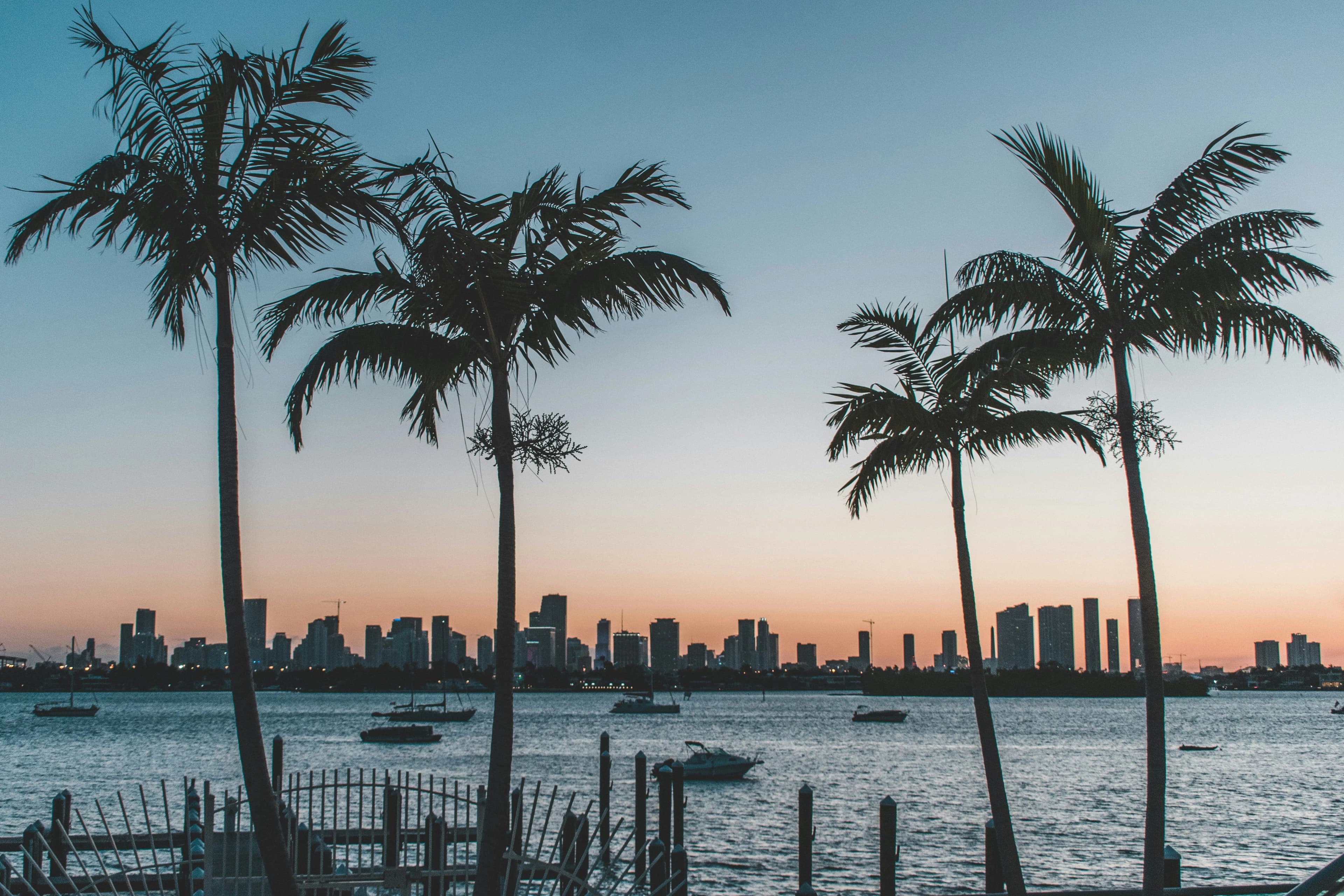
Brickell, Miami's financial core, offers a structurally different proposition. Glass towers with floor-to-ceiling city and bay views, suites designed for the corporate traveler who also values privacy and spatial quality. The rhythm is sharper, quieter at night, and more oriented toward the bay than the ocean.
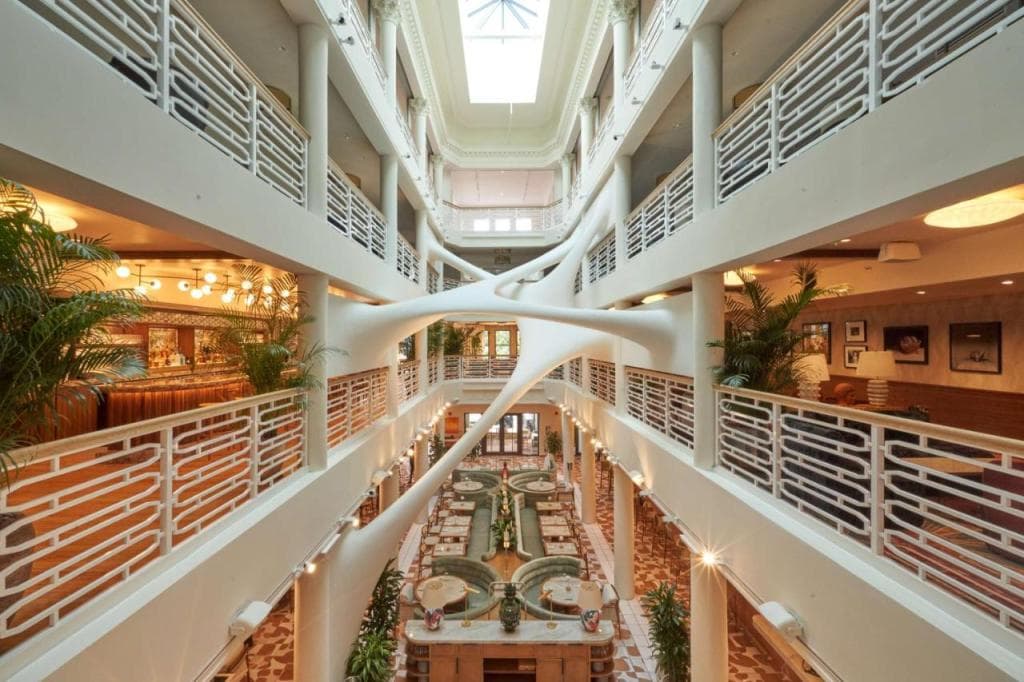
Mid-Beach and the area surrounding the Faena District represent a third register: curated blocks where a specific vision of luxury has been imposed on the streetscape. Suites in this corridor tend toward theatrical design, with interiors that reference art collection culture rather than conventional hospitality.
Coconut Grove and Coral Gables, further south, offer something closer to residential calm. Suites in these neighborhoods tend to be larger in footprint, surrounded by mature canopy, and less subject to the visual noise of the beachfront corridors.
When to visit Miami for a suite experience worth the cost
Miami's climate divides cleanly into two seasons: a dry winter from November through April, and a humid, storm-punctuated summer from May through October. The logic for suite travel follows this division closely.
December through March represents peak season. Hotel rates reflect this, and suite availability at the city's most sought-after properties is limited. This period also coincides with Art Basel Miami Beach in early December, arguably the most architecturally and culturally dense week in the city's calendar. Suite bookings during Art Basel require planning several months in advance. The Winter Music Conference in March brings a different kind of density, and the Formula 1 Miami Grand Prix in May has added a new layer of demand to late spring.
For travelers who prioritize space and rate flexibility, September and October offer a counterintuitive case. Hurricane season technically runs through November, but the risk, while real, is statistically lower than general perception suggests. Rates drop significantly, suites are available, and the city's service quality does not diminish. The heat is considerable but manageable, particularly in properties with strong indoor and rooftop infrastructure.
Miami's luxury hospitality standards: what to expect at the top tier
Florida does not operate under a formal designation system comparable to France's Palace classification. The hierarchy here is market-driven, defined by brand positioning, rate architecture, and the physical specifications of the suite inventory itself.
At the top tier, Miami suites are typically defined by a combination of factors: private terrace or balcony with meaningful square footage, butler or dedicated concierge service, custom furnishing rather than brand-standard millwork, and direct beach or bay access in some cases. Properties that have invested in original art programs or architectural commissions tend to produce suites that hold their value as experiences rather than simply as room categories.
The Miami market also includes a significant number of branded residences where the boundary between hotel suite and private apartment is deliberately blurred. These hybrid formats offer kitchen infrastructure, residential-scale living areas, and a lower density of guest interaction, which is precisely what a particular segment of luxury travelers is seeking.
Service expectations at the highest-performing properties in Miami are calibrated to a global traveler with comparative experience across international markets. The standard is high, but it is worth distinguishing between properties where service is a genuine operational priority and those where the physical design absorbs most of the brand investment.
How to choose the right suite in Miami
The primary decision axis for suite selection in Miami is orientation: ocean-facing, bay-facing, or city-facing. Each carries a different sensory register. Ocean-facing suites in South Beach deliver direct Atlantic light in the morning and a social landscape below. Bay-facing suites in Brickell or Edgewater offer the quiet geometry of water and skyline without the beachfront noise. City-facing suites are best suited to travelers who are in Miami for business or events and for whom the view is secondary to the interior experience.
The second axis is architectural identity. Miami's luxury hotel stock includes properties built in the 1930s and restored with contemporary interiors, mid-century structures adapted for modern use, and purpose-built towers from the 2000s and 2010s with predictable spatial logic. The choice between these is not simply aesthetic. It affects the proportions of the rooms, the quality of acoustic insulation, and the relationship between interior and exterior space.
Travelers with specific requirements around privacy, particularly those who wish to avoid hotel lobbies with high foot traffic, should consider suite categories with dedicated elevator access or private entrance infrastructure, which exist in several Miami properties across different neighborhoods.
Why curated selection matters in Miami's suite market
Miami's hotel market is large, competitive, and heavily marketed. The volume of properties presenting themselves as luxury options creates a filtering problem for travelers with genuine discernment. The gap between a property that describes itself as luxury and one that performs at that level in terms of spatial quality, service consistency, and design integrity is significant.
La Suite approaches this market by applying consistent criteria: suite footprint, design authorship, service architecture, and the overall coherence of the guest experience. The curated selection by La Suite removes the noise from the decision process and presents only the properties where the suite category is a considered offer rather than a marketing designation.
For travelers visiting Miami for the first time or returning with higher expectations, this curation reduces the risk of a misaligned booking and increases the probability of an experience that justifies the investment. Miami rewards travelers who know where to position themselves. The curated selection by La Suite is built precisely for that purpose.