Staying in Downtown Houston: what to know before choosing a suite
The distinct character of Downtown Houston as a base
Unlike Houston's residential neighborhoods to the west and south, Downtown is purpose-built for density and transaction. The Theater District here is one of the largest in the United States by the number of seats concentrated in a single urban zone, encompassing opera, ballet, symphony, and theater within a few walkable blocks. The Discovery Green park provides a rare moment of civic softness at the district's eastern edge. The underground tunnel system, a network of climate-controlled pedestrian passages connecting dozens of buildings, reflects Houston's pragmatic response to its subtropical heat and is a genuinely distinctive urban feature found in few cities across North America.
The Midtown and Montrose districts lie immediately adjacent and offer a contrast in texture: lower-rise, gallery-dense, and restaurant-forward. Travelers who want proximity to both corporate infrastructure and the city's more experimental cultural life often find Downtown the most rational base.
When to visit Downtown Houston
Houston's climate is defined by its Gulf Coast position. Summers are hot and humid, with temperatures regularly exceeding 35 degrees Celsius from June through September. The most comfortable periods for urban exploration on foot are October through April, when temperatures moderate and the city's outdoor programming increases. The Houston Livestock Show and Rodeo, held annually in late February and March, is the largest event of its kind in the world by attendance and draws a significant volume of visitors to the city. The Houston Art Car Parade in May represents a different cultural register entirely, drawing a design-literate crowd. For business travelers, the fall and spring conference seasons drive the highest demand for luxury hotel suites in the downtown corridor, and advance planning is advisable during major energy industry events, which can compress suite availability significantly.
Understanding luxury hotel standards in Houston
Houston does not operate within the French Palace classification system or similarly codified prestige labels. The American luxury hotel market is instead stratified by brand positioning, independent property reputation, and the specific amenities offered at the suite level. In Downtown Houston, the upper tier of hospitality is characterized by large suite footprints, dedicated concierge programs oriented toward business travelers, and in-house dining that reflects the city's increasingly serious restaurant culture. Houston's culinary identity has shifted considerably over the past decade, with a range of chef-driven restaurants that draw on the city's demographic complexity, one of the most diverse urban populations in the country. Top-tier suites in this district will typically include separate living areas, executive workspace, and access to private floor amenities. Spa infrastructure varies by property. Travelers accustomed to European Palace-level service should note that American luxury hotels calibrate their offer differently, with a stronger emphasis on transactional efficiency and less on the ceremonial rhythms of check-in and daily service.
How to choose the right suite in Downtown Houston
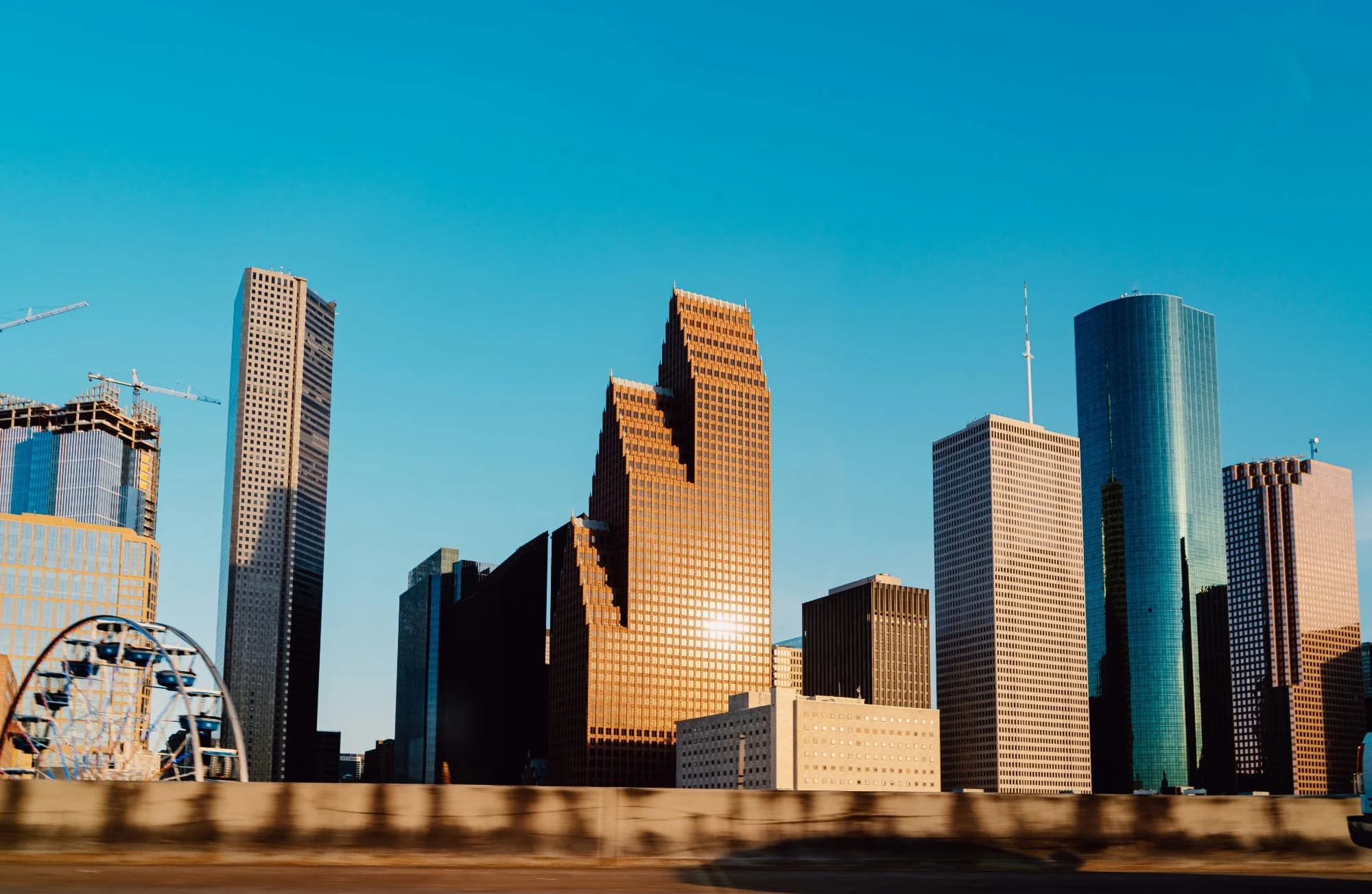
The primary consideration for suite selection in Downtown Houston is the purpose of the stay. Business travelers will prioritize proximity to the convention center and the major corporate campuses along the McKinney Street corridor, as well as suite configurations that support extended working hours. Those visiting for cultural reasons should weight proximity to the Theater District and ease of evening access. A high floor with city views provides a specific kind of orientation to Houston's skyline, which has grown rapidly since the 1970s and presents a distinctive silhouette that rewards observation at night when the tower density is most legible.
Architecture within Downtown Houston skews toward the contemporary and the corporate. Travelers seeking historic property character will find fewer options here than in cities like New Orleans or Savannah. The relevant architectural register is late-twentieth and early-twenty-first century commercial, with a handful of mid-century structures. If historical texture is a priority, properties in the surrounding neighborhoods or the Rice University area to the south may be more appropriate, though they require transport to reach the downtown core.
Suite size in Houston tends toward generosity by American standards. The city's real estate economics, combined with its convention-oriented hospitality market, mean that upper-category suites often offer larger square footage than equivalent price points in New York or San Francisco. This makes Downtown Houston a relatively efficient choice for extended stays or for travelers requiring space for private meetings.
Practical considerations for suite stays in Downtown Houston
Houston is a car-dependent city by design and infrastructure. The downtown core is walkable within its own perimeter, and the light rail system connects it to the Texas Medical Center and the Museum District to the south, but movement beyond these corridors will typically require a vehicle or ride service. Travelers should factor this into their suite selection: valet parking access and proximity to major highway entry points are practical considerations that carry real weight here. The George Bush Intercontinental Airport lies approximately 45 minutes north of downtown in normal traffic; William P. Hobby Airport, serving Southwest Airlines primarily, is closer to the southeast. Transfer time should be budgeted accordingly for early departures.
Why curated selection matters in Downtown Houston
The Houston luxury hotel market is less extensively documented in international travel media than comparable American cities, and this creates an information gap that curated platforms are particularly well placed to address. Properties in Downtown Houston range considerably in their actual suite quality, even within the same nominal star category. The gap between a well-configured suite with genuine service depth and a standard room marketed upward can be significant, and it is not always visible from brand positioning alone.
La Suite applies a consistent editorial framework to its selections, evaluating suite design, spatial logic, service calibration, and the overall coherence of the guest experience. For a city like Houston, where the luxury hospitality market is competitive but less globally legible than New York or Miami, this curation function carries particular value. The curated selection by La Suite ensures that travelers approaching this market for the first time, or returning with higher expectations, are directed toward properties that have been assessed against a precise and consistent standard.