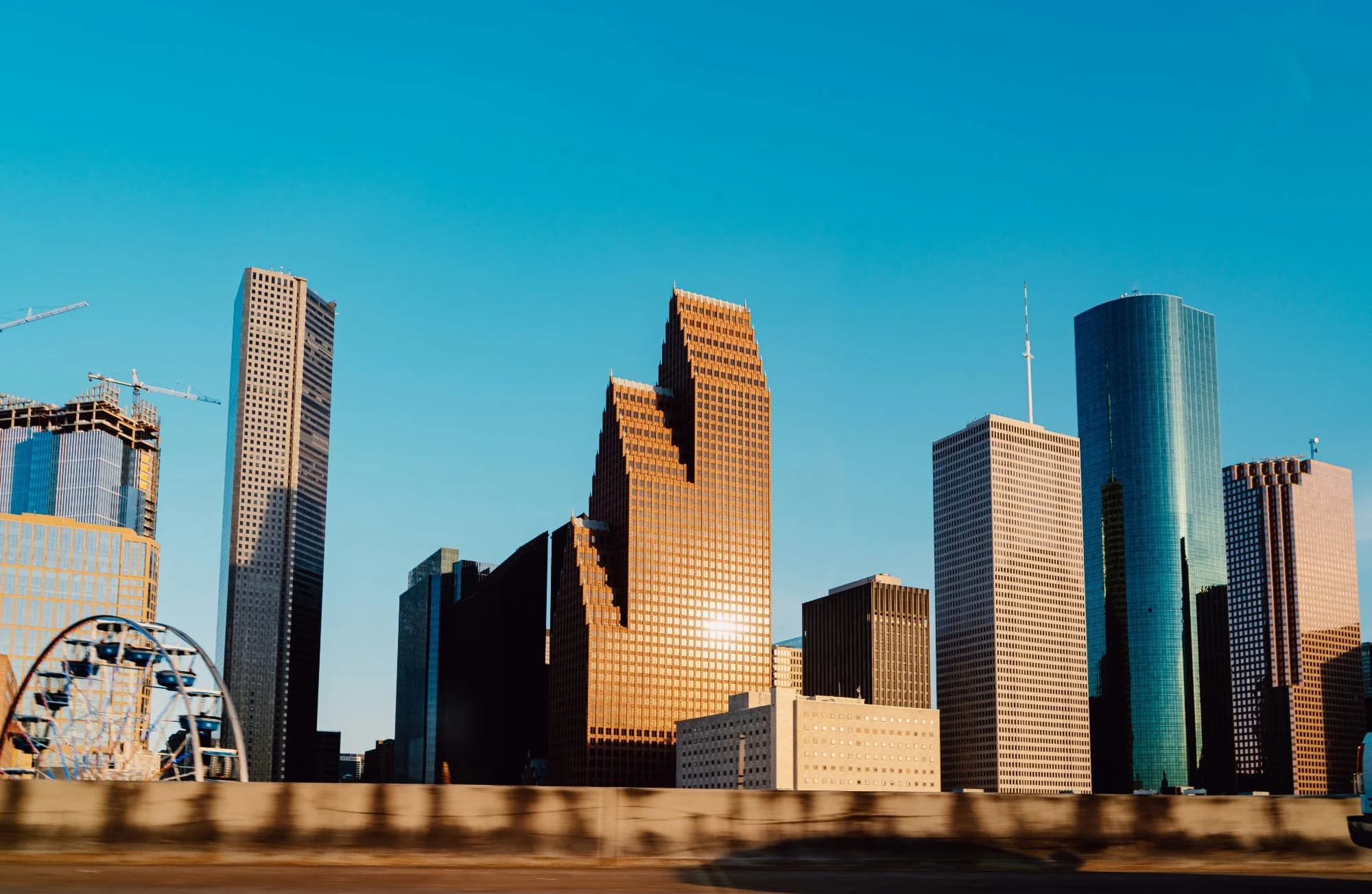
Midtown Houston as a base for suite travel
The architectural character of Midtown is layered. Early twentieth-century commercial buildings sit alongside mid-century apartment blocks and newer mixed-use developments. This mix creates a streetscape that rewards slow movement: the kind of neighborhood that reveals itself through its textures rather than its landmarks. For the suite traveler, this translates into an experience of Houston that feels residential and specific rather than generic and transient.
Understanding Houston's luxury hotel landscape
Houston does not operate within a single luxury hospitality district. Unlike cities where prestige accommodation clusters around a historic center, Houston distributes its finest hotels across several neighborhoods: the Galleria corridor, Uptown, Downtown, and the Medical Center adjacency. Midtown sits between these poles, and luxury hotel suites in this part of the city tend to reflect the neighborhood's own sensibility: considered design, direct access to the restaurant and arts scene, and a quieter profile than the large convention properties further north.
The United States broadly, and Texas specifically, has developed a luxury hospitality vocabulary that prizes scale and service simultaneity. In Houston, this manifests in suites that offer genuine square footage, often with city views that read as architectural rather than purely scenic. The flat topography of the Gulf Coast plain means Houston's skyline is experienced horizontally as much as vertically, and upper-floor suites in Midtown capture this particular urban geometry with clarity.
When to stay in Midtown Houston
Houston's climate divides the year into two distinct hospitality seasons. From October through April, temperatures are temperate and the city's outdoor dining culture is fully operational. This period aligns with Houston's major cultural calendar: the Houston Livestock Show and Rodeo (February to March), the Houston Ballet and Houston Symphony seasons, and a dense schedule of gallery openings in the Midtown and Montrose corridors. Suite availability tends to be more competitive during the Rodeo period and around major medical conferences, given proximity to the Texas Medical Center.
The summer months, June through August, bring high humidity and temperatures that regularly exceed 95 degrees Fahrenheit. Houston's infrastructure accommodates this: interiors are aggressively air-conditioned, and the city's cultural institutions maintain their programming year-round. Travelers who visit in summer often find more competitive suite rates and a city that moves at a different, more deliberate pace. For travelers arriving from North America's northern cities or from the United Kingdom, the summer heat is a material planning consideration worth factoring into accommodation choice.
The distinct character of Midtown's dining and arts scene
Midtown Houston's restaurant density is one of its most legible qualities. The neighborhood contains a concentration of independent dining operations across a wide range of culinary traditions, reflecting Houston's position as one of the most ethnically diverse cities in the United States by measurable demographic data. Vietnamese, West African, Mexican, and contemporary American kitchens coexist within a walkable radius, and the proximity to Montrose, immediately to the west, extends this range further.
The arts infrastructure around Midtown is equally specific. The Museum of Fine Arts Houston, the Menil Collection (a short drive into Montrose), and the Contemporary Arts Museum Houston form a cluster of institutions with international standing. The Menil in particular, designed by Renzo Piano and notable for its diffused natural light system, is among the most architecturally considered museum buildings in the country. For travelers who structure itineraries around cultural institutions rather than retail or entertainment, this corridor functions as one of the most coherent art districts in the southern United States.
How to choose a luxury suite in Midtown Houston
Several practical considerations shape suite selection in this district. First, noise exposure varies significantly depending on proximity to Main Street and the rail corridor. Suites on upper floors, or those oriented away from the street grid, tend to offer greater acoustic separation. Second, parking in Midtown operates on a different logic than in Houston's suburban districts: valet and structured parking are standard at quality hotel properties, and guests who arrive by car should confirm parking arrangements in advance.
Third, the question of suite size is relevant here. Houston's luxury hotel market has historically prioritized generous room dimensions, and suites in the city's better properties often begin at configurations that would constitute junior suites in European or East Coast contexts. When reviewing suite specifications, pay attention to the distinction between a suite with a separate living area and one that is simply an oversized king room: the former provides the spatial logic that makes extended stays in a single property genuinely comfortable.
Fourth, consider the relationship between the property and the neighborhood's walkable assets. A luxury hotel suite that positions you within a short walk of the rail line, the restaurant corridor, and the museum connection represents a materially different experience from a suite that requires a car for every movement. In a city as car-dependent as Houston, this distinction carries real weight.
The value of a curated selection in Houston
Houston's hotel market is large, dispersed, and not always self-explanatory to the visiting traveler. The difference between a property that markets itself as luxury and one that delivers the spatial, service, and design standards that justify that category is not always legible from standard booking platforms. La Suite's curated selection for Houston applies a consistent editorial standard across properties, filtering by genuine suite configuration, service infrastructure, and neighborhood relevance. For Midtown specifically, curation matters because the district's identity is defined by specificity: the right property here is one that understands the neighborhood, not simply one that occupies it. The curated selection by La Suite removes the interpretive work and delivers only the properties that meet the standard for considered suite travel in this part of the city.