Understanding The Strip as a luxury destination
Areas of The Strip worth distinguishing
The northern Strip
The northern section, anchored around Sahara Avenue and extending toward the SLS and Resorts World properties, offers a quieter entry point to the corridor. Foot traffic is lower, the pace more measured, and the properties tend toward a younger architectural vocabulary. For suite travelers who want proximity to the action without full immersion in the central crowd, this section has a functional logic.
The central Strip
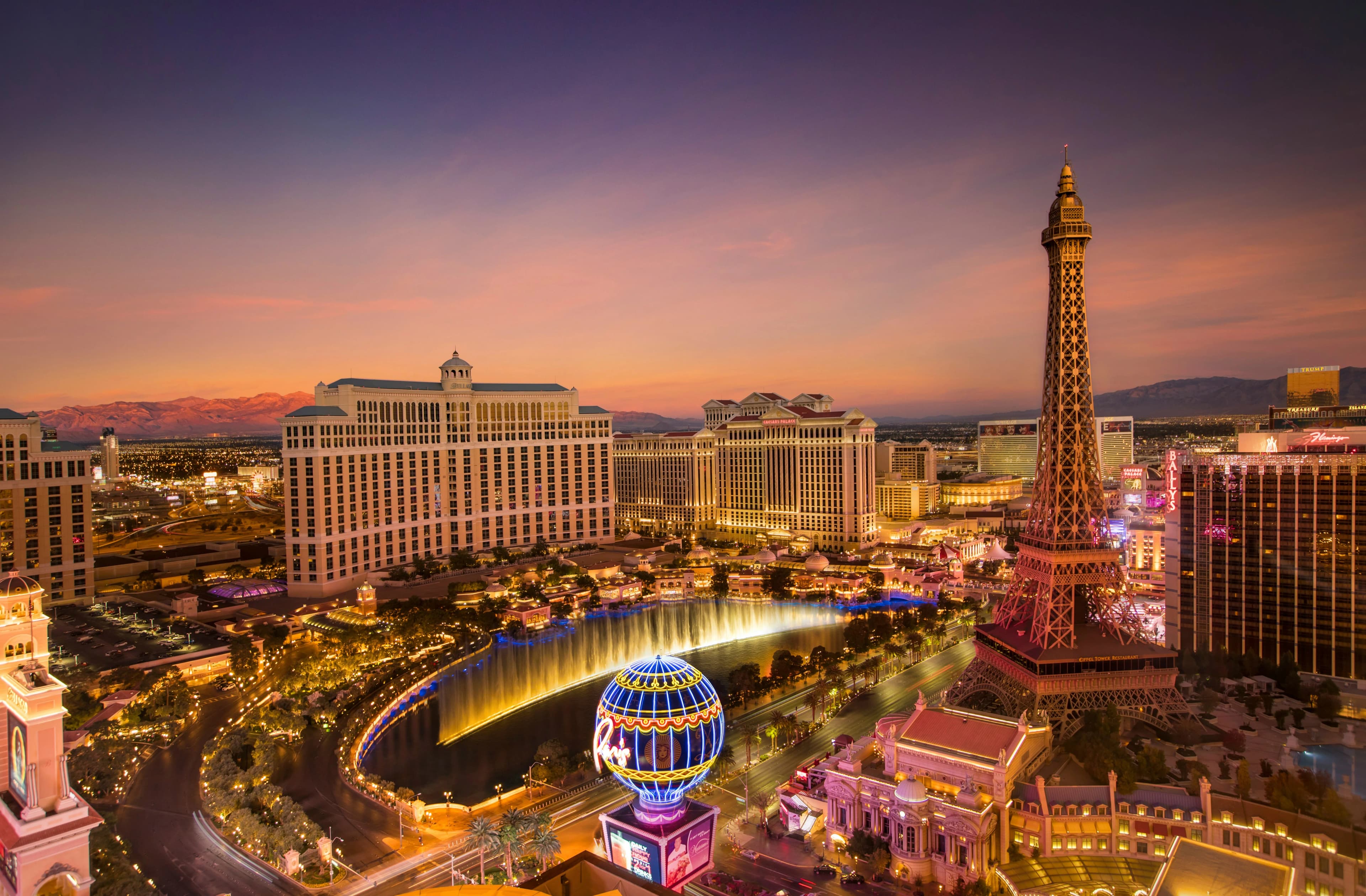
The central portion, roughly between Spring Mountain Road and Flamingo Road, contains the highest concentration of large-scale integrated resort properties. This is where the most expansive suite inventories exist, including penthouses and sky villas positioned at significant elevation. The visual exposure here is exceptional: suites facing east deliver morning light over the desert; those facing west are oriented toward Allegiant Stadium and the Spring Mountains. The sensory register is unapologetically urban and nocturnal.
The southern Strip
The southern end, near Tropicana Avenue and the Welcome to Las Vegas sign, has undergone consistent redevelopment. Properties here tend to be more recently constructed or extensively renovated. The MGM Grand complex and adjacent properties anchor this section. For travelers arriving from Harry Reid International Airport (approximately 3 miles southeast), this end of The Strip offers the most direct access, which is a practical consideration for short-stay, high-frequency visitors.
When to visit The Strip for a luxury suite stay
The Strip operates at full capacity year-round, but the conditions for a considered suite stay vary considerably by season. Spring (March to May) offers moderate temperatures, typically between 60 and 85 degrees Fahrenheit, before the desert heat becomes a factor. This period aligns with major boxing and UFC events at the T-Mobile Arena, as well as Formula 1 Las Vegas Grand Prix preparation cycles that now shape the hospitality calendar.
November has become a significant month following the establishment of the Las Vegas Grand Prix, held on a circuit that runs along the Strip itself. Suite demand during this event is extreme and advance planning is essential, often twelve months or more. Summer months (June through August) bring temperatures regularly exceeding 105 degrees Fahrenheit. The outdoor experience diminishes sharply, but suite stays during this period can represent relative value, as leisure travelers thin out. The interior environment of a well-designed suite insulates the experience entirely from the exterior climate.
December through February represents the off-peak window. Temperatures are mild (45 to 65 degrees Fahrenheit), major conventions including CES in January drive midweek occupancy in the business-adjacent properties, and New Year's Eve is among the most booked nights of the year globally, requiring reservation lead times of six months minimum for premium suite inventory.
Local luxury standards: what suite quality means on The Strip
The Strip operates within the American luxury hotel framework, which differs structurally from European models. There is no domestic equivalent of the French Palace designation, but several properties on The Strip have pursued and received Forbes Five-Star ratings, AAA Five Diamond status, or both. These are the most reliable proxies for suite quality in this market.
The concept most relevant to suite travelers here is the integrated resort model: properties where the hotel, casino, spa, restaurant, entertainment, and retail functions are contained within a single architectural structure, sometimes exceeding 3,000 rooms. Within these complexes, the suite product is stratified. Standard suites occupy mid-rise floors. Sky villas and penthouses occupy dedicated upper floors, often with private elevator access, separate check-in, and butler service. Some properties operate their premium suite inventory under a distinct brand identity within the larger resort, effectively functioning as a hotel-within-a-hotel.
What distinguishes top-tier suites on The Strip from comparable products in other American cities is primarily spatial scale and view quality. Square footage in penthouse-level suites routinely exceeds 5,000 square feet. Floor-to-ceiling glass is standard at this tier. Private terraces are available in select properties, a feature that carries significant value given the 270-degree desert panorama available from upper floors.
How to choose the right suite on The Strip
The primary decision axis is orientation: which direction the suite faces determines the visual character of the stay. East-facing suites receive direct sunrise light and overlook the central Strip corridor. West-facing suites frame the desert and mountain silhouette. Corner suites, where available, command both and typically carry a price premium reflecting that dual exposure.
The second consideration is the property's noise architecture. The Strip is acoustically active at all hours. Premium suites in well-constructed properties use triple-glazed glass and concrete slab construction to manage this effectively, but it is a factor worth confirming. Upper-floor positioning is the most reliable mitigation.
Third, assess the service model. Some integrated resorts operate their suite product with dedicated concierge floors and private check-in. Others integrate suite guests into the general hotel flow. For travelers prioritizing privacy and discretion, the former model is preferable. This distinction is rarely visible in standard booking interfaces, which is one reason a curated approach adds genuine utility.
For broader context on suite travel across the United States or across North America, La Suite provides destination-level curation at each scale, from country to neighborhood.
Why curated selection matters on The Strip
The Strip contains more hotel rooms than almost any comparable geographic area on the planet. The volume of options is not the obstacle; the signal-to-noise ratio is. For a traveler selecting a luxury hotel suite in this corridor, the relevant inventory is a small fraction of the total. La Suite's curated selection for Las Vegas isolates that fraction: properties where the suite product meets a defined architectural and service standard, presented without the distortion of promotional pricing or sponsored placement. The decision becomes faster, more confident, and grounded in criteria that reflect how discerning travelers actually evaluate a stay.