Newport's distinct areas for luxury suite stays
Bellevue Avenue and the mansion district
The historic spine of Newport's upper-class identity runs along Bellevue Avenue, flanked by the preserved summer cottages of the Vanderbilts and Astors. Hotels positioned in or adjacent to this corridor offer proximity to The Breakers, Marble House, and Rosecliff, all operated by the Preservation Society of Newport County. A luxury suite in this zone places guests within walking distance of the most architecturally coherent concentration of Gilded Age domestic architecture in North America. The atmosphere is hushed, residential in scale, and oriented toward afternoon culture rather than nightlife.
The waterfront and Thames Street
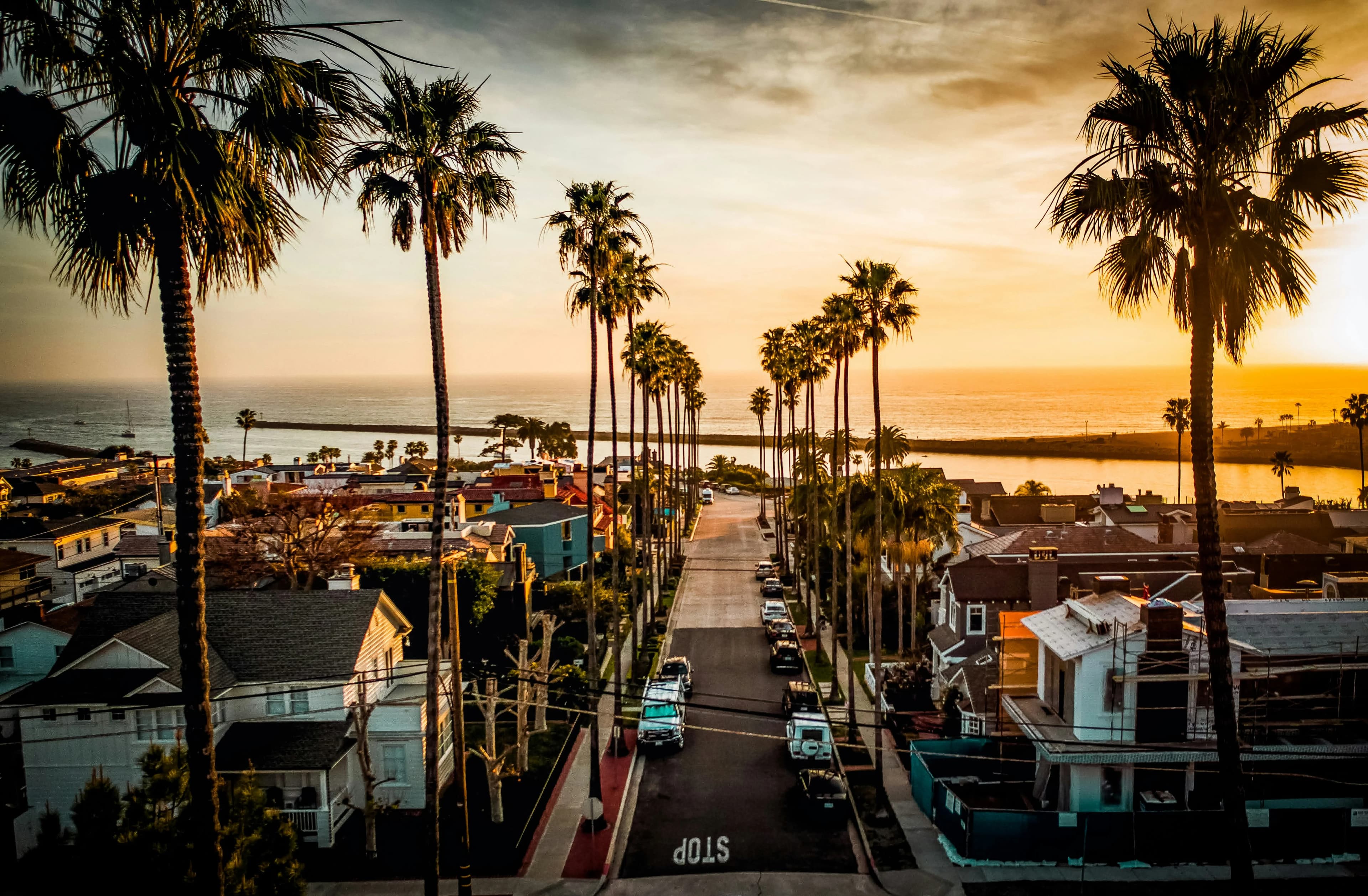
Newport's working harbour and its commercial extension along Thames Street represent the city's more animated face. Boutique hotels and inn-style properties here offer suite accommodation with harbour views, proximity to the International Tennis Hall of Fame, and easy access to the marina culture that has defined Newport since it hosted the America's Cup from 1930 to 1983. The sensory register is different: salt air, the sound of rigging, and the visual rhythm of wooden-hulled vessels against a skyline of colonial-era brick.
Ocean Drive and Cliff Walk adjacency
For guests whose primary interest is the Atlantic coastline, properties positioned near Ocean Drive or with direct access to the Cliff Walk offer a more private, horizon-focused experience. The 5.5-kilometre Cliff Walk trails the eastern edge of the Bellevue estate district, with the ocean on one side and the rear facades of the mansions on the other. Suite accommodation in this zone tends to prioritise views, outdoor terraces, and seasonal privacy over cultural density.
When to visit Newport for a luxury suite stay
Newport operates on a pronounced seasonal rhythm. The peak window runs from late June through September, when the sailing community is active, the mansion estates operate at full capacity, and the city's social calendar reaches its highest intensity. The Newport Folk Festival (late July) and Newport Jazz Festival (early August) are both held at Fort Adams State Park and draw a culturally engaged, affluent audience. Suite availability during these periods requires planning well in advance, and rates reflect the concentration of demand.
September offers a quieter version of peak season: the sailing community remains, the estates are still open, and the Atlantic light shifts into a cooler, more architectural quality that many guests find preferable to the height of summer. October brings the Newport Mansions Wine and Food Festival, a significant calendar event for food-literate travelers.
The off-season, from November through April, strips Newport back to its residential core. Rates compress, availability opens, and the city becomes legible in a different way: the architecture reads more clearly without summer crowds, and the coastal light in winter has a spare, graphic quality. For guests visiting North America in the colder months, Newport in winter is a considered choice rather than a default one.
Local luxury standards: what to expect from top-tier suites in Newport
Newport does not have a formal prestige classification equivalent to the French Palace designation or the Forbes Five-Star system applied uniformly across markets. Instead, the city's luxury hospitality landscape is shaped by two distinct typologies.
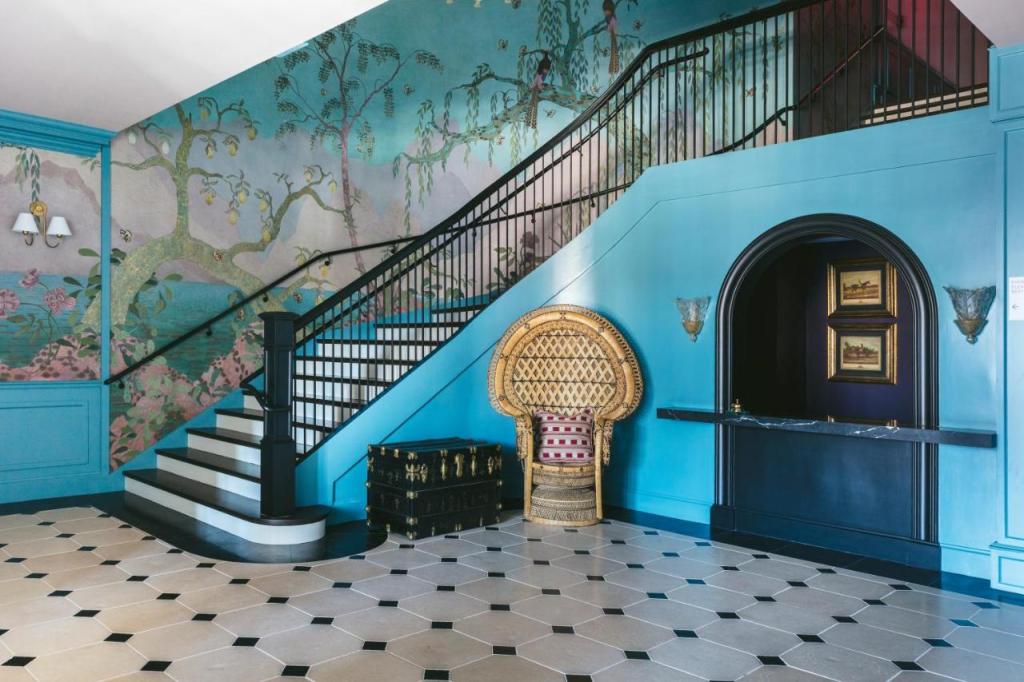
The first is the historic inn or mansion conversion: properties occupying original Gilded Age or colonial-era structures, where the architecture itself constitutes a primary amenity. In these buildings, suites are characterised by ceiling height, period detailing, and a spatial generosity that reflects the original domestic programme. The trade-off is that some historic properties cannot offer the full-service infrastructure of a purpose-built luxury hotel.
The second typology is the purpose-built or extensively renovated full-service hotel, where suite offerings include dedicated concierge service, in-room dining, spa access, and the operational consistency expected by guests accustomed to international luxury hotel standards. Newport has examples of both, and the choice between them is fundamentally a question of what the guest values more: atmosphere and historical specificity, or operational precision and service depth.
How to choose the best luxury suite in Newport
Several practical considerations apply specifically to Newport when selecting suite accommodation.
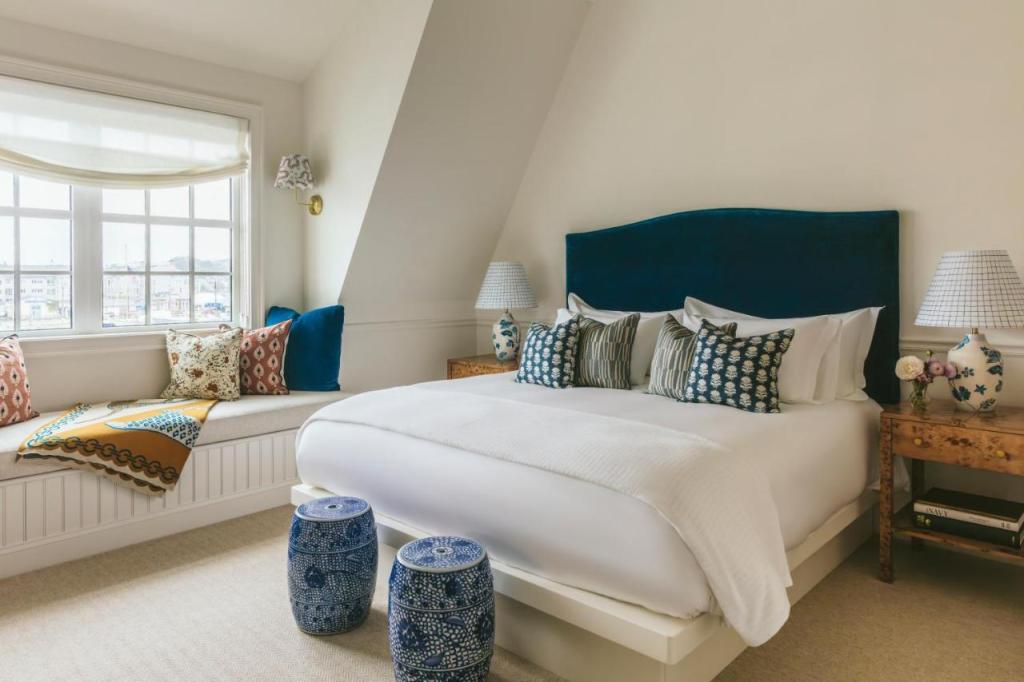
First, consider orientation. Newport's most coveted views are either harbour-facing or ocean-facing, and the two offer fundamentally different experiences. Harbour views are active and social; ocean views are expansive and quieting. Neither is objectively superior, but the distinction is worth making deliberately.
Second, consider the role of outdoor space. Newport's climate between June and September supports extended outdoor living, and suites with private terraces, balconies, or garden access represent a meaningfully different product from interior-only rooms at the same price point. The Cliff Walk and Ocean Drive are accessible on foot or by bicycle from most central properties, but having private outdoor space within the suite itself changes the texture of a stay.
Third, consider proximity to the cultural programme you have built. If the primary draw is the mansion circuit, Bellevue adjacency matters. If it is sailing, the harbour district is the correct base. Newport is small enough that the difference is rarely more than ten minutes by car, but suite stays at this level are about precision, not approximation.
Fourth, consider the season's effect on noise and light. Summer Newport is socially active in a way that winter Newport is not. Guests sensitive to ambient noise should verify the acoustic profile of suite options during peak season.
Why curation matters in Newport
Newport's hotel market is relatively small in absolute terms, but the variance in quality between properties is significant. The city's prestige reputation, anchored in its Gilded Age history and sailing legacy, means that some properties trade on historical association rather than current operational excellence. A curated selection by La Suite filters for contemporary quality as well as historical character, ensuring that the suite you select delivers on both dimensions.
La Suite applies the same editorial standards to Newport that it applies across the full spectrum of destinations in the United States: direct assessment of spatial quality, service depth, and the coherence between a property's positioning and its actual guest experience. In a market where reputation can lag behind reality in either direction, that curation function has direct practical value for the discerning traveler.