Understanding Ushuaïa as a luxury destination
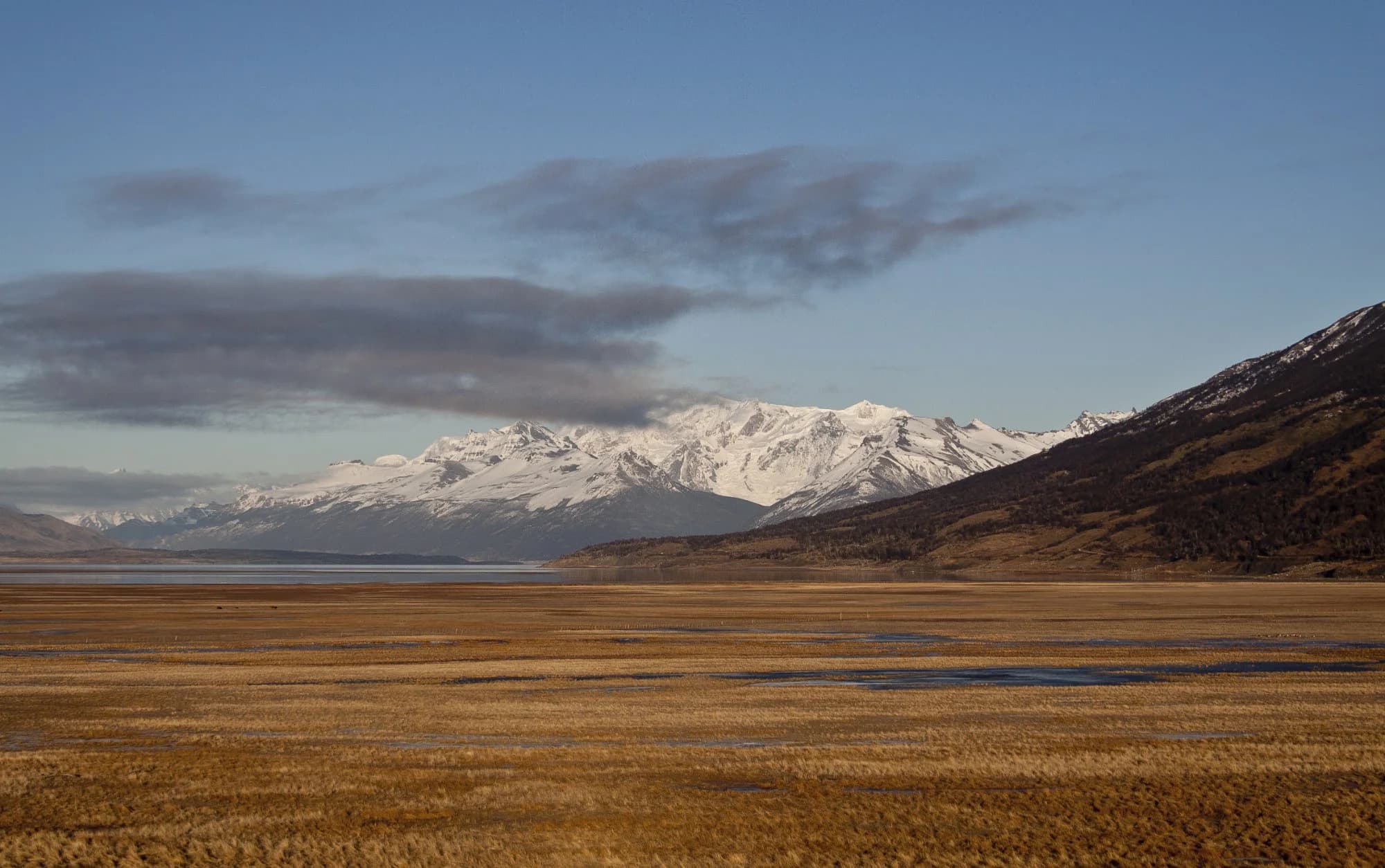
For travelers arriving from Buenos Aires or connecting from international hubs, Ushuaïa represents the edge of the known world in a literal sense. The Beagle Channel, named after the ship that carried Darwin through these waters in the 1830s, defines the southern boundary of the city. The Andes terminate here. The quality of light, particularly in the long summer days of December and January, is unlike anything found in more temperate latitudes. A luxury hotel suite with a considered orientation toward these elements transforms the experience from logistical to genuinely immersive.
Best areas to stay in Ushuaïa
The channel-facing hillside
The most sought-after positioning for luxury accommodations in Ushuaïa is on the slopes above the city, facing south toward the Beagle Channel and beyond to Chilean Tierra del Fuego. Properties at this elevation offer unobstructed sightlines across the water, the ability to observe weather systems moving in from the Drake Passage, and a sense of remove from the activity of the port below. Suite elevations matter here in a way that is almost architectural in its precision.
The city center and port area
Ushuaïa's center is compact and walkable. Staying close to the port provides immediate access to the embarkation points for Beagle Channel boat excursions, the Museo del Fin del Mundo, and the main commercial street, Avenida San Martín. For travelers combining Ushuaïa with an Antarctic or sub-Antarctic cruise, proximity to the port has practical merit. The trade-off is a more urban environment with less visual separation from the surrounding landscape.
The outskirts toward Tierra del Fuego National Park
The western edge of Ushuaïa transitions rapidly into Tierra del Fuego National Park, Argentina's only coastal national park. Properties in this corridor sit within the lenga beech forests that define the landscape of the Fuegian Andes. The acoustic environment here is notably different: quieter, more isolated, and governed by the rhythms of the forest rather than the port. For guests whose primary interest is the natural environment rather than the town itself, this positioning is the most coherent choice.
When to visit Ushuaïa for a luxury suite experience
Ushuaïa operates on a seasonal model that differs significantly from most luxury destinations. The austral summer, running from November through March, is the peak period. Temperatures during this season range from approximately 5 to 14 degrees Celsius, daylight extends to nearly 17 hours at the December solstice, and access to outdoor activities including trekking, kayaking on the Beagle Channel, and excursions into Tierra del Fuego National Park is at its broadest. Antarctic cruise departures are concentrated in this window, which means suite availability at the better properties requires advance planning of several months.
The austral winter, from June through August, presents a different proposition entirely. Ushuaïa receives snowfall, the ski resort at Cerro Castor opens (the southernmost ski area in the world), and the landscape takes on a monochromatic severity that has its own aesthetic logic. Suite availability is generally more accessible in winter, and rates reflect the lower demand. For travelers drawn by the idea of snow, silence, and an extreme southern winter, this season has a compelling internal coherence.
Shoulder seasons in April, May, September, and October offer a middle position: the autumn leaf color of the lenga beeches in April and May is considered one of the most visually distinctive periods in Patagonia, and spring in September and October brings wildflowers and migrating bird species back to the channel.
Local luxury standards in Ushuaïa
Argentina does not operate a formal palace classification system comparable to France's Palace designation. The luxury market in Ushuaïa is defined instead by a combination of positioning, architectural specificity, and the quality of experiential programming on offer. The best properties here tend to share certain characteristics: materials sourced from or resonant with the Patagonian environment (stone, native timber, leather), spatial generosity in suite design that acknowledges the visual primacy of the landscape outside, and guiding services that connect guests to the national park and the channel with genuine expertise.
The concept of a luxury hotel suite in this context differs from what a traveler might expect in a capital city. The suite is not primarily a social or status space. It is a private viewing platform, a warm retreat from a genuinely cold and wild exterior, and a base for activity that requires logistical support. Properties that understand this distinction are the ones worth considering. If you are exploring the broader context of suite travel in Argentina or across South America, the standards and expectations shift considerably by region.
How to choose the best luxury suite in Ushuaïa
Orientation and views
In a destination where the landscape is the primary asset, the orientation of a suite is a structural consideration, not a preference. South-facing suites toward the Beagle Channel provide the most expansive views and the most direct engagement with the destination's defining geography. Suites facing the Martial Range to the north offer a different register: more intimate, more forested, and more connected to the feeling of being inside the mountains rather than at their edge.
Thermal performance and interior design
Ushuaïa's climate requires properties to perform well in cold, wet, and occasionally extreme conditions. A luxury suite in this environment should offer genuine thermal comfort: well-designed heating systems, materials that feel appropriate to the climate (rather than imported tropical aesthetics), and the kind of considered interior that rewards time spent indoors when the weather dictates it. Fireplaces, natural materials, and adequate spatial depth in suite design are indicators of a property that has been conceived for this specific latitude.
Access to guided experiences
The distinguishing feature of the best Ushuaïa properties is their relationship to the surrounding environment. In-house naturalist guides, dedicated logistics for national park access, and arrangements for Beagle Channel navigation separate the properties that treat the location as an opportunity from those that merely occupy it. When evaluating a luxury hotel suite here, the experiential programming should carry as much weight as the physical space itself.
The value of curation in Ushuaïa
The luxury suite market in Ushuaïa is small and specific. There are relatively few properties that meet the criteria a discerning traveler would apply, and the differences between them are meaningful rather than marginal. A curated selection by La Suite removes the considerable friction of evaluating properties across a market where marketing language is rarely calibrated to the actual experience on offer. In a destination this remote, arriving at the wrong property is not a minor inconvenience. It is a significant failure of the trip's entire architecture. The editorial framework that La Suite applies to this and every destination it covers is designed precisely for contexts like Ushuaïa: where the stakes are high, the options are limited, and the right decision requires more than a star rating.