1828 Smart Hotel Boutique, Buenos Aires
The 1828 Smart Hotel unites contemporary elegance and sophisticated design with Argentine warmth. Located in a vibrant neighborhood, you'll be steps from major tourist attractions, restaurants, and sh

Argentina's geography makes a single-lens approach to planning a stay inadequate. Each zone operates under its own logic, its own climate, and its own architectural vocabulary. Understanding these distinctions is the first step toward selecting the right luxury hotel suite for your itinerary.
48 hotels available

The 1828 Smart Hotel unites contemporary elegance and sophisticated design with Argentine warmth. Located in a vibrant neighborhood, you'll be steps from major tourist attractions, restaurants, and sh

The Alvear Palace is a 5-star hotel located in the stylish neighborhood of La Recoleta, surrounded by restaurants, shops and only five minutes away from the financial district. It is a smoking free pr

Boasting impressive panoramic views and two swimming pools, Arakur Ushuaia Resort & Spa offers luxurious rooms with free WiFi access. The property is located in Cerro Alarkén Natural Reserve. Rooms at

Featuring a restaurant, bar and views of garden, Awasi Iguazú is located in Puerto Iguazú, 2.6 miles from Iguazu Casino. With a garden, the 5-star hotel has air-conditioned rooms with free WiFi, each

Elegant Accommodations Awasi Mendoza in Ciudad Lujan de Cuyo offers a 5-star hotel experience with spacious family rooms. Each room features a private bathroom, air-conditioning, and mountain views. R

Boasting a rooftop splash pool and deck area, this boutique hotel in downtown Cordoba features contemporary designer style details. Free WiFi access is available. Parking is subject to availability up

Located in Villa General Belgrano, a 17-minute walk from Brewer Park Villa General Belgrano, Böden Hotel & Spa, AKEN SOUL has accommodations with a seasonal outdoor swimming pool, free private parking

The Carsson Hotel Buenos Aires offers 4-star accommodations that combine classic architecture and state-of-the-art amenities, such as flat-screen TVs and Wi-Fi. The hotel lies next to the popular Call

Set in the spectacular setting of Argentina's wine country and offering an outdoor pool, spa and free horse riding, Casa de Uco Wine Hotel & Spa is located in Valle de Uco. Free Wi-Fi access is availa

Featuring a bar and massage services, Casa Lucia member of Meliá Collection is well situated in the center of Buenos Aires, a 9-minute walk from Basilica del Santisimo Sacramento. Each room at the 5-s

The CasaSur Recoleta is a charming boutique hotel located in the Recoleta district of Buenos Aires, next to the Alvear Palace, the Recoleta Cemetery and several shops and restaurants. The stylish furn

Located in Agrelo, Chozos Resort has a terrace. Featuring a garden, the 4-star hotel has air-conditioned rooms with free WiFi, each with a private bathroom. There is free private parking and the prope

Located in Villa la Angostura, Correntoso Lake & River Hotel offers peaceful accommodations at the mouth of the Correntoso River. It features stylish rooms. Wi-Fi and parking are free. The rooms at Co

Elegant Accommodations El Tránsito Hotel Boutique in Concepción offers a 5-star experience with a sun terrace, garden, and a year-round outdoor swimming pool. Guests enjoy free WiFi, bicycle parking,

Elegant Accommodations Explora en El Chalten in El Chalten offers a 5-star hotel experience with spacious rooms featuring mountain or river views. Each room includes a private bathroom, bathrobes, and

Spacious luxury suites with marble bathrooms, charming gardens and swanky gourmet restaurants and bars can be enjoyed at The Four Seasons hotel in Buenos Aires. It is the only hotel in the exclusive R

Located in Villa General Belgrano, 11 miles from Brewer Park Villa General Belgrano, Get Hotel Molvento, AKEN SOUL Collection has accommodations with a seasonal outdoor swimming pool, free private par
Strategically located inside Iguazu National Park, Gran Meliá Iguazú features an infinity pool and spa facilities. Has 3 restaurant, and 4 Bars. Soberly decorated, rooms at Gran Meliá Iguazú feature

The Bel Air offers impressive neo-baroque architecture in trendy Recoleta, 2297 feet from both Callao Subway Station and the Colon Theater. It features classical suites and an afternoon tea buffet. Fr

Located in the elegant Puerto Madero district, Hilton Buenos Aires offers plush accommodations with views of the city and river. The hotel features spa facilities, a fitness center, a rooftop pool, an
The capital functions as a gateway and a destination in its own right. Buenos Aires is a city of defined neighborhoods, each with a distinct social and aesthetic register. Palermo Chico and Recoleta concentrate the older money and the more formally designed properties, with suites in converted Belle Époque townhouses or purpose-built towers that face the city's wide boulevards. The suite offer here rewards those who want proximity to galleries, private dining, and the Argentine fashion and design scenes without sacrificing a sense of residential calm.
Patagonia is where the suite format shifts entirely. Space is measured differently here: floor-to-ceiling glass facing the Andes, private terraces oriented toward glacial lakes, and interiors that favor local stone, native wood, and heavyweight textiles designed to absorb the cold. Towns such as San Carlos de Bariloche, Villa La Angostura, and El Chaltén serve as bases for properties built around landscape access rather than urban amenity. Ushuaïa, at the continent's southern tip, offers a suite experience genuinely unlike anywhere else on Earth, oriented around sub-Antarctic light and the Beagle Channel.
The zone around Mendoza and its satellite towns, including Agrelo and Chacras de Coria, has developed a category of wine estate accommodation that is architecturally considered and gastronomically serious. Suites here are typically embedded within working vineyards, with views across the Luján de Cuyo or Uco Valley and the snow-capped Andes as a fixed backdrop. The pace is deliberate. The programming is organized around harvest seasons, private tastings, and bespoke asado experiences.
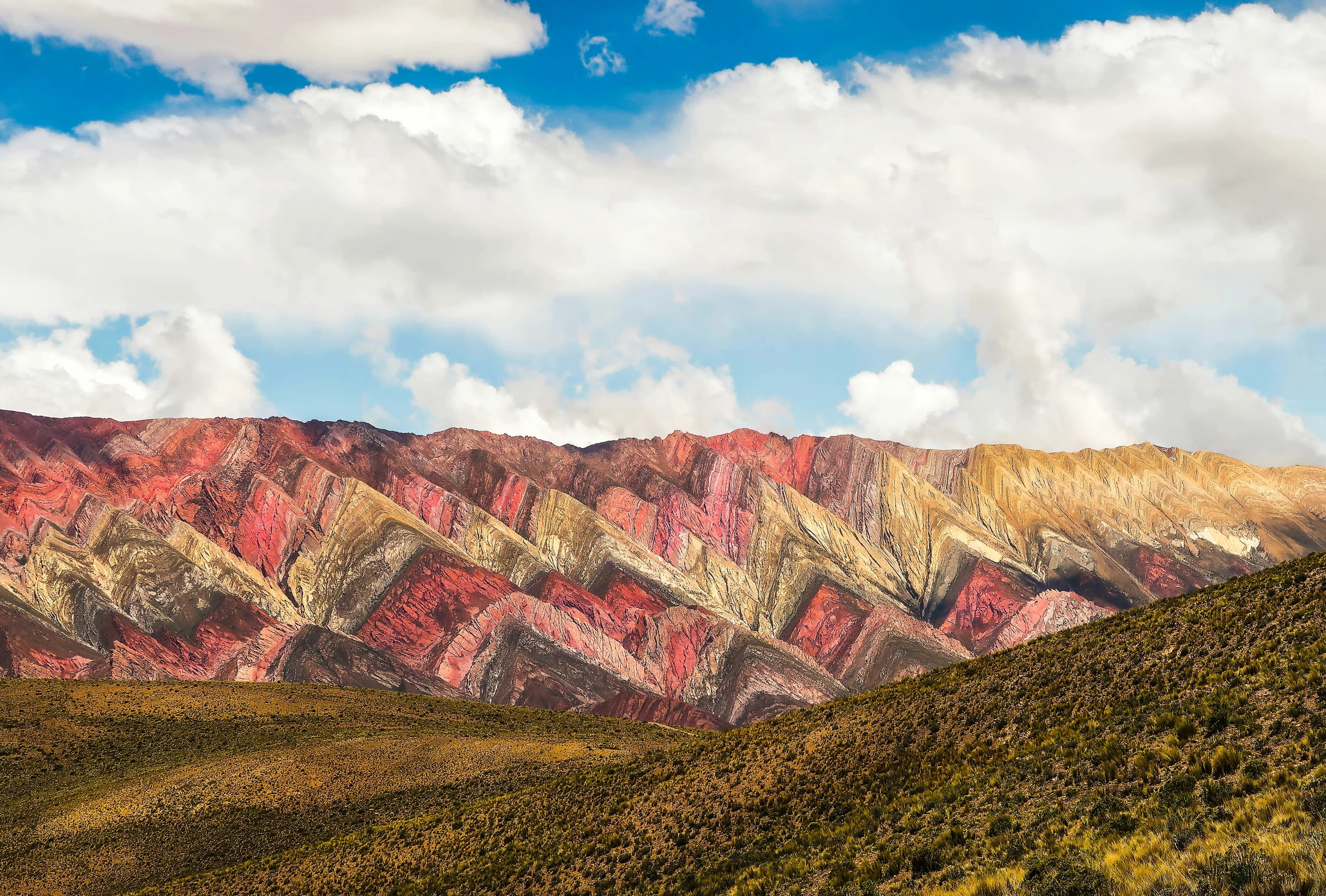
The provinces of Salta and Jujuy, with towns such as Cachi and Rosario de Lerma, represent an entirely different register. Altitude here can exceed 3,000 meters in surrounding areas. The architectural language draws on colonial Spanish construction and pre-Columbian Andean forms: adobe walls, terracotta, and the ochre and terracotta tones of the Quebrada de Humahuaca. Luxury suites in this zone tend toward a more restrained, craft-focused aesthetic, centered on the land and on silence.
Argentina's climatic diversity means there is no single optimal season for the country as a whole. The Patagonian summer, running from November through March, is when conditions are most favorable for outdoor access around the lakes and mountains. However, peak demand during this window compresses suite availability at the best properties significantly. Advance planning of three to six months is standard for Patagonia during this period.
Buenos Aires is most comfortable in spring (September to November) and autumn (March to May), when temperatures are moderate and the cultural calendar is at its most active. The city's design weeks, art fairs (including arteBA in May), and fashion industry events cluster around these months. Mendoza's harvest season, known locally as the Vendimia, runs through March and early April and is the most atmospheric time to be based in a wine estate suite. The northwest is most accessible in the dry season, broadly from May to October, before summer rains affect road access to highland areas.
Argentina does not operate under a formal national suite classification equivalent to France's Palace designation. The luxury hotel category here is instead defined by a combination of factors: the quality of the physical build, the land or urban context, the sourcing philosophy of the kitchen, and the degree of service personalization. Argentina's finest properties tend to compete on experiential distinctiveness rather than on brand recognition alone.
In the wine regions, the estancia and boutique bodega hotel format is the dominant luxury typology. These are working agricultural properties that have been architecturally upgraded to offer a small number of suites, often with private plunge pools and access to the estate's private cellar programs. In Patagonia, the language shifts to the ecolodge format, built on exclusivity of access to remote terrain rather than on amenity count. In Buenos Aires, the reference properties are typically smaller, design-forward hotels with a suite tier that competes directly with the best of São Paulo or Santiago for interior quality.
Service in Argentina's top properties is generally warm in register and increasingly sophisticated in execution, with a growing emphasis on sommelier programs, private guide networks, and access to experiences that are not publicly bookable.
The scale of the country demands a clear decision on how much ground to cover. Argentina is not a destination suited to rapid itinerary compression. Properties separated by geography require either significant internal flight connections or an acceptance that each zone deserves its own dedicated visit.
For travelers focused on a single zone, the suite selection logic is straightforward: landscape-facing rooms in Patagonia, vineyard-embedded suites in Mendoza, and architecturally notable urban rooms in Buenos Aires. For those building a multi-zone itinerary, the key is ensuring that the standard of the suite experience does not drop at the second or third destination. Argentina's luxury suite tier is uneven across the country, and the gap between the best and the second-best properties in smaller towns can be significant.
Practical considerations include altitude acclimatization in the northwest (where properties in towns above 2,000 meters require a slower first day), the need for all-weather suite amenities in Patagonia (a fireplace and covered outdoor space are functionally important, not merely atmospheric), and the value of properties with on-site kitchens of genuine quality in remote locations where restaurant options are limited.
The Argentine luxury hotel market is genuinely diverse, but it is also inconsistent. Marketing language in the sector runs ahead of delivery in ways that are not always visible from standard booking platforms. A suite described as a premium offering may sit within a property with limited service depth or architectural coherence. La Suite's selection process applies a consistent standard of editorial judgment to the Argentine market specifically, filtering for properties where the suite tier represents a meaningful step up in spatial quality, design clarity, and experiential integrity.
For travelers approaching Argentina from outside the region, this curation removes a significant research burden. The 12 properties currently listed across Argentina on La Suite represent a cross-section of the country's strongest suite offers, from Patagonian wilderness lodges to wine estate rooms and capital city properties. The selection is not exhaustive. It is deliberate. That distinction is the point.

The strongest concentrations of high-quality luxury suites in Argentina are found in Buenos Aires, the Mendoza wine country (particularly around Agrelo and Chacras de Coria), and Patagonia (including San Carlos de Bariloche, Villa La Angostura, and Ushuaïa). The northwest provinces of Salta and Jujuy offer a smaller but architecturally distinctive suite category centered on colonial and Andean design traditions.
The Patagonian summer, from November through March, offers the most reliable access to outdoor landscapes and the longest daylight hours, making it the peak period for suite bookings at the region's leading properties. Availability at the best properties becomes constrained quickly during this window, and advance reservations of three to six months are standard. Shoulder season visits in April or October offer reduced demand with still-reasonable conditions.
Suites in the Mendoza wine region, including properties around Agrelo and Chacras de Coria, are typically integrated into working vineyard estates and designed with a strong sense of place: local stone, neutral palettes, and framing of the vine rows and Andean backdrop as the primary visual element. Private plunge pools, wine cellar access, and bespoke tasting programs are standard features at the better properties.
Buenos Aires offers a suite tier that is architecturally diverse and increasingly competitive with São Paulo and Santiago. The best properties are concentrated in neighborhoods such as Recoleta and Palermo, where converted Belle Époque buildings and purpose-designed boutique hotels offer rooms with a high degree of interior specificity. The city's cultural density, including its gallery scene, private dining culture, and fashion industry, makes it a strong base for design-literate travelers.
Argentina does not maintain a formal national classification system equivalent to the French Palace designation or a similar prestige label. Top-tier properties are identified by a combination of factors: architectural quality, the distinction of their suite tier, the sourcing standards of their kitchens, and the depth of their service model. Independent editorial curation, as practiced by La Suite, plays an important role in identifying which properties genuinely deliver at this level.
Properties in the northwestern provinces, including towns near Cachi and Rosario de Lerma, sit at significant elevations, with surrounding terrain often exceeding 3,000 meters. Altitude acclimatization should be factored into the first day of any stay, and the best suites in this region are designed with this in mind, offering a calm, unhurried environment suited to slow arrival. The dry season from May to October is generally more reliable for road access to highland areas.
Ushuaïa, located at the southern tip of Argentina on the Beagle Channel, offers a suite experience defined by its sub-Antarctic light, remote geography, and the physical drama of its setting between the Martial Range and the water. The property offer here is smaller and more specialist than in Buenos Aires or Mendoza, but the best suites are oriented toward this landscape with a clarity of intention that is rare. It is a destination for travelers who value geographic extremity as part of the experience itself.
For Patagonia during the November-to-March summer season, and for Mendoza during the March Vendimia harvest period, advance reservations of three to six months at the best properties are strongly advisable. Buenos Aires operates with more flexibility due to its year-round urban appeal, though spring and autumn periods around major cultural events can see the top suite categories fill early. Properties with a small number of suites, which includes most of Argentina's finest wine estate and wilderness lodge properties, require the earliest planning.
The best Patagonian properties are built around landscape access as their primary offer: guided access to national parks including Los Glaciares and Nahuel Huapi, private fly-fishing arrangements, horseback circuits on estancia land, and kayaking in glacial lake systems. The suite itself functions as a recovery and orientation space between these activities, with fireplace-equipped rooms, covered terraces for all-weather use, and kitchens capable of delivering at a high standard in locations remote from restaurant infrastructure.
La Suite applies a consistent editorial standard across the Argentine market, assessing properties on the spatial quality of their suite tier, the architectural integrity of the property, the depth of service programming, and the honesty of correspondence between marketing claims and the actual guest experience. The current selection of 12 properties across Argentina represents a deliberate cross-section of the country's strongest suite offers rather than an exhaustive listing, prioritizing distinctiveness and reliability over volume.