Understanding Mendoza wine country as a luxury destination
Best areas to stay in Mendoza wine country
Luján de Cuyo
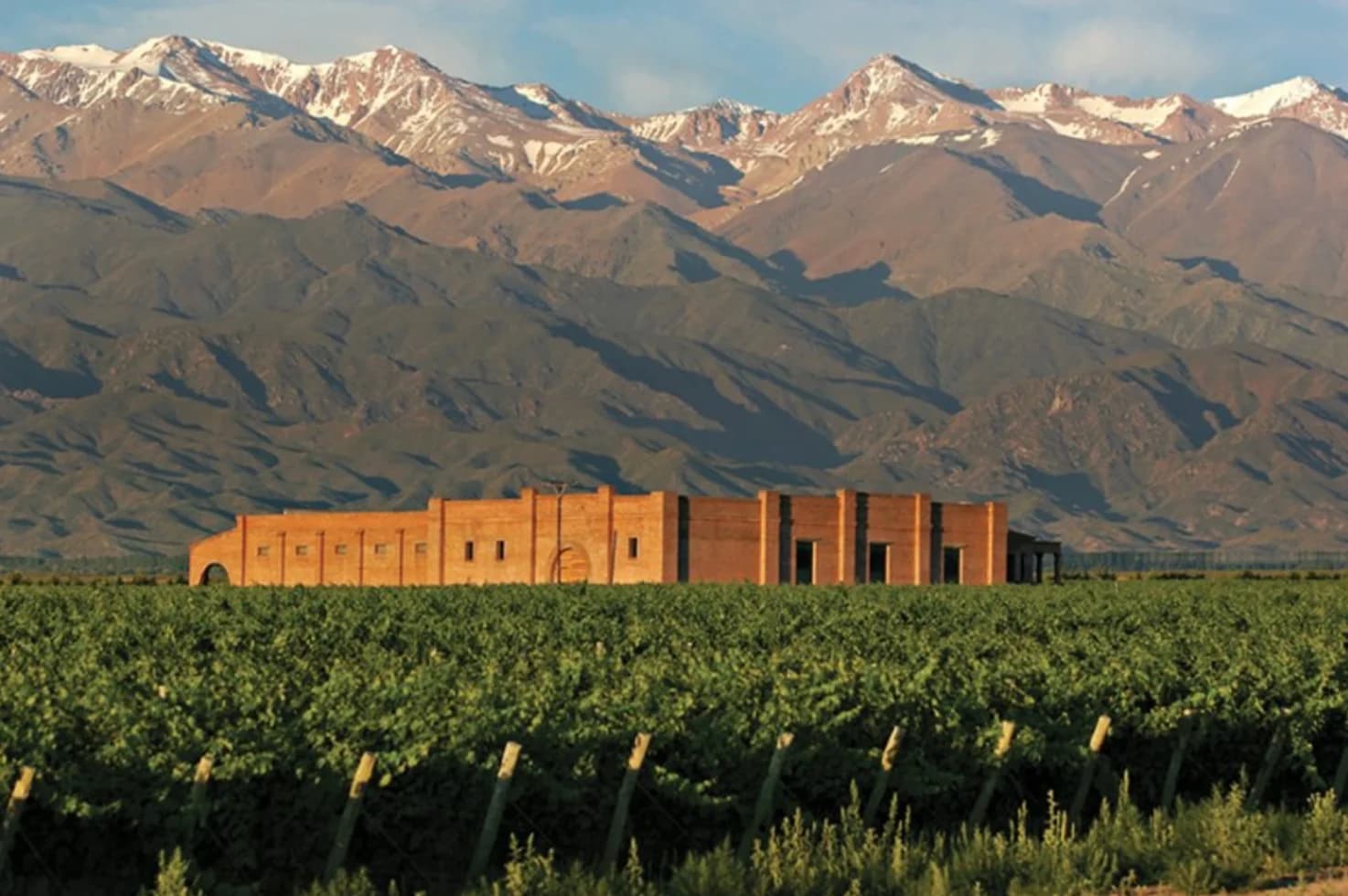
Luján de Cuyo is widely regarded as the premium wine-growing corridor in Mendoza. The department sits directly south of the city, at elevations between 900 and 1,100 metres, and it is where many of Argentina's most prestigious bodegas have established their flagship estates. Staying here places guests within walking distance of production facilities, barrel rooms, and private dining experiences. The visual register is austere in the best sense: gravel paths, low-lying vines, and a constant horizon of snow-capped peaks. Luxury properties in this zone tend to occupy converted estate houses or purpose-built architectural structures integrated into working vineyards.
Valle de Uco
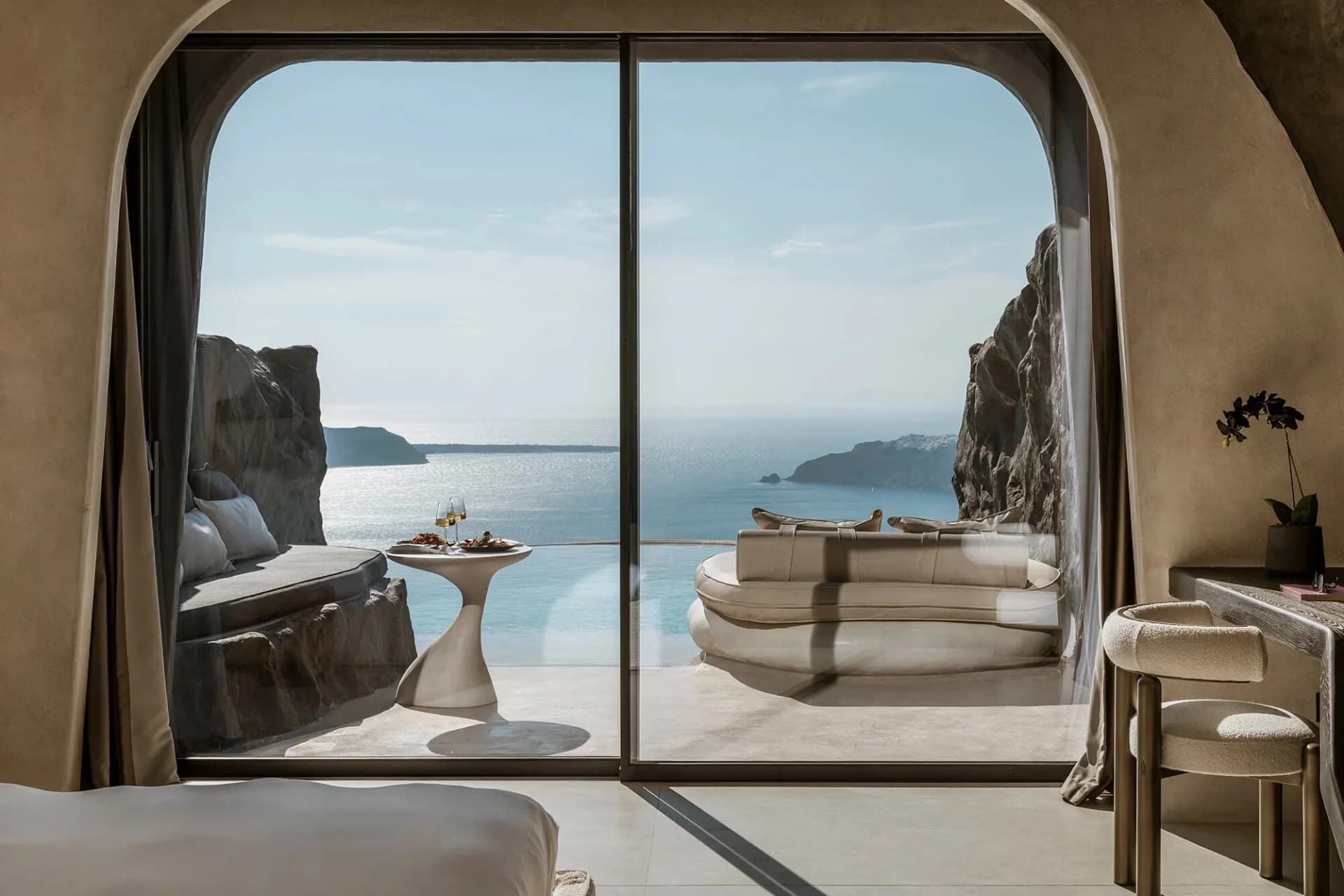
Valle de Uco is the high-altitude frontier of Mendoza wine country, a valley that begins approximately 80 kilometres south of the capital and climbs toward the base of the Andes. Elevations here reach 1,500 metres, and the growing conditions produce wines of notable concentration and freshness. The architectural language of top properties in this valley is contemporary and deliberate: poured concrete, rammed earth, glass walls oriented toward the Tupungato volcano. For travellers seeking complete immersion in landscape with minimal urban distraction, Valle de Uco is the most coherent choice. Suites here tend to be generous in floor plan, designed around the view rather than around conventional hotel logic.
Maipú
Maipú lies closer to the city of Mendoza and functions as the more accessible expression of the wine country experience. The zone is historically important to Argentine viticulture and retains a more domestic, agricultural character. Properties here are generally less architecturally ambitious than those in Uco but offer proximity to olive groves, small producers, and artisan food culture. It suits travellers who want the terroir without total isolation.
When to visit Mendoza wine country
The optimal window for visiting Mendoza's wine country as a luxury traveller runs from late October through early April, covering the Southern Hemisphere spring, summer, and early autumn. The grape harvest, known locally as vendimia, takes place between late February and April and represents the most cinematically compelling period to visit. The light is golden, the activity in the vineyards is constant, and many bodegas open private harvest experiences to guests staying on property.
The Fiesta Nacional de la Vendimia, held annually in early March in the city of Mendoza, is a significant cultural event that draws large crowds. Travellers who prefer quieter conditions should visit in November or December, when vineyards are in full leaf and suite availability is generally higher. Winter months (June to August) bring cold nights and snow on the Andes, with a different but equally precise aesthetic. Some properties close partially in winter, so confirming availability in advance is advisable.
Local luxury standards in Mendoza wine country
Argentina does not operate a formal national luxury hotel classification equivalent to the French Palace designation. The quality tier in Mendoza wine country is instead signalled through affiliation with international collections (Relais and Châteaux, Small Luxury Hotels of the World, Leading Hotels of the World), through the architectural pedigree of the property, and through the reputation of the winery that owns or operates it.
The dominant model for top-tier accommodation in Mendoza is the bodega hotel: a property embedded within a working wine estate, where the suite experience is inseparable from the production of the wine. Meals are typically sourced from the estate's kitchen garden, wine lists are drawn from the property's own cellar, and activities are organised around the agricultural calendar. This model demands a different kind of evaluation from the traveller. The quality of the wine programme, the expertise of the sommelier team, and the coherence between the architecture and the landscape all carry weight that room size alone cannot capture.
How to choose the best luxury suite in Mendoza wine country
Several practical distinctions shape the choice between properties. The first is altitude: Valle de Uco suites sit higher and deliver a more dramatic Andean backdrop, but the drive from the city is longer and roads can be affected by weather. Luján de Cuyo offers a more accessible version of the vineyard suite experience without sacrificing quality.
The second consideration is the balance between privacy and programming. Some properties operate as boutique hotels with a full service structure, including guided tastings, spa facilities, and in-suite dining. Others are more residential in character, with fewer structured activities and greater autonomy for the guest. Neither model is superior, but the match between property style and traveller preference is consequential.
Third, consider the architectural provenance of the suite itself. Mendoza's best properties have commissioned architects of international standing, and the physical experience of the space reflects those decisions. Orientation toward the Andes, the management of natural light at different times of day, the relationship between interior and exterior, these are not incidental details. They define the quality of the stay in a way that a standard hotel metric cannot capture.
The value of a curated selection in Mendoza wine country
The number of properties in Mendoza that market themselves as luxury is substantially larger than the number that genuinely deliver at that level. The bodega hotel category in particular contains a wide spectrum, from internationally designed estates with genuine architectural and gastronomic ambition to converted farmhouses with limited infrastructure. Navigating this without a reliable reference point is inefficient and carries real risk of disappointment for a traveller with precise expectations.
La Suite applies an editorial filter to this market. The selection process evaluates the physical quality of the suites, the coherence of the property's design logic, the standards of service and wine programming, and the overall integrity of the experience. The result is a curated set of options that removes the noise from the decision. For a destination as geographically dispersed and as architecturally variable as Mendoza wine country, that filter is not a convenience. It is the difference between a considered stay and a costly miscalculation.