Alma Loft, Los Organos District
Located in Máncora, a few steps from Playa Vichayito, Alma Loft provides accommodations with an outdoor swimming pool, free private parking, a garden and a terrace. With a restaurant, the property als

Peru does not resolve into a single luxury register. Its regions operate on entirely different sensory and cultural frequencies, and the decision of where to base yourself carries real consequences for the quality of the trip.
46 hotels available

Located in Máncora, a few steps from Playa Vichayito, Alma Loft provides accommodations with an outdoor swimming pool, free private parking, a garden and a terrace. With a restaurant, the property als

The Antigua Casona San Blas is a family-owned and operated boutique hotel in the historic center of Cusco with 50 rooms. All rooms have WiFi, radiant heating, feathered pillows and bedding, smart TVs,

Featuring a fantastic outdoor pool and an oceanfront location Aranwa Paracas Resort & Spa offers accommodations in Ica, a 5-minute drive from El Chaco port and Cruz del Sur bus station. Free WiFi acce

Elegant Accommodations Aranwa Sacred Valley Hotel & Wellness in Urubamba offers a 5-star experience with spa facilities, a swimming pool with stunning views, a fitness center, and a lush garden. Guest

Located right in front of Vichayito Beach, Vichayito Bungalows offers chalets and bungalows with free Wi-Fi and TV sets. It features a spa, a restaurant and a garden with a swimming pool. Free parking

The beachfront Arennas Mancora features an outdoor pool and a jacuzzi, an on-site restaurant, and free WiFi in Máncora. The hotel sits in front of Las Pocitas Beach. The room features a private bathro

Casa Andina Premium Arequipa in the center of the White City, is a unique18th-century colonial mansion made of volcanic stone. The traditionally decorated rooms are equipped with LCD TV and tea and co

Casa Andina Premium Cusco offers accommodations In central Cusco overlooking Limacpampa Square, with traditional, courtyard-facing rooms. It is located only a short walk from Plaza de Armas and Korica

Set in a historical building just 2 blocks from Plaza de Armas square, this luxury boutique hotel offers spacious suites with free WiFi. It features a spa and outdoor swimming pool. All guests have fr

Casa Clara by Ananay Hotels features a garden, terrace, a restaurant and bar in Cusco. Among the facilities at this property are room service and a 24-hour front desk, along with free WiFi throughout

Located 33 feet from the Machupicchu train station, Casa del Sol Machupicchu offers free Wi-Fi and free shuttle services from Machupicchu Train Station. The museum area is 1640 feet away. The rooms in

Located in Calca and with Main Square reachable within 13 miles, CASA RAIZ Handmade House Luxury Stay provides concierge services, non-smoking rooms, a shared lounge, free WiFi throughout the property

Located in the prestigious San Isidro district, Country Club Lima Hotel is one of the most exclusive hotels in Lima and is renowned for its excellent service. It was built in 1927 and has an impressiv

El Pardo DoubleTree by Hilton is a modern hotel with tasteful rooms and free Wi-Fi in Miraflores. Facilities include a rooftop pool with panoramic views, 3 restaurants and a gym. Rooms at El Pardo Dou

An outdoor swimming pool with 2 hot tubs and elegant décor can be enjoyed in Lima’s upscale Miraflores district. The beach circuit is 6 blocks away. Hilton Lima Miraflores has chic rooms with air-cond

Elegant Accommodations Hotel Indigo Lima Miraflores by IHG in Lima offers a 5-star experience with modern rooms featuring air-conditioning, private bathrooms, and city views. Each room includes a work

Elegant Accommodations Humano, Lima, a Tribute Portfolio Hotel in Lima offers a 5-star experience with a fitness center, terrace, restaurant, bar, and a year-round outdoor swimming pool. Guests enjoy

Located 3.7 mi from Nogalpampa Stadium in Urubamba, Inkaterra Hacienda Urubamba welcomes guests with a restaurant and bar. A flat-screen TV with cable channels, as well as an iPod docking station are

In an exclusive historic Colonial mansion, Inkaterra offers luxury accommodations with marble fireplaces and a stone decorated Spanish gallery and central courtyard. Massage sessions can be booked. Wi

In Aguas Calientes, Inkaterra Machu Picchu Pueblo Hotel is a colonial-style property that features massage sessions and an Andean sauna. The spacious rooms feature tile floors and sitting areas. Buffe
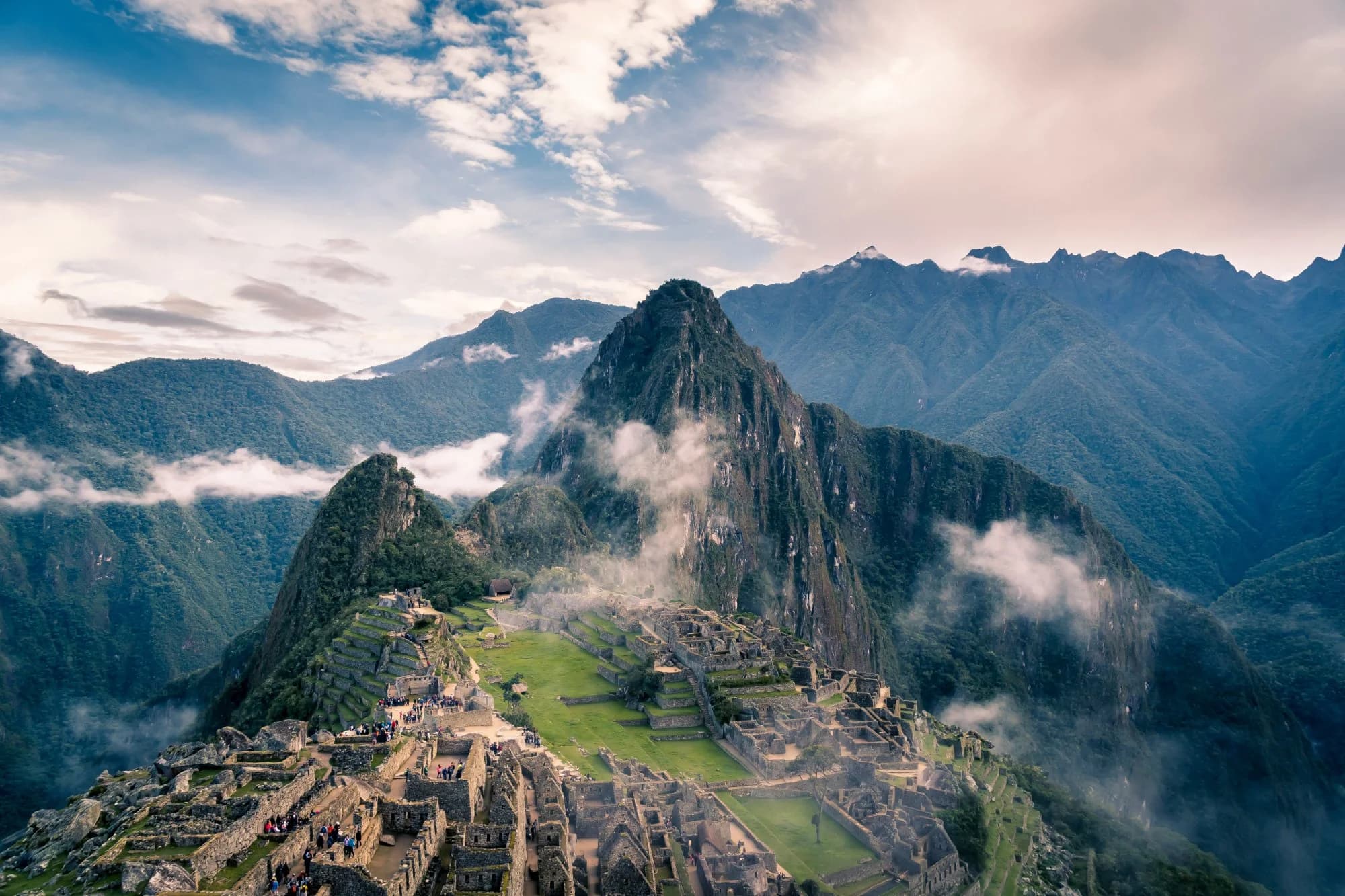
Cusco and the surrounding Sacred Valley form the gravitational centre of Andean luxury. At elevations above 3,400 metres, properties here have had to engineer both physical comfort and a calibrated response to altitude. The finest luxury hotels in this corridor occupy converted colonial monasteries, hacienda estates, and purpose-built retreats designed to frame the Andean landscape rather than compete with it. Urubamba and Calca in the valley floor offer a lower-altitude alternative with direct access to archaeological sites and agricultural terraces that have been cultivated continuously since the Inca period. Machu Picchu itself has severely limited accommodation, and the single luxury hotel suite option at the site commands a premium that is fundamentally about access rather than space.
Lima is where Peruvian luxury intersects most directly with international standards. The district of Miraflores sits on a clifftop above the Pacific, and the best luxury hotel suites here offer a form of urban calm that is particular to this geography: the city recedes, and the ocean takes precedence. Callao, Lima's historic port district, has emerged as a cultural counterpoint with its Monumental complex attracting a more design-conscious traveler. Further north along the coast, Máncora and the area around Canoas de Punta Sal offer a warmer Pacific experience with a notably lower-key atmosphere. The Los Organos District remains one of the more discreet stretches of the northern coastline.
Arequipa, built almost entirely from sillar, a white volcanic stone quarried from the surrounding peaks, presents an architectural character unlike anywhere else in South America. The city's colonial centre is a UNESCO World Heritage site, and the best luxury hotels here occupy buildings of genuine historical weight. To the north, the Achoma District in the Colca Valley offers a more remote register: smaller in scale, oriented around the canyon landscape, and increasingly sought by travelers who have already covered Cusco and want a less trafficked Andean experience.
Paracas sits at the edge of the Paracas National Reserve, where the Atacama desert meets the Pacific. Luxury hotel properties here are defined by their spatial isolation: the landscape is extreme, the light is particular, and the proximity to the Ballestas Islands adds a wildlife dimension that requires no dramatisation.
Peru's climatic geography is complex. The Andes and the coast operate on different seasonal rhythms, and the Amazon basin has its own entirely separate cycle.
For the Sacred Valley and Cusco, the dry season runs from May through October. This is the period of clearest skies, lowest rainfall, and most predictable access to high-altitude sites. June through August sees the highest international traveler volume, and luxury hotel suite availability at the most sought-after properties becomes constrained. Inti Raymi, the Inca festival of the sun celebrated on 24 June in Cusco, draws significant cultural interest and should be factored into planning.
Lima and the Pacific coast, including Máncora and Paracas, follow an inverse logic. The capital is covered by garúa, a low coastal fog, from June through November. For reliable Pacific sun, the northern coast is best visited between December and April. Paracas tends to be windiest between September and November, a consideration for those prioritising outdoor comfort.
For Arequipa and the Colca area, the dry season aligns broadly with the Andes pattern: May to October offers the clearest conditions and easiest canyon access.
Peru does not operate under the French Palace classification system or equivalent national prestige labelling. Hotel quality is assessed primarily through international rating frameworks, brand affiliations, and, increasingly, through the editorial validation of curated platforms and specialist travel media.
What distinguishes the upper tier of Peruvian luxury hotels is less about formal classification and more about a set of concrete qualities: altitude management and oxygen supply systems at high-elevation properties, architectural authenticity in converted heritage buildings, the depth of culinary programming (a significant factor given Peru's position in global gastronomy), and the calibre of the local cultural programming offered to guests.
Several properties in the Sacred Valley have pioneered what might be called Andean wellness: treatments rooted in indigenous plant knowledge, altitude acclimatisation protocols, and landscape-integrated spa architecture. This is not an ambient amenity. For travelers arriving from sea level, these programmes have direct functional value.
In Lima, the luxury hotel landscape reflects the city's position as a gastronomic capital. Properties affiliated with or adjacent to the dining scene around chefs such as Virgilio Martínez and Gastón Acurio carry a cultural weight that extends beyond their room inventory.
Several practical distinctions shape the suite selection process in Peru more than in most destinations.
Altitude is the first variable. A suite at 3,800 metres in the Sacred Valley is a physiologically different proposition from one at sea level in Miraflores. Travelers with cardiovascular sensitivities, those traveling with young children, or those on tight itineraries should weigh altitude carefully. The finest properties at altitude mitigate this with acclimatisation menus, supplemental oxygen, and medical staff, but the variable remains.
Architectural type is the second consideration. Peru offers a genuine spectrum: Inca-period stone construction integrated into contemporary hospitality design, Spanish colonial buildings converted into luxury hotels with interior courtyards and thick-walled rooms, modernist cliff-edge properties in Lima, and low-profile eco-lodges on the edge of the Amazon. Each type produces a different spatial and sensory experience, and the choice should reflect the traveler's priorities for that specific leg of the journey.
Access logistics matter more here than in most luxury destinations. Machu Picchu requires a train to Aguas Calientes and a bus to the site. The Colca Canyon near Achoma involves several hours from Arequipa. Paracas is a four-hour drive south of Lima. Building an itinerary around suite quality requires mapping these logistics in advance.
Peru's luxury hotel market has expanded significantly over the past decade, and the distance between a genuinely exceptional luxury suite and one that merely presents itself as such is considerable. Marketing language in this sector has become increasingly undifferentiated, making independent assessment more valuable rather than less.
La Suite applies consistent editorial criteria across the fifteen properties listed for Peru, covering the South America region. The selection is not a directory. It is a considered editorial position on which properties deliver at the level that the destination's complexity demands. For travelers allocating significant time and resources to Peru, the quality of that initial curation determines much of what follows.

The Sacred Valley corridor between Urubamba and Calca concentrates the highest density of exceptional luxury hotel suites in Peru. The finest properties here occupy converted hacienda estates or purpose-built retreats at altitude, with direct views over Inca agricultural terraces. La Suite curates the most architecturally and experientially coherent options in this corridor.
The two destinations serve fundamentally different purposes within a Peru itinerary. A luxury hotel suite in Lima, particularly in Miraflores, offers an urban Pacific-facing base oriented around gastronomy, culture, and coastal light. Cusco and the Sacred Valley deliver an altitude-intensive, archaeologically rich experience with a different spatial and climatic register. Many travelers of sufficient time use both.
At elevations above 3,400 metres, altitude sickness is a real physiological consideration for most travelers arriving from sea level. The best luxury hotels in Cusco and the Sacred Valley address this through acclimatisation programmes, supplemental oxygen in rooms, altitude-specific menus, and in some cases on-call medical support. Travelers should factor at least 24 to 48 hours of acclimatisation into their itinerary planning.
For the Sacred Valley and Cusco, the dry season from May through October is the optimal window, with June through August being the most heavily booked period for luxury suites. For Lima and the northern Pacific coast around Máncora, December through April offers the most reliable sun. Suite availability at the most sought-after properties narrows significantly during Cusco's peak season and around the Inti Raymi festival in late June.
The defining characteristics at the upper tier of Peruvian luxury hotel suites include altitude engineering at highland properties, genuine architectural heritage in converted colonial or hacienda buildings, the depth of culinary and cultural programming, and landscape integration. Properties that command a genuine premium typically offer oxygen supply systems, indigenous wellness treatments, and access to cultural experiences not available through standard booking channels.
There is a single luxury hotel property located within the Machu Picchu citadel zone in Aguas Calientes, and it represents the only option for suite-level accommodation with immediate proximity to the site. Access to the citadel itself is regulated by timed entry permits regardless of where one stays. La Suite lists this property as part of its curated Machu Picchu selection.
Arequipa's luxury hotel offer is defined by its built environment. The city's colonial centre, constructed largely from white sillar volcanic stone, contains several properties of genuine architectural distinction operating as luxury hotels within UNESCO-listed buildings. The Colca Canyon area to the north, including the Achoma District, offers smaller, more remote properties oriented around the canyon landscape and condor observation.
Paracas occupies a specific and underrated position in Peru's luxury geography. Situated where the Atacama desert meets the Pacific and adjacent to a protected national reserve, it offers spatial isolation and extreme landscape access that most Peruvian destinations cannot replicate. The best luxury hotel suites here are defined by their positioning within this environment rather than by urban amenity, making it particularly well-suited to travelers who have already covered the highland circuit.
Peru has established a durable international reputation in contemporary gastronomy, particularly through Lima-based chefs whose restaurants appear consistently on global ranking lists. The best luxury hotels in Lima are closely integrated with this culinary ecosystem, either through in-house restaurant programmes of comparable ambition or through privileged access to external reservations. For a segment of the traveler audience, the gastronomic dimension is a primary driver of destination and property selection.
The northern coast around Máncora, Los Organos, and Canoas de Punta Sal offers Peru's warmest and most consistently sunny Pacific experience. Luxury hotel suites in this corridor are fewer in number and generally more low-key in register than those in Lima or the Sacred Valley, reflecting the area's character as a discreet retreat rather than a prestige address. The best season for this stretch of coast runs from December through April, when water temperatures and sun reliability are highest.