Understanding Lima's luxury geography
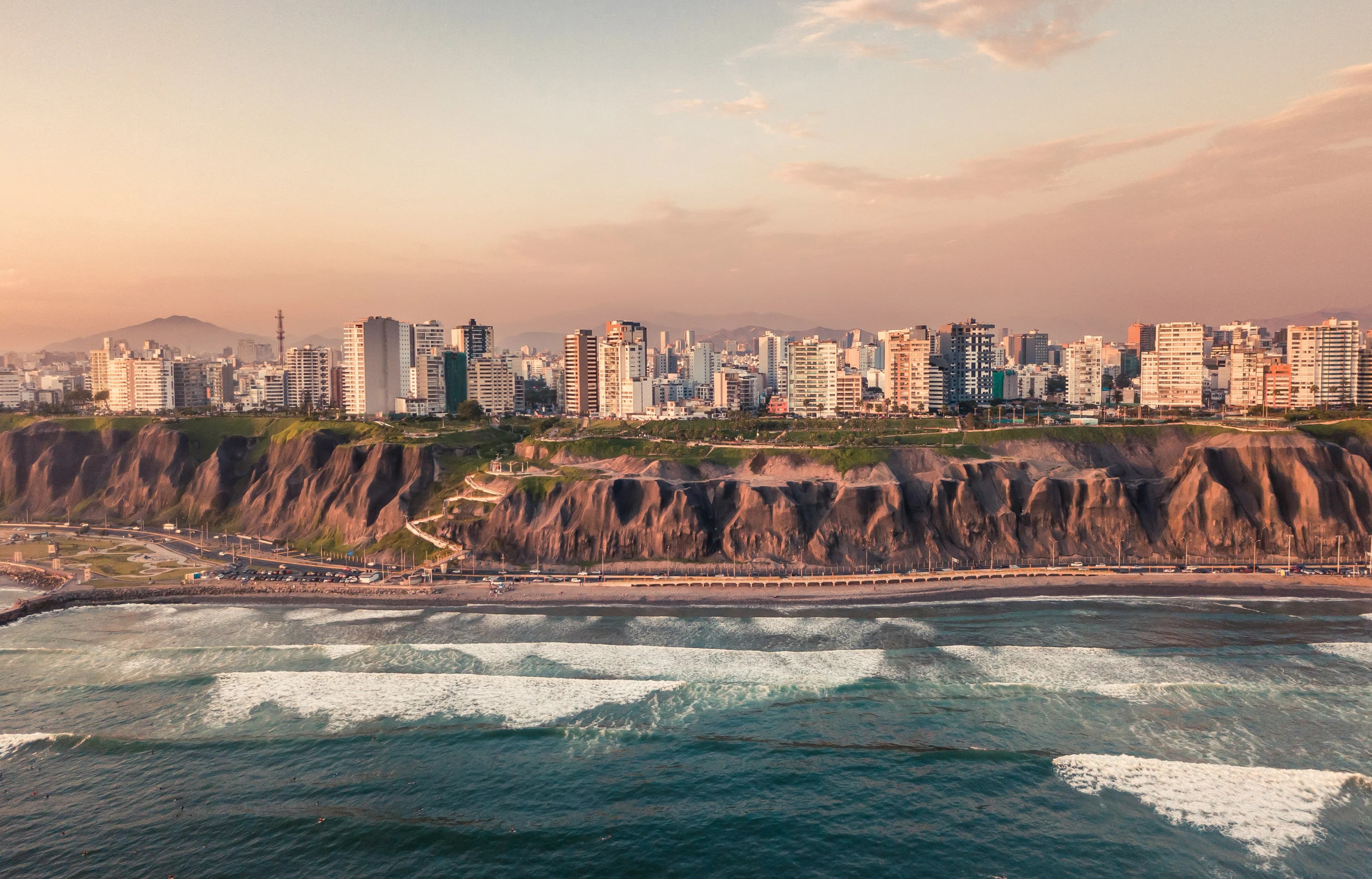
Miraflores is Lima's financial and diplomatic center, where international hotel groups and high-end independent properties cluster around the Malecón, a clifftop promenade above the Pacific. The architecture here is largely contemporary, with ocean-facing rooms designed to capture the grey-blue light that defines Lima's coastal climate. For travelers prioritizing convenience, proximity to Larco Mar, and consistent service infrastructure, this district sets the standard.
Barranco, just to the south, operates at a different frequency. Once the summer retreat of Lima's 19th-century elite, it now functions as the city's cultural and creative quarter. Republican-era mansions have been converted into boutique properties, art galleries sit beside cevicherías, and the pedestrian bridge overlooking the ravine (the Puente de los Suspiros) is one of the city's genuine architectural landmarks. A suite in Barranco offers immersion into a more local, art-literate Lima.
San Isidro, between the two, is the city's established business district, home to several international luxury hotels whose suites cater primarily to corporate travelers seeking executive infrastructure. For leisure travelers, it serves as a quieter, more residential alternative to Miraflores.
For broader context on how Lima positions itself within South American luxury travel, consult La Suite's curated selection for Peru and the wider South America destination guide.
When to visit Lima for a suite stay
Lima's climate is governed by the Humboldt Current, which produces a coastal desert condition almost unique in the world. The city receives almost no rainfall, but it is frequently covered by a low marine layer known locally as the garúa, particularly between June and October. This produces cool, overcast days with temperatures rarely exceeding 18°C in winter. Many first-time visitors find this surprising, given Lima's proximity to the equator.
Summer in Lima runs from December through April, when temperatures climb to 26-28°C, the garúa lifts, and the city feels warmer and more open. This is the high season for leisure travel, and suite availability at prime properties tightens accordingly. Booking three to four months in advance is advisable for the most sought-after addresses.
The shoulder months of April, May, and November offer a pragmatic balance: hotel rates soften slightly, the city's cultural calendar remains active, and Mistura (when it runs) and other food-focused events give the stay additional texture. Lima's gastronomy scene operates year-round at high consistency, which means the city's primary draw does not fluctuate seasonally the way coastal beach destinations do.
Lima's luxury hospitality standards
Peru does not operate a formal state-administered prestige label equivalent to France's Palace designation. Lima's top-tier properties are assessed through international systems, primarily Forbes Travel Guide and Leading Hotels of the World affiliations, alongside the standard five-star classification administered nationally.
What distinguishes a high-caliber luxury hotel suite in Lima is a combination of factors specific to the city. Ocean-facing orientation is a significant premium in Miraflores and Barranco properties, where suites positioned above the Malecón or the ravine carry a spatial and visual logic that interior-facing rooms cannot replicate. Pre-Columbian and colonial art integration is increasingly common in independently managed properties, where curated collections from Andean textile traditions or ceramic archaeology appear as genuine design decisions rather than decorative afterthoughts.
Service ratios at Lima's leading hotels tend toward the attentive without being intrusive, reflecting a Peruvian hospitality culture that places value on warmth and discretion in equal measure. Butler services, in-suite dining drawn from kitchen teams with serious culinary credentials, and direct connections to reservation access at Lima's most competitive restaurant tables are now standard expectations at the top tier.
How to choose the right suite in Lima
The first consideration is orientation: Pacific-facing suites in cliff-top properties offer a specific atmospheric quality, particularly in the early morning when the marine layer is still present and the ocean appears as a sheet of silver below the windows. This is a distinctive sensory condition, unlike any other coastal capital in the region.
The second consideration is architectural character. Lima's luxury offer divides broadly between purpose-built contemporary towers with panoramic glazing, and converted Republican-era mansions with high ceilings, internal courtyards, and textured materiality. The choice between these two registers is a matter of personal disposition, but it is worth identifying in advance, since the resulting suite experience differs considerably in atmosphere, noise profile, and the kind of intimacy the property generates.
Third, proximity to gastronomy matters in Lima more than in almost any other South American city. Lima is consistently ranked among the world's leading culinary destinations, with a restaurant culture built on ceviche, tiradito, causa, and the broader tradition of Peruvian-Japanese fusion known as Nikkei. Choosing a suite in Miraflores or Barranco places the traveler within walking distance of the restaurants that define this scene. San Isidro is also well-served, though slightly more removed from the creative energy of the coastal neighborhoods.
Finally, consider the purpose of the visit. Lima rewards extended stays. Three nights is the minimum to engage seriously with its archaeological museums (particularly the Larco Museum, with one of the most significant pre-Columbian collections in the Americas), its restaurant culture, and its contemporary art scene. A suite with genuine living space, rather than an enlarged hotel room, supports this kind of immersive engagement.
Why curation matters in Lima's luxury market
Lima's hotel market has expanded considerably in the past decade, and the range of properties marketing themselves as luxury has broadened in parallel. Not every property that positions itself at the top tier delivers a suite experience consistent with that claim. The gap between stated category and actual performance can be significant, particularly in properties that have not invested in suite-specific infrastructure, sound insulation, or the kind of service depth that a discerning traveler identifies immediately.
La Suite's approach to Lima is selective by design. The platform focuses on properties where the suite offering is a genuine architectural and experiential priority, not an afterthought. For a city as layered and operationally complex as Lima, a curated selection reduces decision fatigue and aligns the traveler with properties that have been assessed against consistent criteria: space, service, materiality, and positioning within the city's distinct neighborhoods.
Exploring Lima through a carefully chosen luxury hotel suite is not simply a comfort consideration. It is a structural decision that shapes how the city is experienced: the quality of rest, the ease of access to culinary and cultural programming, and the degree to which the property itself becomes part of the journey rather than a backdrop to it.