The Experience
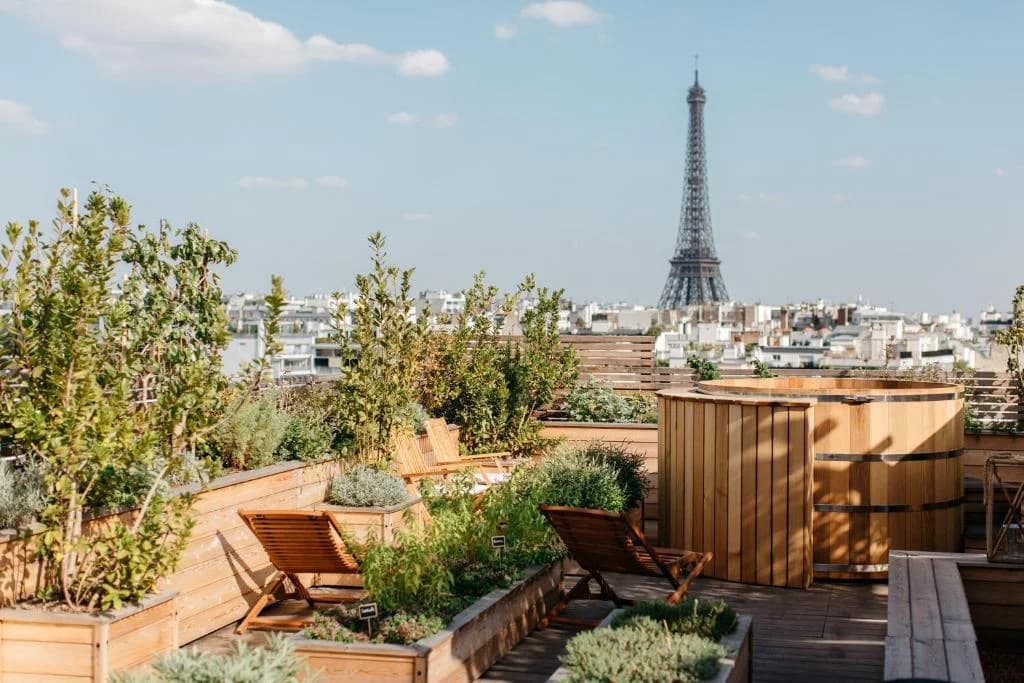
A suite with Eiffel Tower views occupies a specific geography within Paris. The tower's visibility requires precise positioning: northwest to southwest exposure, typically across the 7th, 15th, and 16th arrondissements. Distance matters as much as orientation. The tower reads differently from each vantage. Close range: monumental, architectural, iron structure dominating. Middle distance: proportional, iconic, framed. Far range: punctuation mark on the skyline, context for the room itself.
This view performs a quiet function in luxury hospitality. It anchors the experience without demanding attention. Unlike rooms marketed on city noise or street energy, a suite with tower views operates on stillness. The view becomes a fourth wall. Guests find themselves standing at the window not for activity-watching, but for contemplation. It's the opposite of spectacle.
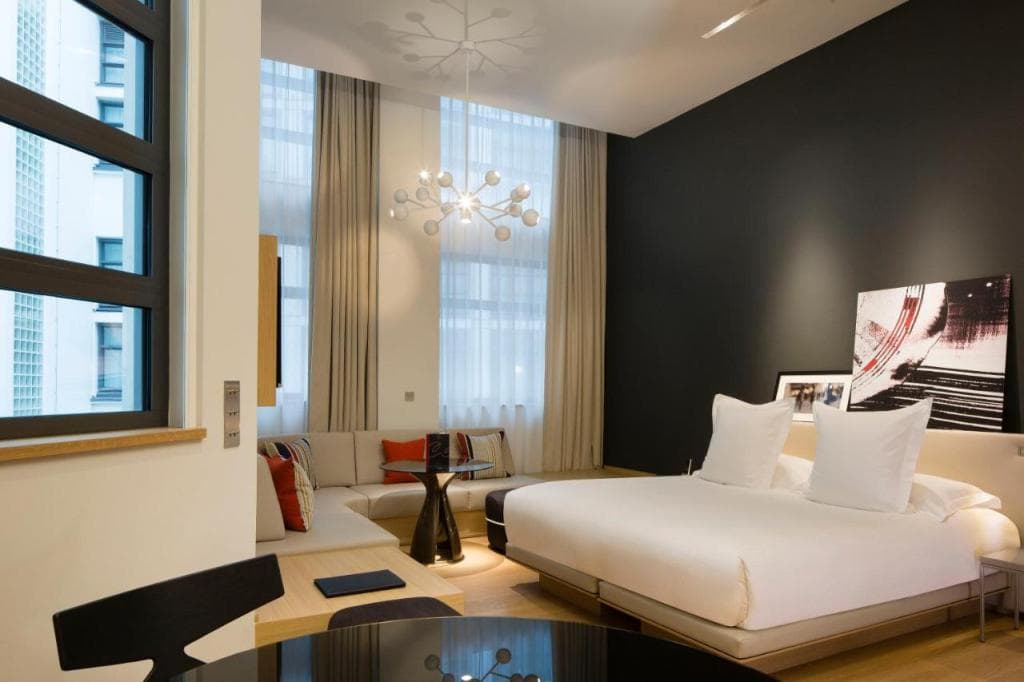
What distinguishes a true tower view from a partial glimpse is architectural resolution. The suite's layout must orient the primary living space toward the view. Bedrooms, sitting areas, or terraces positioned to capture it naturally, not as an afterthought. Balconies and terraces amplify the experience; they transform the view from framed to inhabited. The best suites don't announce the tower. They make it inevitable.
Top Destinations in Paris
The Eiffel Tower neighborhood contains the densest cluster of tower-view accommodations, particularly around Trocadéro, where sight lines are direct and framed. The 16th arrondissement (Le Seizième) positions many suites with western views of the monument at middle distance, offering proportion and context. The 7th arrondissement, south of the tower, provides different angles; views there tend toward the evening light and lesser crowding.
The golden triangle and Place Vendôme neighborhoods offer tower views from unexpected angles, particularly from upper floors of hotels positioned at compass extremes. These views read as bonus orientations rather than primary focus, which can appeal to guests seeking subtlety.
Curated Highlights
Shangri-La Paris occupies a former palace positioned directly on the Seine with unobstructed tower sightlines. The Duplex Eiffel view suite is specifically architected for this orientation, with split-level spatial planning that frames the monument from multiple elevations within the room.
Maison Barnes Paris Trocadero operates as a residential collection positioned at Trocadéro itself, the historic vantage. The Jules Verne Apartment with Terrace and Sacha Guitry Apartment with Terrace both command the classic French compositional view: tower centered, symmetrical, architectural.
Terrass' Hotel sits at Montmartre's eastern edge, offering oblique tower views that read as landscape context rather than monument focus. The Penthouse, Panoramic View of the Eiffel Tower integrates the tower into a broader Paris skyline rather than isolating it.
Cheval Blanc Paris sits on the Île Saint-Louis with studied sightlines. The Eiffel Suite positions the tower as a framed element within the room's architectural language.
Mandarin Oriental Lutetia, Paris places the Eiffel View Deluxe Balcony Room with direct western exposure. Hôtel Plaza Athénée offers the Signature Eiffel Suite, positioned in the hotel's western tower with uninterrupted tower views.
Additional curated options include Hôtel San Régis, Hôtel Aventure, Bulgari Hotel Paris, Le Meurice – Dorchester Collection, The Peninsula Paris, Hôtel Fouquet's Paris, across 27 total suites specifically positioned for tower views.
Expert Booking Advice
Verify orientation before reserving. Request floor plans showing window placement relative to the tower. "Tower view" is vague; clarify whether the view reads from the bed, the sitting area, the terrace, or all three. Rooms on lower floors may lose the view if neighboring buildings intervene. Upper floors typically offer clearer sightlines but lose atmospheric proximity.
Angle matters architecturally. A direct, centered view (classic Trocadéro perspective) reads monumental and formal. An oblique angle reads more intimate, the tower appearing as landscape feature rather than primary subject. Neither is superior; they serve different aesthetic intentions.
Light direction shapes experience across seasons and times of day. Western and southwestern exposures catch evening and golden-hour light, which photographs well and creates warm afternoon conditions. Northern and northeastern exposures offer consistent, shadowless light without glare. Morning light differs from evening; if timing matters for your stay, specify.
Balconies and terraces are not standard. Where available, they transform a windowed view into inhabited space. The ability to step outside and experience the view in open air creates a category difference. Clarify terrace access and size before booking.
Verify obstructions. Tree cover, neighboring construction, or balcony railings can partially block views from certain positions within the room. Request recent photography from the specific suite, not promotional imagery. Ask whether the hotel has modified building lines or sightlines since the suite's last photographic documentation.
Noise considerations: suites with prominent external views often have larger window systems, which may require double-glazing specifications for sound isolation. Clarify acoustic performance, particularly for rooms on lower floors exposed to street activity.