What makes the Golden Triangle Paris's most prestigious address for suite travel
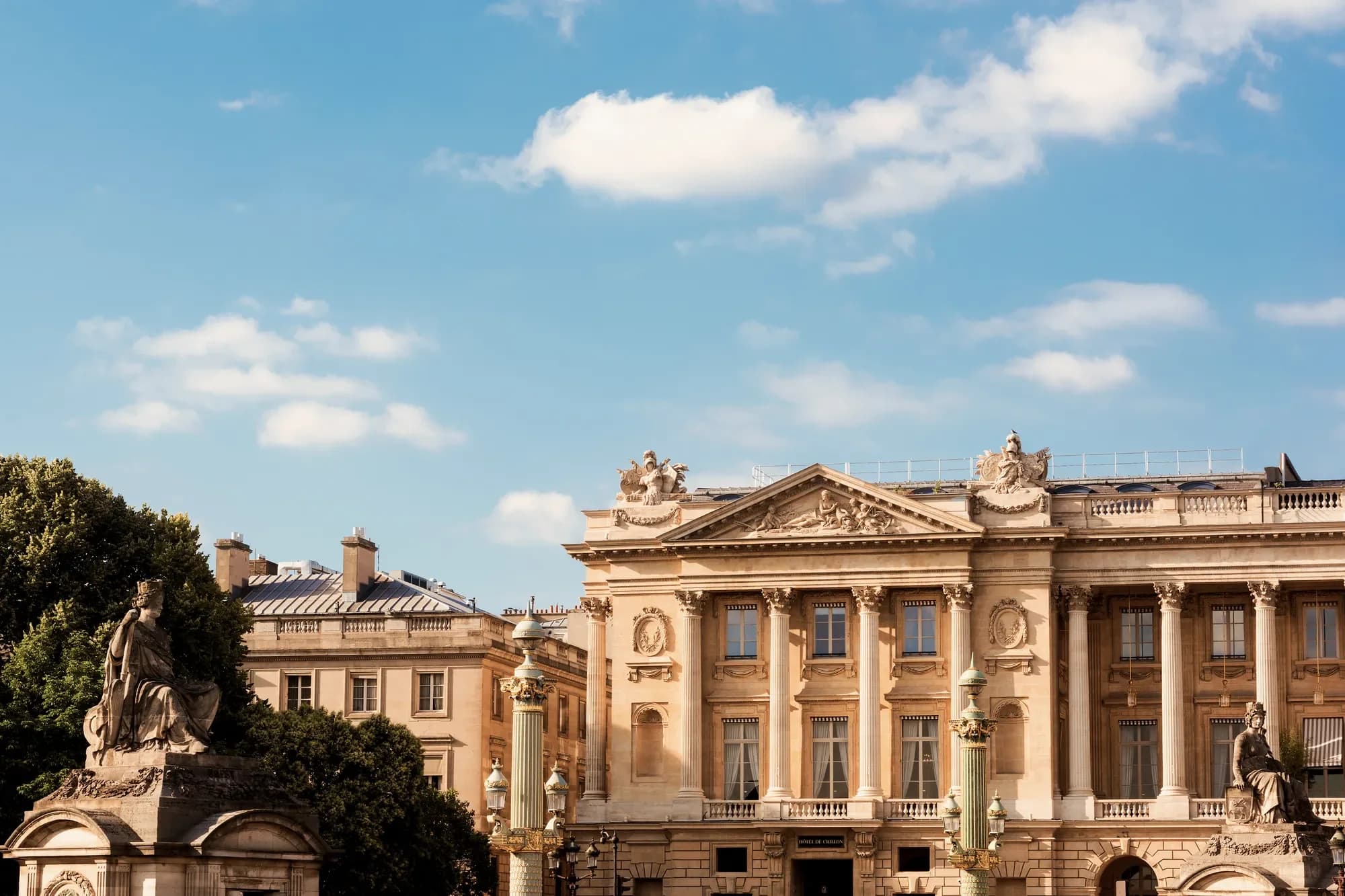
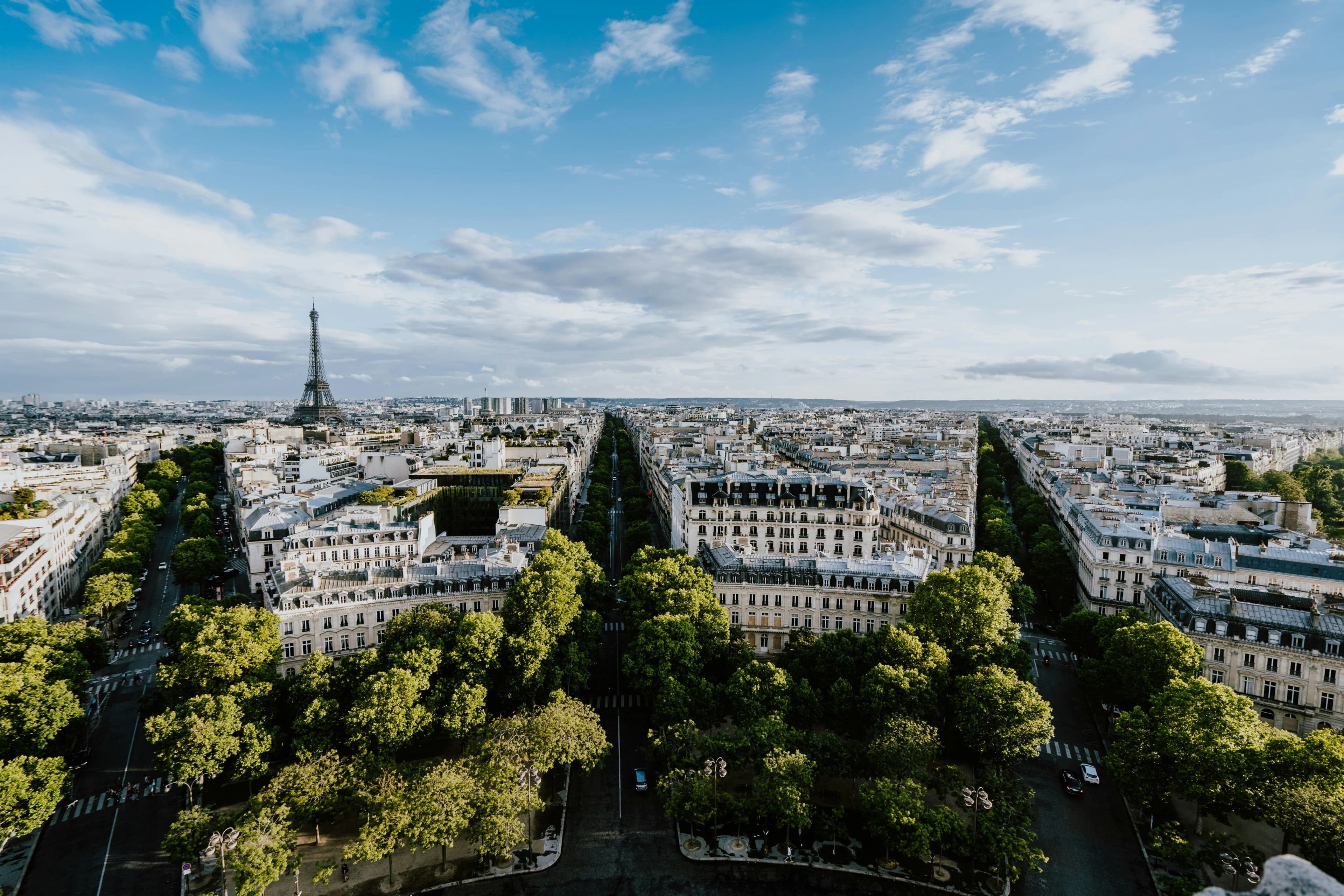
The architecture of the quarter is uniformly Haussmannian: broad stone façades, wrought-iron balconies, measured floor heights, and a consistency of scale that makes the streets feel composed rather than organic. The best luxury hotels in the Golden Triangle were often purpose-built or extensively converted to honor this aesthetic, which means that the physical envelope of a suite here carries architectural weight. A corner suite overlooking Avenue Montaigne delivers more than a view. It delivers a specific Parisian reference point that has no equivalent elsewhere in the city.
Best areas within the Golden Triangle to consider when choosing a suite
Avenue Montaigne
Avenue Montaigne is the most couture-facing of the three arteries. The flagship stores of Dior, Chanel, Valentino, and others line the street in a sequence that makes it the operational center of Paris fashion week. Hotels positioned on or immediately adjacent to this avenue place guests in direct proximity to the rhythm of the industry. Suite travelers with an interest in fashion, interiors, or cultural production will find this the most contextually relevant address.
Avenue George V
Avenue George V carries a slightly quieter register. It connects the Champs-Élysées to the Seine with a directness that favors discretion. The luxury hotel properties here tend toward the classical and formal, with larger footprints and more established reputations. For travelers prioritizing scale, heritage, and privacy, this section of the triangle offers the most considered base.
The Champs-Élysées edge
The Champs-Élysées side of the triangle functions as the public-facing perimeter. While the boulevard itself is high-volume and commercial in parts, the hotel properties that back onto or sit just off it benefit from the accessibility without the full exposure. Suite floors at height on this edge offer some of the most dramatic perspectives on the arc toward the Arc de Triomphe.
When to visit the Golden Triangle for luxury suite travel
Paris operates year-round as a high-demand luxury destination, but the Golden Triangle has its own seasonality. The two editions of Paris Fashion Week, held in January and February for haute couture and in September and October for ready-to-wear, concentrate the city's most exclusive professional and social activity in this neighborhood specifically. Suite availability during these windows is limited, and lead times for the best rooms extend to several months.
Spring, from late March through May, brings optimal conditions: moderate temperatures, extended daylight, and the return of outdoor terraces on the avenues. This is the period when the district operates at its most photogenic and socially active, without the peak compression of fashion month. September remains the most culturally loaded month overall, combining fashion week with the start of the gallery and concert season across the city. December brings a different kind of intensity, with the seasonal installations on the Champs-Élysées and a concentration of high-net-worth visitors who treat Paris as a year-end ritual.
Understanding Parisian luxury hotel standards in this quarter
France's official hotel classification system includes a designation beyond five stars: the Palace label, awarded by Atout France to a small number of properties that meet criteria covering architecture, service, cultural contribution, and operational standards. The Golden Triangle holds one of the highest concentrations of Palace-classified hotels in the country. This designation is not awarded permanently. It is reviewed and can be revoked, which means properties holding it maintain a level of operational discipline that is structurally different from standard five-star management.
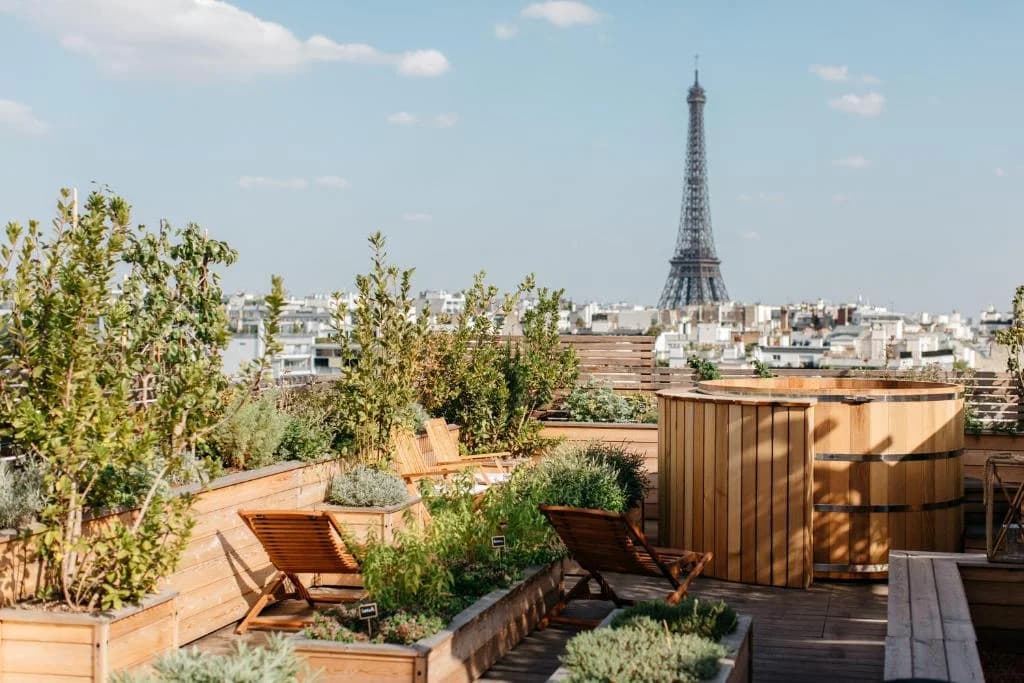
Within a Palace-classified luxury hotel, the suite category typically includes dedicated concierge access, separate living and sleeping areas, custom furnishings that reflect the property's design identity, and in many cases butler service. The best suites in this district also offer views onto the Eiffel Tower, the Seine corridor, or the avenues themselves, which is a spatial quality that cannot be replicated by renovation alone. It is a function of original building placement and floor allocation.
How to choose the right luxury suite in the Golden Triangle
The first consideration is orientation. Suites facing the avenues offer social context and iconic views, but they also absorb more street-level sound. Suites on interior courtyard sides tend to be quieter and, in the best cases, open onto private gardens or landscaped courtyards that are entirely invisible from the street. Both configurations are architecturally valid. The choice depends on whether the visit is oriented toward the city's external energy or toward a more interior and private register.
The second consideration is scale. The Golden Triangle's hotels range from intimate townhouse-format properties with a small number of suites to large-format Palace hotels with full floor allocations. A smaller property offers a more controlled social environment. A larger property offers more amenity infrastructure: spas, multiple restaurants, event access. The right choice depends on the purpose of the stay and the size of the traveling party.
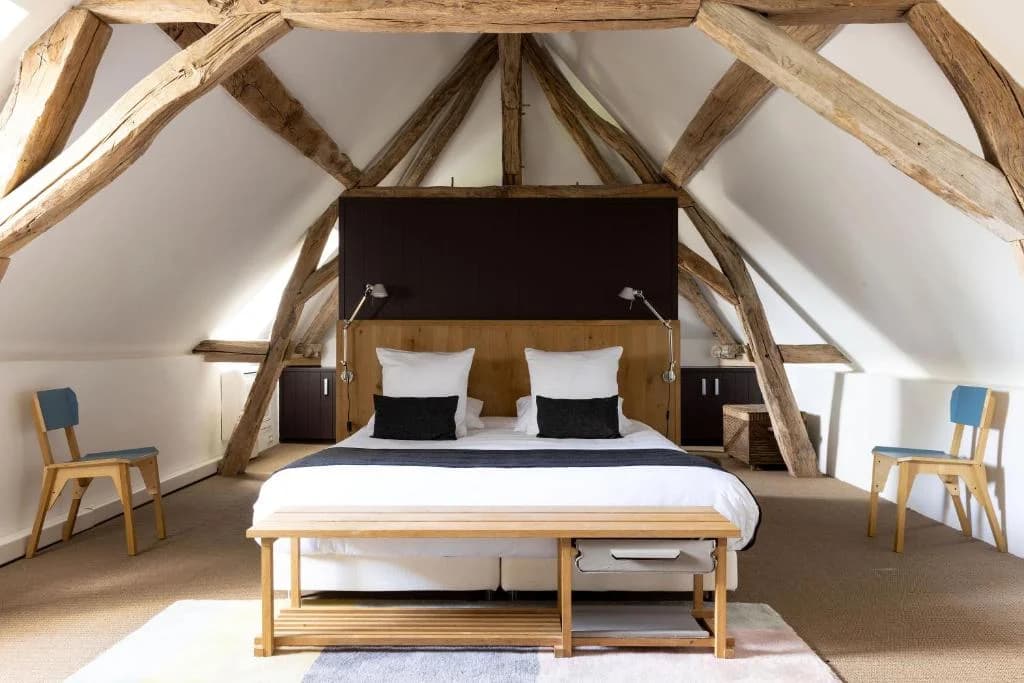
The third consideration is design language. Some properties in this district are rooted in classical French decorative tradition: gilded detailing, antique furniture, period textiles. Others have undergone complete contemporary redesigns that maintain the Haussmannian shell but install entirely modern interiors. Both approaches produce excellent suites. The preference is personal, but it is worth identifying before arrival, because the two experiences are categorically different.
Why a curated selection by La Suite matters in this neighborhood
The Golden Triangle is not a destination where poor choices are easy to make, but it is one where the difference between a good suite and the right suite is significant. The quarter has enough comparable properties at the top tier that selection requires more than a price filter. It requires knowledge of which suites have recently been renovated, which floors deliver the best light at different times of year, which properties manage their suite allocation with more flexibility for longer stays, and which concierge teams have the depth of city knowledge that turns a suite into an operational base rather than a bedroom.
La Suite applies this level of specificity to every property in its curated selection. For a neighborhood like the Golden Triangle, where the margin between options is narrow and the investment is substantial, that precision is not a luxury. It is the point.