







The Ultimate Guide to Milan's Most Beautiful Luxury Hotel Suites | LaSuite.com
BY Jules Peulet

An elite selection of Milan's finest luxury suites, exploring the architectural dialogue between Lombard rationalism, haute couture theatricality, and the secret life of inner courtyards.
Milan has completed its definitive transformation, shifting from the industrious, corporate capital of fashion to one of the most lucrative and competitive playgrounds in the world for ultra-wealthy international travellers. Driven by a monumental wave of sovereign hotel conversions, led by the Ferragamo family's spectacular revitalization of Europe's oldest seminary at Portrait Milano, and the fiercely guarded intimacy of Casa Cipriani, the Lombard metropolis now commands vertiginous room rates rivalling Paris and London. Yet within a historic urban setting where real estate is contested down to the millimetre, a generic room key represents a major strategic error. Milan's standard premium hotel inventory is notoriously limited, frequently designed for fashion executives on brief business trips. To truly unlock the city's elite lifestyle, one must master the sprawling private residential footprints of its signature suites.
At La Suite, we operate under rigorous design auditing that filters out superficial corporate luxury. In a global capital where style is an absolute cultural religion, a world-class suite must function as an architectural landmark in its own right, a space where historical gravity meets the impeccable execution of Made in Italy craftsmanship. This guide serves as your definitive spatial roadmap to Milan's greatest ultimate hotel assets, mapping the grandest Piano Nobile salons, penthouses with hidden gardens, and haute couture residential sanctuaries concealed behind the city's austere granite facades.
Discover all our luxury suites in Milan !
1. Architectural DNA and Spatial Philosophy
The architectural framework of Milan's ultra-luxury hotel suites is defined by a captivating aesthetic duality: the severe geometric discipline of mid-century Lombard rationalism in constant tension with haute couture theatrical maximalism. Milanese architecture has long concealed its greatest treasures behind an austere exterior shell. Within the city's elite hotel enclaves, this design philosophy articulates itself masterfully through a deeply physical material palette. Spaces are anchored by Ceppo di Gré, the signature blue-grey conglomerate stone found in Milan's grandest private vestibules, juxtaposed with monolithic slabs of cream-tinted Navona travertine, Zimbabwean black granite, rich panels of dark walnut wood, and hand-polished lacquers.
This structural identity is carried by an elite circle of master designers and architects. Antonio Citterio revolutionized contemporary Italian hospitality at Bulgari Hotel Milano, employing deep-toned oak woodwork, thick cream linens, and crisp geometric cuts to transform a historic convent site into a masterpiece of timeless and understated modernism.
In striking contrast, master architect Michele Bönan injected a brilliant sense of historical theatre into Portrait Milano. Bönan references Milan's aristocratic heritage by employing bold cardinal red accents, emerald green velvet, and bespoke modernist ironwork frames that rest directly beneath 16th-century historic vaulted stone colonnades.
Meanwhile, design legends like Patricia Urquiola and Piero Lissoni have consistently pushed boundaries in the city's finest luxury establishments, pairing understated B&Italia furniture with experimental textures, proving that a Milanese suite achieves supreme luxury through impeccable geometric balance, material depth, and silent spatial harmony.
2. Mapping neighbourhoods & atmospheres
Milan is an urban landscape structured around distinct cultural circles and fashion districts, each possessing its own social velocity, architectural rules, and environmental energy.
Quadrilatero della Moda: high-shine commerce & global prestige
The undisputed global capital of haute couture, luxury flagships, and highly visible prestige. Paved with historic stone blocks and bordered by Via Montenapoleone and Via della Spiga, the Fashion Quadrilateral is a highly polished and manicured theatre of status.
The suites in this area, led by the monumental Portrait Milano and the minimalist and refined Armani Hotel Milano, occupy grand historic palaces and rationalist monuments. The lifestyle here is fast-paced, style-obsessed and international. It serves as the primary base for business leaders, creative directors and high-end collectors who demand immediate proximity to the world's most prestigious luxury ateliers and elite dining clubs.
Brera : affluent bohemianism & secret botanical gardens
The intellectual, artistic and romantic soul of Milan. Characterized by a maze of narrow cobblestone streets, independent design showrooms and historic literary cafés, Brera offers a softer and profoundly residential alternative to the commercial centre. The absolute jewel of this neighbourhood is the Bulgari Hotel Milano, hidden at the end of a private cul-de-sac and bordered by historic botanical gardens.
The suites in Brera prioritize complete intimacy, refined modern furnishings and views of natural gardens. The atmosphere is calm, artistic and deeply confidential, attracting global trend-setters, artists and reclusive icons who desire total seclusion on the edge of the city centre.
San Babila & Corso Venezia : sovereignty of old wealth & hidden courtyards
The private enclave of historic Milanese aristocracy, multigenerational family fortunes and exclusive private clubs. Lining the grand Corso Venezia avenue, this district is defined by monumental neoclassical palazzos concealed behind immense wooden doors. Accommodations such as the Casa Cipriani Milano hyper-exclusive embody this unique and timeless elegance.
The suites feature bespoke mahogany woodwork, original parquet flooring and deep velvet club chairs. The ambiance is calm, deeply formal and intensely secure, serving as the first choice for traditional purists who value private club energy, discreet networks and generational discretion.
Centro Storico & Duomo : monumental scale & high velocity
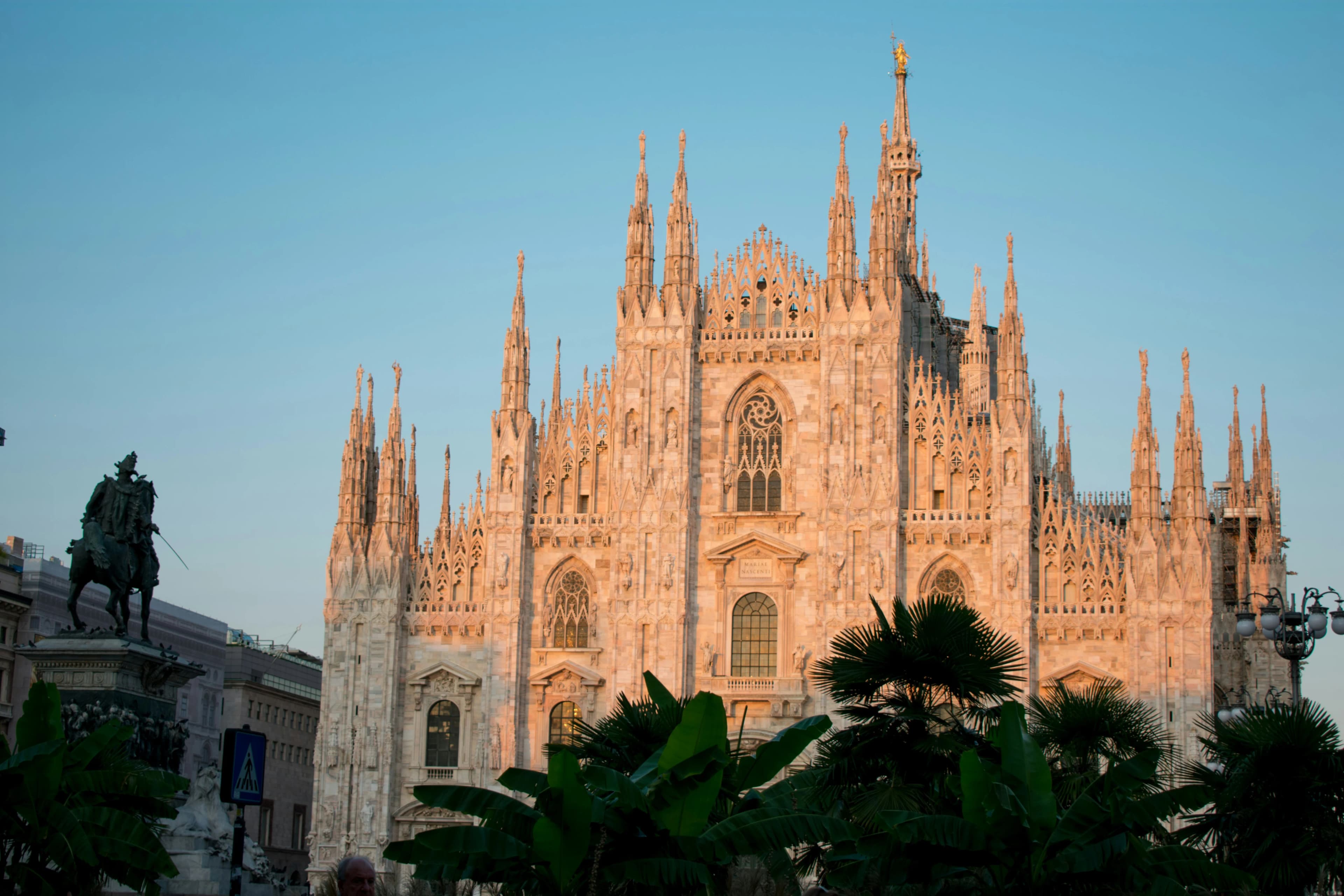
The city's high-velocity historic heart, dominated by the majestic spires of the Duomo and the glass-vaulted roof of the Galleria Vittorio Emanuele II. While densely populated by daytime tourism, the zone shelters highly exclusive vertical hideaways masterfully integrated into historic banking structures.
Properties like the Galleria Vik Milano, saturated with art, and the majestic Park Hyatt Milan define this category. Suites feature imposing floor-to-ceiling windows framing iconic monuments, reception rooms with soaring ceilings, and direct interior elevator lines. The energy is monumentally proportioned and central, seducing travelers who wish to be positioned at the absolute structural heart of the city.
Porta Nuova & Isola : Futuristic glass canopies & Vertical forests
The architectural frontier of modern Milan. Dominated by vertiginous glass skyscrapers, cutting-edge elevated piazzas, and the world-renowned towers of Bosco Verticale (Vertical Forest), Porta Nuova represents Lombardy's technological future.
Refined properties like the Hotel Viu Milan capture this minimalist-industrial energy. Suites feature cast-concrete walls, freestanding open-plan bathtubs, and massive floor-to-ceiling glass panels that frame the sprawling modern urban horizon. The atmosphere is energetic, digital, and forward-looking, attracting technology entrepreneurs, architects, and independent design enthusiasts.
3. Residential layouts & Volumes
The defining boundary between a standard premium hotel key and an elite suite in Milan is the masterfully designed architecture of horizontal space and layout flexibility. Because standard hotel rooms are heavily optimized for travelers in rapid transit, they offer zero intimacy for entertaining or maintaining a personal lifestyle. Renting a signature suite is a strategic residential gesture, explicitly designed to emulate the flow and exclusivity of a true private Milanese apartment (casa milanese).
The emblem of this design philosophy is the Suite Loggia facing the Piazza or the Private Patio Residence, executed to perfection in properties such as Portrait Milano. Clients traverse a formal stone gallery vestibule that leads directly into a vast reception salon. The layout rests on a clear segregation of public and private volumes: the primary reception salon is configured with custom low sofas, a private bar, and full-length glass doors that open onto covered and deep stone patios or loggias.
Completely isolated from this public realm by solid, soundproofed recessed sliding doors lies the heart of the master bedroom suite. This private wing integrates expansive dressing rooms lined with smooth leather or polished oak, and multi-room marble bathrooms often equipped with personal integrated hammam steam showers. This specific layout configuration ensures that an international fashion executive, a luxury director, or a private collector can orchestrate casting sessions, corporate strategy meetings, or private presentations in the main salon without ever compromising the complete isolation of their personal sleeping quarters.
4. The Lifestyle Ecosystem: Gastronomy & Haute Detail
An elite Milanese suite functions as the operational nucleus of an incredibly sophisticated luxury ecosystem, seamlessly connecting world-class multi-starred gastronomy to the closed and ultra-private universes of bespoke haute couture.
Culinary integration within Milan's top-tier suites completely redefines the concept of private room service. Rather than standard menus, the kitchens of the city's finest design establishments treat the private dining salons and stone loggias of their signature suites as direct extensions of their main dining rooms. Clients can orchestrate private dinners orchestrated in-suite by renowned culinary institutions, such as the three Michelin-star excellence of Il Ristorante - Niko Romito at the Bulgari hotel.
The entire experience elevates to performative art: dedicated sous-chefs assemble custom tables directly within your suite, while head sommeliers circulate private wine trolleys through your salon to compose bespoke tastings of rare Franciacorta and never-commercially-released single-estate Barolo reserves, selected from the hotel's deep underground vaults. Even the traditional Aperitivo Milanese is entirely reinvented, served by a white-liveried maître d'hôtel on your private terrace at sunset.
Simultaneously, the geographical positioning of these suites unlocks entirely off-market shopping experiences. For occupants of Milan's premier suites, shopping completely bypasses the public retail floor.
Through prestige concierge services, the world's greatest Italian fashion houses located in the Quadrilateral, notably Giorgio Armani, Prada, and Brunello Cucinelli, will organize private tailoring consultations in-suite. Senior style directors and master tailors transport complete seasonal collections and rare fabric pieces directly into your suite's wardrobe, enabling a totally relaxed and highly confidential acquisition experience, far from the intense public eye during culminating Fashion Weeks.
5. The Cultural Tapestry and Historical Anchors
Milan's finest hotel suites function as living cultural vaults, meticulously curated to connect the modern traveler directly to Italy's rich artistic soul and industrial design heritage. The interiors of these spaces are designed with curatorial precision, treating historical design patrimony not as static decoration, but as a vital design element that lives alongside contemporary forms.
In these premium sanctuaries, original art and industrial furniture are treated as foundational layers of the environment. It is common to discover suites where mid-century original drawings by Gio Ponti and architectural photographs by Gabriele Basilico sit alongside bold contemporary sculptures and bespoke furniture prototypes drawn directly from the workshops of the Salone del Mobile. Hotels regularly partner with prominent regional artistic foundations and local archives to rotate curated art collections through their top-tier signature suites, transforming the living space into an exclusive private exhibition gallery for international collectors.
Beyond the physical artworks displayed in the rooms, staying in a leading Milanese suite grants entirely unprecedented and off-market access to the city's most guarded cultural institutions through elite hotel partnerships:
Exclusive after-hours access to the Last Supper: Private crowd-free visits at midnight to the Santa Maria delle Gracie refectory to contemplate Leonardo da Vinci's Last Supper, guided by a senior art historian after public hours.
Teatro alla Scala privileges: Immediate VIP access, private box reservations, and behind-the-scenes backstage tours organized in partnership with the city's historic operatic monument.
Sovereign modernist visits: Exclusive and restricted access to private rationalist architectural masterpieces, such as Piero Portaluppi's spectacular Villa Necchi Campiglio, entirely exempt from public tourist crowds.
6. The Aesthete's Insight (Our signature critique)
A rigorous and completely objective architectural critique of the Milan ultra-luxury suite landscape reveals that the romantic appeal of staying in a magistrally converted historic palazzo introduces significant operational and acoustic friction.
The primary and most disruptive challenge in converted Milan palazzos is the Cortile Echo Chamber. Traditional Milanese architecture is explicitly structured around expansive internal stone courtyards (cortili). While these spaces are spectacular and serve as public life centers during the day, their polished granite and marble surfaces act as massive acoustic megaphones at night. Should a hotel operate a highly popular courtyard restaurant or open-air cocktail bar, such as Portrait Milano's massive public piazza or Bulgari's iconic garden bar, the ambient noise of tinkling crystal, laughter, and background music resonates directly along the stone walls. Even with advanced modern double glazing sealed shut, high-frequency chatter can easily penetrate signature suites on lower floors, obliterating any illusion of peaceful isolation during peak social hours.
Second, the technical reality of Milan's historic transport grid introduces the Tram Resonance Trap. Milan's iconic orange and yellow iron trams are a cherished symbol of the city's industrial identity, yet they present significant structural risk for luxury hotels situated along major thoroughfares such as Via Manzoni or Via Grossi. As these massive steel vehicles roll along iron rails embedded in stone streets, they generate low-frequency structural vibrations that pass directly through the masonry foundations of historic buildings. Despite advanced secondary acoustic glazing within rooms, these deep vibrations can cause subtle rattling of original window frames and penetrate the primary bedrooms of lower-floor suites at 5:30 a.m., disrupting sleep patterns for sensitive travelers.
Finally, the architectural commitment to historic preservation frequently results in chronic natural light deficits within specific interior suite configurations. To protect street-facing historic facades, hotel interior architects are often compelled to orient primary bedrooms and secondary living spaces of their largest suites inward, overlooking narrow light wells or secondary service patios. While these spaces are completely insulated from street noise, they may feel exceptionally dark, cavernous, and obscure, requiring artificial lighting even at noon on a cloudless Italian summer day, making meticulous verification of a suite's current and real-time light exposure absolutely essential before confirmation.
In the final analysis, reserving an elite suite in a Milan hotel is far more than a simple transaction; it is an intentional choice to align yourself with the city's unique design history, distribution geometry, and disciplined light of Lombardy's capital. The city's finest accommodations succeed in dissolving the boundary between historic palatial gravity and modern luxury, allowing you to live intimately alongside Italian craftsmanship cultures, culinary mastery, and spectacular urban perspectives. Whether your design preference leans toward the pure minimalism and linear concrete of a contemporary penthouse at Porta Nuova or the grand vertical salons filled with antiques of a Michele Bönan palazzo in the Quadrilatero, the appropriate space must successfully master the challenges of its structure and natural setting. By prioritizing courtyard-facing orientations with verified acoustic glazing, controlling light exposure variables, and selecting authentic material depth, the discerning traveler can look beyond the veneer of superficial luxury to secure a private Milan sanctuary that delivers an unforgettable aesthetic experience.
Architectural and insider FAQ
How do Milan's finest suites manage private fashion fittings or castings during Milan Fashion Week?
The distribution of prestige suites in the Quadrilatero is explicitly designed with professional lifestyle execution in mind. High-end signature residences incorporate independent secondary service entrances, massive hidden structural alcoves for garment support, and advanced multi-directional LED lighting systems within dressing areas that mimic natural light color temperatures. This allows private stylists, models, and retouching teams to move freely through service areas without ever disrupting the main living volumes or compromising the privacy of the principal guest sleeping quarters.
How can I guarantee a suite that is completely isolated from restaurant noise in the late evening?
To achieve absolute acoustic silence from the hotel's public dining spaces in the inner cortile, you must avoid suites located on lower floors, first and second levels which feature single-glazed French doors opening directly onto the main inner cortile. When booking, explicitly request a signature suite located on upper levels (fourth floor and above) or an arrangement facing the hotel's restricted outer garden walls (such as the garden suites at Bulgari). The greater vertical altitude and soft ground terrain naturally absorb high-frequency courtyard chatter.
What is the practical layout difference and spatial feeling between a historic Palazzo Suite and a modern Sky-Loft Porta Nuova?
The fundamental difference lies in architectural mass and historical scale against linear transparency. A historic Palazzo Suite offers monumental structural thickness, ceilings of four to five meters, hand-applied cornices, and a succession of enclosed rooms designed for formal intimacy and quiet residential gravity. Conversely, a modern Sky-Loft Porta Nuova is built within a contemporary steel exoskeleton; it completely rejects interior partitions in favor of open configurations, suspended mezzanine levels, raw concrete surfaces, and continuous floor-to-ceiling glass walls that focus entirely on panoramic immersion over the skyline.
More from the Journal

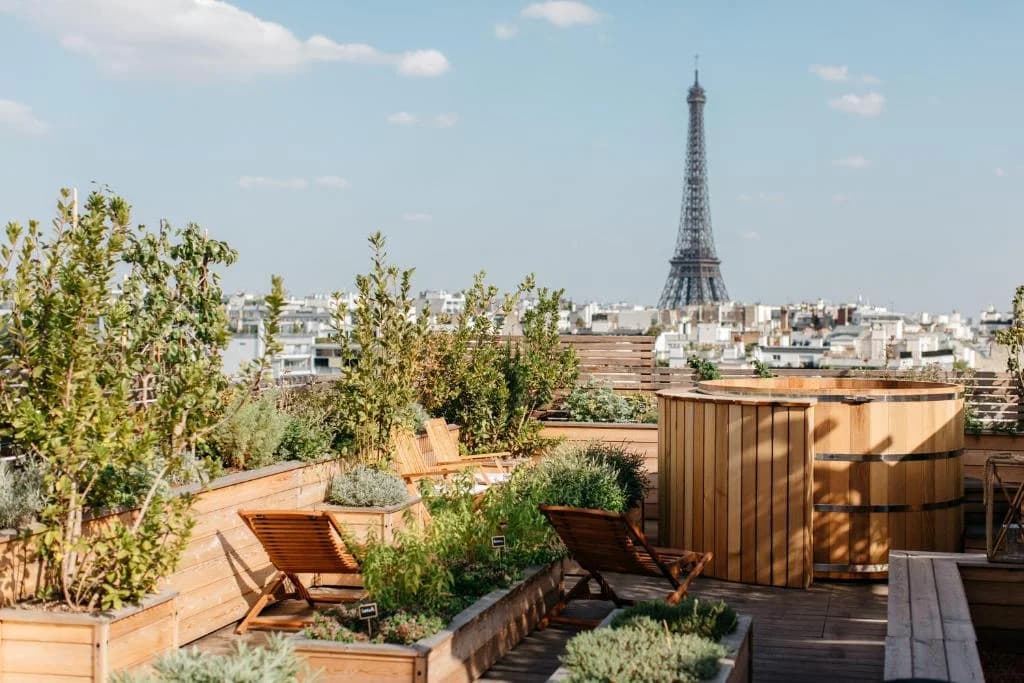
Paris / Romance: Suites with Eiffel Tower Views to Book for Two
Paris and the Eiffel Tower embody intimacy for two. Discover four Parisian retreats where the view of the Iron Lady becomes the discreet setting for shared moments, between private balconies and suspended gardens.
BY Jules Peulet

Edinburgh / Autumn: The 5 Suites Where Season Becomes Art
In autumn, Edinburgh reveals a raking light that redraws every urban volume. Five exceptional suites transform this seasonal alchemy into a residential experience, where Gothic velvet mingles with refined marble and perspectives over the misty castle.
BY Jules Peulet

New York / December: Inside the Most Coveted Suites
December transforms Manhattan into a competitive arena for access to the most exclusive suites. Between structural scarcity and exponential demand, luxury hotels reveal the mechanisms governing seasonal luxury.
BY Jules Peulet