







The Ultimate Guide to the Most Beautiful Luxury Suites in Rome
BY Jules Peulet

An exceptional selection of the most architecturally remarkable luxury suites in Rome, exploring the majestic confluence of Renaissance grandeur, refined contemporary Italian design, and sovereign terrace living.
Rome doesn't simply display history; it commands it. For the global traveler seeking authentic immersion in the capital of the Dolce Vita, the Eternal City remains an unmatched monument of architectural majesty and artistic dominance. However, in a luxury hotel market crowded with centuries-old buildings converted into hotels, a profound spatial limitation exists. To truly experience Rome at its peak, one must transcend the constraints of a standard luxury hotel room and demand the vertiginous volumes and history-laden grandeur of its finest signature suites.
At La Suite, we believe an elite suite must function as a private urban estate, a sanctuary where monumental heritage, design authenticity, and spatial scale converge to create an unforgettable aesthetic landmark. In a city built upon layers of empire, Renaissance, and baroque style, a world-class suite must offer far more than generic opulence; it must provide an elite vantage point through which to contemplate the city. This guide is your definitive architectural roadmap for navigating Rome's finest hotel suites, selected specifically for those who recognize that where you sleep dictates how you see the world.
Discover our finest suites in Rome !
1. Architectural DNA & spatial philosophy
Entering an ultra-luxury hotel suite in Rome is to engage in an intimate dialogue between imperial weight, baroque theatricality, and the sharp execution of contemporary Italian design. Roman hospitality architecture doesn't conceal its age; rather, it leverages the city's monumental past as a raw structural framework for modern residential masterpieces.
The physical shell of the ultimate Roman suite is anchored by Roman travertine, the porous limestone in cream tones that has formed the backbone of the city's monuments since the Colosseum's construction. Within the most prestigious properties, this heavy stone foundation is balanced by vertiginous ceilings of five to six meters in height, hand-restored Renaissance frescoes (affreschi) and original sixteenth-century wooden coffered ceilings (soffitti a cassettoni). The materials selected for these spaces are profoundly tactile, celebrating Italian artisanal heritage: oiled Carrara marble, polished solid walnut woodwork, and rich silk velvet from heritage houses such as Rubelli.
This monumental heritage has been reimagined with expertise by visionary contemporary interior architects. Tommaso Ziffer, celebrated for his dramatic work with Rocco Forte Hotels at Hotel de la Ville and Hotel de Russie, treats the Roman suite as a haute couture podium. Ziffer masterfully juxtaposes bold geometric patterns, mid-century furniture and vibrant color palettes directly against classical architecture, ensuring that historical volumes feel intensely alive rather than frozen in a museum.
In marked contrast, Florentine architect Michele Bönan brings a sense of calm, hyper-refined cinematic luxury to properties such as J.K. Place Roma. Bönan strips away baroque heaviness in favor of clean lines, bespoke four-poster beds and perfectly balanced lighting, creating a residential atmosphere that feels like a private, elite Roman apartment.
Meanwhile, master architect Patricia Urquiola has redefined sustainable heritage at Six Senses Rome. Urquiola weaves local travertine plaster with organic, curved arrangements and soft, earthy tones, proving that ancient Roman materials can be seamlessly integrated into a contemporary design philosophy centered on wellness.
2. Mapping neighborhoods and atmospheres
Rome is a complex tapestry of historic districts (rioni), each possessing its own distinct architectural rhythm, socio-cultural velocity and spatial energy. Selecting a suite represents an intentional alignment with one of these unique geographic identities.
Il Tridente (Piazza di Spagna & Via Condotti)
The absolute epicenter of haute couture, aristocratic heritage and cinematic glamour. Centered around the Spanish Steps and the prestigious luxury boutiques of Via Condotti, Il Tridente represents the ultimate manifestation of Dolce Vita lifestyle. Staying in a signature suite here, such as those at Portrait Roma or the prestigious Hotel d'Inghilterra, means living at the heart of Roman prestige. The streets are animated by high-end boutiques, historic cafés and private palazzos. The atmosphere is fast-paced, highly refined and resolutely theatrical, attracting high-profile international travelers and design purists who desire immediate access to the city's elite commercial and social scenes.
Centro Storico (Pantheon, Piazza Navona, Campo de' Fiori)
The vibrant and mystical heart of Renaissance and Baroque Rome. This neighbourhood is a fascinating labyrinth of narrow cobbled streets, hidden small squares and majestic fountains. The accommodations here, ranging from the structurally revolutionary Six Senses Rome to the raw and avant-garde design of G-Rough, occupy magistrally converted palazzos. Staying in this area means living alongside the ancient gods. The atmosphere is dense, historic and deeply charged, attracting travellers who appreciate architectural surprises, hidden interior courtyards and total immersion in Rome's living history.
Via Veneto & Ludovisi
The grand boulevard of mid-twentieth century celebrity, diplomatic security and imperial scale. Famous for hosting Hollywood elite during the 1960s, Via Veneto is lined with mature plane trees and monumental late nineteenth-century facades. Grand Palaces such as the Hotel Eden and the Regina Hotel Baglioni define this neighbourhood. The suites here offer immense physical scale, formal dining rooms and high ceilings. The atmosphere is nostalgic, imposing and highly secure, making it the preferred residential base for diplomats, business leaders and multigenerational families who demand traditional luxury and absolute discretion.
Monti
The bohemian heart, creative and art-centered of Rome. Nestled between the Colosseum and Termini, Monti is a neighborhood of steep hills, ivy-covered brick walls and vibrant artisanal workshops. Rather than grand traditional hotels, Monti is defined by high-end design lofts, conceptual suites and boutique refuges offering private and unexpected views of the Colosseum. The energy is young, independent and artistic, attracting creative directors, independent collectors and travelers who reject traditional palatial formality in favor of raw, neighborhood-centered character.
Prati & The Picturesque Ridges (Gianicolo / Monte Mario)
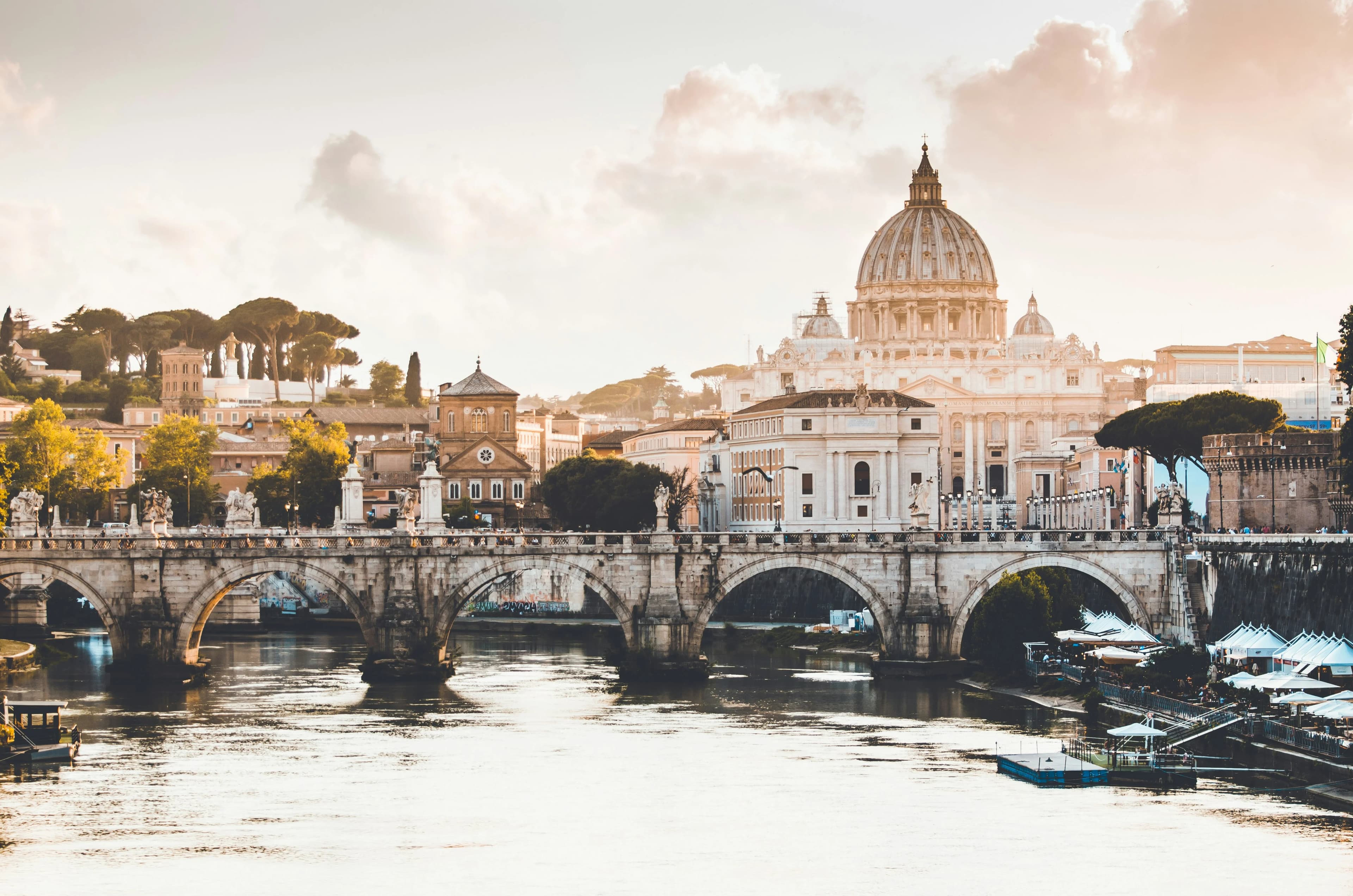
The domain of verticality, open horizons and resort-scale luxury. Situated on either side of the Tiber or perched on the ridges framing the city center, neighborhoods like Prati and the Monte Mario hills host vast luxury estates such as Rome Cavalieri (Waldorf Astoria) or Villa Agrippina Gran Meliá. Suites here are chosen for their monumental scale and absolute security. Surrounded by private Mediterranean gardens, these overhanging sanctuaries offer massive private terraces enjoying completely unobstructed 360° panoramic views of the Vatican dome and the entire Roman horizon line, offering a totally isolated urban resort escape from the chaotic streets below.
3. Residential Configurations & Volumes
The defining boundary between a standard premium hotel room and an elite suite in Rome lies in configuration. Due to strict structural limitations of historic palazzos, standard hotel rooms in Rome can often appear cramped and structurally fragmented. Booking an elite signature suite represents a strategic acquisition of the Piano Nobile (the noble second floor), specially designed to deliver the open volumes of a true Roman aristocratic estate.
The cornerstone of this design philosophy is the formal reception enfilade. Entry into an elite Roman suite typically reveals a grand entrance vestibule opening onto a spacious public salon with six-meter-high ceilings and imposing windows that flood the space with natural Mediterranean light. This grandiose reception space is entirely separated from the master bedroom apartments by hidden doors or private paneled corridors, allowing a business executive or prominent diplomat to host formal meetings or intimate dinners without ever exposing their private living spaces.
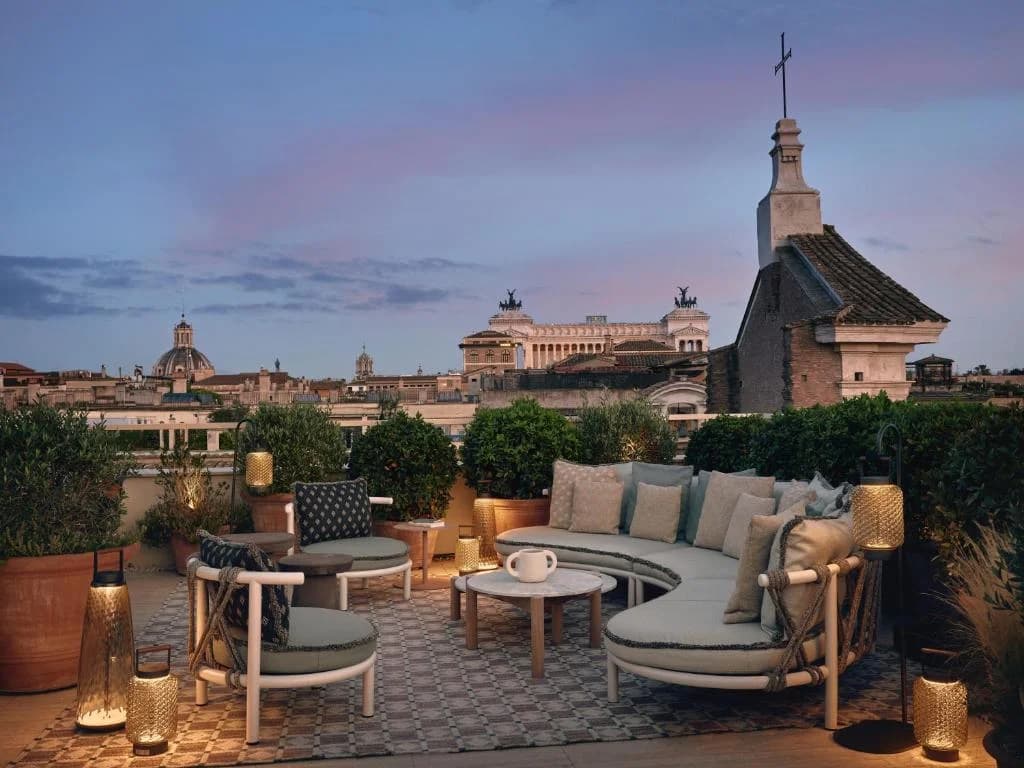
Furthermore, the unique architecture of Rome's roofline introduces a residential feature that is spectacular and nonexistent elsewhere in the world: the Altana. An altana is a private, elevated wooden structural platform built directly atop terracotta tile roofs. Accessible via private staircases from the suite's upper level, these masterfully engineered outdoor living spaces elevate the traveler entirely above urban noise.
They function as open-air salons equipped with bespoke wrought-iron furnishings, private bars, and dining tables, offering an exclusive panoramic platform where downtown domes serve as a private backdrop. For ultra-high-net-worth families, these configurations frequently integrate service office-pantries with separate entrances, allowing a private butler or personal chef to manage service with complete operational discretion.
4. The lifestyle ecosystem: gastronomy & haute couture
An elite Roman suite operates as the operational nucleus of a hyper-private lifestyle ecosystem, seamlessly connecting the absolute apex of Italian gastronomy to the closed-door worlds of haute couture.
Culinary integration within Rome's prestigious suites transforms private dining into an art of extraordinary performance. Establishments staffed with Michelin-starred culinary teams, such as La Terrazza at Hotel Eden, regard the private salons and altane terraces of their most luxurious suites as direct extensions of their main dining rooms. Guests may host private Aperitivo hours or multi-course dinners where menus are orchestrated in-suite by dedicated chefs and accompanied by rare Italian vintages selected by the hotel's head sommelier from private reserves, all served in white-glove service beneath the Roman sunset.
Simultaneously, the close relationship between the city's prestigious signature suites and the legendary fashion houses of Via Condotti unlocks shopping experiences entirely inaccessible to the public. For residents of Rome's prestige suites, shopping is an entirely off-market affair.
Through the concierge networks of elite hotels, the master tailors of legendary icons of Roman bespoke craftsmanship such as Brioni or Battistoni will bypass their traditional showrooms to conduct private measurements, fabric selections, and fittings directly within the comfort of your suite's salon. Similarly, the high-luxury jewelry houses of the Trident regularly transport valuable archives and rare timepiece pieces directly to the suite under private guard, allowing clients to acquire masterworks in complete intimacy and comfort.
5. The Cultural Tapestry & Historical Anchors
Rome's finest hotel suites function as cultural vaults, meticulously curated to connect the traveler directly to Italy's rich artistic soul. The walls of these spaces are treated with museum precision, seamlessly fusing antiquity with the vanguard of modern art.
Within these sanctuaries of prestige, original art is treated as a foundational design element. It is commonplace to discover suites where ancient Roman marble busts and Renaissance tapestries sit alongside masterworks of twentieth-century Italian art, including pieces from the Arte Povera movement, Lucio Fontana's Spatialism, or Alighiero Boetti's geometric textiles. Hotels regularly partner with prominent local galleries and private foundations to curate art collections specific to their signature suites, transforming living quarters into a private museum gallery.
Beyond the physical artworks on the walls, staying in a prestigious Roman suite offers unprecedented off-market access to the city's most jealously guarded cultural treasures, through exclusive partnerships managed by the hotel's executive concierge teams:
After-Hours Sistine Chapel Access: Entirely private, crowd-free evening tours of the Vatican Museums and Sistine Chapel, led by senior art historians following public closure.
Private Gallery Visits: Exclusive closed-door access to the Galleria Borghese or private aristocratic estates such as Palazzo Colonna, including entry to private family wings closed to the general public.
Archaeological Access: Private evening walks led by experts through the underground levels of the Roman Forum or Colosseum, entirely devoid of crowds.
6. The Aesthete's Overview (Our Signature Critique)
A rigorous and forthright architectural critique of Rome's ultra-luxury suite landscape reveals that the romantic appeal of staying in a five-hundred-year-old palazzo frequently introduces significant operational and structural friction.
The primary and most pervasive challenge in the city center is the noise generated by the iconic Sampietrini cobblestones. These dark volcanic stones line the streets of Centro Storico and Il Tridente. While visually stunning, their uneven surfaces amplify the sound of every passing Vespa, taxi, and delivery truck. Because many historic hotel facades are strictly protected by heritage preservation laws (Soprintendenza Archeologia Belle Arti e Paesaggio), properties are legally prohibited from installing modern heavy acoustic window frames. Despite interior double glazing, low-frequency road vibrations can easily penetrate the heavy fine silk draperies of lower-floor suites facing the street, disrupting sleep cycles from dawn onward.
Secondly, the technical challenge of retrofitting modern high-pressure plumbing into old brick pipe shafts is a constant source of friction. Guests staying in top-floor penthouses or historic wings may discover that, despite premium rates, the water pressure of their monolithic marble showers can be erratic during peak morning hours. Moreover, drainage systems in five-hundred-year-old palazzos operate on narrow historic gravitational lines, meaning that deep bathtubs can take excessively long to drain, revealing the technical limitations of modern luxury engineering within ancient frameworks.
Finally, the architectural layout of the classic Roman palazzo creates a severe lack of natural light in certain suite configurations. Palazzos were historically built around narrow central interior courtyards (cortili) designed to provide ventilation rather than light. While grand salons overlooking the street enjoy brilliant sunlight, primary bathrooms, dressing rooms, and secondary bedrooms overlooking these interior courtyards can feel exceptionally dark and cavernous. Guests may easily find themselves in a suite where artificial lighting is necessary even at noon on a cloudless summer day, making careful verification of a suite's layout and view orientation absolutely essential before booking.
Ultimately, booking an elite hotel suite in Rome requires looking beyond superficial luxury and understanding the raw architecture of the city. The finest accommodations here offer an unparalleled and transformative connection to Italian heritage, allowing you to live seamlessly between a magnificently realized Renaissance salon and the open blue horizon of Roman rooftops. Whether your heart is set on a highly secured villa with sunset views over the Vatican or a historic Piano Nobile suite hidden within the cobbled alleyways of Centro Storico, the ideal space must successfully harmonize the city's intense natural and historic elements. By prioritizing wind protection on rooftops, the authenticity of material craftsmanship, and genuine acoustic privacy against the streets, the discerning traveler can look beyond the superficial pitfalls of generic luxury to obtain a private Roman sanctuary that offers an unforgettable aesthetic milestone.
Architectural & Traveler FAQ
What is the practical difference between a suite with a "Terrace" and one with an "Altana" in Rome?
The fundamental difference lies in height, construction, and panoramic scope. A standard hotel terrace is typically a stone or tiled balcony that extends horizontally from a suite's living room, often facing the street or an internal courtyard with views limited by surrounding buildings. An Altana, by contrast, is a specific historic wooden platform built directly onto the roof structure. It requires climbing a private staircase from within the suite and positions you completely above the surrounding rooflines, offering an unobstructed, 360° panoramic view of the entire city skyline.
How can I ensure my Roman suite will be completely silent despite the chaotic noise of city traffic?
To guarantee absolute acoustic silence, you must pay particular attention to suite orientation and floor level. Avoid lower-floor suites (ground floor, first and second floors) that open directly onto street corners paved with Sampietrini, as these stones considerably amplify scooter traffic. Instead, explicitly request suites overlooking the hotel's quiet internal courtyard (cortile) or opt for penthouses on upper floors that overlook the urban canyon, ensuring ambient city noise diminishes before reaching your windows.
What is the absolutely optimal booking window for Rome's high-end signature suites?
Since the inventory of genuine multi-room suites and historic Piano Nobile spaces in palazzos is remarkably limited (often fewer than 3 to 5 units per hotel) and demand from international diplomatic delegations and affluent families is constant, the optimal booking window is 4 to 6 months in advance. This window shrinks dramatically during peak Mediterranean tourist seasons (May to June and September to October), where booking up to 9 months ahead is essential to secure the most coveted configurations with sunset views and terrace amenities.
More from the Journal

Paris / Romance: Suites with Eiffel Tower Views to Book for Two
Paris and the Eiffel Tower embody intimacy for two. Discover four Parisian retreats where the view of the Iron Lady becomes the discreet setting for shared moments, between private balconies and suspended gardens.
BY Jules Peulet

Edinburgh / Autumn: The 5 Suites Where Season Becomes Art
In autumn, Edinburgh reveals a raking light that redraws every urban volume. Five exceptional suites transform this seasonal alchemy into a residential experience, where Gothic velvet mingles with refined marble and perspectives over the misty castle.
BY Jules Peulet

New York / December: Inside the Most Coveted Suites
December transforms Manhattan into a competitive arena for access to the most exclusive suites. Between structural scarcity and exponential demand, luxury hotels reveal the mechanisms governing seasonal luxury.
BY Jules Peulet