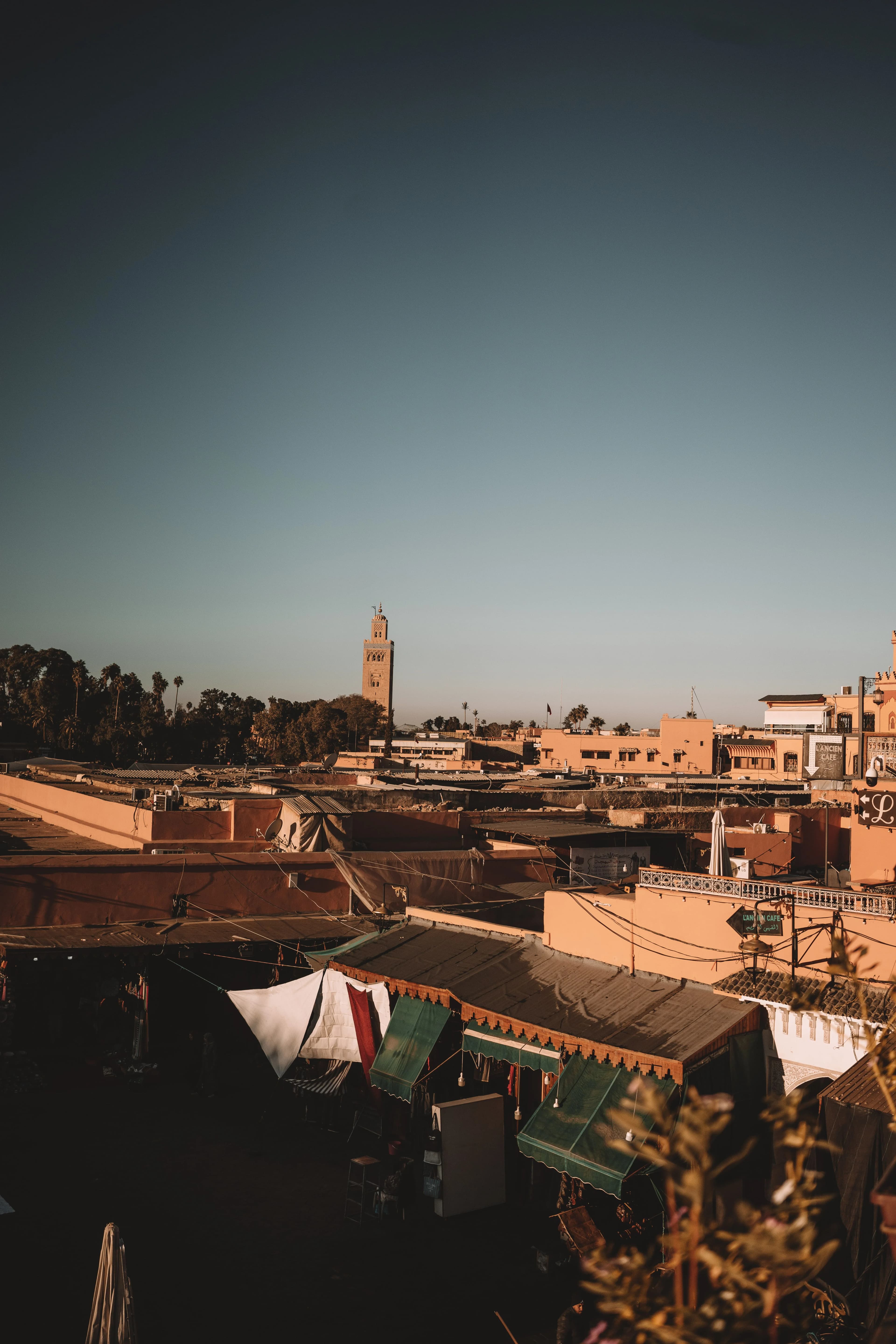
Why Essaouira occupies a distinct position in Moroccan luxury travel
This is also a city with deep artistic roots. Jimi Hendrix visited in 1969, and the connection, whether mythologized or not, has become part of the city's cultural identity. The Gnawa musicians who perform in Djemaa Laghdir square during the annual Gnaoua World Music Festival represent a living sacred tradition, not a tourist performance. The blue fishing port, the thuya wood artisans, and the gallery spaces clustered within the medina all contribute to an environment that attracts artists, architects, and travelers who prefer substance to surface. A luxury hotel suite in Essaouira is, in this context, a private retreat from a city that already rewards slow, attentive exploration.
The best areas to stay in Essaouira
Inside the medina walls
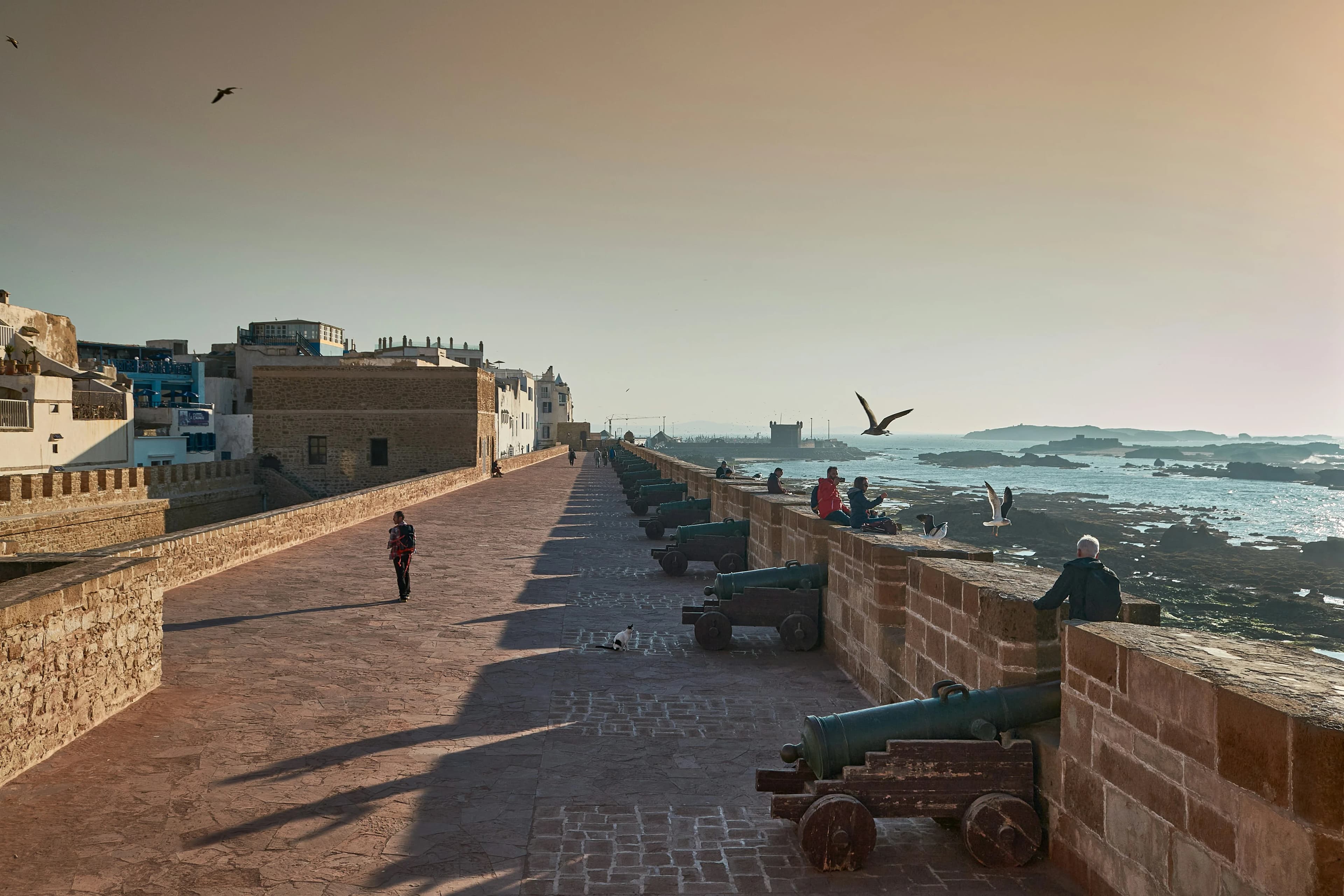
The medina itself is the primary choice for travelers who want full immersion in Essaouira's architectural character. Riads and boutique properties converted from historic merchant houses offer thick-walled interiors that remain cool in summer and sheltered in winter. The finest suites in these properties are typically located on upper floors, with roof terraces providing direct views over the rooftops to the Atlantic. Proximity to the Skala de la Ville, the sea-facing ramparts, places guests within minutes of the city's most photogenic vantage points. The narrow streets of the medina enforce a pedestrian pace that fundamentally changes how a stay feels.
The beachfront and coastal approach
South of the medina, the bay stretches for several kilometres, and a small number of larger properties position themselves along this coastline. The trade-off is scale for serenity: rooms are larger, views are open, and the relationship with the Atlantic is more direct. This area suits travelers who come primarily for the ocean, the wind sports for which Essaouira has international recognition, or simply the visual expanse of the bay. The medina remains accessible by a short walk or taxi.
When to visit Essaouira for a luxury suite stay
Essaouira's climate is moderated by the Atlantic in a way that makes it viable year-round, though each season has a distinct character. Spring, from March to May, brings mild temperatures and lower tourist density, making it the most comfortable period for extended exploration of the medina and surrounding argan forests. June through August is peak season, when the alizé winds are strongest, which makes the city a destination for wind and kite surfers but also keeps the heat manageable. The Gnaoua World Music Festival, typically held in June, draws significant international attendance and places pressure on suite availability; advance planning is essential if this coincides with travel dates.
September and October offer a quieter interval with stable weather. Winter months are cooler and occasionally rainy, but the reduced crowds and lower rates can make this period appealing to those who prioritize solitude over sunshine. Properties within the medina's thick stone walls maintain a natural thermal stability throughout the year.
Understanding luxury hospitality standards in Essaouira
Morocco's hospitality classification system uses a star rating overseen by the Ministry of Tourism, and the country also designates certain historic properties under the Maison d'Hôtes label, which covers boutique and riad-format accommodations. In Essaouira, the most notable luxury experiences tend to be found in this smaller-scale category rather than in large international hotel chains, which have limited presence within the medina. This is not a deficit. A well-curated riad suite can deliver a level of spatial intelligence, artisanal finish, and personal service that a conventional hotel room cannot replicate.
Expect the finest suites to include zellige tilework, hand-carved plaster detailing, internal courtyard access, and rooftop terraces with unobstructed views. Local craftwork, including Essaouira's distinctive thuya root woodwork inlaid with lemon wood and mother of pearl, will often appear in furniture and decorative elements. Hammam access is standard in serious properties, and many top-tier suites incorporate private hammam facilities. For travelers considering Morocco as a broader itinerary, Essaouira functions well as both an opening chapter and a considered conclusion, given its airport connections and the coastal contrast it provides to inland destinations. For those exploring the wider region, the La Suite editorial guide to Africa provides additional context on positioning Essaouira within a continent-wide approach to luxury suite travel.
How to choose the right luxury suite in Essaouira
Architecture: historic conversion versus new build
The choice between a medina riad conversion and a purpose-built coastal property is the central architectural decision for this destination. Historic conversions offer cultural immersion and spatial character, but they also involve narrower staircases, occasional sound transfer between rooms, and the ambient noise of a living medina. Purpose-built properties offer contemporary amenity standards and often larger bathrooms, but may sacrifice the sense of place that makes Essaouira distinctive. The question is whether the guest prioritizes the city's texture or their own comfort envelope.
Wind exposure and suite orientation
The alizé is a defining feature of Essaouira, and suite orientation matters more here than in most Moroccan destinations. A rooftop terrace that faces the prevailing northerly wind without shelter can be unusable for extended periods. Properties that provide sheltered courtyard spaces or leeward terracing offer a more reliable outdoor experience. This is a practical consideration that a curated selection process should account for, and which general booking platforms rarely surface in their listings.
Proximity to the medina's key cultural nodes
The Mellah, the port, the Skala de la Kasbah, and the main souks are all contained within a compact area. Suite selection based on proximity to specific points of interest is less critical here than in larger cities, but properties at the northern end of the medina, closer to the Skala de la Ville, tend to offer the most immediate access to the sea walls and ocean light that define Essaouira's visual identity.
The value of curation for Essaouira suite travel
Essaouira's luxury accommodation market is characterized by a wide variance in quality beneath a surface of aesthetic consistency. Many properties present well photographically while delivering inconsistent service, inadequate soundproofing, or maintenance standards that fall below what the price point should imply. The city's popularity with independent travelers and the relative ease of converting a medina property into a guesthouse has produced a dense and uneven market. La Suite's curation process filters this field according to verified criteria: spatial quality, service reliability, suite-specific amenities, and the overall coherence of the guest experience. For travelers who value their time and privacy, this process removes the primary friction of booking in a destination where the gap between expectation and reality can be significant.