Cape Town's distinct areas for luxury suite stays
The Victoria and Alfred Waterfront is Cape Town's most commercially polished district. Properties here place guests within direct reach of the working harbor, with Table Mountain visible across the water. The atmosphere is urban and transactional, suited to travelers who want convenience alongside scale. Suites in this area typically offer panoramic water-facing terraces and access to the city's principal retail and cultural infrastructure.
Green Point sits between the Waterfront and Sea Point, offering a quieter residential register. Properties here tend toward boutique scale, with a design-forward sensibility. The area has direct access to the Green Point Urban Park and Signal Hill, making it a considered choice for travelers who prefer proximity to nature without sacrificing the city's energy.
Sea Point is the city's most European-feeling coastal strip, a promenade of modernist apartment blocks and pavement restaurants running along the Atlantic seaboard. Suite properties here offer direct ocean exposure and a distinctly local rhythm. The area's density gives it authenticity, and mornings along the Sea Point Promenade are a defining Cape Town experience.
Camps Bay is the city's most visually arresting neighborhood: a narrow strip of white-sand beach backed by the Twelve Apostles mountain range, lined with open-air restaurants and low-rise luxury properties. Suites here are among the most architecturally considered in the city, designed to maximize the relationship between interior space and the landscape outside. The Atlantic water is cold, but the light is extraordinary.
When to visit Cape Town for a luxury suite stay
Cape Town operates on a Mediterranean climate cycle. The summer months, from November through March, deliver long days, consistent warmth, and the city's highest concentration of cultural and social activity. This is peak season, and suite availability at leading properties requires advance planning, often months ahead.
The shoulder seasons, April to May and September to October, offer a different quality of experience: cooler temperatures, fewer visitors, and a city that moves at a more considered pace. The Winelands, roughly an hour's drive from the city, are at their most atmospheric during harvest season in February and March. For travelers focused on interior design and cultural programming rather than beach access, winter (June to August) offers genuine value and a more intimate engagement with the city.
The Cape Town International Jazz Festival, held annually in late March or early April, is one of the continent's most significant cultural events and draws an international audience. The Design Indaba conference, typically in February, attracts architects, creatives, and brand directors from across the world and reflects the city's serious engagement with contemporary design.
Local luxury standards: what defines a premium suite in Cape Town
South Africa does not operate a formal hotel classification system equivalent to the French Palace designation or the Italian Lusso category. The grading authority is the Tourism Grading Council of South Africa, which operates a star system up to five stars. Within that framework, the distinction between a standard five-star property and a genuinely exceptional one is entirely a matter of curation rather than certification.
Cape Town's finest suites are distinguished by several factors specific to the city: the integration of outdoor space (terraces, plunge pools, and unobstructed sightlines to the mountain or ocean carry significant weight), the quality of the architectural response to the site, and the level of bespoke service that moves beyond hotel convention. The city has produced a cohort of independent boutique properties that compete directly with international branded hotels on design and experiential terms, often exceeding them in spatial generosity and local knowledge.
Properties in the Atlantic Seaboard corridor, from Green Point through Sea Point to Camps Bay, tend to prioritize landscape integration. Those closer to the City Bowl and the Winelands fringe offer a different typology: historic fabric, converted colonial or Cape Dutch architecture, and a stronger connection to the city's layered cultural history.
How to choose the right luxury suite in Cape Town
The primary decision is geographic. Cape Town's topology means that the mountain is always present as a reference point, but the relationship between a suite and its immediate context varies substantially by neighborhood. A suite facing the Atlantic in Camps Bay delivers an entirely different sensory register from one positioned above the city bowl with Table Mountain as its backdrop.
Beyond orientation, consider the scale of the property. Cape Town supports both large international branded hotels and small independent guesthouses of genuine distinction. For travelers who prioritize privacy and spatial generosity, smaller properties often offer suites with direct garden or pool access that larger hotels cannot match. For those who require a full-service infrastructure, including business facilities, multiple dining concepts, and consistent 24-hour operation, the larger properties on the Waterfront or in the City Bowl are better suited.
Transport logistics are worth factoring into the choice of area. Cape Town's Atlantic Seaboard is not a walking city in the conventional sense, and the distance between neighborhoods is best managed by private transfer or car hire. A suite in Camps Bay places the traveler at a remove from the Waterfront and the city center, which is an asset if seclusion is the objective and a friction point if frequent movement is required.
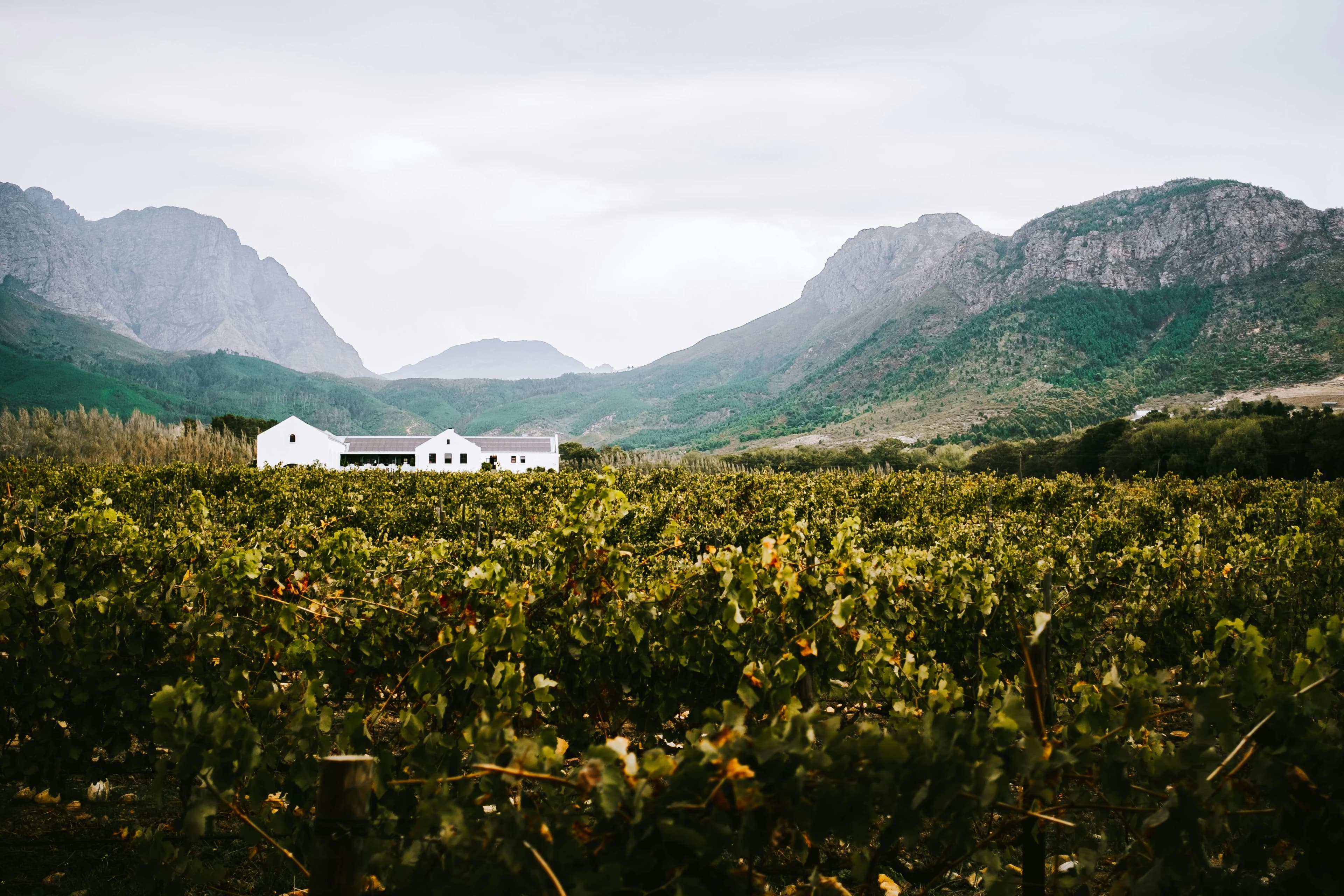
For travelers extending their stay into the Cape Winelands, the broader territory of South Africa offers exceptional suite accommodation in estate settings that operate quite differently from urban hotel logic. These properties deserve separate consideration within the wider context of African luxury travel.
The value of a curated selection in Cape Town
Cape Town's hotel market has expanded significantly over the past two decades. The volume of properties presenting themselves as luxury options is considerable, and the gap between marketing language and actual delivery is not always visible from standard booking platforms. A suite described as ocean-facing may deliver a lateral sliver of water between two buildings. A property positioned as boutique may lack the staffing depth to support genuine suite-level service.
La Suite approaches Cape Town as an editor rather than an aggregator. The properties presented in our curated selection have been assessed on spatial quality, architectural integrity, service consistency, and the specificity of the experience they deliver. The objective is to make the decision efficient for travelers who have already determined that a suite is the correct format for their stay, and who need reliable guidance on which properties in Cape Town meet that standard without requiring them to audit dozens of options independently.