Stayinmind, Xuancheng
Stayinmind has a seasonal outdoor swimming pool, garden, a restaurant and bar in Jing. Among the facilities at this property are a shared kitchen and room service, along with free WiFi throughout the

Xuancheng is the administrative center of southeastern Anhui, a province that contains some of China's most visually and culturally concentrated landscapes. The city itself borders Zhejiang and Jiangsu provinces, placing it at a geographic and cultural crossroads that shaped its historical identity as a center of literati culture. The production of xuan paper, used for Chinese calligraphy and painting for over a millennium, originates in Jing County within the Xuancheng prefecture. This is not incidental context. It defines the character of the place: precise, refined, oriented toward the long view rather than the immediate impression.
1 hotel available

Stayinmind has a seasonal outdoor swimming pool, garden, a restaurant and bar in Jing. Among the facilities at this property are a shared kitchen and room service, along with free WiFi throughout the
Hotels in the area, but in a neighbouring town.

Nestled at the foot of the majestic Mount Huangshan, Banyan Tree Hotel Huangshan offers luxury suites in characteristic Anhui-style architecture with free WiFi. It also features a spa center and a res

Exceptional Facilities Conrad Hangzhou Tonglu in Hangzhou offers an infinity swimming pool, spa facilities, fitness center, sun terrace, and a lush garden. Guests can also enjoy an indoor swimming poo

Located in Liyang and with Liyang Railway Station reachable within 11 miles, FU VALLEY Hotel has concierge services, non-smoking rooms, a garden, free WiFi throughout the property and a restaurant. We

LOST LODGE·Shendu Wubei(Lin'an) is located in Lin'an and features a bar. Among the facilities of this property are a restaurant, a shared lounge and room service, along with free WiFi throughout the p

Comfortable Accommodations Xian Du in Huangshan offers family rooms with air-conditioning, private bathrooms, and scenic views. Each room includes a balcony or terrace, bathrobes, and free toiletries.

17 hotels · 179 km away
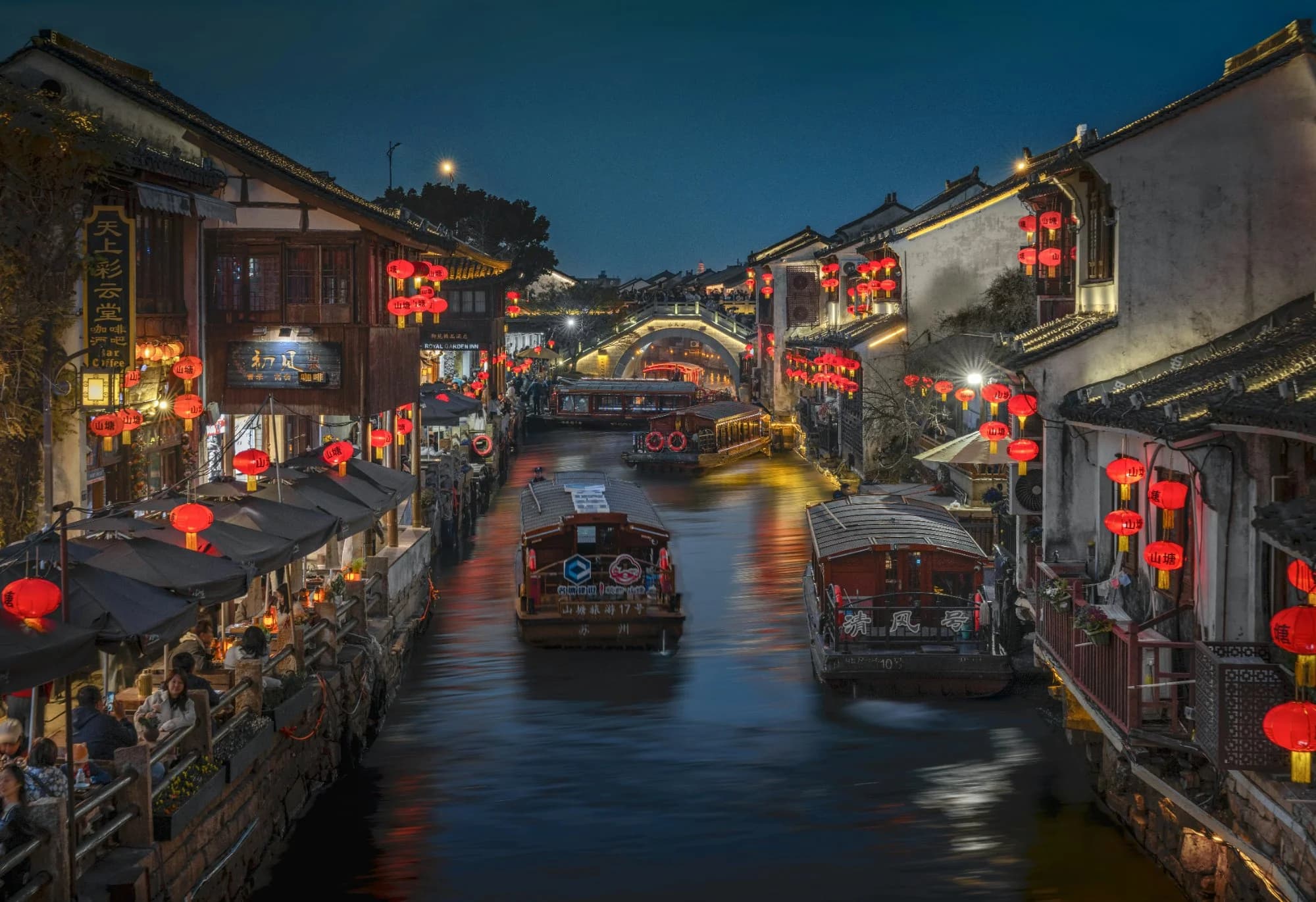
Suzhou sits within the Yangtze River Delta, approximately 100 kilometres west of Shanghai, and has long functioned as a counterpoint to that city's density and pace. Where Shanghai projects financial ambition outward, Suzhou turns inward: its classical gardens, whitewashed walls, and stone-bridged canals define an aesthetic of deliberate restraint that resonates strongly with the contemporary luxury traveller seeking cultural depth over spectacle.

14 hotels · 159 km away
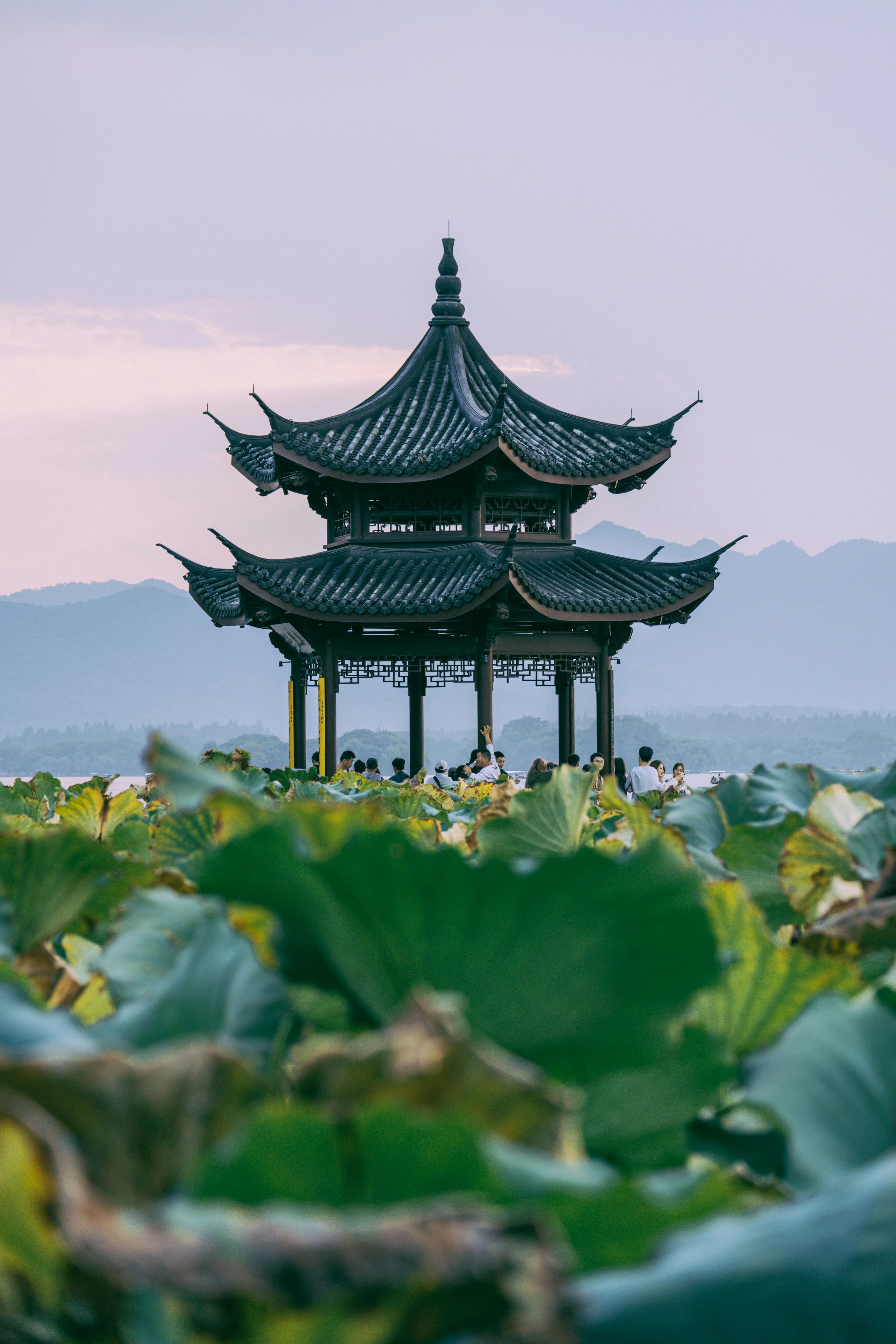
Hangzhou's geography is inseparable from its appeal, and the area in which you base yourself will shape the entire character of your stay. The city organises itself around West Lake, and proximity to this landscape remains the primary variable in any serious accommodation decision.

6 hotels · 122 km away
Nanjing sits on the southern bank of the Yangtze River in Jiangsu Province, approximately 300 kilometers northwest of Shanghai. It is not a city that performs for tourists. Instead, it reveals itself gradually: through its preserved Ming-dynasty walls (among the longest surviving city walls in the world), its density of museums and mausoleums, and its measured, tree-lined boulevards that give it a distinctly unhurried pace compared to China's megacities. For travelers accustomed to the compressed spectacle of Beijing or the commercial intensity of Shanghai, Nanjing offers something architecturally and historically richer in texture, without the accompanying crowd pressure. This is precisely the kind of destination where a well-chosen luxury hotel suite becomes less an amenity and more a curatorial decision.
For the high-end traveler, this translates into a destination that rewards attention. The architecture, the surrounding countryside, and the craft traditions here are not performing for visitors. They exist on their own terms, which makes genuine engagement with them feel earned rather than transactional.
Jing County, southwest of the city center, is where the prefecture's cultural weight is most concentrated. The Qingyi River valley here has produced xuan paper continuously since the Tang dynasty, and the paper-making workshops remain active. Staying within reach of this area offers access to a craft culture that is recognized by UNESCO as intangible cultural heritage. The landscape itself, with terraced hillsides and river mist, has the quality of a classical Chinese painting rendered at full scale.
Xuancheng's position in the broader southern Anhui corridor means that the Huangshan mountain range is within practical reach. Travelers using Xuancheng as a base gain access to one of China's most geographically dramatic landscapes without the density of tourism concentrated directly around Huangshan city. This positioning suits the traveler who values controlled access over convenience infrastructure.
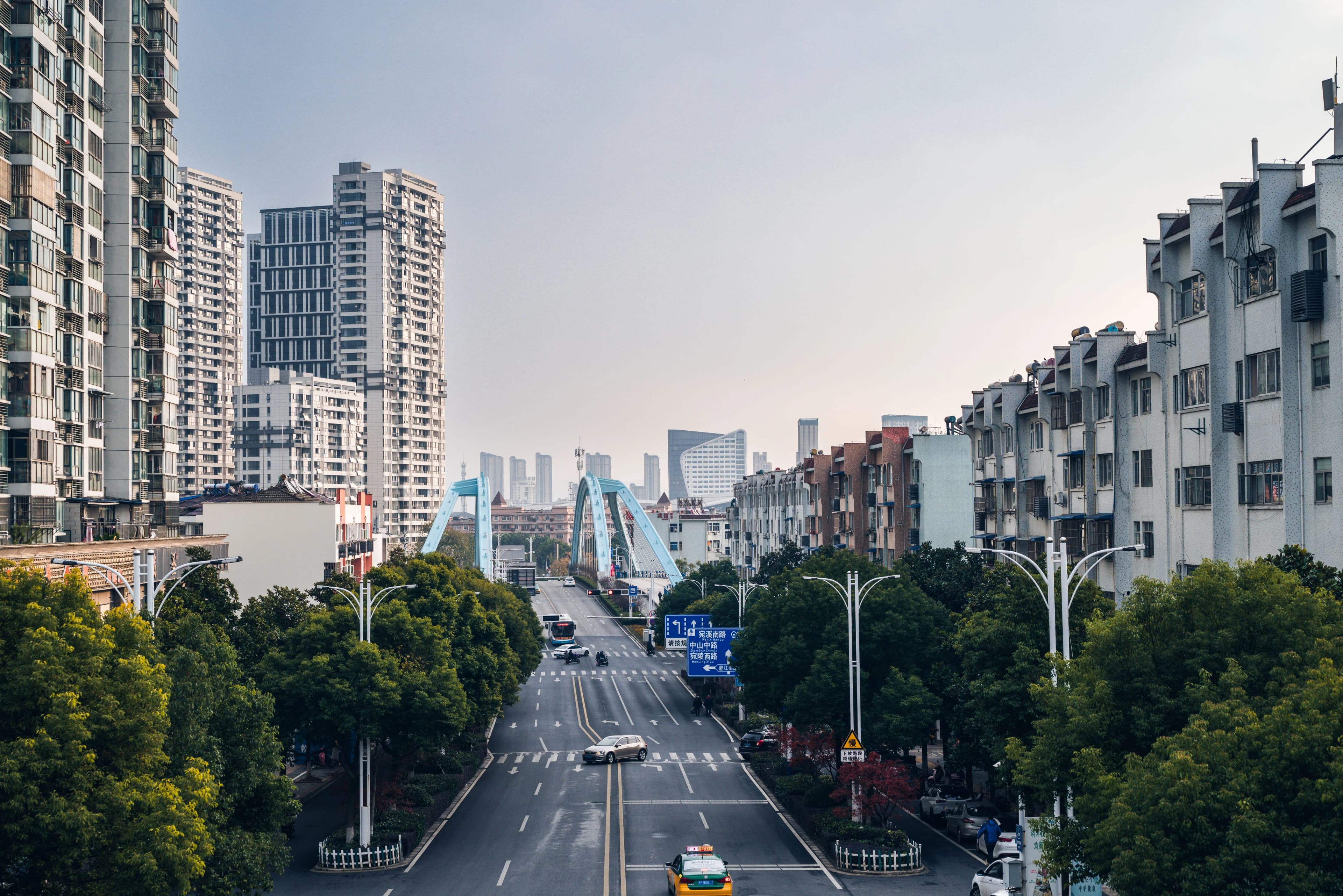
The city center of Xuancheng is compact and organized around the Shuiyang River system. The urban fabric here reflects Anhui's characteristic hui-style architecture in its older districts: white-washed walls, dark tile roofs, and enclosed courtyard structures that create a distinctive visual rhythm. The newer development zones are modern and functional, but the older riverside quarters retain a pedestrian scale that makes them genuinely walkable and architecturally coherent.
The most considered time to visit Xuancheng is during spring (March to May) and autumn (September to November). Spring brings the flowering of tea gardens across southern Anhui and moderate temperatures that make the landscape particularly legible. The quality of light in early spring, before summer humidity arrives, is particularly suited to the ink-wash aesthetic that defines the region visually.
Autumn is arguably the stronger season. The humidity retreats, the foliage in the surrounding hills turns, and the cultural calendar in Anhui tends to concentrate events around the national holiday period in early October. Summer (June to August) brings significant rainfall and heat, which affects accessibility to rural areas. Winter is mild by northern Chinese standards but requires planning around reduced daylight and occasional fog in the river valleys.
There are no large-scale international luxury events anchored specifically to Xuancheng, which is itself an asset for travelers seeking a quieter engagement with the region. The major Chinese national holidays (Golden Week in October, Lunar New Year in January or February) bring domestic tourism surges and affect accommodation availability, so advance planning around these periods is advisable.
China's luxury hotel classification system operates independently of Western frameworks. The government's five-star hotel rating provides a baseline, but the most discerning travelers have come to rely on international brand presence and independent review systems to identify genuinely high-caliber properties. In a city of Xuancheng's scale, the luxury hotel infrastructure is less developed than in tier-one or tier-two Chinese cities, which means that the definition of a high-end stay shifts slightly toward boutique properties, heritage conversions, and resort developments oriented around the surrounding natural landscape.
Hui-style architecture, specific to Anhui province, is a meaningful marker of local authenticity in higher-end properties here. Buildings that incorporate the characteristic horsehead gable walls (mǎ tóu qiáng), carved wood interiors, and courtyard layouts offer a spatial experience that no international-standard hotel block can replicate. A luxury suite within a well-restored hui compound operates on different sensory terms than a suite in a generic tower: the proportions, the materials, and the relationship between interior and exterior space all reflect a distinct architectural logic.
Guests should expect that luxury properties in this region will vary in terms of international language infrastructure. English-language service, while increasingly available in higher-end properties, is less standardized here than in Shanghai or Beijing. This is worth factoring into planning, particularly for extended stays or guests with specific service requirements.
The primary choice in this region is between urban-center properties and those positioned within the surrounding countryside or in adjacent counties such as Jing County. Urban properties offer logistical convenience and access to the city's commercial and cultural infrastructure. Rural or peri-urban properties offer landscape immersion, architectural authenticity, and a quieter operational rhythm.
For travelers prioritizing the craft and cultural dimension of the region, proximity to Jing County's paper-making villages is a meaningful differentiator. For travelers using Xuancheng as a base for broader southern Anhui exploration, a centrally located property with strong transport connectivity is more practical. The size of the suite matters here in ways specific to Chinese luxury hospitality: larger suites in this context often incorporate traditional spatial concepts, including separation between reception and sleeping areas, that reflect local architectural conventions rather than simply scaling up a standard room plan.
Connectivity is also a practical consideration. Xuancheng has its own railway station on the Hangzhou line, providing access to the broader Yangtze Delta rail network. High-speed rail connections to Hangzhou, Nanjing, and Shanghai make the city more accessible than its relative obscurity suggests, and this infrastructure is worth factoring into suite selection in terms of proximity to the station versus landscape immersion.
Xuancheng is precisely the kind of destination where curation adds the most value. In cities with saturated luxury markets, the selection process is easier because the inventory is large and well-documented. In a city like Xuancheng, the challenge is different: the number of genuinely high-caliber properties is smaller, the information available in English is thinner, and the gap between a property that sounds appropriate and one that actually delivers on the experience is wider.
La Suite applies the same selection standards here as across all of China and the broader Asia region: spatial quality, service architecture, architectural integrity, and the specific capacity of a suite to function as a private environment rather than simply an oversized room. In a destination where the cultural and landscape rewards are genuine but the hospitality infrastructure is still developing, this kind of editorial filtering is not a luxury. It is the prerequisite for a stay that actually delivers what the region is capable of offering.

Xuancheng offers access to Anhui province's deep cultural heritage, particularly through Jing County's xuan paper tradition, which has been recognized by UNESCO as intangible cultural heritage. The region's hui-style architecture, ink-wash river landscapes, and relative distance from mass international tourism give it a character that rewards deliberate, culturally engaged travel. It suits the traveler who prioritizes authenticity and spatial quality over convenience infrastructure.
Spring (March to May) and autumn (September to November) are the most favorable seasons, offering moderate temperatures, lower humidity, and the most visually coherent landscape conditions. Autumn is particularly recommended for the quality of light and foliage in the surrounding Anhui hills. Travelers should plan around China's Golden Week national holiday in early October, when domestic tourism volumes significantly affect suite availability.
The most distinctive local typology is hui-style architecture, characterized by white-washed exterior walls, dark roof tiles, horsehead gable walls, carved wood interiors, and enclosed courtyard structures. Properties that authentically incorporate these elements offer a spatial and sensory experience that is specific to Anhui province and cannot be replicated by international-standard hotel design. A well-restored hui compound suite operates on fundamentally different architectural terms than a conventional luxury tower suite.
Xuancheng has a railway station on the Hangzhou to Fuzhou high-speed line, providing connections to Hangzhou (approximately one hour), Nanjing, and onward to Shanghai. This places the city within practical day-trip or short-stay range of the Yangtze Delta's major urban centers, making it viable both as a standalone destination and as part of a broader southern Anhui itinerary. Advance booking of train tickets is advisable during national holiday periods.
Jing County is arguably the cultural core of the Xuancheng prefecture for discerning travelers. It is the historical and active center of xuan paper production, a craft with over a thousand years of continuous practice and UNESCO recognition. The Qingyi River valley landscape here is visually exceptional, and the paper-making workshops offer a form of cultural engagement that is substantive rather than performative. A luxury property positioned within or near Jing County provides a markedly different experience from an urban-center stay.
English-language service is less standardized in Xuancheng than in China's tier-one cities such as Shanghai or Beijing. Higher-end and internationally affiliated properties will generally provide English-speaking front-of-house staff, but the depth of English-language support across all service touchpoints cannot be assumed. Travelers with specific service requirements or complex itineraries should factor this into their planning and may benefit from working with a platform that has direct relationships with properties in the region.
Huangshan city is more heavily developed around international tourism infrastructure and benefits from direct proximity to the Huangshan mountain range. Xuancheng offers a quieter base with more authentic urban fabric, access to the culturally distinct Jing County area, and a less saturated accommodation market. Travelers who prioritize cultural depth and privacy over convenience to the mountain will find Xuancheng a more considered choice, while those for whom the mountain itself is the primary objective will find Huangshan city more logistically straightforward.
The most meaningful differentiators in this market are architectural authenticity (specifically, genuine hui-style construction rather than decorative references to it), the distinction between urban-center and countryside positioning, and the spatial logic of the suite itself. Suites in well-restored traditional compounds will often feature courtyard views, carved wood detailing, and a separation of spaces that reflects local architectural conventions. Travelers should also consider proximity to Jing County for cultural access, or proximity to the railway station for broader regional mobility.
Xuancheng's hotel market is smaller in scale than China's primary and secondary cities, and the presence of major international luxury brands is limited compared to destinations like Shanghai, Hangzhou, or even Huangshan city. The higher-end options in the region tend to be domestic Chinese luxury operators, boutique heritage properties, and resort developments that draw on the natural and cultural landscape. This is not a disadvantage: it means that the most interesting properties here are often those that reflect local architectural and cultural specificity rather than replicating a global brand formula.
La Suite applies consistent editorial standards across all destinations, evaluating spatial quality, architectural integrity, service architecture, and the capacity of a suite to function as a genuinely private and considered environment. In destinations with thinner English-language documentation, such as Xuancheng, this curatorial work is particularly valuable because the gap between a property's self-presentation and its actual delivery can be significant. The platform's selection for China and across Asia is based on direct assessment criteria rather than star ratings or brand affiliation alone.